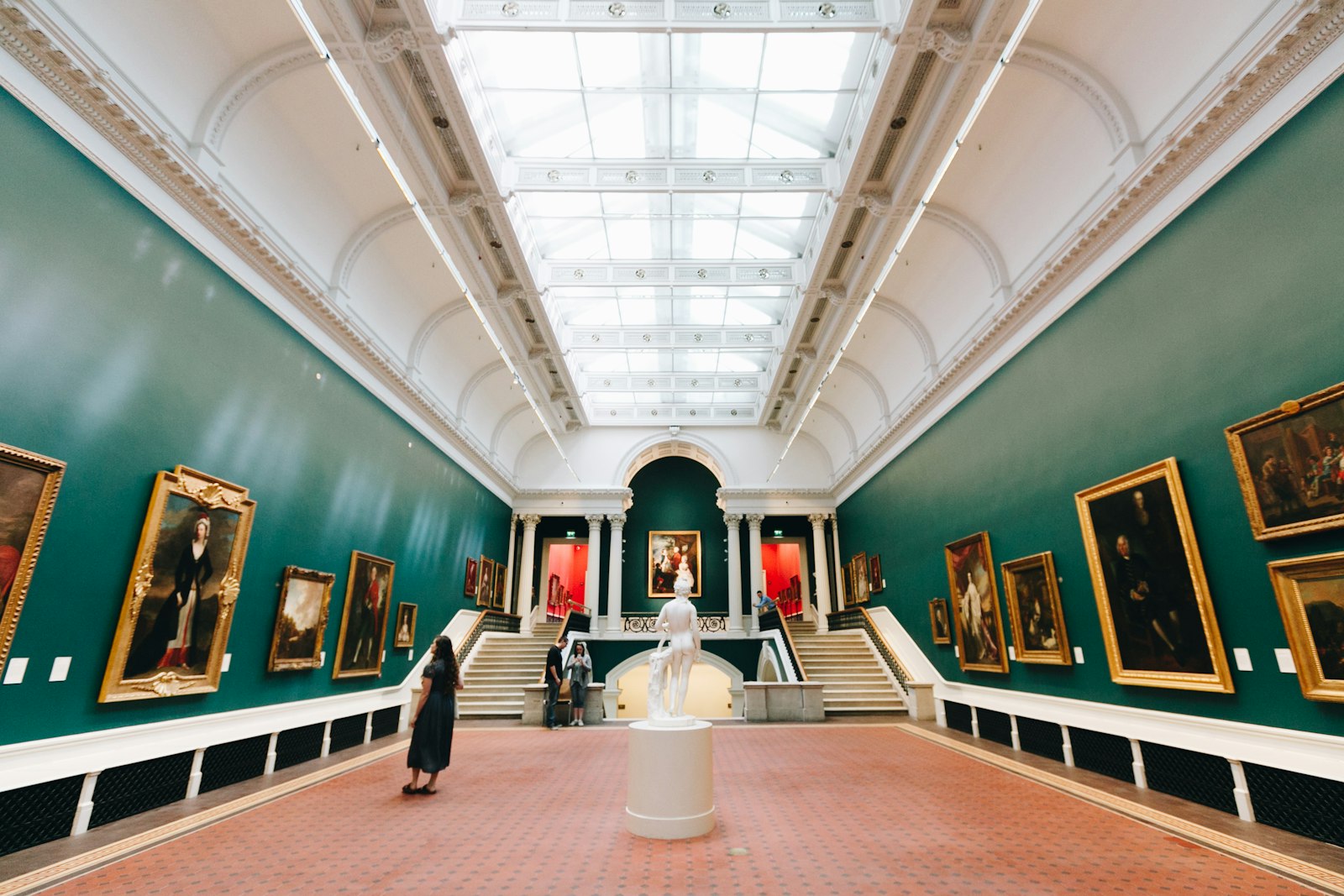
Ireland has a remarkable artistic tradition, from medieval manuscript illumination to contemporary visual art. The country’s art scene is vibrant, accessible, and deeply integrated into Irish culture. Whether you’re an art enthusiast or simply curious about how Irish people express themselves creatively, exploring Irish art galleries is an essential part of understanding Irish culture.
The Chester Beatty Library
The Chester Beatty Library in Dublin Castle is one of the world’s great manuscript collections. Founded by American collector Alfred Chester Beatty and bequeathed to Ireland, the library houses extraordinary illuminated manuscripts, including the Book of Kells’ sister manuscript (the Book of Durrow), ancient papyri, and rare printed books from across centuries.
The collection spans cultures and continents—Arabic manuscripts, Persian texts, East Asian materials, and European materials all coexist. The library’s strength is in showing how different cultures approached the creation and preservation of beautiful, meaningful texts.
Visiting the Chester Beatty Library is an essential Dublin experience. The manuscripts are displayed in climate-controlled cases, beautifully presented. You can see the actual pages of ancient texts, understand the technical mastery of scribes, and appreciate how humans have worked to create beautiful and meaningful objects for thousands of years.
The library also hosts temporary exhibitions that contextualize the collection and make it relevant to contemporary audiences.
The National Gallery of Ireland
Located on Merrion Square in Dublin, the National Gallery houses Ireland’s premier collection of Irish and European art. The collection spans from medieval times through contemporary work.
The Irish art collection is particularly strong, with works by Jack B. Yeats (brother of the poet), Walter Osborne, William Leighton Osborne, and numerous other Irish artists. These galleries tell the story of Irish artistic development and vision.
The European collection includes works by significant masters—Rembrandt, Caravaggio, Vermeer, and numerous others. While not encyclopedic, the collection is curated with care and hung with sensitivity to how viewers experience art.
The National Gallery is also notable for its commitment to accessibility. Admission to the permanent collection is free, making art available to everyone. The gallery has excellent educational programs and hosts regular talks and exhibitions.
The building itself is beautiful, with natural light and proportions that make viewing art genuinely pleasant.
The Irish Museum of Modern Art (IMMA)
Located in the Royal Hospital Kilmainham, IMMA is Ireland’s premier contemporary art museum. The building—a 17th-century structure that served as a hospital and barracks—is stunning, and the location (in Kilmainham, an area full of historical significance) adds context.
IMMA focuses on contemporary Irish and international art. The exhibitions are thoughtful and often experimental. The museum isn’t afraid to present challenging, thought-provoking work that makes visitors uncomfortable or confused—which is often the point of contemporary art.
The collection includes major works by Irish contemporary artists. The museum also hosts artist residencies and produces catalogs that contribute to art historical discourse.
Visiting IMMA is essential for understanding contemporary Irish art and how Irish artists are engaging with global conversations about art, politics, identity, and meaning.
The Crawford Gallery Cork
Located in Cork, the Crawford is one of Ireland’s major art museums, with a significant collection of Irish and European art. The building is beautiful, and the gallery is more intimate than Dublin’s major institutions.
The Crawford has a particularly strong collection of Irish art and hosts excellent contemporary exhibitions. The museum also supports emerging artists through its programs and exhibitions.
Visiting the Crawford gives insight into Cork’s vibrant arts scene and demonstrates that Irish art exists well beyond Dublin.
Galway Arts Festival and the Contemporary Scene
Galway hosts the annual Galway Arts Festival, one of Ireland’s major cultural events. The festival features visual art exhibitions, performance art, theater, music, and literary events. It’s a showcase for Irish and international contemporary artists.
Galway itself has a thriving independent gallery scene, with numerous small galleries and artist-run spaces featuring contemporary work. The city has become increasingly important to the Irish contemporary art scene.
Francis Bacon’s Studio
For those interested in contemporary Irish art history, the Francis Bacon Studio in Dublin is extraordinary. The studio, preserved exactly as Bacon left it at his death, contains the physical remnants of his working process—paint-splattered surfaces, sketches, photographs, and the chaos of artistic creation.
Francis Bacon was one of the 20th century’s greatest artists, and his work was revolutionary in how it portrayed the human figure. Though Bacon lived much of his life in London, he was Irish and maintained a studio in Dublin. The studio provides intimate access to how a major artist actually worked.
Jack B. Yeats and Irish Artistic Identity
Jack B. Yeats (brother of poet William Butler Yeats) was one of Ireland’s greatest painters. His work evolved from representational painting to increasingly abstract and expressive work. Yeats’ paintings are widely held in Irish museums and galleries.
Understanding Yeats is important because he represents the moment when Irish art began to define itself as Irish—not simply copying European traditions but developing a distinctive Irish artistic voice. His work is emotional, often depicting Irish landscapes and life, but always with artistic sophistication.
Street Art and Mural Culture
Contemporary Irish cities, particularly Dublin and Belfast, have vibrant street art scenes. Dublin’s Temple Bar area and Brick Lane in London Road are known for colorful murals and street art. Belfast’s Murals are particularly famous, with complex political, historical, and artistic significance.
Street art in Irish cities reflects contemporary political and social concerns—immigration, LGBTQ+ rights, environmental issues, and social justice. Street art is taken seriously as legitimate artistic expression in Ireland, unlike some countries where it’s simply vandalism.
The Design Scene and Craft
Beyond fine art, Ireland has a strong tradition of design and craft. The Design and Craft Council of Ireland supports contemporary makers. Dublin has design districts where contemporary designers create furniture, clothing, ceramics, and other objects.
Irish craftsmanship has historical significance—Waterford crystal is famous globally, Aran knitting is traditional, and Donegal tweed is prized. Contemporary Irish designers are building on these traditions while pushing them in new directions.
Photography and Film
Ireland has produced significant photographers and filmmakers. Contemporary Irish photographers are engaging with landscape, portraiture, identity, and documentary work. The photographic scene is strong and growing.
Irish cinema has become increasingly significant internationally, with films like “The Banshees of Inisherin,” “Once,” and others receiving global recognition. Understanding Irish film contributes to understanding Irish artistic expression.
How to Experience Irish Art as a Traveler
In Dublin: Visit the National Gallery, Chester Beatty Library, and IMMA. Explore independent galleries in the city (Temple Bar has many). Walk through neighborhoods to see street art. Visit Francis Bacon Studio if you’re seriously interested.
In Cork: Visit the Crawford Gallery and explore Cork’s independent gallery scene.
In Galway: Visit galleries and catch the arts festival if you’re there during summer.
In Belfast: See the murals, visit galleries, and understand how art is used to express political and historical identity.
Across Ireland: Many smaller cities and towns have gallery spaces. Visual art is integrated into Irish culture even in smaller communities.
The Contemporary Irish Art Scene
Contemporary Irish artists are engaged with global conversations about identity, politics, environment, and meaning. They’re working in traditional media (painting, sculpture, photography) and experimental media (video, installation, performance).
Irish art benefits from both a strong historical tradition and contemporary relevance. Artists are rooted in Irish history and identity but fully engaged with international artistic discourse.
The Irish art scene is notably collaborative and supportive. Artists gather in studios, organize exhibitions, and support each other’s work. This creates a sense of artistic community.
Why Art Matters in Ireland
In a country with a strong literary tradition, art provides another way of expressing what matters. The visual arts allow Irish people to explore identity, landscape, history, and meaning in ways that complement the Irish tradition of storytelling and language.
For visitors, engaging with Irish art provides access to how Irish people see themselves, what they value, what they’re wrestling with, and how they express their creativity and vision.
Whether you’re standing in front of a medieval manuscript, a Jack B. Yeats painting, or a contemporary mural, you’re engaging with Irish artistic expression and understanding Irish culture more deeply. The Irish take their artists seriously, and visitors should too.




Leave a Reply