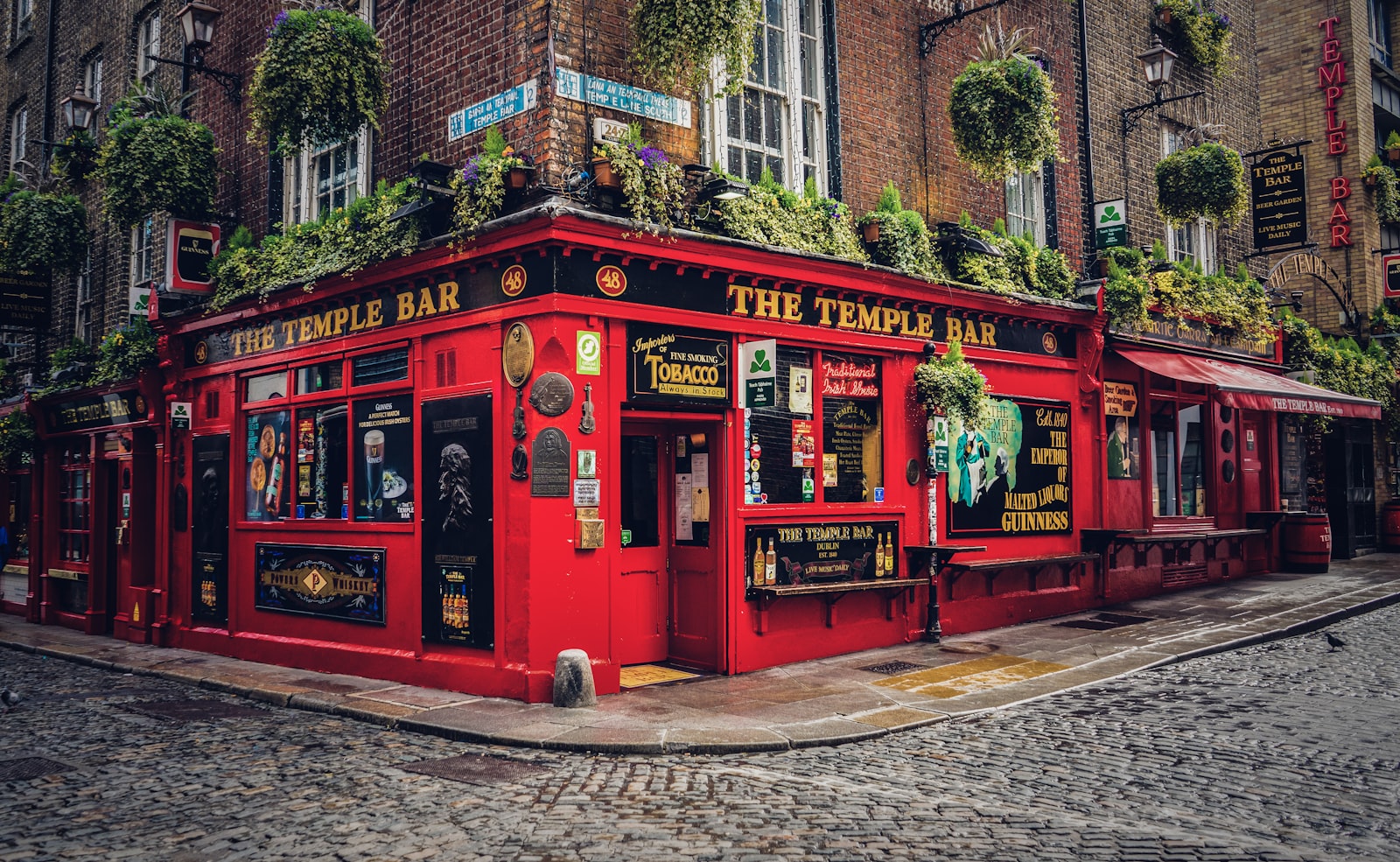
If you think an Irish pub is just a place where people go to drink, you haven’t experienced one yet. The Irish pub isn’t a bar—it’s more like a living room, a community center, a theater, and a school all rolled into one. For Americans visiting Ireland, understanding pub culture is essential to truly experiencing Irish life. Let’s pull up a stool and explore what makes these establishments so fundamentally different from what you know back home.
The Pub: More Than Just a Watering Hole
The first shock for American visitors is usually the atmosphere. Walk into an Irish pub on any evening, and you might think nothing much is happening. People are nursing their drinks, having conversations, maybe watching a football match on the telly. There’s no loud music, no flashing lights, no servers in skimpy outfits, no industrial energy designed to separate you from your money as quickly as possible.
That’s the point. The Irish pub is designed for lingering. For talking. For existing in community with others. The bartender—often called the publican—might be the same person who’s been pulling pints there for thirty years. They know their regulars’ names, their usual orders, their families, their stories. A true “local” is someone who belongs to their neighborhood pub the way they belong to a particular church or club.
This is why the Irish pub has become such a powerful export. You’ll find Irish pubs everywhere from Tokyo to Toronto, and while they’re charming, there’s something about the real thing that can’t be replicated. It’s the history, the authenticity, the organic sense of community that’s been built over generations.
The Snug: Privacy in a Public Place
One of the most peculiar and charming features of traditional Irish pubs is the snug. If you’re visiting a historic pub, look for a small, enclosed booth—usually positioned near the bar with a small opening or window. These are snugs, and they’re a relic of a more repressed Ireland.
Back in the day, women (especially respectable women) didn’t enter pubs openly. Instead, they’d sit in the snug, where they could order a drink through the window to the bartender without being seen. Similarly, priests and other authority figures could enjoy their pint without public visibility. The snug protected privacy and reputation while still allowing participation in pub life.
Today, snugs are sought-after seating spots, usually more comfortable than regular tables and perfect for small groups who want semi-privacy while remaining part of the pub’s social fabric. It’s a wonderful example of how Irish institutions adapt and persist.
Traditional Music Sessions
One of the greatest joys of Irish pub culture is stumbling into a traditional music session. Unlike American open mic nights (which are often excruciating), a traditional session is something special. Musicians—many of them accomplished but most just passionate—gather to play traditional Irish tunes together.
There’s a specific etiquette. Musicians arrive, sit down among the regular crowd, and someone starts a tune. Others join in if they know it. There’s no microphone, no stage, no spotlight. You might not even realize a session is happening until you notice the bodhrán player and the fiddlers creating magic in a corner booth.
The repertoire is enormous and largely passed down orally. Musicians know hundreds of tunes, often learning them by ear. A session might last two hours, with dozens of different tunes flowing seamlessly together. The beauty is in the conversation between instruments—the way a bodhrán player supports the melody of the fiddle, how the accordion drives the rhythm.
As a visitor, you’re welcome to listen. The musicians might seem absorbed in their playing, but they’re aware of the audience. That said, respect the session. Don’t request a song; don’t try to sing along (unless it’s late and things are winding down informally). And for heaven’s sake, don’t film it. The “plastic paddy” tourist who pulls out their phone to record is seen as missing the whole point.
Rounds: How You Actually Buy Drinks
This might be the single thing that confuses Americans most about Irish pubs. When you’re with a group and someone buys drinks, they buy for everyone—not just themselves. If you’re with four people and someone says, “I’m getting a round,” they’re buying four pints (or whatever everyone’s drinking).
This means you’re expected to buy a round yourself when it comes around. If there are five of you, you’ll spend what you would have spent on one drink multiplied by five. It’s actually more economical than individual purchases, but it requires social awareness.
The unspoken rule is that everyone buys their fair share. You don’t leave after one drink if others have bought you drinks. You don’t nurse one pint while friends are on their second. It’s a system based on trust and reciprocity. And it’s brilliant—it means drinks arrive regularly, everyone gets treated, and it creates a binding social obligation to stay and chat.
The Pint of Guinness Ritual
Americans often ask about Guinness. “Should I order it in Ireland?” The answer is yes, but there’s more to it than just ordering.
A proper Guinness takes time. The bartender pours it at an angle, lets it settle, and completes the pour with a perfect head. This isn’t theater—it genuinely makes it taste better. The anticipation is part of the experience.
And there’s something about the first sip of Guinness in an Irish pub that’s hard to describe. It tastes different than it does in America (and usually tastes terrible in non-Irish pubs, because they don’t maintain their taps properly). The dark, slightly bitter flavor, the creamy head, the sense of occasion—it becomes mythical in retrospect.
That said, Guinness isn’t the only beer. You’ve got Smithwicks, Beamish, various craft beers, and plenty of Irish whiskeys. Order what you like. Just respect the process, and never rush a bartender pulling a proper pint.
Pub Food
The old American stereotype is that Irish food is terrible. The modern Irish pub menu suggests otherwise. While you can still get the traditional bacon and cabbage or Irish stew, most pubs now serve surprisingly good food.
Expect fish and chips (often excellent), burgers, soups, seafood chowder, and of course, sides of brown bread and butter. The portions are generous. The ingredients are usually sourced locally. And nothing costs as much as it does in the US.
Many Irish people meet friends for lunch at a pub, grab a quick bite before drinks, or make an evening of dinner and pints. It’s normal, accepted, and much less formal than dining out in America.
Lock-Ins and Other Late-Night Magic
In the old Ireland (and still today in some places), a “lock-in” refers to what happens when the bar has officially closed but the door is locked from the inside. The publican and regular customers remain, continuing to drink and socialize after hours.
These were technically illegal but widely tolerated. It was just friends staying late, the publican pouring one more round for people they’d known for years. Today, with stricter licensing laws, genuine lock-ins are rarer, but the culture of lingering, of finishing conversations, of ordering “one more” remains strong.
The “Local”
Finding your local pub is finding your place. As a visitor, you’ll stay in a hotel or Airbnb, but locals have their pub—the place they go several nights a week, where they run into friends, where they know what to expect. Some tourists make the conscious effort to find a good local bar away from the tourists and return every evening they’re in town. This is excellent strategy. You’ll get friendlier service, better prices, and far more authentic experience.
Opening Hours and The Smoking Ban
Irish pubs have licensing hours, though they’ve become more flexible. Historically, pubs opened around 10:30 AM and closed around 11 PM (or later on weekends). Today, they often stay open later, but don’t assume. Check ahead.
The smoking ban, introduced in 2004, was controversial but is now widely accepted. You cannot smoke inside pubs, so you’ll see people smoking outside. This hasn’t killed pub culture—if anything, it’s created a different kind of social dynamic on the street.
Best Pubs in the Major Cities
Dublin: Toner’s is an old-school institution. O’Donoghue’s features live music. The Long Hall has the most beautiful bar in the city. For a true local experience, try Doheny & Nesbitt or The Stag’s Head.
Cork: Try Sin É for live music, or head to traditional spots like Tom Barry’s.
Galway: Tig Coili is famous for sessions. Taffes is iconic. For a quieter experience, try The Quays.
The best advice: wander. Find a pub that looks interesting. Chat with locals. Ask for recommendations. The magic of pub culture is in the discovery.
The Pub as Ireland’s Living Room
Ultimately, the Irish pub endures because it serves a fundamental human need—to belong somewhere, to see and be seen, to sit comfortably without being pressured to consume relentlessly, to have conversations that meander and deepen.
In an increasingly digital, isolated world, the Irish pub remains stubbornly analog. It’s a place where you’re expected to look at the people around you, not your phone. Where time moves differently. Where strangers become friends through proximity and chat.
When you visit an Irish pub, you’re not just ordering a drink. You’re entering a centuries-old tradition of community, conversation, and connection. That’s what makes it so different from an American bar. That’s what makes it worth your time.
Sláinte.




Leave a Reply