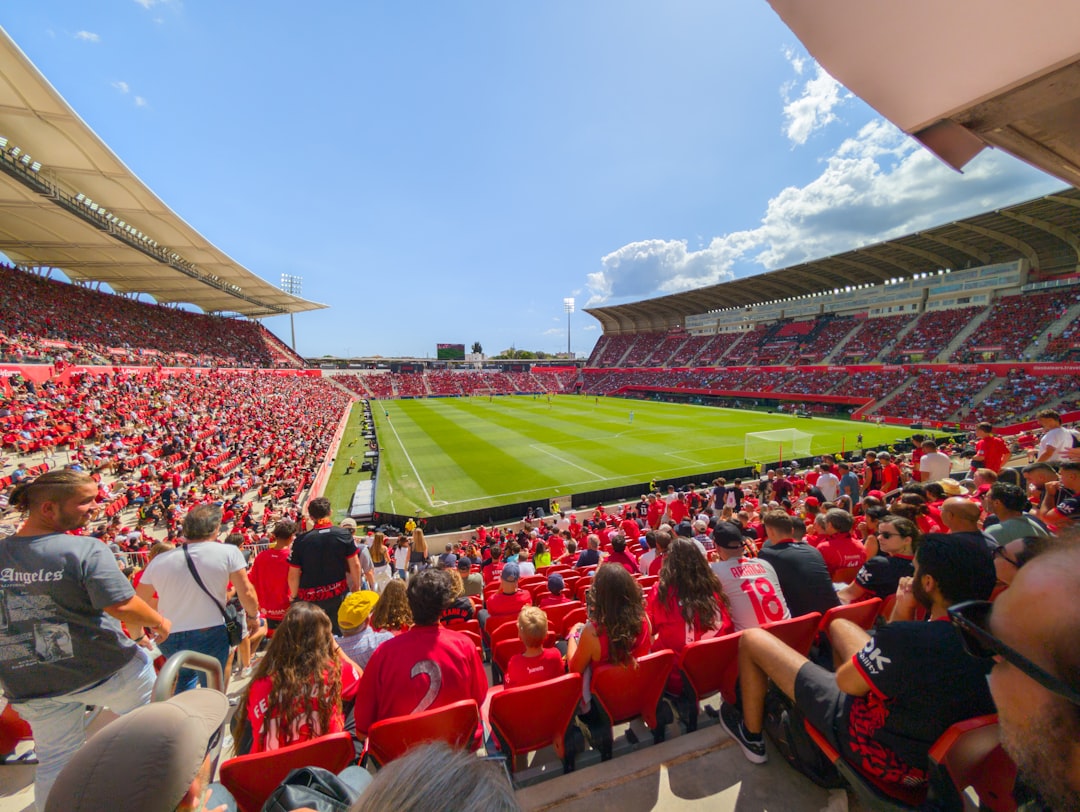
If you want to understand Spanish culture, you don’t need to read history books or take a sociology class. You need to spend a Saturday afternoon in a Spanish bar during a football match. Football in Spain isn’t entertainment. It’s religion. It’s identity. It’s how Spaniards understand themselves and their place in the world. The passion, the arguments, the loyalty, and the occasional heartbreak are all genuine expressions of how deeply football is woven into Spanish life.
There are 92 professional football clubs in Spain, but Spanish football essentially revolves around La Liga—the top division—and specifically around the rivalry between Real Madrid and Barcelona. Understanding this rivalry is understanding Spain itself: two regions, two identities, two visions of what Spain is, all expressed through the metaphor of football.
Real Madrid vs. Barcelona: More Than a Game
In most countries, football rivalries are about sports. In Spain, the Madrid-Barcelona rivalry—called El Clásico—is about regional identity, political history, and competing visions of Spanish nationalism.
Real Madrid and Castilian Spain:
Real Madrid represents central Spain, the Castilian heartland, and traditional Spanish nationalism. Historically, Real Madrid was the favored club of the Franco dictatorship, which benefited the club with resources and political support. The club’s name itself—”Real” (Royal)—reflects establishment power.
However, it’s important to note that Real Madrid is not inherently fascist or authoritarian today. The club is what a club is: a team, its players, and its fans. But historically, Madrid represented centralist Spanish power, and that narrative still resonates.
Barcelona and Catalan Identity:
Barcelona represents Catalonia, a distinct region with its own language, culture, and historical aspirations. FC Barcelona is arguably the most important cultural institution in Catalonia, more important to Catalan identity than government or universities.
During the Franco dictatorship, Catalonia was oppressed. The Catalan language was suppressed. Catalan culture was marginalized. Barcelona football club became a symbol of Catalan resistance and identity. Playing for Barcelona became a way of asserting Catalan identity when other expressions were forbidden.
After Franco’s death and the transition to democracy, Catalonia won increasing autonomy. But football remained central to Catalan identity. FC Barcelona became a source of pride for Catalans and a symbol of Catalan nationalism.
What This Means for Travelers:
When you watch an El Clásico match, you’re watching something that transcends sport. You’re watching two regions argue about national identity. You might see fans wearing both Madrid and Barcelona kits, but that’s unusual. In many Spanish households, supporting the “wrong” team can actually cause family tension.
This doesn’t mean you should be afraid to express a preference. Spaniards enjoy passionate football arguments. Just understand that you’re not discussing a sports team—you’re discussing regional identity and historical trauma, all expressed through the beautiful metaphor of football.
La Liga and Spanish Club Culture
While El Clásico dominates headlines, La Liga involves 20 clubs, many with their own loyal fanbases and rich histories.
The Big Three:
Real Madrid and Barcelona are the obvious superpowers, but Atlético Madrid (the third-largest club in Madrid) has built a competitive team through smart management. Atlético fans pride themselves on being the underdog team in their city, succeeding through intelligence and effort rather than just spending money.
The Historic Clubs:
Athletic Bilbao deserves special attention. This club has a unique identity: they only sign players from the Basque Country. This self-imposed restriction limits their competitiveness at the highest level, but they’ve still won La Liga multiple times and won Spanish Cups more than any other club except Barcelona.
This Basque-only policy reflects Basque nationalism and cultural pride. Athletic Bilbao fans view their club as defenders of Basque culture. The club has never relented on this policy, turning down the chance to sign the world’s greatest players in order to maintain their identity.
Sevilla is a historically important club that’s had periods of success, though not at Madrid or Barcelona’s level. The city of Seville is also home to Real Betis, creating one of Spain’s most intense city derbies.
Valencia, Villarreal, Real Sociedad (another Basque club), and others round out La Liga with varying levels of success and fan passion.
The Lower Divisions:
Below La Liga are La Segunda División (Second Division) and lower divisions. Some travelers might find it more fun to watch a Segunda División match—the football is decent, the atmosphere is more relaxed and local, and tickets are much cheaper. You’ll get a more authentic Spanish football experience than at an El Clásico match.
Watching Football in a Spanish Bar: The Ritual
This is where football culture is most accessible to travelers. Find a bar showing a match, order a drink, and observe.
The Atmosphere:
A Spanish bar during a match is electric. Conversations stop when the ball is in play. Commentary from the TV is overridden by conversations among fans. The mood shifts rapidly—from celebration to despair to outrage, all within seconds.
If it’s a match between local rivals or between Madrid and Barcelona, the bar might be divided. Madrid fans on one side, Barcelona fans on the other, but sharing the space peacefully (usually). The arguments are spirited but not hostile.
If the local team is playing, that’s different. If Real Madrid is playing at home, much of Spain shuts down to watch. Bars are packed. Strangers become temporary teammates through shared support.
What to Order:
Beer (cerveza) is the standard football-watching drink. A caña (small draft beer, about 200ml) costs €2-3 and will last you through the first half. Soft drinks are available if you prefer. During matches, many bars also serve pinchos or snacks.
What to Do:
Don’t worry about being silent or keeping out of the way. You can absolutely comment on plays, ask questions, or express opinions. Just be respectful of the sport and the passion of the fans.
If you’re sitting near people who seem knowledgeable about football, you can ask them questions. “Why is he doing that?” or “Is this player good?” are normal conversations. Spaniards love talking about football, even with strangers.
The Intensity:
In the final minutes of a close match, the bar becomes nearly silent. Every one is watching intently. If a goal is scored, the celebration is immediate and loud. If a goal is conceded, the groans are real.
After the Match:
After the final whistle, analysis begins. Bar patrons will discuss every play, every decision, every missed opportunity. This analysis can go on for an hour. It’s not bitter—it’s how Spaniards process emotion. They talk it out.
The Ultras: Passionate, Sometimes Problematic
Spanish football has an intense fan culture, including organized fan groups called “ultras.” These are dedicated, passionate supporters who attend every match and create atmosphere.
Ultras can be wonderful—they sing, they wave flags, they create a sense of community and tradition. Some ultras have been going to matches for decades and pass the tradition to their children.
However, some ultras have been involved in violence. Spanish football has experienced hooliganism, particularly in city derbies or matches with high regional/political stakes. This is a genuine problem and has led to increased policing and safety measures at stadiums.
As a traveler, you’re unlikely to encounter serious violence just by watching a match. The atmosphere at La Liga matches is generally safe for spectators. But be aware that tensions can run high, and if a match is particularly contentious, just exercise caution and follow the advice of stadium staff.
Attending a La Liga Match
If you want the full experience, buy a ticket to a La Liga match. Here’s how:
Where to Buy Tickets:
The clubs’ official websites sell tickets directly. For big matches (El Clásico, derbies), tickets sell out weeks in advance. For regular-season matches, you can often buy tickets closer to game day.
Secondary markets like Ticketmaster or StubHub sometimes have availability when official channels are sold out, but expect to pay more.
General Admission vs. Specific Seats:
Some clubs use general admission (you can sit anywhere in a section), while others assign specific seats. Check when you buy.
Prices:
Tickets for regular-season La Liga matches range from €30-100, depending on the club, the opponent, and the seat location.
El Clásico matches are significantly more expensive and nearly impossible to get for casual travelers. If you want to see Madrid or Barcelona play, go see them against a non-rival opponent.
What to Expect:
Spanish stadiums are large and modern (especially at big clubs). You’ll go through security, find your seat, and settle in. The stadium announcer will hype the crowd. The teams will come out to enormous noise. The match will be two 45-minute halves plus extra time if it’s tied.
The atmosphere during a live match is different from watching in a bar. The noise, the crowd, the energy—it’s genuinely moving. Even if you don’t care deeply about football, watching a La Liga match in a Spanish stadium is a cultural experience.
Safety:
Spanish stadiums have high security. You’ll go through metal detectors. Prohibited items (like flares, certain flags, weapons) are confiscated. These measures exist because Spanish football has had violence, but they’re effective. Attending a match is safe.
City Derbies: When Geography Becomes Everything
Some of Spain’s most intense matches are city derbies where teams from the same city face off.
The Seville Derby (El Gran Derbi):
Real Betis and Sevilla FC share the same city and the same stadium (though Betis plays at Benito Villamarín and Sevilla at the Ramón Sánchez-Pizjuán). This derby is incredibly intense. Sevilla fans and Betis fans are neighbors, coworkers, sometimes family members. The football becomes personal.
Sevilla has historically been more successful, which creates resentment from Betis fans. But both clubs have passionate supporters, and the atmosphere during their matches is electric.
The Madrid Derby (Derbi Madrileño):
Real Madrid and Atlético Madrid share the same city. While Barcelona gets more international attention, the Madrid derby can be just as intense for locals. Atlético Madrid fans see themselves as the underdog, working-class alternative to Madrid’s establishment power.
The Basque Country Rivalry:
Athletic Bilbao and Real Sociedad are both Basque clubs with Basque-only philosophies (Real Sociedad’s is less strict), and they have a rivalry that’s significant within the Basque country, though less known internationally.
The Passion and the History
What makes Spanish football so intense is that it’s not just sport—it’s cultural expression. For decades, football was one of the few ways people could express regional identity. A Catalan could express Catalan pride by supporting Barcelona when other expressions were forbidden. A Basque could assert Basque identity through Athletic Bilbao.
These are no longer the only ways to express regional identity—Catalonia now has its own government, for example. But the habits of identity expression persist. Football remains central because generations have been socialized to care about it.
Women’s Football: A Growing Force
Historically, Spanish football has been dominated by men’s football. But women’s football is growing rapidly. The Spanish national women’s team (La Roja Femenina) won the UEFA Women’s Euros in 2024, and interest in women’s football is increasing significantly.
If you’re interested in seeing less expensive, less intimidating football while supporting a growing part of the sport, women’s football is an excellent choice. Tickets are cheap, the skill level is high, and the atmosphere is often more relaxed than men’s matches.
Why Football Matters
Football in Spain is where emotion, identity, and community intersect. It’s where people process their sense of belonging to a place. It’s where loyalty is expressed. It’s where passion is allowed.
In a culture that can sometimes seem reserved to outsiders, Spanish football reveals authentic emotion and authentic caring about something beyond personal interest.
When you sit in a Spanish bar during a match and hear the roar of the crowd, feel the tension during a penalty kick, or watch strangers embrace after a last-minute goal, you’re witnessing something genuine. You’re witnessing how Spanish people actually feel about something. You’re witnessing culture.
And that’s worth understanding.




Leave a Reply