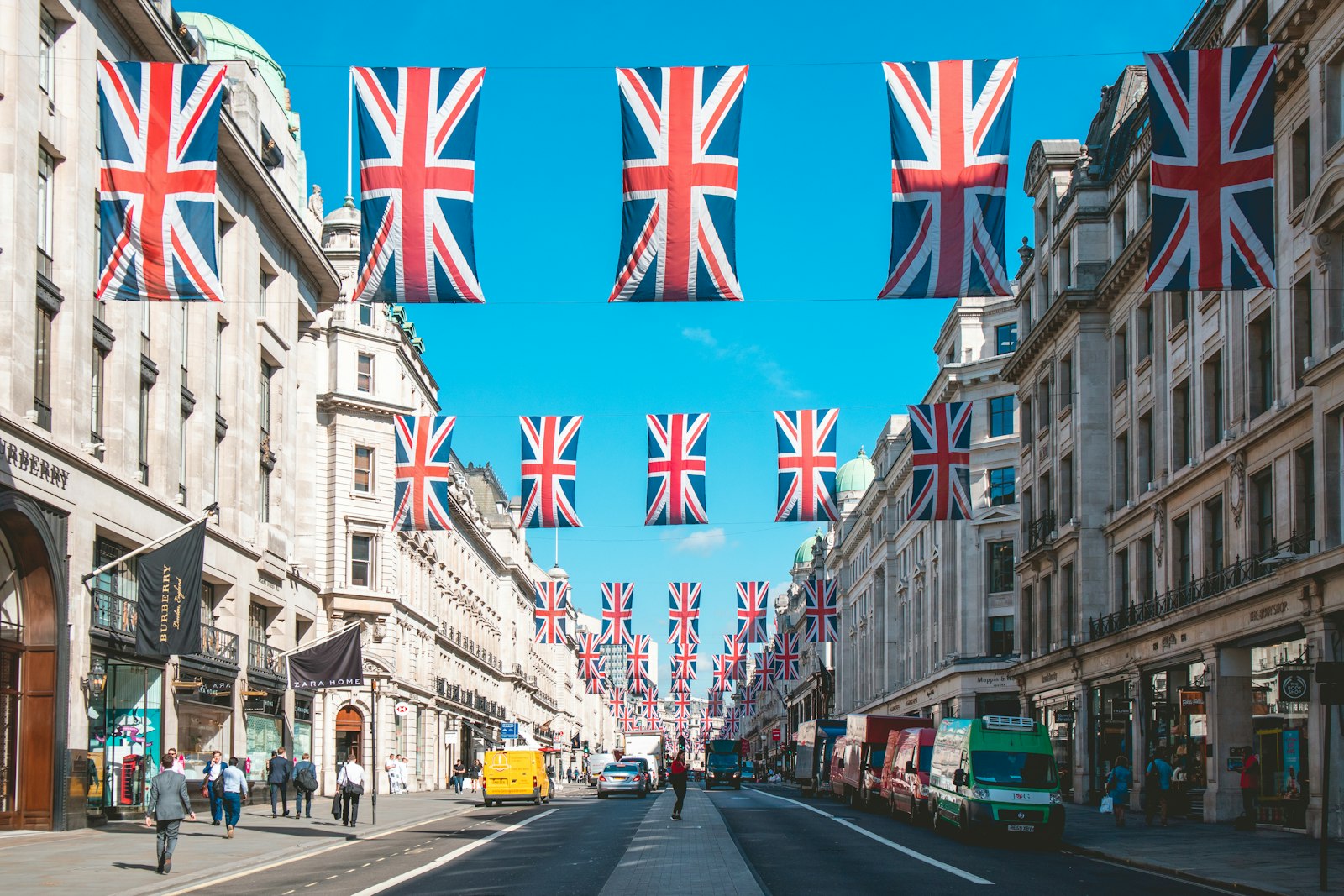
cars parked on side of the road near buildings during daytime

London Slang: From Cockney Rhyming to Multicultural London English

Photo by chan lee on Unsplash

·

·

Introduction

London is linguistically unique. It’s not just one accent or one slang system—it’s a constantly evolving mix of working-class Cockney tradition, modern Estuary English, immigrant influences, and something new called Multicultural London English (MLE) that’s becoming the lingua franca of young London.

If you’re visiting London, understanding the slang isn’t just about communication—it’s about cultural literacy. The city’s language tells the story of its history and its future. This guide covers the classics, the modern evolution, and what you’ll actually hear on London streets.

Classic Cockney Rhyming Slang

How Cockney Rhyming Slang Works

Cockney rhyming slang is a complex system where you replace a word with a rhyming phrase, then usually drop the rhyming word, leaving only the first word.

The formula:

  1. Take a word you want to say
  2. Find a phrase that rhymes with it
  3. Use the phrase instead of the word
  4. Often, drop the rhyming word so only the first word remains

Example: “Stairs” rhymes with “apples and pears,” so Cockneys say “apples and pears” for stairs, or just “apples” if you drop the rhyming word.

Classic Cockney Rhyming Slang Examples

Apples and pears: Stairs

  • “Go up the apples and pears” = Go upstairs
  • Shortened to just “apples”

Dog and bone: Phone

  • “Ring me on the dog and bone” = Call me on the phone
  • Shortened to just “dog”
  • Plates of meat: Feet

  • “My plates are killing me” = My feet are killing me
  • Shortened to just “plates”
  • Trouble and strife: Wife

  • “The trouble’s not happy about that” = My wife’s not happy
  • Shortened to just “trouble”
  • Ruby Murray / Curry: Curry (food)

  • “Fancy a ruby?” = Fancy some Indian food?
  • “Ruby” is a reference to a famous Indian actress
  • Bacon and eggs: Legs

  • “Look at the bacon on that person” = Look at those legs
  • Not commonly used anymore
  • Gregory Peck / Neck: Neck

  • “You’ve got some nerve” becomes “You’ve got some Gregory Peck”
  • Rarely used; mostly historical
  • Butcher’s hook: Look

  • “Have a butcher’s at this” = Take a look at this
  • Shortened to just “butcher’s”; still sometimes used
  • Bristols / Bristols City: Breasts

  • “Nice set of Bristols” = Obvious meaning
  • Named after Bristol City Football Club (rhyming slang)
  • Still used in crude banter
  • Barnet Fair: Hair

  • “You need a new barnet” = You need a new hairstyle
  • Named after Barnet Fair in London
  • Hampstead Heath: Teeth

  • “Nice Hampstead” = Nice teeth
  • Rarely used anymore
  • Rosie Lee / Rosy: Tea

  • “Fancy a rosie?” = Fancy a cup of tea?
  • Still occasionally used
  • Boat race / Boat: Face

  • “Punch in the boat” = Punch in the face
  • Not commonly used anymore
  • Art and Dart: Heart

  • Rarely used in modern contexts
  • Barney Rubble: Trouble

  • “There’s some barney up ahead” = There’s trouble ahead
  • Rarely used
  • Bristol: Breast (singular, from “Bristol City”)

  • Crude slang, still heard in certain contexts
  • Pork pies: Lies

  • “You’re telling pork pies” = You’re lying
  • Shortened to “porkies”; “Stop telling porkies” = Stop lying
  • Syrup / Syrup of figs: Wig

  • “Nice syrup” = Nice hairpiece
  • “Syrup of figs” is the full phrase
  • Rabbit and pork: Talk

  • “Stop your rabbit” = Stop talking
  • “Rabbit” comes from the full phrase
  • Trouble and strife: Wife

  • Already mentioned but very famous
  • Pot of honey: Money

  • “Got any pot?” = Got any money?
  • Rarely used
  • Bag of tricks: Chicks

  • Derogatory, not recommended to use
  • Flowery dell: Smell

  • “Something’s got a flowery” = Something smells
  • Rarely used anymore
  • Elephant’s trunk: Drunk

  • “He was elephant’s” = He was drunk
  • Shortened to “elephant”; still occasionally used
  • Boat race / Boat: Face

  • Already mentioned
  • Modern Usage of Cockney Rhyming Slang

    Current status: Cockney rhyming slang is mostly historical. It was genuinely used by working-class Londoners in the past, but modern Cockneys don’t really use it much anymore, and tourists/outsiders who try to use it sound ridiculous.

    Why it declined: Cockney accent itself has declined among younger Londoners. Estuary English and Multicultural London English are more common now.

    When you’ll encounter it: Mostly in touristy contexts, humor, or older Londoners. You won’t hear it much in actual modern London conversation.

    Pro tip: You don’t need to use this. Understanding it is enough. If you try to use it, Londoners will find it hilarious and slightly cringe.

    Cockney Accent & Culture

    Who Speaks Cockney?

    Traditionally, Cockney was the dialect of working-class East Londoners, particularly those within the sound of Bow Bells (the bells of St. Mary-le-Bow church in Cheapside).

    Modern Cockney:

  • Increasingly rare among younger people
  • Still spoken by some older East Londoners
  • More associated with specific neighborhoods and families
  • Influenced by immigration and migration
  • Characteristics of Cockney Accent

    Dropped H’s:

  • “Hello” becomes “ello”
  • “Hand” becomes “and”
  • “Happy” becomes “appy”
  • Th sounds become F or V:

  • “The” becomes “ve” (ve cat, not de cat)
  • “Think” becomes “fink”
  • “Them” becomes “vem”
  • “That” becomes “vat”
  • Vowel shifts:

  • “Face” sounds more like “fice”
  • “Meat” sounds more like “meet”
  • “Long A” sounds slightly different
  • Rhotic R’s are dropped:

  • “Car” sounds like “cah”
  • “Arm” sounds like “ahm”
  • “R” only pronounced before vowels
  • Glottal stops:

  • T sounds in middle of words become glottal stops (a pause)
  • “Bottle” becomes “bo’le”
  • “Better” becomes “be’er”
  • Example of Cockney speech:
    “I’ll ‘ave a cuppa tea, mate” (I’ll have a cup of tea, mate) is heavily stereotyped Cockney, but modern speakers are less extreme.

    Cockney Culture

    Working-class identity: Cockney is tied to working-class London identity.

    East London origin: Historically from East London (Bethnal Green, Whitechapel, etc.).

    Football culture: Strong connection to East London football clubs.

    Humor and banter: Cockney culture values humor, quick wit, and friendly insults.

    “Proper Londoner” mentality: Pride in London identity and culture.

    Modern London Slang: Estuary English

    What is Estuary English?

    Estuary English is a relatively new accent/dialect that developed in Southeast England (around the Thames Estuary) in the last few decades. It’s a mix of RP (Received Pronunciation) and Cockney, but more relaxed than both.

    Who speaks it: Younger Londoners, middle-class speakers, increasingly common in London media.

    Characteristics:

  • Non-rhotic (no R at end of words)
  • Relaxed vowels
  • Less cockney than pure Cockney, less posh than RP
  • Natural-sounding, not overdone
  • Increasingly prestigious among young people
  • Modern London accent: Most young Londoners speak something between Estuary English and MLE.

    Multicultural London English (MLE)

    What is MLE?

    Multicultural London English is a new dialect developing in London, especially among younger people and in multicultural neighborhoods. It’s influenced by British Caribbean English, Indian English, African English, Pakistani English, and other varieties brought by immigrants. It’s genuinely new—only about 30 years old as a recognized system.

    When it started: 1990s, accelerating in 2000s
    Where: Primarily London, spreading to other UK cities
    Who speaks it: Younger people (teens to 30s), across ethnic backgrounds
    Status: Growing more prestigious among young Londoners; changing what “London accent” means

    MLE Characteristics

    Pronunciation changes:

  • “Th” becomes “d” or “t” (“that” becomes “dat,” “think” becomes “tink”)
  • Rhoticity varies (sometimes R pronounced)
  • Vowel shifts from RP
  • Pitch movements and intonation different
  • Vocabulary/slang is the big one:

    MLE Slang Terms

    Bare: A lot, very, completely

  • “Bare cold” = very cold
  • “Bare people” = a lot of people
  • “That’s bare wasteful” = that’s very wasteful
  • Status: Increasingly mainstream
  • Peng: Attractive, beautiful, excellent

  • “That person is peng” = that person is attractive
  • “That’s peng” = that’s excellent/nice
  • Status: Very current, mainstream among young Londoners
  • Mandem: Man, guys, group of people

  • “The mandem are coming over” = the guys are coming over
  • “What’s happening, mandem?” = greeting to a group
  • Status: Very current, genuinely common
  • Wagwan / Wagwarn: What’s going on? How are you?

  • “Wagwan, bruv?” = What’s up, brother?
  • Greeting between friends
  • Status: Current, especially in inner London
  • Innit: Isn’t it? (tag question)

  • “It’s cold, innit?” = It’s cold, isn’t it?
  • “That’s peng, innit?” = That’s good, innit?
  • Status: Extremely common, almost universal in London
  • Fam: Family, friends, close people

  • “My fam” = my group/family
  • “Alright, fam?” = Hey, how are you?
  • Status: Very current among young people
  • Bruv / Bruvver: Brother, mate, friend

  • “Alright, bruv?” = Hey, friend?
  • “That’s my bruv” = That’s my friend
  • Status: Very common in London
  • Ting / Ting ting: Thing, girl/woman, situation

  • “What’s that ting?” = What’s that thing?
  • “See that ting over there?” = See that girl over there?
  • Status: Current
  • Leng: Tall, attractive, impressive

  • “That girl is leng” = that girl is tall/attractive
  • “That car is leng” = that car is impressive
  • Status: Current among young people
  • Bless: Okay, fine, alright

  • “Bless, that’s acceptable” = Okay, that’s fine
  • Can also mean actual blessing
  • Safe: Goodbye, thanks, okay

  • “Safe, see you later” = See you later
  • “Safe for that” = Thanks for that
  • Status: Very common
  • Wicked: Good, excellent, okay

  • “That’s wicked” = That’s great
  • Status: Mainstream (though less cutting edge than newer MLE)
  • Allow it: Stop it, forget about it, don’t bother

  • “Allow it, man” = Stop, forget it
  • “Allow the noise” = Ignore that
  • Talk talk / Talk: Speaking nonsense, gossip

  • “Stop your talk” = Stop gossiping
  • “Don’t talk” = Don’t say anything (or don’t bother)
  • Raw / Raws: Facts, situation, the real deal

  • “That’s raw” = That’s the real situation
  • Status: Less current now
  • Pussyhole / Pussio: Weak person, wimp

  • Offensive slang, derogatory
  • Batty / Battyman: Homophobic slur, derogatory

  • Do not use
  • Ting: Pretty woman, girlfriend

  • “My ting” = my girlfriend/girl
  • Can be seen as objectifying
  • Moist: Annoying, irritating, unfunny

  • “That’s moist” = that’s annoying/unfunny
  • Status: Less current
  • Leng: Beautiful, attractive, impressive

  • Already mentioned
  • Peak: Bad, unlucky, embarrassing

  • “That’s peak” = That’s bad/embarrassing
  • “Bare peak” = Very unlucky
  • Status: Current
  • Manky: Disgusting, gross

  • British slang that’s become part of MLE vocabulary
  • Tired: Weak, pathetic, overused

  • “That’s tired” = That’s pathetic/overused
  • Roadman: Young man, street guy

  • “The roadmen are out” = The young guys are outside
  • Status: Current, though with some negative connotations
  • Wasteman: Useless person, idiot

  • “You’re a wasteman” = You’re useless
  • Status: Current insult
  • Fyah / Fire: Great, hot, excellent

  • “That beat is fire” = That beat is great
  • Status: Current
  • Blessed: Lucky, fortunate, content

  • “I’m blessed” = I’m fortunate/grateful
  • Status: Current, especially among older MLE speakers
  • Safe: Already mentioned

    Mandem: Already mentioned

    Fam: Already mentioned

    Bruv: Already mentioned

    Blud / Blood: Friend, mate

  • “Alright, blud?” = Hey, friend?
  • From Caribbean English influence
  • Status: Current
  • Section: Group of friends, area you’re from

  • “My section” = my group/area
  • Status: Current
  • Yard: Home, house, area

  • “Come to my yard” = Come to my house
  • From Caribbean English
  • Status: Current
  • MLE Grammar & Speech Patterns

    Double marking:

  • “The man he came” (adds emphasis)
  • Can sound like non-standard grammar to RP speakers
  • Rhoticity variation:

  • R is sometimes pronounced where RP wouldn’t
  • Influenced by Caribbean and other Englishes
  • Intonation:

  • Different pitch patterns from RP or Cockney
  • Often rising intonation at end of statements
  • Tag questions:

  • “Innit?” becomes generic tag (whether or not it makes grammatical sense)
  • “That’s peng, innit?” (grammatically awkward but normal in MLE)
  • Geographic Variation in London

    North London vs. South London vs. East London

    North London:

  • Slightly different accent (less Cockney influence)
  • More suburban feel
  • Mix of working and middle-class
  • South London:

  • Less defined accent/dialect
  • More suburban
  • Growing MLE influence
  • East London:

  • Traditional Cockney stronghold (declining)
  • Increasingly multicultural
  • Strong MLE presence
  • Working-class associations historically
  • West London:

  • More posh/middle-class
  • Less distinctive slang
  • RP influence stronger
  • Central London / West End:

  • Mixed, very diverse
  • Lots of tourists
  • Varied accents
  • How to Sound Like a Londoner (Without Being Cringe)

    Do:

  • Listen to London accents and try to pick up the rhythm
  • Use “innit” naturally (very easy if you spend time there)
  • Use “fam,” “bruv,” “safe,” “peng,” “bare” if they come naturally
  • Adopt the London attitude (confident, quick-witted)
  • Don’t:

  • Try too hard with old Cockney rhyming slang (you’ll sound ridiculous)
  • Force an accent you don’t have
  • Use slang you don’t understand
  • Use derogatory terms
  • Try to be someone you’re not
  • Real talk: As an American visitor, you don’t need to sound like a Londoner. Your accent is fine. But understanding the slang helps you fit into conversations and appreciate London culture.

    Modern vs. Classic: The Shift

    What’s dying out:

  • Pure Cockney accent (increasingly rare)
  • Cockney rhyming slang (mostly forgotten)
  • Classic working-class London identity
  • What’s rising:

  • MLE (increasingly prestigious)
  • Estuary English (comfortable middle ground)
  • Multicultural London identity
  • London as a global city
  • What it means: London’s language is becoming more diverse, more global, and less tied to traditional class boundaries.

    Where to Hear Different London Slang

    East London: More traditional Cockney, some MLE
    North London: Estuary English, some Cockney influence
    South London: Less distinctive
    West London: More RP influence
    Central London: Everything mixed
    Universities: MLE and modern slang
    Secondary schools: Most advanced MLE usage

    Final Thoughts

    London slang tells the story of London itself—from working-class Cockney roots to multicultural modern London. The language is constantly evolving, becoming more diverse, and less tied to traditional markers of class and region.

    As an American visitor, you’ll hear all of this. You might encounter old-school Cockney rhyming slang in a pub with older locals, but you’re much more likely to hear young Londoners using MLE slang like “innit,” “peng,” “bare,” “fam,” and “bruv.”

    The key is listening, understanding, and appreciating how language reflects culture and history. You don’t need to use it perfectly. But understanding it shows respect for London culture and helps you genuinely connect with Londoners.

    And if you hear something you don’t understand? Just ask. Londoners are generally happy to explain their slang, especially to foreigners who are genuinely curious.

    Innit.

    Free Newsletter!

    Join the Europetopia Newsletter for free tips on travel, history, and culture in Europe!

    We promise we’ll never spam! Take a look at our Privacy Policy for more info.


    Jonathan Avatar

    Written by

    Related Articles

    Comments

    Leave a Reply

    Your email address will not be published. Required fields are marked *


