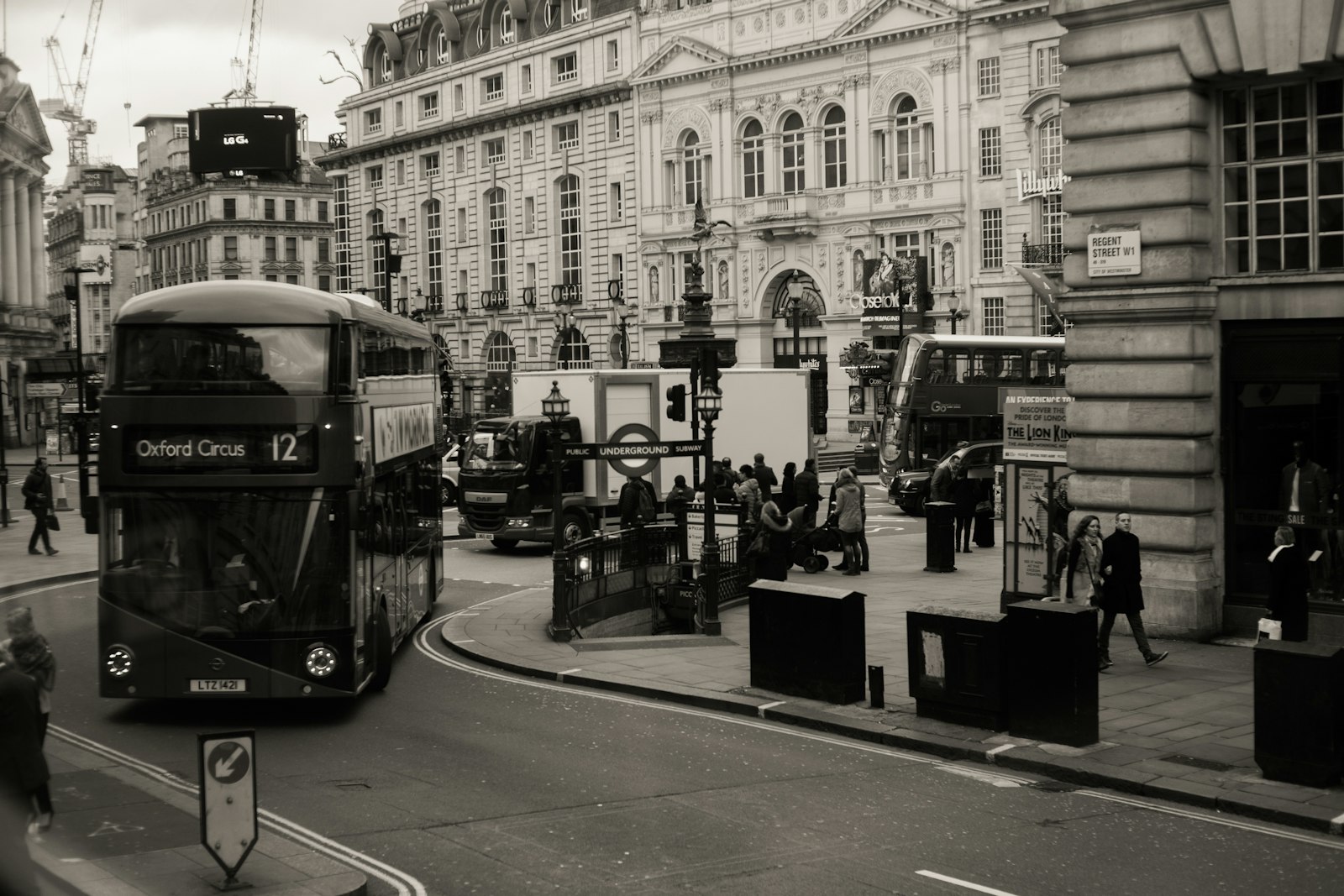
London is a palimpsest—layer upon layer of history written over previous centuries. Medieval streets run beneath modern buildings. Roman walls still define city boundaries. A Roman fort has become a Gothic cathedral. Walking through London, you’re not just moving through space but traveling through time. For American visitors, London’s historical layers tell the story of how a small Roman settlement became the capital of a global empire and evolved into the complex, multicultural city of today.
The best way to experience London’s history is to walk. London’s geography preserves its past, and following the route outlined here takes you through roughly 2,000 years of continuous human history.
Roman Londinium: The Beginning
London’s recorded history begins in 43 AD when the Roman legions under Emperor Claudius invaded Britain. The Romans established a fort on the north bank of the Thames and built a settlement they called Londinium. Within decades, it became the most important town in Roman Britain, a trading center where goods from across the empire were exchanged.
The Roman Wall still defines the northern boundary of the ancient city. You can see substantial portions of it in various locations. The best-preserved section runs along the eastern wall of the City of London, near the Tower of London. The wall is 2,000 years old and was built around 200 AD as the city grew and required defense against barbarian raids.
Walking along the Roman Wall, you’re literally walking on top of Roman stone—the path runs along the exterior of the wall, and you can place your hand on rocks that Roman soldiers touched. It’s disorienting and thrilling to realize that the street you’re walking on is the same path that existed in 200 AD.
The Museum of London, located at Barbican just inside the Roman Wall, contains extraordinary artifacts from Roman Londinium. The mosaics, pottery, coins, and tools show a city of considerable sophistication. Wealthy Romans lived in houses with heated floors and bathrooms. Merchants traded wine, olive oil, pottery, and luxury goods. Soldiers, slaves, merchants, and craftspeople from across the empire lived in Londinium, making it an ancient multicultural city.
In 410 AD, the Romans withdrew from Britain to defend the empire from Germanic invaders. Londinium was abandoned by its Roman inhabitants, and the city effectively disappeared for centuries.
Medieval London: Rising from the Ruins
Following the Roman withdrawal, Londinium became a ruin, too damaged to be easily repopulated. For centuries, Britain was invaded by Anglo-Saxons, Danes, and other Germanic peoples. London was refounded in the 9th century, but it was a poor shadow of Roman Londinium.
The establishment of Westminster Abbey and a royal palace at Westminster (about two miles west of the old Roman city) in the late 10th century created a new political and religious center. The Abbey, founded by Edward the Confessor around 1050, became the site of royal coronations and burials. Every English monarch has been crowned in Westminster Abbey since 1066, and most have been buried there. The Abbey is the physical center of English royal identity, which is why walking through the Abbey is walking through centuries of royal and national history.
The old Roman settlement reemerged as a merchant city controlled by the Crown but increasingly independent. London Bridge, built of stone between 1176 and 1209, replaced the earlier wooden bridge and became the city’s defining landmark. This wasn’t just a bridge; it was a commercial street with shops built along its entire length. Pedestrians, merchants, and goods crossed London Bridge daily, making it the busiest commercial space in medieval London. The bridge stood for 600 years until it was replaced in 1831.
You can’t walk on the original medieval bridge, but you can see modern London Bridge and imagine the crowded medieval street that existed here. A short walk from London Bridge brings you to St. Paul’s Cathedral, originally built in 604 AD on a pre-Christian religious site (the spot was probably sacred to pre-Roman Britons as well). The current St. Paul’s, designed by Christopher Wren, was built after the Great Fire of 1666, but the location itself is sacred space that’s been religious for at least 1,400 years.
Medieval London was crowded, unsanitary, and plagued with disease, but it was vibrant and profitable. Merchants from across Europe lived here. The Hanseatic League, the powerful North Sea merchant confederation, had a base in London called the Steelyard. Money flowed through the city, and fortunes were made and lost. Guilds—associations of craftsmen like goldsmiths, weavers, and butchers—controlled the quality and price of goods and accumulated significant wealth and power.
The medieval city was periodically ravaged by plague. The Black Death of 1348-1350 killed roughly 25-40% of London’s population. Imagine the horror of plague spreading through these crowded streets, with no understanding of disease transmission and no effective medical treatment. The plague returned multiple times throughout the medieval period, keeping the population in constant anxiety about death.
The Great Fire and Christopher Wren’s London
In September 1666, a fire broke out in a baker’s house on Pudding Lane. In a city of wooden buildings with thatched roofs, fire was an existential threat. The Great Fire spread rapidly through the dense medieval streets, burning for three days. About 80% of the city was destroyed.
The fire was catastrophic, but paradoxically, it created an opportunity. The old medieval city—disease-ridden, crowded, with haphazard streets—was gone. A blank slate existed for rebuilding.
The king employed Christopher Wren, one of history’s greatest architects, to rebuild London. Wren couldn’t implement his grandest vision of wide streets and rational planning—property owners wanted to rebuild on the same sites—but he designed numerous new churches in a classical English style. He created St. Paul’s Cathedral, which is still the iconic London church and probably the finest baroque structure in Britain.
Walking through Wren’s London, you’re walking through architectural classicism imposed on medieval street patterns. Wren’s churches—St. Bride’s, St. Mary-le-Bow, St. Stephen Walbrook—are small jewels of baroque beauty. These weren’t vanity buildings but served actual parishes and provided places of worship for the City’s residents.
The Great Fire also led to London’s emergence as a financial center. Insurance was invented to handle fire loss—the insurance concept originated in London after 1666. Insurance offices became banking offices, and the City of London became the world’s financial capital. Walking into the City of London, the historic medieval settlement inside the Roman walls, you’re walking through the heart of global finance. Modern glass towers mix with medieval churches and Georgian townhouses, creating a visual representation of financial modernity built on top of centuries of banking tradition.
Georgian Elegance: The 18th Century
The 18th century saw London expand westward. The wealthy abandoned crowded medieval streets for newly developed areas like Bloomsbury, Soho, and Mayfair. Georgian townhouses—elegant, rational, four-story brick buildings—replaced medieval sprawl. These weren’t just buildings; they represented a new idea of urban living where middle-class professionals could afford a detached or semi-detached townhouse with servants’ quarters, receiving rooms, and dining rooms.
Walking through areas like Bloomsbury, you’re walking through Georgian London. The squares—Bloomsbury Square, Russell Square, Woburn Square—represent Georgian urban planning at its best. Wealthy and educated residents lived here: David Hume, Adam Smith, and other Enlightenment figures. It was intellectual London.
The British Museum, founded in 1753, was established in Bloomsbury and collected artifacts from across the expanding British Empire. Walking through the British Museum today, you see not just artifacts but also the material representation of British imperial power—objects looted from Egypt, Greece, China, India, and Africa, all gathered into one place under British authority.
This was also the era when London became the center of a global empire. The East India Company, chartered in 1600 and increasingly powerful, made London the nexus of global trade. Sugar from the Caribbean, spices from the East Indies, cotton from India, tea from China—all flowed through London. The wealth this generated transformed London from a wealthy city into a global center.
Victorian Expansion and Industrial London
The 19th century saw London explode in size. Steam railways brought workers and goods into the city. Victorian entrepreneurs built massive warehouses, factories, and tenements to house the exploding population. The elegant Georgian townhouses of Bloomsbury now had grimy industrial areas nearby.
The Thames, which had been London’s reason for existing, became increasingly polluted. The raw sewage from a million inhabitants flowed into the river, creating a putrid stench and a health hazard. In the summer of 1858, the “Great Stink” was so bad that Parliament couldn’t meet—the smell from the river was unbearable even inside the building.
This crisis led to one of the greatest civil engineering projects of the era: Joseph Bazalgette’s sewage system. Bazalgette designed a network of underground pipes that carried sewage to treatment plants downriver, away from central London. The Victoria Embankment, built along the north bank of the Thames to house these pipes, is a monument to Victorian engineering.
Victorian London also saw the development of the Underground Railway, the world’s first rapid transit system. The first line opened in 1863, and it revolutionized urban transportation. The Tube, as it became known, allowed workers to live outside central London and commute to work, enabling massive suburban expansion.
Walking through Victorian London—areas like Bloomsbury, Kings Cross, the South Bank—you see the mixture of Georgian elegance, Victorian industry, and modern reconstruction. The buildings tell the story of a city transforming from compact medieval city to sprawling modern metropolis.
The National Gallery, founded in 1824, moved to Trafalgar Square and became one of the world’s greatest art museums, a tangible representation of Victorian cultural confidence. Walking through rooms of Italian Renaissance masterpieces, French Impressionism, and English landscape painting, you’re seeing the artistic treasures the British Empire had either created or acquired.
The Blitz and Postwar London
The 20th century brought new forms of destruction. During World War II, German bombers targeted London in the Blitz (September 1940 to May 1941). Over 20,000 Londoners died, and vast sections of the city were destroyed. St. Paul’s Cathedral was nearly destroyed—the dome survives in iconic photographs showing it standing alone amid flames and rubble.
Walking through London, you still see bomb damage scars: buildings with different architectural styles next to each other because one was destroyed and rebuilt, gaps in streetscapes where entire blocks were obliterated, the underground stations that were used as bomb shelters.
The postwar period brought reconstruction. Some areas were rebuilt beautifully, others with utilitarian efficiency. The South Bank, where the Royal Festival Hall was built in 1951, represents optimistic postwar reconstruction—a new cultural center built on the ruins of industrial London.
But postwar London also struggled. The British Empire was dissolving. Colonies were achieving independence. Britain’s global power was declining. The 1950s and 1960s saw immigration from former colonies—the Windrush generation from the Caribbean, then Pakistani, Indian, and other communities. London became increasingly multicultural, sometimes creating social tension, but ultimately enriching the city.
Swinging Sixties and Modern London
The 1960s saw a cultural explosion centered on London. The Beatles, the Rolling Stones, and the Who emerged from London’s music scene. Fashion designers like Mary Quant and Twiggy made Carnaby Street famous. A generation of young people rejected their parents’ conservative values and created a new youth culture. For a moment, London was the center of global popular culture—a status it hadn’t held since the Victorian era.
This cultural dominance didn’t persist, but London’s transformation into a modern multicultural city did. Bangladeshi restaurants proliferated in East London. West Indian music and reggae influenced British music. Chinese communities established neighborhoods around Leicester Square and Gerrard Street. Jewish, Italian, Polish, and other immigrant communities created ethnic neighborhoods and cultural institutions.
Walking through modern London—the South Bank with its cultural institutions, the East End with its mix of old workshops and young creative people, the West End with its theaters and entertainment, the financial City—you see a city that has continuously reinvented itself. The layers of history are visible: Roman walls, medieval churches, Georgian townhouses, Victorian warehouses, postwar utility buildings, modern glass towers.
A Walking Route Through London’s History
Here’s a suggested route that takes you through major historical layers:
Start at Tower of London to understand medieval fortress London and see the Crown Jewels. Walk along the Roman Wall to grasp Roman Londinium’s scale. Head west to St. Paul’s Cathedral to see Wren’s baroque masterpiece and the location’s sacred continuity. Cross London Bridge (the modern bridge) and head to Westminster Abbey and Houses of Parliament to understand political London and see where kings are crowned and laws are made.
Walk through Bloomsbury to see Georgian London and visit the British Museum. Take the Northern Line to King’s Cross, the great Victorian railway station, a monument to Victorian engineering. Return to central London and walk along the South Bank to see postwar cultural London.
Finally, wander through Soho and Chinatown to experience multicultural London, and catch an evening show in the West End theaters, a tradition dating back centuries.
London’s Continuing Evolution
What makes London remarkable is that it’s not a dead historical artifact—it’s a living city that continues to evolve. Every decade brings new neighborhoods, new architectural styles, new populations. The Shard, a glass tower completed in 2012, offers views of the entire city stretching back 2,000 years. Looking from the Shard across London, you see the layering of history: ancient walls, medieval churches, Georgian squares, Victorian terraces, postwar estates, and modern development all existing simultaneously.
For American visitors, London offers something America’s cities can’t: visible continuity stretching back to ancient Rome. The Roman wall you touch with your hand is 2,000 years old. The church where monarchs pray is over 1,400 years old. The abbey where kings are crowned has stood for nearly 1,000 years. No American city has that depth of continuous history.
Walking through London is walking through the archaeological layers of Western civilization, with the added richness that the city is still alive, still changing, still accumulating new history on top of the old.




Leave a Reply