In the depths of Swedish winter, when daylight is scarce and darkness feels absolute, Swedes have created a celebration that seems almost defiant in its light and joy. Two major celebrations define the Swedish winter: Santa Lucia on December 13th, a festival of candlelight and singing that feels almost ancient in its ritual, and then Christmas itself, celebrated with elaborate food, specific traditions, and an unexpected national event that unites the country in a way nothing else quite does.
To understand Swedish Christmas culture is to understand how profoundly the Swedish relationship to darkness and light shapes everything. It’s to understand why a country might have a day dedicated to a Catholic saint who has nothing to do with actual Swedish history. It’s to understand why virtually the entire country pauses to watch a cartoon about Donald Duck on Christmas Eve. Swedish Christmas isn’t about commercialism or religious orthodoxy (Sweden is increasingly secular); it’s about light, community, tradition, and the deep human need to create beauty and meaning during the darkest time of year.
Santa Lucia: December 13th, The Festival of Light
Santa Lucia (or Sankta Lucia, using the more Swedish form) is celebrated on December 13th and represents one of the most visually distinctive Swedish traditions. The celebration centers on a white-robed procession where the Lucia figure—traditionally a young woman or girl—wears a white gown and a crown of candles, leading a procession of other participants also dressed in white and carrying candles.
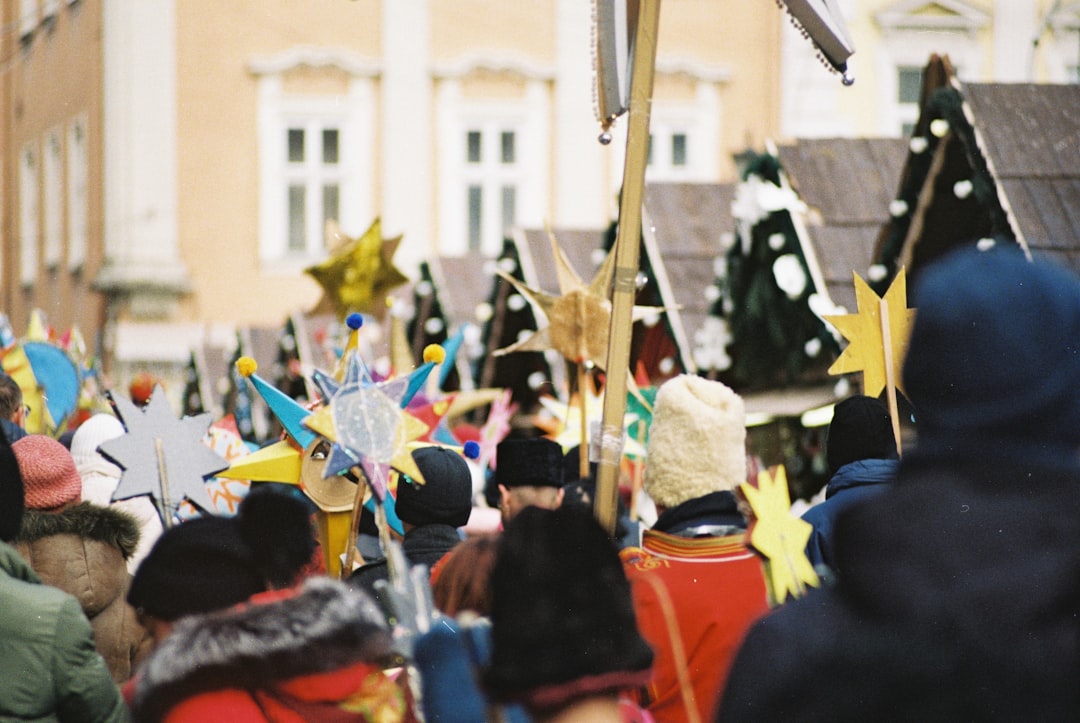
The figure is mysterious and somewhat surreal: a maiden in white with a flaming crown of fire, walking through the winter darkness with an otherworldly presence. The procession traditionally includes the “Lucia” and her attendants, sometimes including “Star Boys” (sternsänger) wearing pointed hats, and various other traditional characters. They move through towns and cities in the early morning darkness, singing traditional songs.
The most famous Lucia song is “Sankta Lucia,” which has a haunting melody and lyrics that translate roughly to “Santa Lucia, your light shines so bright over frozen hills and winter nights.” The song is typically sung in Swedish and Italian (reflecting the saint’s origin), and it has an almost liturgical quality despite Sweden being a secular country.
The actual Saint Lucia was a 4th-century Christian martyr from Sicily. Her connection to Swedish culture is indirect—her feast day aligned with the winter solstice in old Swedish calendars, and somewhere along the way, the festival developed into the modern tradition. Why a Mediterranean saint became central to Swedish winter tradition is somewhat mysterious, but the effect is undeniable: she’s become a symbol of light during darkness, a figure who bridges the sacred and the secular, the ancient and the modern.
Lussekatter: Saffron Buns with Raisins
If Lucia is the figurehead of the December 13th celebration, lussekatter (literally “Lucia cats,” though they’re actually sweet buns) are the food. These are saffron-infused buns, typically shaped in a figure-eight or S-shape (representing a cat’s coiled position, apparently), studded with raisins, and best eaten warm with coffee.
The saffron gives lussekatter their distinctive golden color and subtle, complex flavor. They’re expensive to make (saffron is expensive) and are typically made fresh for Lucia celebrations. Bakeries start producing them early in December, and they’re a seasonal specialty that Swedes look forward to.
The Swedish Christmas season is marked by the appearance of lussekatter in bakeries. If you’re visiting Sweden in early December, you can track the approach of Lucia by watching when lussekatter appear. They’re also served at home during breakfast or fika on Lucia morning, often with warm milk or glögg (Swedish mulled wine).
Eating warm lussekatter with coffee on a cold December morning, while listening to Lucia songs, is a perfectly condensed Swedish winter experience: indulgence, tradition, and comfort all combined.
School and Workplace Lucia Celebrations
In schools and workplaces across Sweden, Lucia celebrations happen on December 13th. Children might be organized into a procession, with one student selected (or volunteering) to be the Lucia figure. Workplaces host Lucia events where employees gather to sing, eat lussekatter, and participate in the tradition.
These workplace celebrations are usually a brief respite from work—everyone gathers, sings, eats buns, and then returns to their desks. It’s a moment of beauty and tradition in the midst of ordinary life. For many Swedes, the workplace Lucia celebration is a highlight of their December.
Schools take the tradition seriously. Children rehearse the songs, practice the procession, and understand this as a significant cultural moment. Lucia celebrations at school can be quite elaborate, with multiple participants in costume, coordinated singing, and a sense of occasion.
The Julbord Feast: Christmas Food Culture
After Lucia comes Christmas proper, celebrated on December 24th (Christmas Eve) in Sweden, unlike many English-speaking countries where the main celebration is December 25th. Christmas Eve is the central celebration, with families gathering for an enormous meal: the julbord, which we discussed in the smörgåsbord article.
The julbord is the peak of Swedish food celebration. It includes numerous dishes that appear at no other time of year: special Christmas sausages, gravlax, meatballs, ham, various breads, and on and on. Families might spend hours at the table, eating multiple courses, taking breaks between courses, enjoying the abundance and togetherness.
For many Swedish families, the Christmas meal is eaten at home, though some families go to restaurants for Christmas smörgåsbords. The meal represents abundance, tradition, and family—a moment when people gather around food and each other to celebrate connection and continuity.
The Donald Duck Christmas Eve Tradition: Really
Here’s where Swedish Christmas culture becomes delightfully strange to outsiders: at 3 PM on Christmas Eve, virtually the entire country pauses to watch a cartoon about Donald Duck. The program, “Kalle Ankka och hans vänner firar jul” (Donald Duck and his friends celebrate Christmas), airs on Swedish television, and tradition holds that families gather to watch it before their Christmas meal.
This isn’t recent; it’s been happening since 1960. It’s not ironic or kitsch; it’s genuine tradition. Swedish television schedules around it. Families plan their Christmas Eve activities with this program in mind. The assumption is that this is something you do: you watch Donald Duck on Christmas Eve.
Why? The origins are somewhat lost, but the tradition persists because tradition is respected in Sweden and because it’s become a cultural marker of Christmas itself. The announcement of the Donald Duck program on television is essentially the signal that Christmas has begun. Once you’ve watched Donald, Christmas is officially underway.
For visitors, this is both charming and absurd—a wealthy, culturally sophisticated country with an elaborate Christmas food tradition pausing to watch a cartoon about an American duck. But that’s exactly the point: Swedish culture doesn’t take itself too seriously. Tradition isn’t about being highbrow or sophisticated; it’s about connecting with family and maintaining continuity with the past.
The Julbock: The Christmas Goat
Traditionally, Sweden had a Christmas goat figure, the julbock, which was either a real goat or a person in a goat costume who would go house to house, similar to trick-or-treaters in other countries. The julbock would do pranks and cause mischief, and people would give gifts to convince it to leave.
In modern Sweden, the julbock tradition is mostly symbolic rather than practiced. But the image of the Christmas goat remains part of Swedish Christmas iconography. Straw goats are decorative Christmas objects, and references to the julbock appear in Christmas songs and traditions.
The most famous modern julbock is the Gävle Goat, a giant straw goat constructed in the city of Gävle each year. Standing about 13 meters (43 feet) tall, the Gävle Goat has become an icon precisely because it keeps getting burned down. Since 1966, when the first Gävle Goat was constructed, it has been vandalized, burned, or otherwise destroyed most years.
The burning of the Gävle Goat is now so reliable that it’s almost part of the tradition itself. News outlets report on whether the goat survived the year, people make predictions about whether it will be destroyed, and the whole thing has become both a genuine community tradition and an elaborate internet meme. It’s simultaneously earnest Christmas tradition and absurdist performance art.
For visitors and international observers, the Gävle Goat is delightfully Swedish: a straightforward, earnest tradition that has become increasingly surreal through repetition and internet documentation.
Julmust: The Christmas Soda That Outsells Coca-Cola
Another Swedish Christmas tradition that seems almost impossible to outsiders is julmust, a spiced soft drink that’s released seasonally around Christmas. Julmust is a dark soda with spices (cardamom, caramel, and others), and it’s drunk with Christmas meals and during the Christmas season.
What makes julmust notable is that it outsells regular sodas during the Christmas season. Major brands release julmust versions, and Swedes stock up on it as part of their Christmas preparations. It’s seasonal—you can’t buy julmust in June—which makes the appearance of it in stores yet another signal that Christmas is approaching.
The taste is distinctive: spiced, slightly unusual to those unfamiliar with it, and absolutely associated with Swedish Christmas. Many Swedes will drink julmust with their Christmas meal in preference to other beverages.
The existence of a seasonal soda that outsells standard sodas is quintessentially Swedish: the idea that Christmas is special enough to warrant a unique product, that people will plan for it, that it’s part of the traditional meal.
The Broader Significance: Light in Darkness
What ties these traditions together—Lucia on December 13th, the julbord, the Donald Duck cartoon, the julmust, the Gävle Goat—is that they’re all about creating light, joy, and tradition during the darkest, coldest time of year. Sweden’s winter darkness is profound. In Stockholm, the sun rises at 8:47 AM on December 21st and sets at 2:55 PM. In northern Sweden, it barely rises at all.
In response to this darkness, Swedes have created celebrations filled with light (candles at Lucia), warmth (the elaborate Christmas meal), tradition (the December 13th celebrations, the December 24th festivities), and togetherness (family gatherings). These aren’t frivolous celebrations; they’re psychological necessities, ways of asserting meaning and joy against the natural darkness.
The traditions also reveal something about Swedish values: respect for continuity and tradition, the belief that these practices are worth maintaining even (or especially) when they seem odd or inconvenient, the importance of family and community, and the understanding that culture is made through shared practices.
Celebrating Swedish Christmas as a Visitor
If you’re visiting Sweden during the Christmas season, you have the opportunity to participate in these traditions:
- December 13th: Look for Lucia processions in towns and cities. Attend if possible, or watch videos of the tradition. Try lussekatter from a bakery.
Swedish Christmas feels distinctly Swedish: thoughtful, traditional, connected to the natural cycle of seasons, filled with specific foods and practices, and rooted in the understanding that humans need light and warmth (literal and metaphorical) during dark times.
Whether you’re religious or secular, the Swedish Christmas celebrations are fundamentally about affirming connection, tradition, and the resilience of creating beauty and joy in the midst of natural darkness. It’s a profoundly human response to winter, and it’s worth experiencing if you have the chance.




Leave a Reply