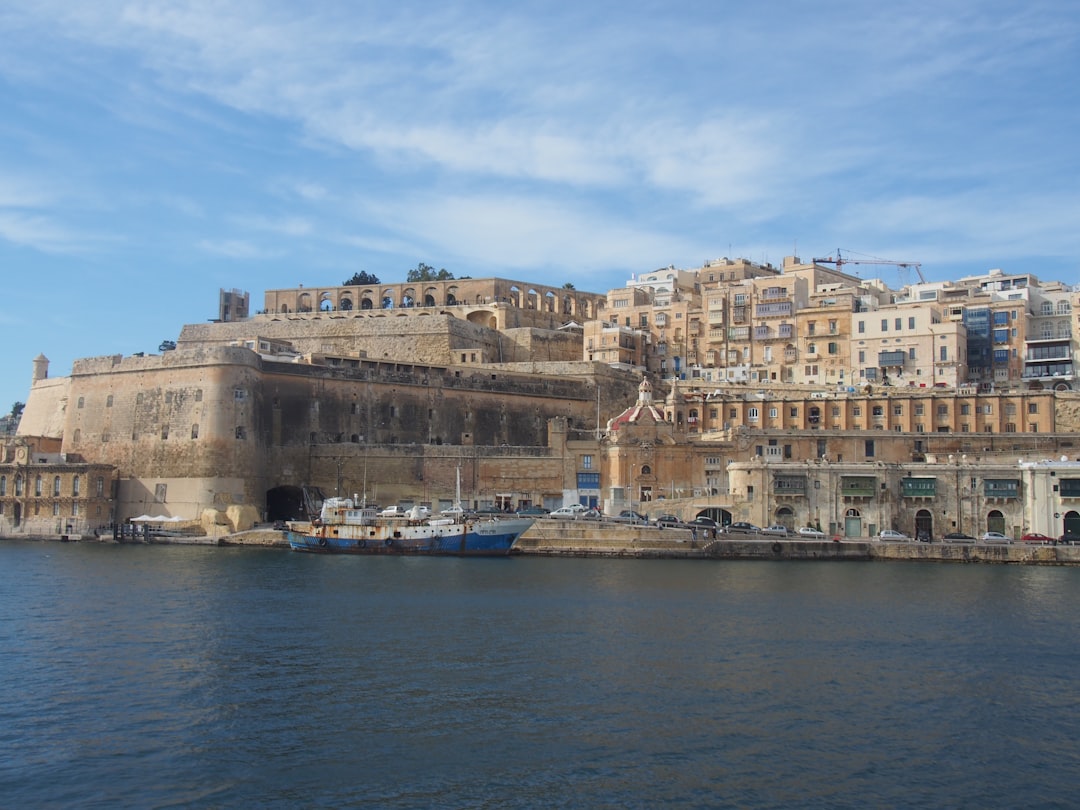
Malta is a contradiction wrapped in honey-coloured limestone. It is a European Union member state where English is an official language. It is a Mediterranean archipelago that receives more sunshine than almost anywhere else in Europe—over three hundred days per year. It has seven thousand years of continuous human habitation, temples older than the Egyptian pyramids, and a military history so dramatic it reads like fiction. And despite all of this, it remains one of the more affordable corners of the Mediterranean. For travellers who want sun, history, and excellent food without the price tag of the French Riviera or the Amalfi Coast, Malta is difficult to beat.
Valletta: Europe’s Smallest Capital, Largest Personality
Valletta, the capital, was built in the sixteenth century by the Knights of St. John after the Great Siege of 1565, in which a vastly outnumbered garrison held off the Ottoman Empire for nearly four months. The Knights, flush with donations from grateful European monarchs, constructed a fortified city of such lavish Baroque grandeur that it was called “a city built by gentlemen for gentlemen.” The result is a compact peninsula of golden stone buildings, ornate churches (there are 25 in a city that measures roughly one kilometre by six hundred metres), and fortified harbour walls that drop sheer to the water.
Start at St. John’s Co-Cathedral, which looks plain from the outside but conceals an interior of such jaw-dropping opulence—every surface encrusted with gilded carvings, marble tombstones, and painted vaults—that it stops you in your tracks. The cathedral also houses two paintings by Caravaggio, including “The Beheading of Saint John the Baptist,” the largest canvas the artist ever painted and the only work he signed. The Upper Barrakka Gardens, at the tip of the peninsula, provide panoramic views across the Grand Harbour to the Three Cities, with a noon cannon salute fired daily from the bastions below.
Mdina and the Ancient Past
Mdina, in the centre of the island, is called the Silent City, and the name fits. This former capital, perched on a hilltop behind Arab-Norman fortifications, has a permanent population of under three hundred people. Its narrow streets, barely wide enough for a single car, are flanked by palaces and convents whose walls glow amber in the late afternoon light. There are no shops, no hawkers, no tourist tat. Just stone, silence, and the occasional cat. Visit in the late afternoon when the day-trippers have left and the city belongs to itself again.
Malta’s prehistoric credentials are extraordinary. The Megalithic Temples of Ħaġar Qim and Mnajdra, on the southern coast, date to approximately 3600 BC—a full thousand years before the Great Pyramid of Giza. These are not primitive rock piles. They are sophisticated structures with corbelled ceilings, altar niches, and precisely aligned doorways that frame the rising sun on the equinoxes. The Hypogeum of Ħal Saflieni, an underground necropolis carved from solid rock over a period of centuries, is one of the most remarkable archaeological sites in the world. Entry is limited to eighty visitors per day and tickets often sell out weeks in advance—book early.
Three Islands, Infinite Coastline
The Maltese archipelago consists of three inhabited islands. Malta, the largest, holds the bulk of the population and the major historic sites. Gozo, reached by a twenty-five-minute ferry from Ċirkewwa, is greener, quieter, and more rural, with excellent hiking, the Citadel fortress in Victoria, and some of the best diving in the Mediterranean. Tiny Comino, between the two, is largely uninhabited and famous for the Blue Lagoon, a shallow bay of impossibly turquoise water that fills with boats in summer but remains stunning regardless.
Swimming in Malta means rocky coves, natural pools, and ladders bolted into the limestone rather than sandy beaches (though sandy beaches do exist—Golden Bay and Għajn Tuffieħa on Malta, Ramla Bay on Gozo). The water clarity is extraordinary, and snorkelling off almost any rocky stretch reveals sea life that thrives in the absence of sand and tides.
Living and Visiting on a Budget
Malta’s cost of living sits below the Western European average, and this translates to good value for visitors. Restaurant meals, particularly outside Valletta’s most tourist-heavy streets, are affordable—expect eight to twelve euros for a pasta dish, twelve to eighteen for fresh fish. The pastizzi, Malta’s national snack—flaky pastry filled with ricotta or mushy peas—costs less than a euro from any bakery or street kiosk. Public buses cover the entire island of Malta from a central hub in Valletta, and a seven-day travel card costs twenty-one euros for unlimited rides.
For longer stays, Malta’s English-speaking environment, warm climate, and European connectivity have attracted a growing expat community, particularly from the UK, Scandinavia, and increasingly from the digital nomad world. Rental costs, while rising, remain below those of comparable Mediterranean destinations. A one-bedroom apartment in Sliema or St. Julian’s—the main expat hubs on the northeast coast—runs between seven hundred and a thousand euros per month. Whether you come for a week or a year, the sun, the history, and the pastizzi will keep pulling you back.



Leave a Reply