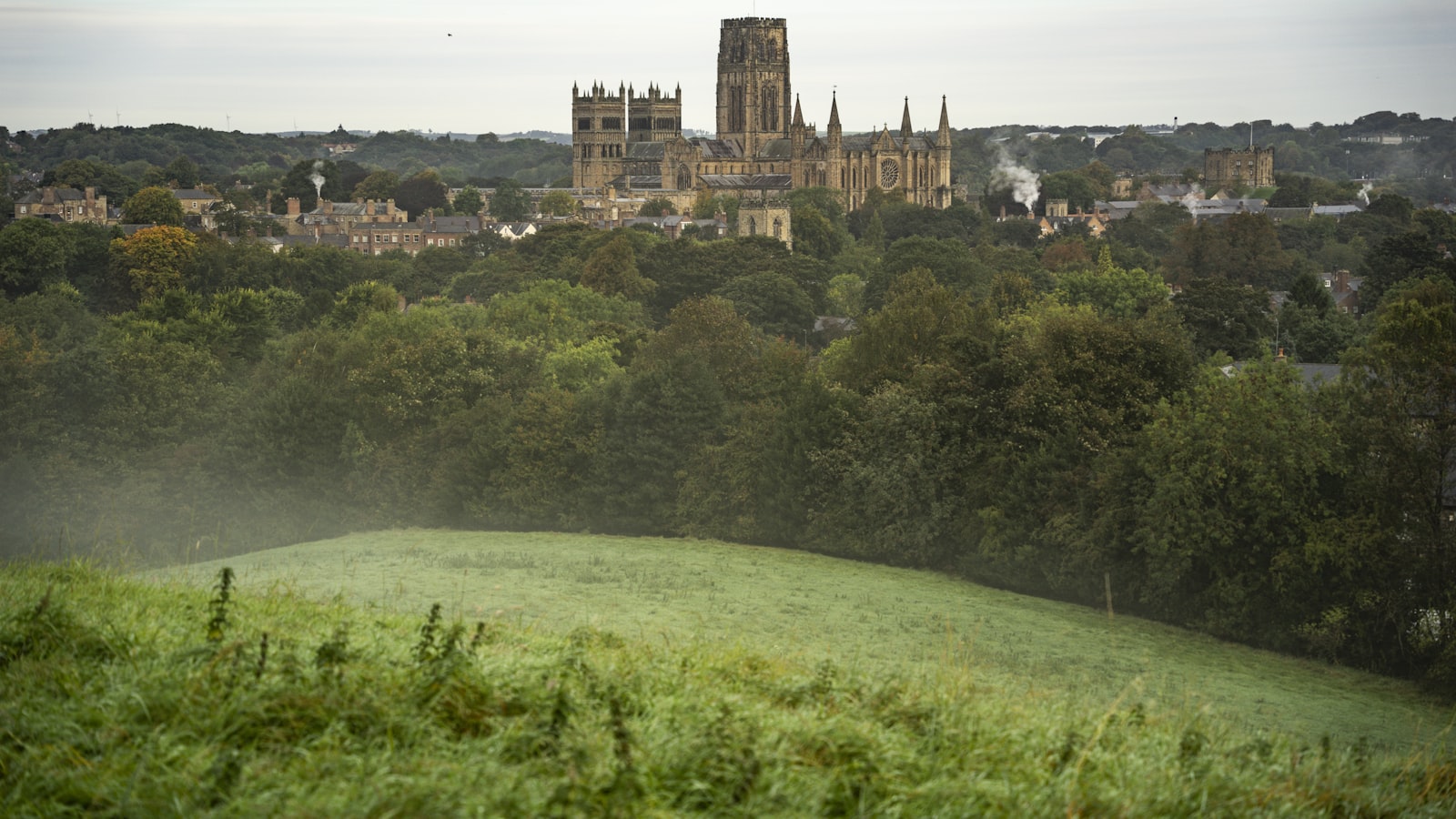
Medieval England—the four centuries from the Norman Conquest to the Tudor revolution—was an age of remarkable contradictions. It was an era of great religious faith that produced some of the world’s most magnificent cathedrals. It was an age of feudal hierarchy and rigid social structure, yet also an age when common people could rise to power and influence. It was a time of warfare and violence, but also of law-making and the gradual development of parliamentary democracy. And it was an age when a single plague could kill half the population, fundamentally reshaping society.
For American travelers, medieval England holds particular resonance because it’s the direct ancestor of English-speaking culture and political tradition. The Magna Carta, signed at Runnymede, is sometimes called the foundation of democracy and personal liberty—ideas that would eventually influence American revolutionary thought. The great cathedrals represent an organizational achievement and artistic aspiration that remains awe-inspiring. And the social chaos of the Black Death and the Peasants’ Revolt remind us that history is not a simple progression toward enlightenment, but a complex human story of suffering, resilience, and change.
King John and Magna Carta: The Limits of Royal Power
In 1199, John became King of England. Unlike his famous brother Richard the Lionheart, John was neither a crusader hero nor a strong military commander. He was, by most accounts, arrogant, petulant, and incompetent. Over 17 years, he managed to lose almost all of England’s territories in France, alienate the nobility, pick fights with the Pope, and impose heavy taxes to finance his failed wars and his increasingly desperate attempts to recover lost lands.
By 1215, the English barons were in open rebellion. They took London, the capital, and forced John to negotiate. The result was Magna Carta—the Great Charter—a document that established, for the first time in medieval Europe, that even the king was subject to law. Not God’s law, which everyone acknowledged—but the law of the realm, as determined by agreement between the king and his nobles.
Magna Carta didn’t establish democracy or personal freedom as Americans understand those terms. It was essentially a contract between a king and his nobles, establishing property rights and legal procedures. Many of its provisions were intensely practical and feudal: how disputes should be settled, what fees nobles would pay, how justice would be administered. Later generations would read into Magna Carta ideas about universal human rights and democratic representation that were never intended by the original drafters.
But something important happened at Runnymede, the meadow beside the Thames where John signed the Charter. For the first time, a king acknowledged that his power had limits. The principle that everyone, including the king, was subject to law would eventually develop into parliamentary government, constitutional monarchy, and the rule of law as an organizing principle of society.
Magna Carta was reissued several times in the 13th century, modified and refined. Eventually it became so fundamental to English political identity that by the time of the American Revolution, colonists would cite it as justification for their rebellion against King George III. They were making an argument that went like this: the king has violated the principles established in Magna Carta; therefore, his rule is illegitimate.
Today, you can visit Runnymede, a pleasant meadow west of London where a memorial marks the spot where Magna Carta was signed. It’s a bit underwhelming as a historical site—the actual signing happened in a tent that no longer exists, and no building marks the spot. But standing there, knowing that something momentous happened in that meadow, connects you to a principle that would shape democracy itself.
The British Library in London holds the original Magna Carta documents. Seeing them—medieval parchment with the royal seal, fragile after 800 years—is moving. These are not grand, visionary documents; they’re practical legal texts written by medieval lawyers. But they represent a fundamental assertion that power should be limited and law should be supreme.
The Great Cathedrals: Faith Made Visible
If Magna Carta represents medieval England’s political achievements, the great cathedrals represent its spiritual and architectural genius. The 13th and 14th centuries saw an explosion of cathedral construction across England. These were ambitious, expensive projects that consumed enormous resources and took decades to complete. Yet they were undertaken by communities that believed passionately that the effort was justified.
Canterbury Cathedral is the most famous, not because it’s the largest or the most architecturally innovative, but because Geoffrey Chaucer made it famous in his “Canterbury Tales”—the idea of pilgrims traveling to Canterbury to visit the shrine of St. Thomas Becket. Even before Chaucer, Canterbury was one of medieval Europe’s most important pilgrimage sites. Thomas Becket, the archbishop who was murdered in the cathedral (or at least, murdered allegedly by knights acting in the king’s name), was believed to have miraculous powers. Pilgrims came seeking healing or spiritual comfort.
Visiting Canterbury Cathedral today, you can see the site of Becket’s tomb, though his actual remains were destroyed during the English Reformation. The cathedral itself is a masterpiece of English Gothic architecture, with towering pillars, intricate carvings, and soaring spaces designed to inspire awe and draw the eye upward toward heaven.
But there are even more spectacular cathedrals elsewhere in England. York Minster is perhaps the most magnificent—a vast cathedral that took centuries to build and stands as one of the greatest achievements of medieval architecture. Its great east window, one of the largest stained-glass windows in the world, contains enough colored glass to astound even travelers who think they’re jaded about medieval monuments. Standing inside York Minster, you understand viscerally why medieval people sacrificed so much to build these structures. The sheer scale, the engineering achievement, the light filtered through colored glass—it’s designed to elevate the spirit.
Salisbury Cathedral, with its soaring spire that dominates the Wiltshire landscape, is another extraordinary example. Its symmetry and proportions are almost mathematically perfect. Walking through it, you’re struck by how the entire structure seems designed to guide your eye upward, to lift your thoughts from the earthly to the spiritual.
These cathedrals also tell stories through their stained glass, carvings, and sculptures. Medieval people were mostly illiterate, so the cathedral served as a vast encyclopedia in stone and glass. Sculptures showed biblical stories, moral lessons, depictions of heaven and hell. Stained-glass windows illustrated scripture and the lives of saints. The entire structure was designed as a teaching tool and a spiritual experience.
The Medieval Town and Pilgrimage
The pilgrimage to Canterbury wasn’t just a religious act; it was also a social occasion, a journey, an adventure. Chaucer’s “Canterbury Tales” captures this beautifully: the pilgrims from all social classes—knights, merchants, monks, nuns, peasants—traveling together, telling stories, sharing the journey.
Medieval towns grew around pilgrimage sites and trade routes. Many English market towns that look charming and historic to modern visitors are actually medieval in their basic layout. The long main street, the market square, the parish church at one end—this pattern was repeated across England. Some towns flourished, others declined. But the medieval framework of many English towns persists.
Visiting medieval market towns like Ludlow, Rye, or Sandwich gives you a sense of medieval commercial life. These towns have preserved medieval streets, buildings, and walls. They’re not reconstructions; they’re living towns that have evolved over a thousand years but still retain their medieval skeletons.
The Black Death: Plague and Transformation
The Black Death arrived in England in 1348, carried on merchant ships from the Mediterranean. It spread with terrifying speed. In some parishes, more than half the population died within months. Entire villages were wiped out. Monasteries were decimated. The social fabric itself seemed to be tearing apart.
The plague was caused by a bacterium spread by fleas on rats—something medieval people didn’t understand. They believed it was divine punishment, or caused by bad air, or astronomical influences. They tried remedies that ranged from the sensible (quarantine) to the bizarre (bloodletting, sitting between fires). Nothing worked. The plague killed indiscriminately: the rich died alongside the poor, bishops died beside their congregants, the young and old, the strong and weak.
The consequences were staggering. With a massive labor shortage after the plague, surviving peasants found themselves in a new situation: their labor was valuable. Many peasants who had been bound to the land for generations began to demand wages, freedom to move, and better conditions. Landowners, desperate for workers, sometimes granted these concessions. A social transformation that might have taken centuries happened in years.
In 1381, this tension exploded in the Peasants’ Revolt. Peasants and artisans from across southeastern England marched on London, led by charismatic figures like Wat Tyler. For a moment, it seemed the entire social order might be overturned. But the King’s forces rallied, the rebellion was crushed, and Wat Tyler was executed. The revolt failed, but it demonstrated that the medieval social order could be challenged, that common people could articulate grievances and demand change.
The aftermath of the plague also saw significant changes in the church and in society. With fewer workers, remaining peasants were less bound to the soil. With less deference to traditional authorities, questions about church wealth and power became more pointed. These tensions would eventually explode in the Reformation, but the seeds were sown in the chaos of the Black Death.
Medieval Life and Culture
Beyond the great events and monuments, medieval England offers the traveler a chance to understand how people actually lived. Medieval manor houses, preserved or reconstructed, show how noble families lived. Monastic ruins reveal the extensive and sophisticated networks of monasteries that dominated medieval intellectual and spiritual life. Archaeological museums across England display the ordinary objects of medieval life: pottery, tools, jewelry, household items.
The Wars of the Roses, which dominated the late 15th century, saw different noble families battle for the English throne. These wars were less about political ideologies than about dynastic succession and power. They dragged on for decades, exhausting the nobles and the people alike. They would end only with the Tudor victory at Bosworth Field in 1485.
Planning Your Medieval England Journey
To understand medieval England, you need to experience both the grand monuments and the everyday places. Start with the great cathedrals: Canterbury, York, Salisbury, Durham, and others. Visit Magna Carta at the British Library. Walk the medieval streets of towns like Ludlow and Rye. Visit monastic ruins and medieval manor houses. Explore the medieval castles and fortifications that still dot the landscape.
The beauty of medieval England for the modern traveler is that so much survives. While medieval cities like London and Manchester have been extensively rebuilt, the medieval framework persists. Walk through a medieval parish church in a small English village, and you’re walking through a structure that may have been built 800 years ago by people who worked stone with hand tools. Step into a medieval town and you’re walking streets laid out in the Middle Ages. The physical continuity with the medieval past is strikingly present.
Medieval England wasn’t a simple or innocent age. It was violent, hierarchical, and filled with suffering. But it was also an age of extraordinary ambition, faith, and cultural achievement. The Gothic cathedrals, the legal innovations, the pilgrimage routes, the towns and villages—these represent human beings striving to transcend their limitations, to create beauty and meaning, to build something that would last. In that striving, medieval England created a legacy that would shape the world for centuries to come.




Leave a Reply