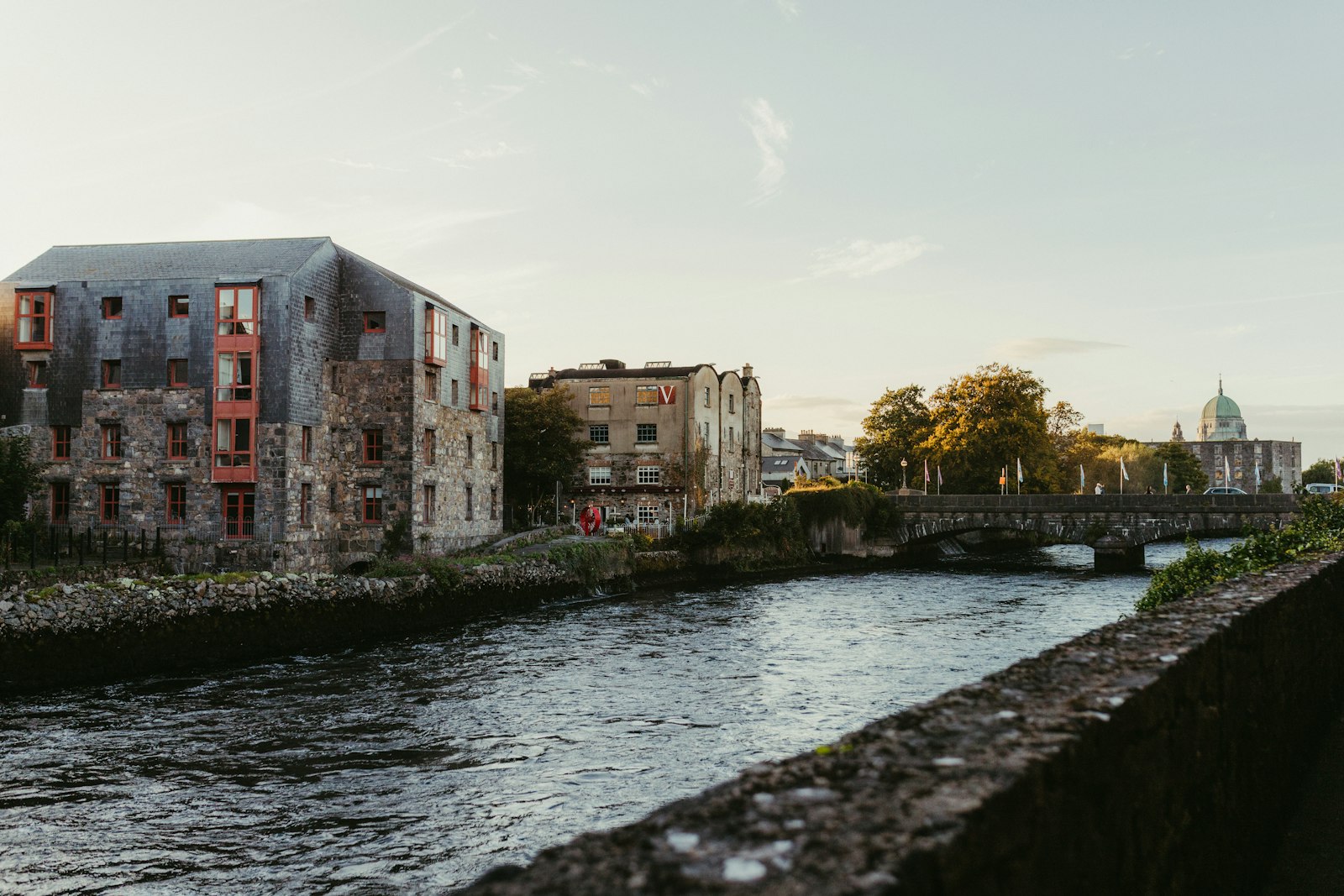
If you’re visiting Ireland today, you’re visiting a country in the midst of profound transformation. Walk through Dublin, Cork, or Galway and you’ll see gleaming office buildings alongside Georgian townhouses. You’ll see construction cranes reaching toward the sky. You’ll encounter people of every nationality and background. The Ireland of your parents’ or grandparents’ generation—poor, rural, religiously conservative, struggling with emigration—is largely gone. In its place is a modern, prosperous, increasingly secular European country that’s also one of the world’s leading tech hubs.
This transformation has happened in just the last 20 years. To understand modern Ireland, you need to understand the economic crash of 2008, the austerity that followed, the tech boom that saved the country’s economy, and the social transformations that have made modern Ireland almost unrecognizable compared to the Ireland of even the 1990s.
The 2008 Crash and Austerity
The Celtic Tiger boom of the 1990s and 2000s was built on unsustainable foundations: massive property speculation, overleveraged banks, and an economy too dependent on a single sector—real estate. When American banks collapsed in 2008 and global credit markets froze, Ireland’s vulnerability became apparent overnight.
Irish banks had lent money recklessly. Developers had built empty housing that would never be occupied. Property prices collapsed. Irish taxpayers found themselves responsible for bailing out massive banks that had made catastrophically bad decisions. By 2010, Ireland was bankrupt and had to accept a bailout from the European Union, International Monetary Fund, and European Central Bank.
What followed was the worst decade of Irish economic policy since independence. The government implemented severe austerity measures: wages for public sector workers were cut. Social welfare was slashed. Healthcare spending was reduced. Unemployment soared to over 15 percent. Young people couldn’t find jobs and emigrated again—a painful return to the pattern of previous centuries.
The psychological impact was severe. Ireland had tasted prosperity and suddenly it was gone. The property that families had bought at the peak was now worth far less than the mortgages on it. Many people lost their homes. The government spending that had built roads and schools was cut. The optimism and confidence of the Celtic Tiger years evaporated, replaced by despair and anger.
The Recovery: Tech to the Rescue
But here’s where Ireland’s story becomes remarkable again. By 2015, growth had returned. And this time, the growth wasn’t built on property speculation and construction. It was built on the tech sector that had arrived during the Celtic Tiger boom.
Google, Facebook, Apple, Microsoft, and dozens of other tech giants had established major operations in Dublin during the boom years. They were still there. They had real products, real global markets, real growth. As the global tech sector boomed in the 2010s, these companies expanded their Irish operations. Tech workers from across the world came to Dublin to work. The city became a major tech hub.
The transformation of Dublin’s “Silicon Docks” area symbolizes this recovery. Old, decaying dock warehouses were converted into sleek office buildings. Facebook built a massive new campus. Google expanded. Amazon, Twitter, Stripe, and countless other tech companies set up Irish offices or expanded existing ones.
The advantage Ireland offered was clear: low corporate taxes (12.5 percent, far below most countries), an educated English-speaking workforce, membership in the European Union, and an existing infrastructure of tech companies and support services. For multinationals wanting a European base with favorable tax conditions and easy access to American and European markets, Dublin became ideal.
The tech boom transformed Dublin economically. It also transformed the city culturally and physically. Dublin developed restaurants, bars, and cultural amenities befitting a prosperous tech capital. Neighborhoods were gentrified. The old Dublin of shabby Georgian streets transformed into a gleaming modern city.
The Housing Crisis: A Modern Contradiction
Here’s the paradox of modern Ireland: the country is wealthy and has a severe housing shortage. Property prices in Dublin have soared again, nearly approaching the Celtic Tiger peak in some areas. Young Dubliners cannot afford to buy homes in the city where they were born. Homelessness has increased despite the country’s prosperity. The housing shortage has become one of the defining political issues.
This contradiction reveals something important about modern Ireland. The tech boom creates high-paying jobs for educated workers and generates enormous tax revenue. But that wealth is not equally distributed. Tech workers earn substantial salaries and can afford expensive housing. But the broader population struggles with affordability. Nurses, teachers, and ordinary workers cannot compete with tech salaries for limited housing.
The government has attempted various solutions—building public housing, changing zoning laws, implementing rent controls—with limited success. Housing remains a serious problem in modern Ireland, particularly in Dublin, despite the country’s overall prosperity.
Social Transformation: From Catholic Ireland to Secular Ireland
Beyond economics, modern Ireland has undergone remarkable social transformation. In 1990, Ireland was still a deeply Catholic country. The Church had enormous social authority. Divorce was illegal. Abortion was illegal and criminalized. Contraception was restricted. Homosexuality was illegal. Women faced significant discrimination in employment and social life.
Today, Ireland is almost unrecognizable by comparison.
In 1995, Ireland held a referendum on divorce. It passed by a narrow margin (50.3 percent in favor), after a bitter campaign. Divorce became legal, shocking older generations but becoming normal relatively quickly.
In 2015, Ireland held a referendum on marriage equality. It passed by a landslide: 62 percent in favor. Ireland became the first country in the world to legalize same-sex marriage by popular referendum. The vote revealed how much Irish society had changed. Dublin celebrated with massive parades and genuine joy. Young Irish people, a substantial portion of the electorate, voted decisively in favor.
In 2018, Ireland held a referendum on abortion. The old law had criminalized abortion completely, treating it as a serious crime. The new law legalized abortion in cases where a woman’s health was at risk or in cases of fatal fetal abnormality. It was more restrictive than many countries, but it represented a dramatic shift from the previous absolute ban. The referendum passed decisively, and abortion access increased.
Church attendance has plummeted. In the 1980s, the vast majority of Irish Catholics attended church regularly. Today, regular mass attendance is below 30 percent and continuing to decline. Secularization has accelerated, particularly among young people. The Church’s authority on moral and social issues has greatly diminished.
Immigration: A Country Transformed
Modern Ireland is also far more diverse than it was historically. During the Celtic Tiger boom, immigration increased, bringing Polish workers, Africans, Asians, and people from across the globe to Ireland. This continued even during the recession, though at lower rates.
Today, Ireland’s cities are genuinely multicultural. Dublin has neighborhoods with significant populations from Nigeria, Poland, France, and dozens of other countries. This is remarkable for a country that was almost entirely homogeneous and Catholic just 30 years ago.
The integration of immigrants into Irish society has been generally positive, though not without tensions. Far-right political movements have emerged in recent years, exploiting concerns about immigration and cultural change. But mainstream Irish society has largely welcomed immigrants and benefited from their cultural and economic contributions.
Ireland in the EU: European and Independent
Modern Ireland is thoroughly integrated into the European Union. The EU’s single market has benefited Irish trade. EU regulations have raised environmental and labor standards. EU funding has developed Irish infrastructure.
Yet Ireland maintains its distinct identity and independence. Ireland is not part of the Eurozone—it kept the Irish pound, making its own monetary policy. After Brexit, Ireland became the only EU member state sharing a land border with the United Kingdom, creating complex questions about the Northern Ireland border and trade arrangements.
Irish identity in the EU is strong. Irish people generally support EU membership. But there’s also awareness that Ireland’s relationship with Europe is different than countries like France or Germany. Ireland, as a historical victim of English colonialism, has a particular appreciation for Irish independence and sovereignty.
Modern Ireland’s Place in the World
Today, Ireland is punching above its weight globally. Irish tech companies like Stripe and Intercom have become unicorns (privately-held companies valued over $1 billion). Irish writers, filmmakers, and artists continue to produce world-class work. Ireland’s small population (roughly 5 million) is vastly overrepresented in global tech, entertainment, and culture.
Ireland’s government has positioned the country as a climate leader, committing to net-zero emissions by 2050 and implementing ambitious environmental policies. Irish businesses are increasingly conscious of sustainability and corporate responsibility.
The Contradictions and Challenges
Modern Ireland contains multiple contradictions. It’s wealthy but has a housing crisis. It’s been secularized but still celebrates religious holidays and maintains Church buildings as cultural monuments. It’s globalized but fiercely proud of its identity. It’s created enormous prosperity but has not solved inequality and poverty.
Immigration has changed Irish demographics, but integration remains a work in progress. New communities and Irish-born minorities navigate questions of belonging and identity in a country that’s still learning to be multicultural.
The tech boom has concentrated wealth in Dublin, leaving rural Ireland behind. Property prices are inflated by international investment, making local housing unaffordable. The gap between rich and poor, diminished during the austerity years when everyone struggled, is widening again.
What Modern Ireland Looks Like for Visitors
When you visit modern Ireland, you’re visiting a country in flux. Dublin is a thriving European capital with world-class restaurants, museums, and cultural attractions. You’ll find excellent coffee, boutique hotels, and international-quality entertainment.
But you’ll also find reminders of the difficulties. Homelessness is visible. Housing affordability is a common topic of conversation. Political debates center on how to manage growth, regulate tech companies, and ensure that prosperity is shared broadly rather than concentrated among the wealthy.
Modern Ireland is not the Ireland of emigration and poverty. But it’s also not the utopian vision some expected the Celtic Tiger boom to create. It’s a real country with real problems, dealing with the complexities of rapid modernization, cultural transformation, and economic inequality.
The Historical Perspective
Looking back, Irish history is a series of profound transformations. From a rural, poor, religiously conservative, emigration-driven society in the 1980s, Ireland transformed into a wealthy, secular, immigration-receiving, tech-powered modern country in just 40 years. That transformation is remarkable and ongoing.
Ireland’s journey from near-bankruptcy in 2010 to economic recovery by 2015 and subsequent prosperity is also remarkable. The country faced a genuinely existential crisis and recovered through a combination of resilience, strategic positioning, and good fortune (timing of the global tech boom).
Modern Ireland is still writing its story. How it manages inequality, housing, immigration, and environmental challenges will shape its character in coming decades. But what’s clear is that Ireland is a dynamic, fast-changing country actively grappling with the challenges of the modern world.
When you visit Ireland today, you’re visiting a country at a fascinating moment in its history—wealthy and prosperous, but still negotiating what it means to be Irish in a globalized, secular, multicultural world.




Leave a Reply