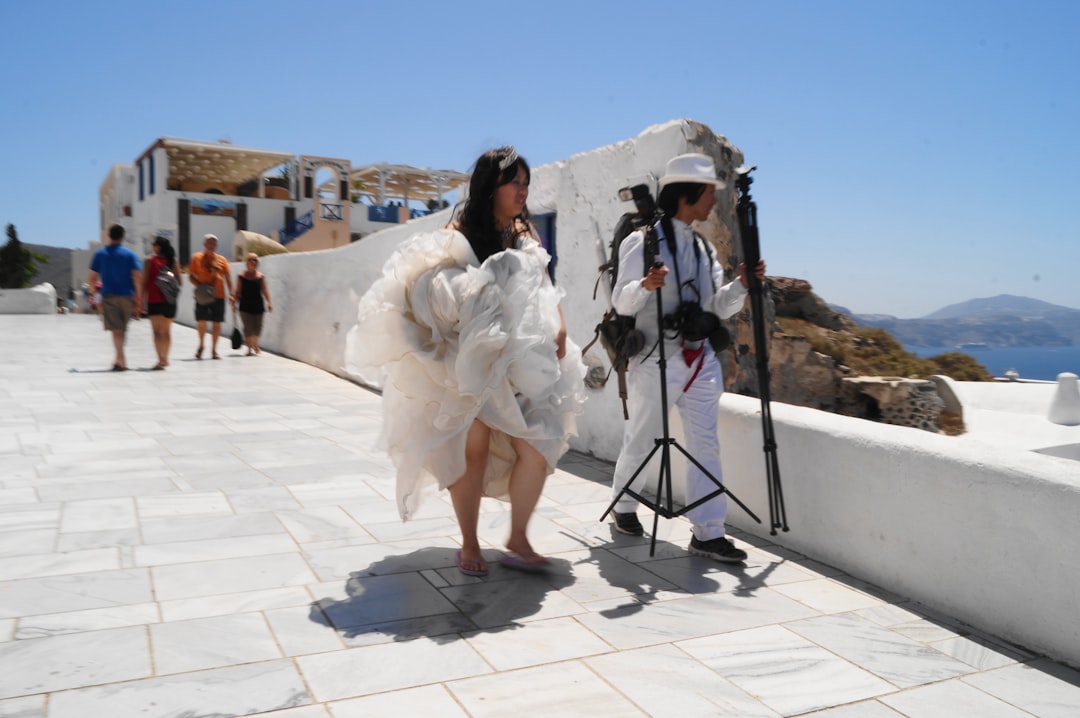
Joel Zwick’s 2002 film My Big Fat Greek Wedding, starring Nia Vardalos and John Corbett, became a surprise cultural phenomenon—a modestly budgeted romantic comedy that captured something authentic about Greek-American family life while achieving massive commercial and critical success. Grossing over 368 million dollars worldwide and becoming one of the highest-grossing romantic comedies ever made, the film transcended its genre to become a genuine cultural touchstone.
Interestingly, despite being about Greek culture and the Greek-American experience, My Big Fat Greek Wedding was filmed primarily in Chicago and Toronto—not in Greece. Yet the film’s profound engagement with Greek traditions, family dynamics, and cultural identity makes it essential viewing for anyone interested in understanding how Greek diaspora communities maintain cultural connection across generations. And importantly, it celebrates Greek culture with genuine affection rather than the exoticizing that sometimes characterizes outsider perspectives.
The Film’s Origins and Authenticity
Nia Vardalos, the film’s star and screenwriter, brought genuine Greek-American experience to the role of Toula Portokalos. Vardalos herself is Greek-Canadian (her parents are Greek immigrants), and the film drew substantially from her own family experiences and observations. This insider perspective gives the film credibility—it’s not a Hollywood invention of “Greek-ness” but rather an authentic portrayal of how immigrant families navigate maintaining cultural identity in North American contexts.
The film’s central narrative—a young Greek-American woman from a large, boisterous Greek family falls in love with a WASP (white, Anglo-Saxon Protestant) man and must navigate family opposition and cultural differences—provides the structure. But the film’s genius lies in its details: the family gathering scenes, the particular dynamic between Toula and her mother (played brilliantly by Lainie Kazan), the way Greek traditions are both cherished and occasionally ridiculous from an insider perspective.
Greek Family Dynamics and Traditions
What makes My Big Fat Greek Wedding so successful is its nuanced portrayal of Greek family culture. The film captures several truths about traditional Greek families:
Extended family centrality: Greek culture emphasizes family as the primary social unit. Multiple generations live near each other, decisions are made collectively, and family members maintain involvement in each other’s lives that might feel intrusive in more individualistic cultures. The film shows this beautifully—Toula’s mother insists on being involved in every aspect of her daughter’s romantic life, not from malice but from genuine conviction that family should be involved.
Food as love language: The constant presence of food—cooking, sharing, abundance—represents how Greek families express care. The Portokalos house overflows with food; feeding people is the central expression of hospitality and family affection. The film captures how Greek mothers and grandmothers show love through cooking and insistence that people eat more.
Religion and tradition: The Orthodox Christian church remains central to Greek cultural identity, particularly for immigrant communities. The family’s insistence on church involvement, religious rituals, and Orthodox traditions reflects how diaspora communities use religion as a way to maintain connection to homeland culture.
Loud, expressive communication: The film captures Greek communication styles—direct, emotional, not filtered by the restraint common in Anglo-Saxon cultures. Greeks say what they think, express emotions openly, and engage in lively, sometimes heated discussion as a normal part of family interaction.
Appearance and social status: The traditional focus on appearance, family reputation, and social position reflects values that immigrant communities brought from Greece. Toula’s mother’s concern about her daughter’s weight, appearance, and marriageability reflects traditional perspectives on women’s social role.
Which Traditions Are Authentic?
The film takes creative liberties while remaining essentially truthful to Greek-American experience. Some elements are exaggerated for comedic effect:
“The Greek people are very specific”: The opening narration claims that “Greeks are very specific,” and the film uses this as organizing principle—the Portokalos family represents Greek-ness in exaggerated but recognizable form. Real Greek families would recognize elements (the food, the mother’s involvement, the religious observance) even if the Portokaloses are somewhat amplified versions.
The “everything is Greek” running joke: The family’s tendency to claim Greek origin for everything (the Trojan Horse, democracy, the Olympic Games) exaggerates but reflects real Greek pride in cultural heritage. Greeks genuinely are proud of their civilization’s contributions, though most wouldn’t claim absolutely everything originated in Greece.
Wedding traditions: The Orthodox wedding ceremony depicted in the film is accurately portrayed. The crowning ceremony, the fasting before communion, and the general religious solemnity reflect authentic Orthodox practice. The large family gathering and multi-day celebration aspects reflect genuine Greek wedding culture, particularly for immigrant communities.
Food: The emphasis on Mediterranean cuisine, family meals, and food preparation is authentically reflective of Greek culture, though exaggerated for comedic effect. Greek families do gather around food, do cook extensively, and do insist on hospitality through feeding.
Mother-in-law dynamics: The fraught but ultimately loving relationship between Toula and her mother reflects real family dynamics in Greek culture. The film captures the tension between old-world perspectives and new-world reality that immigrant families navigate.
The Diaspora Experience
My Big Fat Greek Wedding is ultimately about diaspora—what happens when cultural identity persists across geographic displacement. The Portokalos family, living in Chicago, maintains Greek language, food, traditions, and religious practice while becoming American. The film shows how this dual identity creates both richness and tension.
Toula’s generation (she’s in her late 30s at the film’s start) is American-educated and oriented toward mainstream culture but also embedded in family and Greek traditions. The film captures this duality—she’s caught between worlds, belonging fully to neither while deeply connected to both. This is the authentic diaspora experience: not choosing one culture over another but maintaining complex simultaneous identity.
Greek Culture in Athens and the Islands
While the film was shot in Chicago and Toronto, anyone interested in experiencing the authentic Greek culture that the film celebrates should visit Greece itself. Visiting Greece provides direct engagement with the culture, food, and traditions that diaspora communities like the Portokaloses maintain across generations.
In Athens: Explore traditional neighborhoods like Psyrri or Plaka. Eat at traditional tavernas (not tourist-oriented restaurants). Visit the Orthodox Cathedral and observe religious practice. Attend evening volta (promenade walks) where families gather in public squares. Visit markets where produce vendors and locals negotiate over prices and quality.
Island experience: Visit smaller islands or village Greece rather than resort-focused tourism. Stay in family-run hotels. Eat at family tavernas. Participate in local festivals if timing allows. Attend Orthodox church services (many are open to respectful visitors).
Food tours: Take cooking classes that emphasize Mediterranean diet and family food traditions. Visit markets and learn how Greeks shop and cook. The emphasis on fresh, seasonal ingredients, olive oil, and Mediterranean vegetables reflects values the film celebrates.
Language: Learn basic Greek phrases. Even minimal attempts at Greek language are deeply appreciated and open doors to more authentic interaction. The language itself—emotional, direct, emphatic—carries cultural values.
The Sequel and Continuing Legacy
A sequel, My Big Fat Greek Wedding 2, was released in 2016, reuniting the original cast. The sequel maintains the original’s spirit while updating to contemporary contexts (online dating, social media, generational differences). The sequel filmed in locations including Greece, providing some actual Greek landscape in the franchise for the first time.
Beyond the films, My Big Fat Greek Wedding influenced broader American culture’s understanding and acceptance of ethnic-specific comedy and family narratives. It demonstrated audience appetite for stories from particular cultural perspectives rather than universal American narratives.
Understanding Greek Pride and Identity
A crucial element of the film is understanding Greek pride. The “everything is Greek” running joke reflects genuine Greek pride in cultural heritage—and this isn’t baseless. The Greek civilization’s contributions to Western thought, democracy, philosophy, architecture, and culture are genuinely foundational. Greeks take pride in this heritage, sometimes expressing it in ways that can seem exaggerated to outsiders.
Understanding this pride requires empathy—imagining what it means to descend from a civilization whose cultural achievements fundamentally shaped the world, and carrying that knowledge across generations even when your family is economically disadvantaged or socially marginalized in a new country. The Portokalos family’s insistence on Greek identity despite economic struggle reflects real human need to maintain connection to heritage and dignity.
Experiencing Authentic Greek Culture
To experience the culture that My Big Fat Greek Wedding celebrates:
- Visit Greece—specifically villages and smaller towns rather than major tourist destinations
- Eat as locals eat—market food, family tavernas, seasonal Mediterranean cuisine
- Attend Orthodox services—even if unfamiliar with the religion, the experience provides cultural insight
- Participate in celebrations—Easter, name days, local festivals if timing allows
- Learn basic Greek—even minimal language demonstrates respect and opens cultural doors
- Stay with Greek families or in family-run accommodations—this provides direct cultural engagement
- Understand the history—Greek history of occupation, independence, and cultural survival provides context for contemporary pride and identity
The Film’s Universal and Particular Appeal
My Big Fat Greek Wedding succeeds commercially because its themes are universal—family pressure, romantic love, identity negotiation—while its specifics are culturally particular. The film shows how universal human experiences play out within specific cultural contexts. This combination appeals broadly while celebrating particular identity.
For Greek diaspora audiences, the film was validating—seeing their experiences, language, food, and family dynamics reflected on screen with genuine affection. For non-Greek audiences, the film provided entry into a world that felt both foreign and familiar—family dynamics everyone recognizes, expressed through cultural particularity.
Beyond the Film
Visiting Greece after engaging with My Big Fat Greek Wedding creates rich connections. You’re not visiting an abstract “Greece” but a living culture that diaspora communities have maintained, adapted, and transmitted across generations. The food Toula’s mother cooks in Chicago, the language the family speaks, the traditions they maintain—these persist in contemporary Greece, evolved but recognizable.
The islands and villages you visit in contemporary Greece are where Toula’s ancestors came from, and understanding this connection—between diaspora experience and homeland—enriches your appreciation of both the film and the places it celebrates.
Come to Greece to experience the culture that the Portokalos family maintains across generations. Eat family meals in tavernas. Attend church services. Walk evening piazzas. Speak Greek phrases. Understand that behind every Greek-American family’s traditions lies a homeland still living those traditions, still producing the food, language, and practices that immigrants brought with them.
My Big Fat Greek Wedding celebrates Greek culture with genuine affection and respect. Visiting Greece allows you to understand why that culture, despite economic challenges and geographic displacement, continues to inspire such loyalty and pride across generations.




Leave a Reply