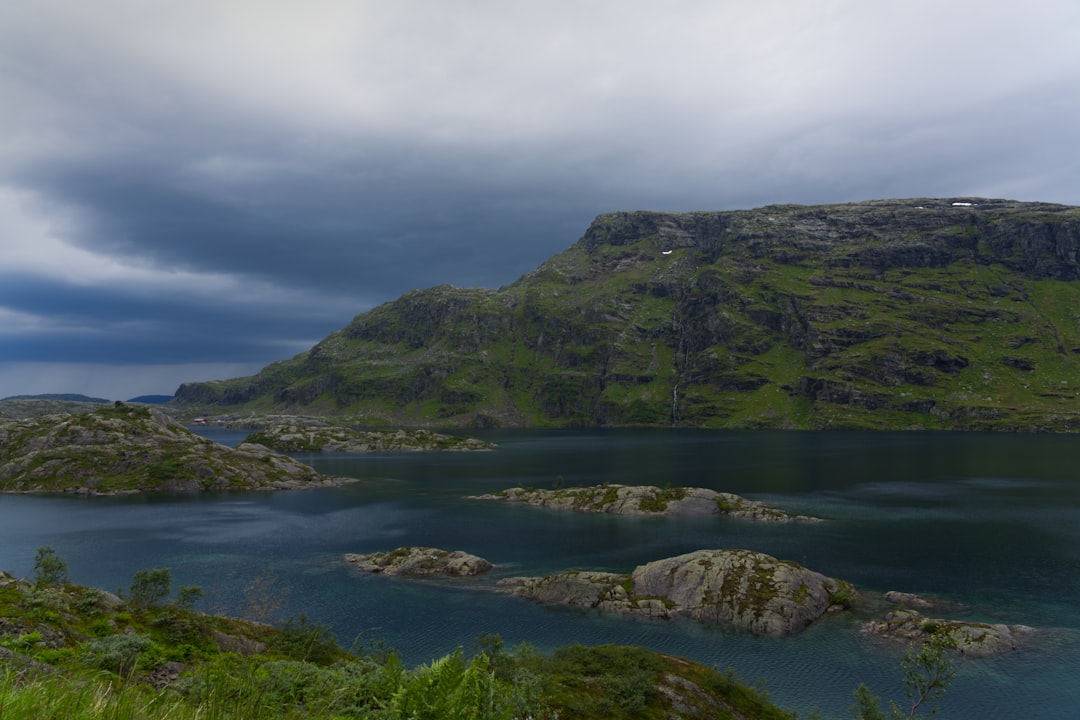
There is a moment, standing on the shore of a fjord at two in the morning, when the sun hangs low over the water like a golden coin that refuses to drop, and you realize that everything you thought you knew about day and night has quietly been rewritten. Northern Norway does that to you. It rewires your internal clock, humbles your sense of scale, and fills you with a strange, luminous energy that makes sleep feel entirely optional.
Tromsø: The Gateway to the Arctic
Most journeys into Northern Norway begin in Tromsø, a surprisingly vibrant university city of about 77,000 people perched on an island at 69 degrees north latitude. Despite its remote location well above the Arctic Circle, Tromsø has the cultural punch of a much larger city. Its wooden houses painted in reds and yellows line the waterfront, while the iconic Arctic Cathedral rises across the bridge on the mainland side, its dramatic triangular form suggesting a frozen wave or a stylized iceberg. Visit in the evening when the interior glows through the massive stained-glass window — it is one of Northern Norway’s most arresting sights.
Tromsø is home to the world’s northernmost university, which gives the city a youthful energy and a surprisingly good restaurant scene. Mathallen Tromsø is the place to try local specialties: king crab legs, stockfish, reindeer stew, and cloudberries. The Polar Museum tells the story of Arctic exploration and the brutal but fascinating history of seal hunting and trapping that once sustained communities here. And if you climb the Sherpa Steps up Fjellheisen (or take the cable car, no judgment), the panoramic view of the city, the surrounding islands, and the distant peaks will stay with you long after you descend.
The Lofoten Islands: Where Mountains Meet the Sea
A few hours south of Tromsø by car or ferry, the Lofoten Islands are the kind of landscape that makes you question whether your eyes are working properly. Jagged granite peaks erupt straight from the ocean, their flanks streaked with waterfalls and their bases fringed with white-sand beaches that could pass for Caribbean if the water temperature did not tell a very different story. The islands are connected by bridges and tunnels, making it possible to drive the length of the archipelago in a day, though you will want far longer.
The traditional fishing villages of Lofoten are reason enough to visit. Reine, frequently cited as one of Norway’s most beautiful villages, clusters red and yellow rorbuer (fishermen’s cabins) along a sheltered harbor beneath towering peaks. Many of these cabins have been converted into atmospheric accommodation, and sleeping in one with the sound of the sea outside your window is an essential Lofoten experience. Nusfjord, a UNESCO-protected fishing village, offers a more intimate look at the traditional way of life. Henningsvær, sometimes called the Venice of Lofoten for its bridges and channels, has reinvented itself as an arts hub, with galleries and cafes tucked into former warehouses.
Fjord Cruises and Fishing Heritage
No visit to Northern Norway is complete without getting out on the water. Trollfjord, a narrow channel between steep cliffs, is accessible by boat excursions from Svolvær and feels almost impossibly dramatic. Fishing remains central to the culture here — from January to April, the annual cod migration brings millions of fish to Lofoten’s waters, and you will see wooden racks called hjell draped with drying stockfish everywhere you look. This air-dried cod has been Lofoten’s primary export for a thousand years, once sustaining Viking voyages and later fueling trade across medieval Europe.
Two Seasons, Two Entirely Different Experiences
Northern Norway offers two dramatically different signature experiences depending on when you visit. From late May to mid-July, the midnight sun never sets, creating endless golden-hour light that photographers and hikers adore. This is the season for kayaking, cycling, and summit hikes at hours that would normally demand sleep. From September to March, the same region becomes one of the world’s premier destinations for the Northern Lights. Tromsø’s location beneath the auroral oval makes sightings frequent on clear nights, and dedicated chase tours head inland to escape cloud cover.
The Hurtigruten Coastal Ferry
For over 130 years, the Hurtigruten ships have served as the coastal lifeline of Norway, carrying passengers, mail, and cargo between Bergen and Kirkenes. The northbound journey takes six and a half days and calls at 34 ports, many of them tiny communities accessible only by sea. While the full voyage is a bucket-list trip in itself, you can also use the Hurtigruten as practical transport, boarding for a single overnight leg between Tromsø and the Lofoten Islands, for example. The ships are comfortable but unpretentious, and watching the coastline unfold from the deck — with its ever-changing procession of mountains, glaciers, and fishing hamlets — is mesmerizing.
Encountering Sámi Culture
The Sámi people are the indigenous inhabitants of Northern Scandinavia, and their culture is woven into the fabric of this region. Near Tromsø and across Finnmark, you can visit Sámi-operated reindeer camps, learn about traditional lavvu tent life, and hear joik, a haunting vocal tradition that is among Europe’s oldest living musical forms. The Sámi Parliament in Karasjok and the Sámi cultural center at Riddu Riđđu offer deeper engagement. Approach these experiences with respect and curiosity — this is a living culture, not a museum exhibit, and the Sámi have much to teach about coexisting with one of Europe’s harshest and most beautiful environments.




Leave a Reply