The Plague That Broke a Kingdom
In 1349, a ship arrived in the harbor of Bergen carrying more than cargo and passengers. It carried death. The Black Death, which had already ravaged Europe, had found its way to Norway’s western coast via infected rats and fleas traveling in the holds of merchant vessels. Within weeks, entire families were dying. Within months, parishes were emptied. Within years, something like 60 to 65 percent of Norway’s population had perished.
The demographic catastrophe that followed was perhaps the most devastating in European history relative to population size. Imagine a country where nearly two-thirds of all people simply vanished. Entire social structures collapsed. The noble families that had ruled portions of Norway for centuries died out with no heirs. Farms were abandoned because there was no one left to work them. Villages transformed into ghost towns. The dense forests began reclaiming the cleared land.
In this vacuum of death and despair came a fundamental political transformation. In 1380, a Norwegian nobleman named Olaf III inherited both the Norwegian and Danish crowns, uniting two separate kingdoms under a single monarch. This was not the result of conquest or even particularly contentious negotiation—it was the logical result of royal genealogy and inheritance law. Olaf was the son of a Norwegian princess and a Danish king, making him the rightful heir to both thrones.
This dynastic union, born from the ashes of plague and inherited through noble blood, would last 434 years. And in the minds of many Norwegians, those four centuries would be remembered as a historical darkness—a night that, once begun, lasted for centuries.
The Kalmar Union and Norwegian Subordination
What began as a union of two roughly equal kingdoms gradually transformed into Danish dominance over a subordinate Norway. The process was gradual but relentless. Copenhagen, the Danish capital, became the seat of royal power. Norwegian nobles found themselves increasingly sidelined from central government. The Council of the Realm—the body of aristocrats who advised the king—was dominated by Danish voices.
By the time the three Scandinavian kingdoms (Denmark, Norway, and Sweden) were formally united under the Kalmar Union in 1397, Norway’s status had shifted dramatically. It was now less a co-equal kingdom and more a colonial possession of Denmark. The union was supposedly tripartite, with each kingdom maintaining some autonomy, but in practice, Denmark controlled policy, trade, and resources.
The economic impact on Norway was particularly severe. Denmark imposed restrictive trade policies that benefited Danish merchants while limiting Norwegian commerce. Norwegian merchants found themselves frozen out of lucrative trading partnerships. The richest parts of Norway—the fish resources of the North Atlantic—were essentially controlled by Danish monopolies. A Norwegian fisherman might catch cod that would be sold by a Danish merchant to a foreign buyer, with the profit flowing to Copenhagen rather than staying in Norway.
Language as Cultural Erasure
Perhaps the most insidious effect of the Danish union was cultural and linguistic. During this period, Copenhagen imposed Danish as the official language of government, education, and prestige. The written Norwegian language—which had developed distinctly from Danish—was gradually displaced. Norwegian schools taught Danish. Norwegian law was administered in Danish. Norwegian children who wanted to advance in society had to master Danish.
This wasn’t merely a political imposition; it was a form of cultural erasure. The medieval Norwegian written tradition, which had flourished with sagas, religious texts, and administrative documents, faded. By the 17th century, educated Norwegians were writing in Danish, and many no longer saw themselves as maintaining a distinct linguistic tradition. A uniquely Norwegian cultural identity, rooted in language, was being systematically replaced by Danish culture.
The oral traditions survived in rural areas, but for centuries the idea of a distinctly Norwegian written language seemed lost. The consequences would echo through Norwegian history—when Norway would eventually regain independence in the 19th century, one of its most pressing challenges would be reconstructing a Norwegian language that could serve a modern nation. The linguistic heritage that had been suppressed for 400 years had to be painstakingly recovered and reimagined.
The Reformation and Religious Consolidation
In the early 16th century, the Protestant Reformation swept through Northern Europe, fundamentally challenging Catholic Church authority. In most European nations, this was a local or national process—each kingdom decided for itself whether to embrace Protestant theology. But in the Kalmar Union, the Reformation came as a directive from Copenhagen.
Denmark’s King Christian III decided the union would become Lutheran. This wasn’t a choice presented to Norwegian clergy or the Norwegian population—it was imposed by royal decree. Catholic bishops were deposed, monasteries were dissolved, and church properties were confiscated. The Catholic traditions that had shaped Norwegian religious life for centuries were systematically dismantled and replaced with Danish Lutheran practices.
Yet there was something historically important in this: the Reformation, even when imposed from Copenhagen, brought literacy and education to a broader population. Lutheran theology emphasized direct access to scripture, which meant that reading became essential. More schools were established. Literacy rates gradually rose. The long-term effect was a more educated Norwegian population, even if that education was being delivered in Danish and shaped by Danish-approved curricula.
The Napoleonic Wars and the Treaty of Kiel
For 400 years, the union endured, with Norway gradually becoming more and more subordinate to Denmark. But the early 19th century brought a moment of potential rupture. When Denmark aligned itself with Napoleon during the Napoleonic Wars, Norway found itself drawn into a conflict it had little part in creating. The British Royal Navy, seeking to eliminate French-allied shipping, attacked Danish-Norwegian vessels and blockaded Danish-Norwegian ports.
Norway, which had prospered through maritime trade and fishing, was economically devastated by this blockade. The Danish Crown, heavily in debt from the Napoleonic Wars, had no resources to compensate its Norwegian colony. Resentment among Norwegians intensified. Why should they suffer economically for Denmark’s political choices? Why should they contribute resources to wars in which they had no stake?
In 1814, as Napoleon’s power collapsed and the old European order was being negotiated, Denmark was on the losing side. The Treaty of Kiel, signed in January 1814, saw Denmark forced to cede Norway to Sweden as compensation for Denmark’s alliance with France. For Norwegians, this was a shock—they were being handed to another kingdom without any consultation about their own preferences.
But this moment of external crisis also created an opportunity. Norwegian leaders, seizing the moment of instability, drafted a Norwegian constitution on May 17, 1814. They declared Norway an independent kingdom in union with Sweden, rather than simply accepting Swedish rule. This was a revolutionary act—Norway, for the first time in 400 years, was asserting its right to self-determination.
The Long Night’s End
The “night that lasted 400 years”—as Norwegian historians sometimes characterize the union with Denmark—was finally ending. But the story wasn’t finished. Norway would now enter into a union with Sweden, which would itself last for nearly a century. Only in 1905 would Norway achieve true independence.
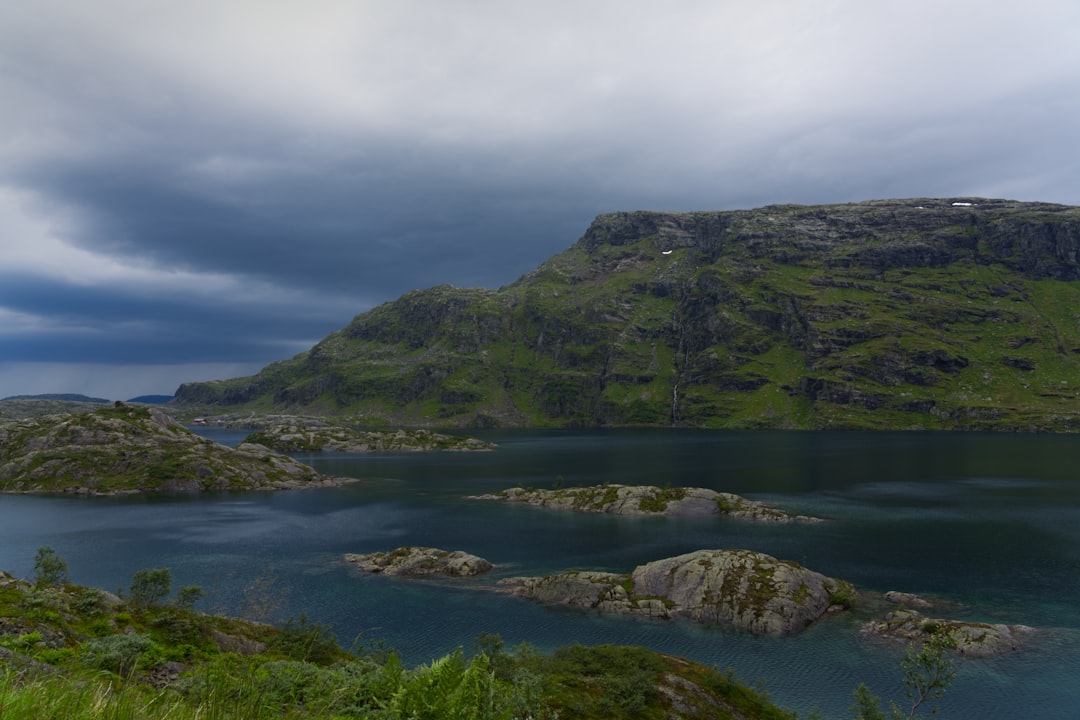
Yet the four centuries of Danish rule had profoundly shaped Norwegian identity. During those centuries, despite the subordination, Norwegians never entirely lost their sense of national distinctiveness. Rural communities maintained oral traditions, folk songs, and cultural practices that preserved a sense of Norwegian identity. The landscapes themselves—the mountains, fjords, and coastlines—remained distinctly Norwegian, indifferent to the crowns that claimed to rule them.
Visiting the Medieval Union
For travelers wishing to understand this period, several sites are essential. Akershus Fortress in Oslo was founded in 1299 and witnessed many of the dramatic moments of the medieval union period. Today it stands as a fortress overlooking the capital, its stone walls a tangible reminder of the medieval era when Norwegian nobility held real power. Walking through its courtyards and halls, you can visualize the centuries when Norwegian nobles gathered there before their influence was gradually subsumed by Danish authority.
Bryggen, the historic wharf quarter of Bergen, preserves the medieval and early modern heritage of one of Norway’s most important port cities. The old Hanseatic wooden buildings, though rebuilt after various fires, maintain the medieval street plan and give visitors a sense of the commercial life of medieval Norway. This was the center of the fish trade, the source of Norway’s wealth and the channel through which Danish economic control was exercised.
Bergen’s early history as a major trading center, predating the full consolidation of Danish power, makes it an important site for understanding the moment before Norway’s subordination became complete.
The Paradox of Subordination
The 400-year union with Denmark created a paradox that would shape Norwegian history for centuries. On the one hand, it resulted in the subordination of Norwegian interests to Danish priorities, economic stagnation, and cultural suppression. The language loss was particularly significant—it would take the 19th-century Norwegian independence movement decades of effort to restore a written Norwegian language to cultural prominence.
Yet on the other hand, the union also integrated Norway into broader European cultural and economic networks. Lutheran theology, European Renaissance thought, and the intellectual movements of the early modern era all reached Norway through Denmark. The architectural styles, administrative practices, and legal codes that shaped Norway came partially through Danish channels.
More importantly, the union preserved Norway as a distinct entity. Unlike Ireland, which experienced direct English colonization and plantation, or Poland, which was repeatedly partitioned by neighbors, Norway maintained its own institutions, laws, and cultural structures even under Danish dominance. When the moment for independence came in the early 20th century, there was sufficient Norwegian institutional coherence and cultural memory to restore an independent nation.
The Long Shadow
Standing in the medieval quarters of Bergen or Oslo, or touring Akershus Fortress, travelers can sense the historical weight of this 400-year period. It’s a history of subordination and cultural suppression, but also of resilience and the preservation of distinct identity under foreign rule. It’s a reminder that history often moves slowly, that empires and unions can persist for centuries even when subordinate populations harbor resentments and desires for independence.
For modern Norwegians, this period represents the long struggle before liberty was finally achieved. It shaped the fierce commitment to independence that characterizes Norwegian political culture. It explains the intense focus on preserving and restoring Norwegian language and culture in the modern era. And it reminds us that nations are not inevitable—they must be consciously built and defended by people willing to resist subordination and assert their right to self-determination.




Leave a Reply