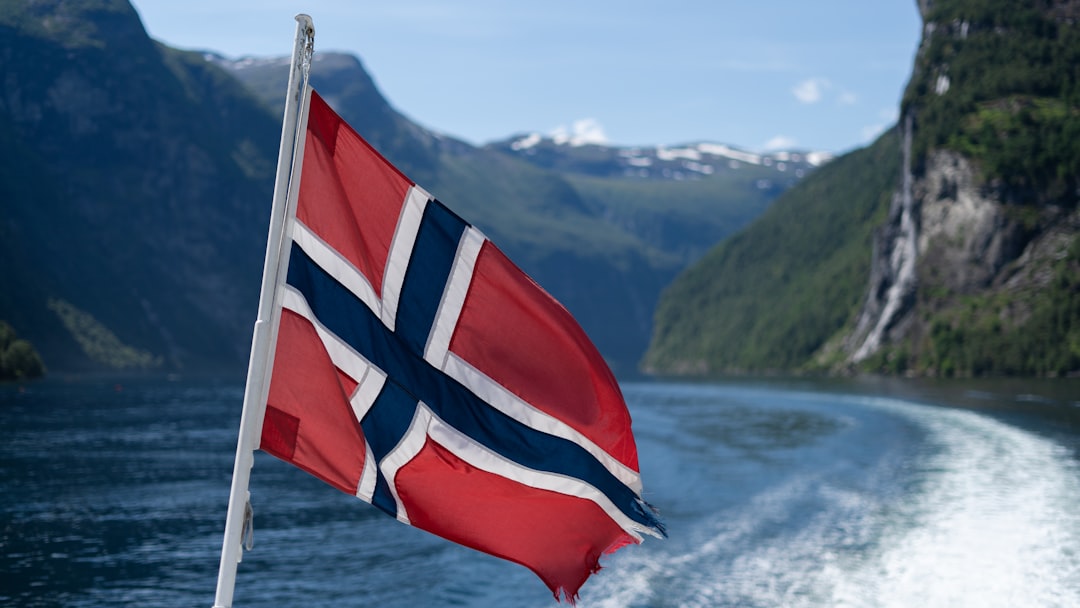
A flag flying from a boat in a body of water

Norwegian Visa & Residency Options for Americans: Every Path Explained

Photo by Bart van der Lugt on Unsplash

·

·

Navigating Norwegian immigration law is essential for a successful move. As an American, you have several pathways to residency, each with specific requirements and timelines. This guide explains every option and the process to obtain each one.

Critical Context: Norway and the Schengen Area

Norway is in the Schengen Area but NOT the European Union. This distinction is crucial for Americans:

  • You can travel visa-free for 90 days in any 180-day period across the Schengen zone
  • Norway negotiates immigration policy independently (not bound by EU rules)
  • Work permits, residency, and immigration rules are Norwegian-specific
  • Post-Brexit comparison: similar to the UK—in Schengen but with separate regulations

This means that EU freedom of movement rules don’t apply. If you’re American, you cannot simply move to Norway based on EU citizenship advantages.

Option 1: 90-Day Schengen Visitor Visa

Who it’s for: Tourists, short-term visitors, those exploring relocation options

Duration: Up to 90 days within a 180-day rolling period (across entire Schengen zone)

Requirements:

  • Valid passport (at least 6 months validity)
  • Return/onward ticket
  • Proof of accommodation
  • Proof of financial means (roughly $45-65/day)
  • Travel insurance (recommended, required by some airlines)
  • Cost: Free for US citizens

    Timeline: Arrive and enter (no pre-approval needed for Americans)

    Important limitations:

  • Cannot work legally
  • Cannot establish residency
  • Timer resets: if you leave Schengen on day 89, the counter resets after 180 days have passed from initial entry
  • Cannot be extended beyond 90 days without leaving Schengen zone for 90+ days
  • Pro tip: Many Americans arrive on 90-day visitor visas while completing job search or housing arrangements, then transition to appropriate work/residency visa.

    Option 2: Skilled Worker Permit (The Most Common Path)

    Who it’s for: Americans with job offers or specialized skills

    Duration: 2-3 years (renewable)

    Requirements:

  • Job offer from Norwegian employer
  • Salary meeting minimum thresholds (typically 635,000-750,000 NOK annually depending on field)
  • Documentation from employer confirming job offer
  • Education/qualifications relevant to position
  • Valid passport
  • Proof of accommodation
  • The application process:

    1. Secure job offer from Norwegian employer
    2. Employer submits application to UDI on your behalf (or you apply directly)
    3. UDI reviews (4-8 weeks typical)
    4. Upon approval, receive approval letter
    5. Apply for residence permit at nearest Norwegian embassy/consulate
    6. Travel to Norway and register with UDI

    Cost: Application fee approximately 3,100 NOK ($295)

    Timeline: 2-4 months total (job search varies widely)

    Salary requirements by field (approximate 2024):

  • Software developers: 680,000-800,000 NOK
  • Engineers: 700,000-850,000 NOK
  • Healthcare professionals: 650,000-750,000 NOK
  • Business professionals: 700,000-800,000 NOK
  • Oil/gas industry: 750,000-1,000,000 NOK
  • Pro tip: The skilled worker permit is straightforward if you have an offer. Companies familiar with hiring expats understand the process. Reach out to major employers in your field—oil companies (Equinor, Shell), tech firms (Statoil, GE Subsea), and consulting firms routinely hire Americans.

    Option 3: Job Seeker Visa

    Who it’s for: Those with relevant work experience seeking employment

    Duration: 6 months

    Requirements:

  • Relevant education/work experience (typically bachelor’s degree minimum)
  • Proof of financial means for 6 months (~120,000-150,000 NOK/$11,500-14,400)
  • Valid passport
  • Proof of accommodation
  • CV and job search documentation
  • The application process:

  • Apply directly to UDI or at Norwegian embassy
  • Submit documentation proving job search capability
  • UDI reviews (4-6 weeks)
  • If approved, receive permit valid 6 months
  • You have 6 months to secure employment and transition to skilled worker permit
  • Cost: Application fee approximately 3,100 NOK ($295)

    Timeline: 4-8 weeks from application to permit

    Important: This permit allows you to live and search for work but not actually work until you secure a job offer and transition to skilled worker status.

    Pro tip: Use this visa strategically if you’re highly employable but prefer to network and interview in-person. Many job interviews are conducted from within Norway. The 6-month window is sufficient for serious job seekers in high-demand fields.

    Option 4: Self-Employment Permit

    Who it’s for: Entrepreneurs, freelancers, consulting professionals

    Duration: 2 years (renewable)

    Requirements:

  • Detailed business plan
  • Proof of capital/financial backing (typically 50,000-100,000 NOK minimum)
  • Registration documents for intended business
  • Evidence of market demand
  • Professional documentation of expertise
  • Valid passport
  • The application process:

  • Develop detailed business plan with revenue projections
  • Secure sufficient capital (Norwegian bank account needed, which requires residency)
  • Submit application to UDI or nearest embassy
  • UDI reviews business viability (6-12 weeks, more thorough than employment permits)
  • If approved, establish business in Norway
  • Register AS or enkeltpersonforetak (sole proprietorship)
  • Cost: Application fee approximately 3,100 NOK ($295) plus business registration costs (500-1,500 NOK)

    Timeline: 2-4 months

    Important considerations:

  • UDI scrutinizes business viability carefully
  • You cannot have a business plan dependent on finding Norwegian employment (that’s skilled worker territory)
  • Must demonstrate genuine business purpose, not visa acquisition as primary goal
  • Popular for digital entrepreneurs, consultants, and service providers
  • Pro tip: Self-employment visa works best if you have established clients or clear market demand. Consulting firms, freelance writers, designers, and coaches succeed here. If you’re beginning entirely new business with unproven concept, UDI may request more detailed documentation.

    Option 5: Student Visa

    Who it’s for: Americans pursuing education in Norway

    Duration: Length of study program

    Requirements:

  • Admission letter from accredited Norwegian educational institution
  • Proof of financial means (minimum 196,000 NOK annually/$18,700)
  • Valid passport
  • Health insurance
  • The application process:

  • Apply and gain admission to Norwegian university/college
  • Receive admission letter
  • Apply to UDI with admission documentation
  • UDI reviews (2-4 weeks)
  • Upon approval, travel to Norway and register
  • Cost: Application fee approximately 3,100 NOK ($295); tuition free at public universities for all students

    Timeline: 2-4 months from admission to permit approval

    Work rights while studying:

  • Full-time students can work up to 20 hours/week during semester
  • Can work full-time during scheduled breaks
  • After graduation, may transition to skilled worker permit if securing employment
  • Post-graduation options:

  • 3-month grace period to find employment
  • If employed, transition to skilled worker permit
  • Otherwise, must leave or apply for different visa category
  • Pro tip: Norwegian universities offer excellent education entirely in English. This is an affordable pathway (free tuition) even if you ultimately return to the US. Many student visa holders transition to work permits if they secure employment.

    Option 6: Family Immigration/Reunion

    Who it’s for: Those with Norwegian citizen/resident relatives

    Duration: Depends on family member’s status

    Requirements:

  • Family member with Norwegian residency/citizenship
  • Evidence of family relationship (marriage certificate, birth certificate, etc.)
  • Proof of accommodation
  • Family member’s income sufficient to support dependents
  • Valid passport
  • Eligible relationships:

  • Spouses/registered partners
  • Dependent children
  • Children sponsoring elderly parents (less common, stricter requirements)
  • Cohabiting partners (2+ years documented relationship)
  • The application process:

  • Sponsoring family member initiates process
  • Submit relationship documentation to UDI
  • UDI verifies sponsorship capacity
  • If approved, receive permit based on sponsor’s status
  • Register in Norway with permit documentation
  • Cost: Application fee approximately 3,100 NOK ($295)

    Timeline: 6-12 weeks (can vary with relationship complexity)

    Spouse/partner considerations:

  • Marriage must have occurred and be legally valid (no minimum waiting period)
  • UDI verifies marriage not entered primarily for immigration
  • Sponsoring spouse must meet income requirements (typically 500,000-600,000 NOK annually)
  • If sponsoring spouse loses income/employment, dependent may be affected
  • Pro tip: Family immigration is fastest path if you have a spouse/partner who’s already Norwegian or established resident. If married to Norwegian citizen, the process is relatively straightforward.

    Option 7: Au Pair Visa

    Who it’s for: Young Americans (typically 18-30) seeking cultural exchange

    Duration: Up to 12 months

    Requirements:

  • Age 18-30 (sometimes up to 35 depending on program)
  • High school diploma or equivalent
  • Valid passport
  • Placement through recognized au pair organization
  • Host family arrangement
  • Health insurance
  • The application process:

  • Contact recognized au pair placement organization (AupairWorld, Care.com, GreatAuPair)
  • Complete application and training
  • Matching with Norwegian host family
  • Host family submits sponsorship documentation to UDI
  • UDI approves (3-4 weeks)
  • Travel to Norway
  • Cost: 0 NOK visa fee; placement agency fees vary (500-1,500 NOK typically)

    Compensation:

  • Free room and board
  • Allowance 4,100-5,000 NOK monthly ($390-475)
  • Integrated as part of family, not employee relationship
  • Expected household and childcare responsibilities
  • Work hours: Maximum 30 hours/week

    Pro tip: Au pair visa is cultural immersion opportunity more than employment. Housing/food provided reduces living costs. Many au pairs continue to longer stays in Norway through transitioning to work permit if securing employment.

    D-Number vs. Fødselsnummer: Understanding These Critical Numbers

    Once you’ve secured any residency permit, the UDI process involves two numbers:

    D-Number (temporary residence number):

  • Assigned at first UDI appointment
  • 6-digit number used while processing fødselsnummer
  • Valid for approximately 2-8 weeks
  • Required for banking, employment, healthcare registration
  • Starts with 9 (easy to identify)
  • Fødselsnummer (permanent personal ID number):

  • 11-digit number assigned after residency confirmed
  • Your permanent identification number for all purposes
  • Required for everything: banking, employment, housing, taxes
  • Cannot function in Norwegian society without it
  • Takes 2-8 weeks after arrival to receive
  • Critical point: You cannot open bank accounts, register with doctors, or officially work until you have at least a D-number. Get your UDI appointment scheduled immediately upon arrival.

    Path to Permanent Residency

    Timeline: 3 years of continuous residence

    Norway offers one of the shortest paths to permanent residency in Europe. After 3 years of legal continuous residence under any permit category:

    Requirements:

  • 3 years continuous residence (or 5 years with some absences)
  • Proof of income/employment
  • Clean criminal record
  • Intention to remain in Norway
  • Application to UDI
  • Benefits of permanent residency:

  • No longer dependent on specific job/employer
  • Can change jobs freely
  • Enhanced security (can only be revoked for serious criminal activity)
  • Path to citizenship becomes clearer
  • Enhanced travel within EEA
  • Application timeline: 2-4 weeks

    Cost: Approximately 3,100 NOK ($295)

    Path to Norwegian Citizenship

    Timeline: 7 years of residence

    After 7 years of legal residence in Norway:

    Requirements:

  • 7 years continuous legal residence (or 6 years with some exceptions)
  • Permanent residency already obtained
  • Norwegian language proficiency (B1 level minimum for adults; children exempt)
  • Paid taxes
  • Clean criminal record
  • Pass Norwegian citizenship test (covers history, culture, geography, governance)
  • Demonstrate intent to remain long-term
  • Language requirement clarification:

  • Must pass Norwegian language test at B1 level (intermediate)
  • Tests administered by official language testing authorities
  • Costs approximately 800-1,500 NOK ($75-140)
  • Multiple test providers available (TOEFL consortium, Cambridge, others)
  • Three attempts typically allowed per application
  • Citizenship test:

  • 20-question multiple choice on Norwegian history, culture, society
  • Subjects include Constitution Day, historical figures, geographical knowledge
  • Available in English and other languages
  • Study materials available free online (UDI.no)
  • Benefits of citizenship:

  • Full political rights (voting, standing for office)
  • Unrestricted travel throughout EEA
  • Enhanced job security in public sector
  • Sponsorship rights for family members
  • Protection from deportation (except in extreme cases)
  • Application timeline: 2-3 months

    Cost: Approximately 500-1,000 NOK ($48-95)

    Pro tip: Many long-term American expats find permanent residency sufficient and don’t pursue citizenship. Language requirement (B1 level) is achievable but requires commitment—expect 12-18 months of study to reach that level if starting from zero.

    Comparing Your Options: Quick Reference

    | Visa Type | Duration | Cost | Requirements | Best For |
    |———–|———-|——|————–|———-|
    | 90-Day Visit | 90 days | Free | Passport, funds | Exploring, tourism |
    | Skilled Worker | 2-3 years | ~$295 | Job offer, degree | Employment-focused |
    | Job Seeker | 6 months | ~$295 | Experience, funds | Active job hunting |
    | Self-Employment | 2 years | ~$295 | Business plan, capital | Entrepreneurs |
    | Student | Duration of studies | ~$295 | Admission letter | University students |
    | Family | Varies | ~$295 | Family sponsor | Married/relatives |
    | Au Pair | 12 months | ~$295 | Age 18-30 | Cultural exchange |

    Application Procedures: General Steps

    Regardless of visa type:

  • Determine eligibility for your category
  • Gather documentation (see UDI.no for specific checklist)
  • Apply online at UDI.no or at nearest Norwegian embassy
  • Pay application fee (non-refundable)
  • Receive tracking number and estimated decision date
  • Receive approval letter (or interview request for complex cases)
  • Book UDI appointment upon arrival in Norway
  • Attend appointment with original documents and approval letter
  • Receive D-number on the spot
  • Wait for fødselsnummer (2-8 weeks)
  • Essential Resources

  • UDI.no: Complete immigration information, applications, tracking
  • Norwegian Embassies & Consulates: Contact for pre-arrival visa questions
  • NAV.no: Employment and benefits information
  • Arbeidsinnvandring.no: Labor migration information
  • Facebook groups: “Americans in Norway,” “Expats in Norway” for peer advice
  • Final Recommendations

    For most Americans: The Skilled Worker Permit is the most straightforward pathway. Focus on securing employment first, then follow the application process. The advantage is clarity: once you have a job offer, the path is clear and timelines are predictable.

    For job explorers: The Job Seeker Visa works if you have strong credentials and can afford 6 months living costs. Use this time strategically to network and interview in-person.

    For entrepreneurs: The Self-Employment Visa is viable if you have a proven business model or established clients. Demonstrating genuine business demand to UDI is critical.

    For students: Pursuing education in Norway is affordable (free tuition) and provides pathway to potential employment after graduation.

    For those with Norwegian partners: Family Immigration is fastest and most certain path.

    Whichever path you choose, begin the process early. Immigration timelines are generally 2-4 months, and employment searches may take longer. Plan accordingly for your move.


    Free Newsletter!

    Join the Europetopia Newsletter for free tips on travel, history, and culture in Europe!

    We promise we’ll never spam! Take a look at our Privacy Policy for more info.


    Jonathan Avatar

    Written by

    Related Articles

    Comments

    Leave a Reply

    Your email address will not be published. Required fields are marked *

