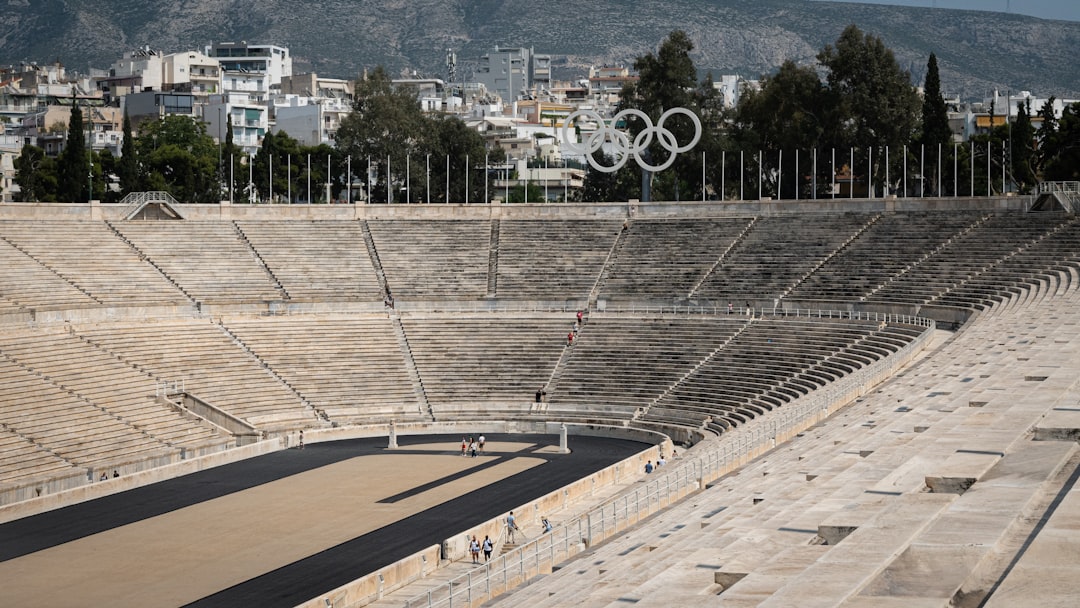
Every four years, billions of people around the world watch the Olympic Games. Athletes from 200 countries compete. The Games are broadcast on television and streamed online. Opening ceremonies feature thousands of performers and cutting-edge technology. And almost none of this—absolutely none—resembles the ancient Olympics. The only things the modern Games inherited from the ancient version are the name, the timing (roughly four years apart), and the ideal of international competition. Everything else is radically different. To understand what the ancient Olympics were really like, you need to visit Olympia, on the western coast of Greece, and stand where athletes trained and competed 2,500 years ago.
Sacred Olympia: A Religious Site Before a Sporting Venue
Olympia wasn’t a city. It was a sacred sanctuary dedicated to Zeus, the king of the gods. The ancient Greeks called it the Altis—the sacred precinct. Within this precinct stood the greatest temples, sculptures, and monuments to Zeus. For most of the year, Olympia was a place of pilgrimage and worship. But every four years, it transformed into a festival site where Greece’s greatest athletes competed.
This is crucial to understanding the ancient Olympics: they were a religious festival first and a sporting competition second. The Games were held to honor Zeus and to celebrate his power and majesty. The athletes were competing not for personal glory or national pride (national pride didn’t really exist in ancient Greece; city-states were more important than the concept of Greece as a whole). They were competing to honor the god and to earn glory that came from victory in a sacred context.
The sanctuary itself was extraordinary. The Temple of Zeus, built around 456 BCE, contained one of the Seven Wonders of the Ancient World: a massive gold and ivory statue of Zeus created by the sculptor Phidias. The statue was over 40 feet tall and was so magnificent that ancient writers said merely looking at it would make you feel the presence of the god. Unfortunately, like almost everything else in Olympia, it was destroyed in antiquity (probably in a fire).
Standing in Olympia today, you can still see the platform where the Temple of Zeus once stood. The stones are massive, roughly cut. The site is smaller than you might expect—this wasn’t a massive arena but a sacred precinct in a river valley. Walking around Olympia, you realize that the athletic contests were just one part of a much larger religious experience.
The Athletic Events: Naked, Oiled, and Dangerous
Ancient Olympic athletes competed naked. This fact surprises most people, but it was fundamental to the games. The word gymnasium comes from the Greek word gymnos, meaning naked. The athletes trained naked and competed naked.
Why naked? Partly for practical reasons—clothes would have restricted movement and made sense only in cold climates, and the Olympics were held in the heat of summer. But partly for ideological reasons—nakedness was seen as honest, revealing the athlete’s true physical form. The judges could see who was cheating (using performance-enhancing substances or illegal technique). And nudity had a spiritual dimension; the Greeks saw the human body, at least the male human body, as a beautiful expression of divine order and excellence.
The original Olympic Games had just one event: the stadion, a sprint race of about 200 meters (656 feet). The word stadium comes from stadion, the length of the track. This footrace was held as early as 776 BCE—a date the ancient Greeks considered the beginning of the Olympic Games.
Over time, more events were added. By the Classical period, the Olympics included:
The stadion: The 200-meter sprint. The starter was called the alytai, and he had a rope that he pulled when all runners were ready, triggering the start. No starting blocks; athletes ran from a standing position.
The diaulos: A double stadion, or roughly 400 meters. This was like the modern 400-meter dash.
The dolichos: A longer-distance race of about 2,400 meters. This was the marathon of the ancient world, though not as long as the modern marathon.
Wrestling (pale): Wrestlers competed in sand and had to throw their opponent so that his back, shoulders, and hips all touched the ground simultaneously. It was brutal and injuries were common.
Boxing (pygmachia): Ancient boxers wrapped their hands in leather straps called himantes. There were no weight classes and no rounds. Fighters fought until one was knocked out or gave up. Deaths and permanent injuries occurred. The sport was incredibly violent.
The pankration: The pits and most brutal event, a combination of boxing and wrestling with very few rules. Fighters could kick, punch, wrestle, and strangle. Nearly everything was allowed except biting and eye-gouging. This was the event where serious injuries—and occasionally deaths—occurred. Champions in the pankration were revered as almost superhuman.
The pentathlon: Added later, this consisted of five events: sprinting, long jump, discus throw, javelin throw, and wrestling. To win the pentathlon, you had to perform well across all five events—it was the decathlon of the ancient world, testing all-around athleticism.
Equestrian events: Chariot races and horse races were added later. These were dangerous and sometimes fatal, both for riders and horses. They were also extremely expensive to enter, so only wealthy aristocrats could compete.
All events except the equestrian events were performed naked and in daylight, in the heat. Athletes trained for months beforehand and then competed in the heat of summer. Dehydration, heat exhaustion, and sunburn were constant hazards. The sand of the wrestling pit could be blinding. Ancient writers described the suffering: athletes vomiting, bleeding, barely able to continue.
The Prize: An Olive Wreath and Immortal Glory
Here’s what athletes didn’t get: money. The Olympic prize was an olive wreath—a crown of leaves from a sacred olive tree that grew in the sanctuary. That’s it. No gold medal, no cash prize, no sponsorship deals, no endorsement contracts.
But the wreath represented something infinitely more valuable: immortal glory. A winner at the Olympics would be remembered forever. Poets would write odes celebrating the victory. Sculptors would create statues. The athlete’s city would celebrate him as a hero. He would receive honors for the rest of his life. His name would be recorded in the official Olympic records and preserved for posterity.
This was extraordinary because, in the ancient world without television or mass media, having your name preserved in writing and in stone was the closest thing to eternal life. Olympic victors were sometimes treated almost as gods. They received special honors, free meals, seats of honor at public events. Some victors became wealthy because they were so admired and honored.
In fact, the idea that Olympic athletes were amateurs unpaid competitors is misleading. While they didn’t receive prize money from the Olympic Games themselves, many wealthy victors became professional athletes, traveling from competition to competition and receiving appearance fees, gifts, and support from wealthy patrons. The Olympics was the most prestigious competition, but it was only one of many athletic competitions where athletes could earn money and prestige.
Women and the Olympics: Excluded and Separate
Women were completely excluded from competing in the Olympic Games. In fact, married women weren’t even allowed to watch the Games. There was a separate religious festival called the Heraea, held at Olympia in honor of the goddess Hera, where unmarried women competed in their own athletic competitions. But it was far smaller and less prestigious than the men’s Olympics.
The most famous exception was Cynisca of Sparta, a princess who owned a chariot team that competed in the Olympic chariot races (and won). She was able to do this because chariot racing was considered different from other athletic events—the credit went to the owner, not the driver. So Cynisca could be the official owner/competitor even though she didn’t physically drive the chariot herself. A statue of her was erected at Olympia, one of the few female honorees.
The exclusion of women reflects the gender politics of ancient Greece. The Olympics celebrated masculine virtues—strength, courage, physical excellence. Women were seen as unable to display these virtues in the same way. Also, the athletes competed naked, and the thought of naked women competing in public was shocking to Greek sensibilities. Women were supposed to be modest and private, not displaying their bodies publicly.
This exclusion lasted until the modern Olympics in 1896, when women were first allowed to compete. It took until the early twentieth century for women’s events to become significant. It took until 2020 for women to achieve gender parity in the Olympic events. So the ancient Olympics’ gender inequality persisted into the modern world for well over a century.
Corruption, Cheating, and the Fall of the Games
The ancient Olympics lasted for nearly twelve centuries, from around 776 BCE to 393 CE. For most of that time, they were the most prestigious athletic competition in the Greek world. But the Games eventually became corrupted.
By the Roman period, when Greece was under Roman rule, the Olympics had been degraded. Athletes were bribed to throw competitions. Judges were corrupted. The sacred nature of the Games was forgotten. Some emperors even competed in the Games, and since no one dared beat an emperor, their victories were hollow. The Games became a spectacle for entertainment rather than a sacred competition honoring Zeus.
In 393 CE, the Roman Emperor Theodosius I, a Christian, banned the Olympic Games. He saw them as a pagan festival incompatible with Christianity. The final Olympic Games were held in that year. The athletic tradition that had lasted for nearly a thousand years ended. The sanctuary of Olympia fell into disrepair. Earthquakes damaged the temples. The Altis was eventually buried under sand and debris.
The Modern Olympics: Revival and Reinvention
For over fifteen centuries, Olympia lay forgotten, buried under the earth. It wasn’t until the eighteenth and nineteenth centuries that archaeologists began excavating the site. In the 1890s, the archaeologist Pausanias’s ancient guidebook to Greece was rediscovered, which helped archaeologists identify exactly where Olympia was and what structures belonged there.
The revival of the Olympic Games was inspired partly by the excavation of Olympia. Pierre de Coubertin, a French educator, was inspired by the ancient Olympics and convinced that reviving them for the modern world would be good for international relations and for young people. He founded the International Olympic Committee, and the first modern Olympic Games were held in Athens in 1896.
But the modern Olympics are only superficially connected to the ancient Games. The modern Olympics have multiple events for both men and women. They include team sports like basketball and soccer (which didn’t exist in ancient times). They involve massive media coverage and sponsorships worth billions of dollars. Athletes are professional, competing for massive prize money. National pride is central—countries compete against each other, and medal counts are tallied and compared. The Olympics have become a massive commercial enterprise.
The ancient Olympics were simpler and in some ways purer: athletes competing in sacred honor, seeking immortal glory, without the apparatus of modern commerce and nationalism. That said, the ancient Olympics also had corruption, violence, exclusion, and tragedy. They weren’t pure either; they were human competitions, with all the flaws and virtues that human competitions contain.
Visiting Olympia Today
The archaeological site of Olympia is one of the most evocative places in Greece. You walk through an olive grove, and the temple foundations appear before you. The gymnasium where athletes trained is still visible. The hippodrome where chariot races were held can be identified. The stadium, where foot races were held, is preserved with its starting and finishing lines still visible.
The Olympia Archaeological Museum is world-class, containing sculptures, vases, athletic equipment, and artifacts from thousands of years of the site’s use. You’ll see ancient Greek athletic sculptures with extraordinary detail. You’ll see weights used in the long jump (ancient athletes held weights and swung them to increase their distance). You’ll see the original statues and reliefs from the temples.
Walking through Olympia, you can almost imagine the heat, the sweat, the roar of the crowd (there were spectators, though they were separate from the athletes). You can imagine the tension as athletes prepared to compete, knowing that victory meant immortal fame, and defeat meant obscurity. You can understand why the ancient world considered Olympia the most sacred athletic site in Greece.
Parting Thoughts
The ancient Olympics reveal something important about ancient Greek values. They valued physical excellence and the glory that came from victory. They believed in the sacred, in honoring the gods through competitive excellence. They created a tradition that lasted longer than any empire, that was remembered and revered across centuries.
But they also reveal the limitations of ancient Greek civilization: the exclusion of women, the violence and danger, the corruption that eventually overwhelmed the sacred purpose. The ancient Olympics were wonderful and terrible, noble and brutal, as human institutions usually are.
Understanding the ancient Olympics helps you understand Greece. It reveals the Greek values of competition, glory, and physical excellence that persist in modern Greek culture. And it shows you that the Olympic Games, though modern and global, have roots in one of history’s most enduring sporting traditions—a tradition born in a sacred sanctuary in the Greek countryside 2,500 years ago.




Leave a Reply