The Ottoman Empire ruled much of southeastern Europe for five centuries, from the fall of Constantinople in 1453 to the Balkan Wars of 1912-1913 — and in some areas far longer. This was not a distant colonial administration but a direct and transformative presence that reshaped the region’s cities, infrastructure, religious landscape, and daily culture. Today, the Ottoman heritage of the Balkans is visible everywhere: in the minarets that punctuate city skylines alongside church steeples, in the stone bridges that span mountain rivers, in the covered bazaars where craftsmen still work in workshops that have operated continuously for centuries. Understanding this heritage is essential to understanding the Balkans themselves.
Mostar’s Stari Most: The Old Bridge
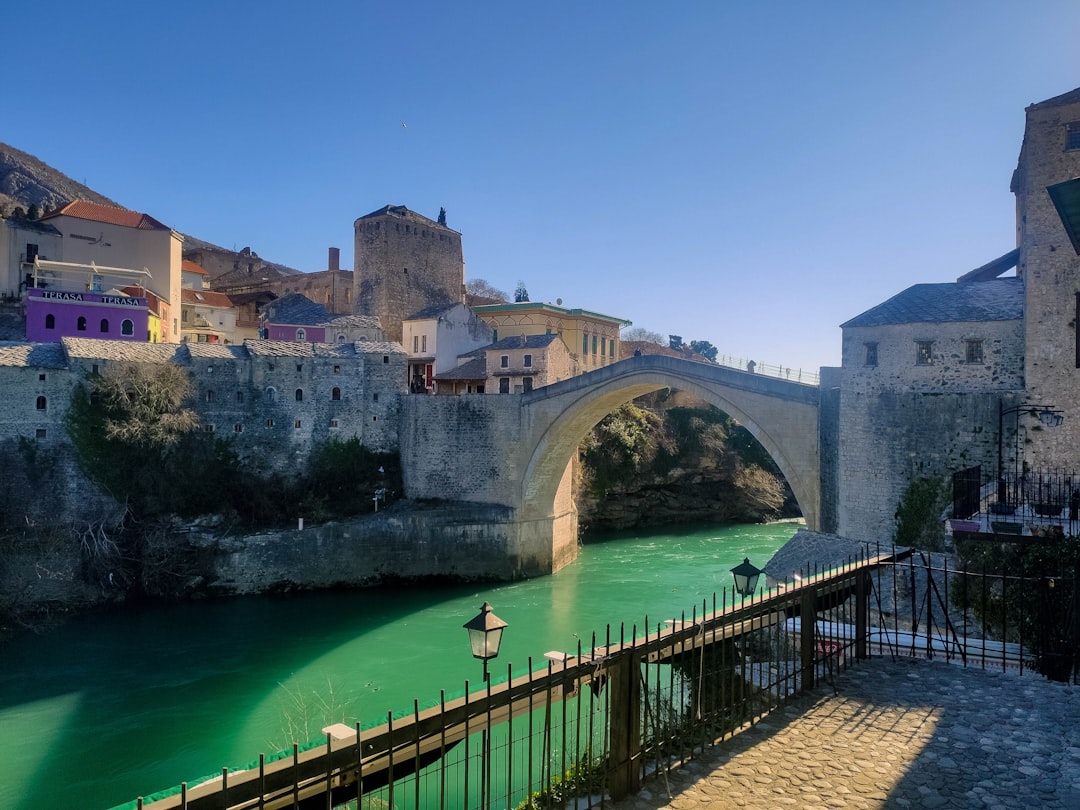
The Stari Most — Old Bridge — in Mostar, Bosnia and Herzegovina, is perhaps the most iconic Ottoman monument in the Balkans. Completed in 1566 by the architect Mimar Hayruddin, a student of the great Sinan, the single-arch stone bridge soared 24 meters above the emerald waters of the Neretva River, connecting the city’s eastern and western banks. For over four centuries it stood, surviving earthquakes and floods, until November 9, 1993, when Croatian artillery deliberately destroyed it during the Bosnian War. The reconstruction, completed in 2004 using original Ottoman construction techniques and stone recovered from the riverbed, is both an architectural achievement and a political statement: the bridge was rebuilt because it had to be — Mostar without the Stari Most was Mostar without its soul.
The neighborhoods on either side of the bridge — Kujundžiluk on the east and the Croat quarter on the west — retain their Ottoman character, with cobblestone lanes, copper workshops, and small mosques. The Koski Mehmed Pasha Mosque, dating to 1617, offers one of the finest views of the bridge from its minaret, and the climb is worth the vertigo.
Sarajevo’s Baščaršija
Sarajevo’s old bazaar quarter, the Baščaršija, was founded by Isa-Beg Isaković in the 1460s, shortly after the Ottoman conquest of Bosnia. For five centuries, it has functioned as the commercial and social heart of the city. The Baščaršija is organized along traditional Ottoman lines: each street was devoted to a specific craft or trade — coppersmiths (kazandžije), leather workers (sarači), jewelers (kujundžije) — and many of these craft streets retain their original function. The Sebilj fountain, a wooden Ottoman-style fountain in the central square, is the city’s most recognized landmark. Surrounding it, the aroma of ćevapi from the grillhouses, strong Bosnian coffee served in traditional džezva pots, and the call to prayer from the nearby Gazi Husrev-beg Mosque — the finest Ottoman mosque in the Balkans, built in 1532 — create an atmosphere that is unmistakably Ottoman in character.
Prizren, Berat, and Skopje
Prizren, in southern Kosovo, may be the best-preserved Ottoman town in the western Balkans. Its old quarter climbs a hillside below a medieval fortress, packed with mosques, hammams (Turkish baths), and Ottoman houses with projecting upper stories. The Sinan Pasha Mosque, completed in 1615, dominates the town center, and the old stone bridge over the Bistrica River provides a postcard view of the town’s layered architecture — Ottoman, Serbian Orthodox, and Catholic buildings sharing the same skyline.
Berat, in central Albania, known as the “City of a Thousand Windows” for the rows of Ottoman houses whose large windows face across the valley, is a UNESCO World Heritage Site that preserves an extraordinary ensemble of Ottoman residential architecture. The houses of the Mangalem and Gorica quarters, climbing steep hillsides on opposite banks of the Osum River, create a visual effect unique in the Balkans. Skopje’s Old Bazaar (Stara Čaršija), the largest bazaar in the Balkans outside Istanbul, has been a marketplace since at least the twelfth century. Its mosques, caravanserais, and hammams date primarily to the fifteenth and sixteenth centuries, and the Daut Pasha Hammam, built around 1466, is now an art gallery — one of the finest examples of Ottoman bath architecture in southeastern Europe.
Ottoman Bridge Architecture
The Ottomans were master bridge builders, and their stone bridges remain among the Balkans’ most distinctive features. The Mehmed Paša Sokolović Bridge in Višegrad, Bosnia — built by Sinan in 1577 and immortalized in Ivo Andrić’s Nobel Prize-winning novel “The Bridge on the Drina” — is a UNESCO World Heritage Site whose eleven arches span the Drina River with a grace that belies their massive engineering. The Arslanagić Bridge near Trebinje, the Goat’s Bridge near Sarajevo, and numerous smaller bridges across Albania, North Macedonia, and Kosovo testify to an Ottoman infrastructure program that connected the empire’s Balkan provinces with remarkable thoroughness.
Cultural Fusion Legacy
The Ottoman legacy in the Balkans extends far beyond architecture. Cuisine across the region reflects centuries of Turkish influence: burek (filled pastry), baklava, ayran (yogurt drink), and dozens of dishes are shared — with local variations and fierce debates about origin — from Istanbul to Sarajevo to Athens. The Balkan tradition of strong, unfiltered coffee prepared in a long-handled pot is directly Ottoman. Musical traditions, particularly the sevdalinka love songs of Bosnia, blend Ottoman melodic modes with Slavic lyrical traditions. Even the Balkan habit of removing shoes at the door derives from Ottoman domestic custom.
The Ottoman period in the Balkans was not benign — there were forced conversions, heavy taxation, periodic violence, and a system of devshirme that conscripted Christian boys into Ottoman service. But it was also a period of urban development, architectural brilliance, and cultural exchange that produced a distinctive Balkan civilization found nowhere else on earth. Engaging with this heritage honestly — neither romanticizing nor demonizing it — is essential to understanding the region today.




Leave a Reply