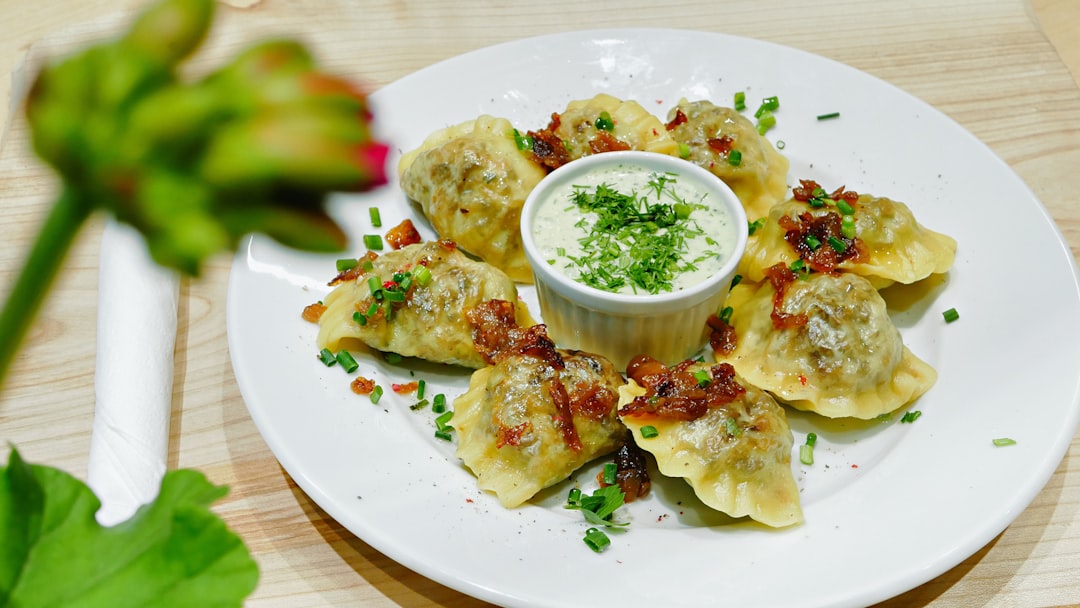
Pierogi are the soul of Polish cooking — half-moon dumplings stuffed, sealed, and either boiled, fried, or both, then served in quantities that would alarm a cardiologist but delight anyone with a pulse. They appear at holiday tables, in milk bars, at festivals, and in every Polish grandmother’s kitchen. But pierogi are not one dish. They’re a family of dishes with regional variations, seasonal fillings, and fiercely debated preparation methods that reveal the depth and diversity of Polish food culture.
The Classic Fillings
Pierogi ruskie (Ruthenian pierogi) are the most famous and most misunderstood. The name doesn’t mean “Russian” — it refers to the Ruthenian people of the historical region of Red Ruthenia, now in southeastern Poland and western Ukraine. The filling is a simple, perfect combination of mashed potato and farmer’s cheese (twarog), seasoned with salt, pepper, and sometimes fried onion. The best versions have a generous ratio of cheese to potato, making them tangy and rich. They’re served boiled and soft or pan-fried in butter until the edges turn golden and crispy — the fried version is objectively superior, though this opinion will start arguments.
Pierogi z miesem (meat pierogi) are filled with minced pork, beef, or a combination, often using leftover roast meat ground with onions and sometimes mushrooms. They’re heartier and more savory than ruskie, and they’re the everyday filling — the weeknight dinner, the market stall lunch. Pierogi z kapusta i grzybami (sauerkraut and mushroom) are the traditional Christmas Eve variety, eaten during Wigilia, the Polish Christmas supper, when meat is forbidden. The filling combines tangy sauerkraut with dried wild mushrooms (preferably borowiki, Polish porcini), and the earthy, funky flavor is deeply satisfying.
Sweet Pierogi: Poland’s Best-Kept Secret
Tourists rarely encounter sweet pierogi, but they’re a staple in Polish homes, especially in summer when fruit is abundant. Pierogi z jagodami (blueberry pierogi) are filled with fresh wild blueberries, boiled until the dough turns slightly purple from the juice, and served with a snowfall of sugar and a pour of sweet cream. Pierogi z truskawkami (strawberry) work the same way. The dough for sweet pierogi is sometimes made with scalded flour for extra tenderness. These are served as a main course, not a dessert — a concept that confuses non-Poles but makes perfect sense after the first bite.
Regional Styles and Variations
In Krakow, pierogi tend to be smaller and more delicate, with thinner dough and precise crimping. The city’s Stary Kleparz market has vendors who’ve been making pierogi the same way for decades. Warsaw’s style is slightly more robust, with thicker dough and larger portions. In the Podlasie region near the Belarusian border, pierogi are sometimes made with buckwheat dough. In Silesia, a larger version called “kluski slaskie” blurs the line between pierogi and dumplings.
Polish pierogi festivals, held in cities across the country during summer, are joyous celebrations of dumpling diversity. The Krakow Pierogi Festival, held annually in August, features dozens of vendors competing with creative fillings — duck confit, spinach and feta, even chocolate. While purists scoff at these innovations, they demonstrate that pierogi culture is living and evolving, not trapped in amber.
Where to Eat the Best Pierogi
The best pierogi are homemade, but since most visitors don’t have a Polish grandmother on standby, here are alternatives. Bar mleczny (milk bars) — communist-era subsidized cafeterias that survived the transition to capitalism — serve enormous plates of pierogi for a few zloty. Bar Mleczny Prasowy in Warsaw and Kuchnia Domowa in Krakow are reliable options where the menu is handwritten, the decor is institutional, and the food is exactly what your babcia would make. For a more polished experience, Zapiecek in Warsaw and Pierogeria Krakowiacy in Krakow serve elevated versions in comfortable settings. Pierogarnia Mandu in Krakow specializes exclusively in dumplings from multiple traditions, including Korean and Georgian alongside the Polish classics.
Making Versus Buying
- Homemade pierogi dough requires only flour, water, egg, and a pinch of salt — the technique is in the rolling and sealing
- The dough should be rolled thin but not translucent; it needs to hold the filling during boiling
- Seal edges by pressing firmly with a fork or folding and crimping — any gap means the filling escapes
- Boil in salted water until they float, then give them another minute
- Fry in butter with sliced onions for the definitive version
- Serve with sour cream (smietana) — this is non-negotiable
Pierogi are proof that the simplest foods are often the most enduring. Flour, water, potato, cheese — ingredients available to every household regardless of wealth — transformed by technique and tradition into something that can make a grown man nostalgic for a childhood kitchen. They are, in the best sense of the word, comfort food: warm, filling, and irreducibly good.




Leave a Reply