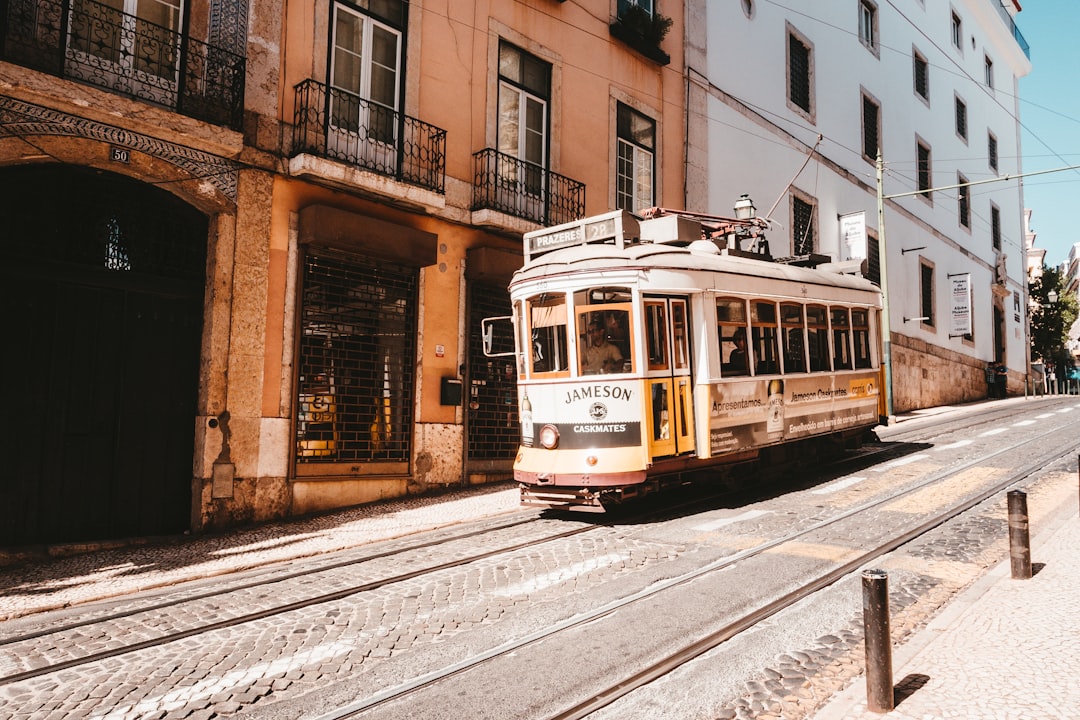
Portuguese cinema occupies a unique and often underappreciated place in European film history. While French New Wave directors like Godard and Truffaut revolutionized cinema in the 1960s, and Italian neorealism influenced generations of filmmakers, Portuguese cinema developed its own distinct aesthetic and philosophical approach—one that has only recently begun to receive the international recognition it deserves. At the center of this tradition stands Manoel de Oliveira, a director whose career spanned nearly a century and who fundamentally shaped how Portuguese cinema approaches narrative, time, and visual representation. Understanding Portuguese cinema requires understanding Oliveira, the city of Porto that serves as his spiritual home, and the contemporary directors who have continued and expanded Portugal’s unique cinematic voice. For travelers and film enthusiasts, Portugal offers not just beautiful locations but access to a distinctive cinematic tradition that fundamentally challenges how we think about film itself.
Manoel de Oliveira: Portugal’s Cinematic Philosopher King
Manoel de Oliveira (1908-2015) represents one of cinema’s most extraordinary careers. Born in Porto and remaining deeply connected to the city throughout his life, Oliveira directed films across nearly a century, from the early sound era through the 21st century. His longevity alone makes him remarkable; his artistic consistency and innovation make him essential to understanding world cinema.
Oliveira’s films are characterized by several consistent preoccupations: the relationship between cinema and literature (particularly classical and philosophical texts), the nature of love and desire, the weight of history and tradition, the paradoxes of time and memory. His visual style is distinctive—long takes, deep focus, minimal editing, a preference for composition over action. He often adapted literary works and approached cinema as a fundamentally philosophical medium, a way of thinking rather than simply telling stories.
Several of his films were set in or filmed in Porto, making that city a pilgrimage destination for serious cinephiles. Understanding Oliveira requires understanding Porto—the city shaped his vision, and his films offer a profound meditation on Porto’s particular character: historic, elegant, tinged with melancholy, and deeply connected to Portugal’s relationship with literature and tradition.
Porto and Manoel de Oliveira: A Sacred Cinematic Geography
Porto (also spelled Oporto in English), Portugal’s second-largest city, sits dramatically on the Douro River’s banks. The city’s architecture—with its medieval downtown, baroque churches, and 18th-century riverside warehouses—provides the visual texture for several of Oliveira’s most significant films. More importantly, Porto represents the intellectual and emotional center of Oliveira’s cinematic vision.
Key Oliveira Films Set in Porto
The Cannibals (Canibais, 1988): This film, based on Miguel Cervantes’ La Galatea, is set in Porto and uses the city’s historic streets, particularly around the Ribeira (waterfront) district, as a primary location. The film’s meditation on desire, literature, and the nature of human connection unfolds through Porto’s winding medieval streets.
The Traveling Players (Os Atores Viajantes, 1988): While not exclusively set in Porto, this film about touring theater actors frequently features Porto locations and captures the theatrical, performative quality that characterizes Oliveira’s relationship to cinema.
Soft Shells (Carapaceu Mole, 1999): This late-period Oliveira film set in Porto explores mortality, desire, and memory in his characteristically philosophical manner. The film uses Porto’s architecture and landscape as more than backdrop—the city becomes a metaphor for the temporal unfolding of human experience.
Exploring the Oliveira-Porto Connection
For visitors interested in Oliveira’s cinema, Porto itself becomes a kind of text to be read. The medieval streets around the Ribeira, the baroque churches, the 19th-century buildings overlooking the river—all provide visual anchors for understanding Oliveira’s aesthetic and thematic preoccupations.
Key Porto Locations for Oliveira Fans:
Ribeira District: The old town center of Porto, with its narrow medieval streets, steep stairways, and historic buildings, appears repeatedly in Oliveira films. The Ribeira is a UNESCO World Heritage site and remains one of Europe’s most architecturally preserved medieval urban centers.
- What to See: The Ribeira is best explored on foot. Walk the narrow streets, climb the stairways, sit in small squares. Oliveira’s films often frame characters moving through these spaces, using the architecture to communicate interior psychological states
- Best Time to Visit: Early morning (8-9 AM) before crowds, or late afternoon (5-7 PM) when light angles create dramatic shadows
- Practical Tips: The Ribeira is extremely steep and involves significant climbing; wear comfortable shoes with good grip
Livraria Lello (Lello Bookstore): One of Europe’s most beautiful bookstores, located in the Clérigos neighborhood of Porto. This historic bookstore, founded in 1906, embodies the intellectual and literary tradition that Oliveira celebrates in his films.
Livraria Alemanha: Another historic bookstore, near Livraria Lello, representing Porto’s long intellectual tradition.
Bolhão Market (Mercado do Bolhão): This historic covered market, dating to 1839, represents the everyday vitality of Porto—the commercial, social life that provides texture to Portuguese cinema.
Clerigos Tower and Church: This baroque church and bell tower dominate the Porto skyline and appear in various Oliveira films. The tower offers views across the city.
Pedro Costa: Extending the Portuguese Cinematic Tradition
While Oliveira represents the philosophical foundation of Portuguese cinema, contemporary Portuguese director Pedro Costa has emerged as one of the world’s most important living filmmakers. Costa’s work, while distinctly his own, extends and transforms Oliveira’s preoccupations: the relationship between cinema and literature, the representation of everyday life and social reality, the patient construction of visual meaning.
Costa is best known for his Fontainhas Trilogy—three films set in the Fontainhas neighborhood of Lisbon:
These films document the lives of inhabitants of Fontainhas, a poor neighborhood slated for demolition, with extraordinary intimacy and formal rigor. Costa uses long takes, natural light, and minimal narrative structure. His films demand patience and offer profound meditation on time, community, and the people typically rendered invisible by mainstream cinema.
Fontainhas: A Neighborhood and a Cinema
Fontainhas (also spelled Fontaínhas) is located in Lisbon’s Encarnação neighborhood. The area was historically home to poor working-class residents and immigrant communities. The neighborhood was demolished in the early 2000s to make way for urban renewal and gentrification. Pedro Costa’s Fontainhas Trilogy represents perhaps the most profound cinematic documentation of this neighborhood and its inhabitants.
Visiting the Former Fontainhas Location:
Today, Fontainhas no longer exists as a neighborhood—the buildings have been demolished, replaced by modern development and gardens. However, for serious film enthusiasts and Costa admirers, visiting the location offers a meditation on cinema’s relationship to documentation, loss, and social change.
Cinemateca Portuguesa (Portuguese Film Archive and Cinema):
Located in Lisbon, the Cinemateca Portuguesa (Portuguese Cinematheque) screens Pedro Costa films, Manoel de Oliveira retrospectives, and showcases Portuguese cinema’s entire tradition. This is an essential destination for serious film enthusiasts.
Miguel Gomes: Contemporary Portuguese Auteur
Beyond Oliveira and Costa, Miguel Gomes represents another crucial contemporary voice in Portuguese cinema. Gomes’ films, while different in style and approach from Oliveira and Costa, continue Portuguese cinema’s commitment to philosophical rigor and visual distinction. His films like Our Clouds (2010) and The Diary of the Immorals (2009) use landscape, history, and philosophical inquiry in ways that extend the Portuguese tradition into new registers.
The Cinemateca Portuguesa: Pilgrimage Site for Film Lovers
The Cinemateca Portuguesa is not just a museum or archive; it’s a living center of Portuguese film culture. For anyone seriously interested in Portuguese cinema, the Cinematheque is an essential destination.
The Cinematheque maintains extensive archives of Portuguese films, provides opportunities for research, and programs regular screenings of both classic and contemporary works. The building itself, located in central Lisbon, is architecturally interesting and offers a sense of the institutional space devoted to film preservation and exhibition.
Visiting Information:
Understanding Portuguese Cinema’s Distinctiveness
Portuguese cinema, while less famous internationally than French, Italian, or even Spanish cinema, occupies a distinctive position in European film history. Several factors contribute to this:
Literary Tradition: Portuguese cinema has historically been deeply influenced by Portuguese literature and philosophy. Directors like Oliveira explicitly adapted literary works and approached cinema as a vehicle for philosophical inquiry. This emphasis on intellectual content distinguishes Portuguese cinema from more action or spectacle-oriented cinema traditions.
Visual Rigor: Directors like Oliveira and Costa are known for extraordinary formal discipline—long takes, minimal editing, careful composition. This approach derives partly from the influence of Japanese cinema (Oliveira admired Ozu) and partly from the belief that cinema should reveal meaning through patient observation rather than manipulation.
Social Commitment: While Portuguese cinema includes purely aesthetic and philosophical works, it has also maintained a strong commitment to documenting social reality and representing people typically rendered invisible in mainstream cinema. Pedro Costa’s work exemplifies this; films about poor neighborhoods, immigrant communities, and marginalized people receive the same formal care as any other subject.
Historical Consciousness: Portuguese cinema is deeply aware of history—colonial history, WWII and its implications, the Carnation Revolution, contemporary European integration. This historical consciousness informs even films that don’t explicitly address historical subjects.
Practical Information for Portuguese Cinema Pilgrims
Getting to Porto:
Where to Stay in Porto:
Day Trip Itinerary:
Getting to Lisbon:
Portuguese Cinema Online Resources:
Conclusion: Cinema as Philosophy, Cinema as Place
Portuguese cinema, from Manoel de Oliveira through Pedro Costa and beyond, represents a fundamentally different approach to filmmaking than what dominates global cinema. It’s cinema understood as philosophy, as meditation, as patient observation rather than manipulation. It’s cinema that trusts viewers to think, to feel, to construct meaning rather than having meaning handed to them.
By visiting Porto and understanding Oliveira’s connection to the city, by traveling to the neighborhood where Pedro Costa filmed, by spending time in the Cinemateca Portuguesa, travelers gain access to this distinct cinematic tradition. More importantly, they gain access to a different way of thinking about cinema itself—as an art form with responsibility to represent reality faithfully, to engage with literary and philosophical traditions, and to maintain formal and ethical rigor in its approach to both subject matter and technique.
For anyone interested in cinema as art rather than entertainment, in understanding the diversity of film traditions worldwide, and in experiencing how distinctive philosophical and aesthetic approaches can emerge from specific places and cultures, Portuguese cinema represents an essential journey. Porto and Lisbon are not just beautiful cities; they are the birthplaces and continuing centers of one of world cinema’s most important traditions.




Leave a Reply