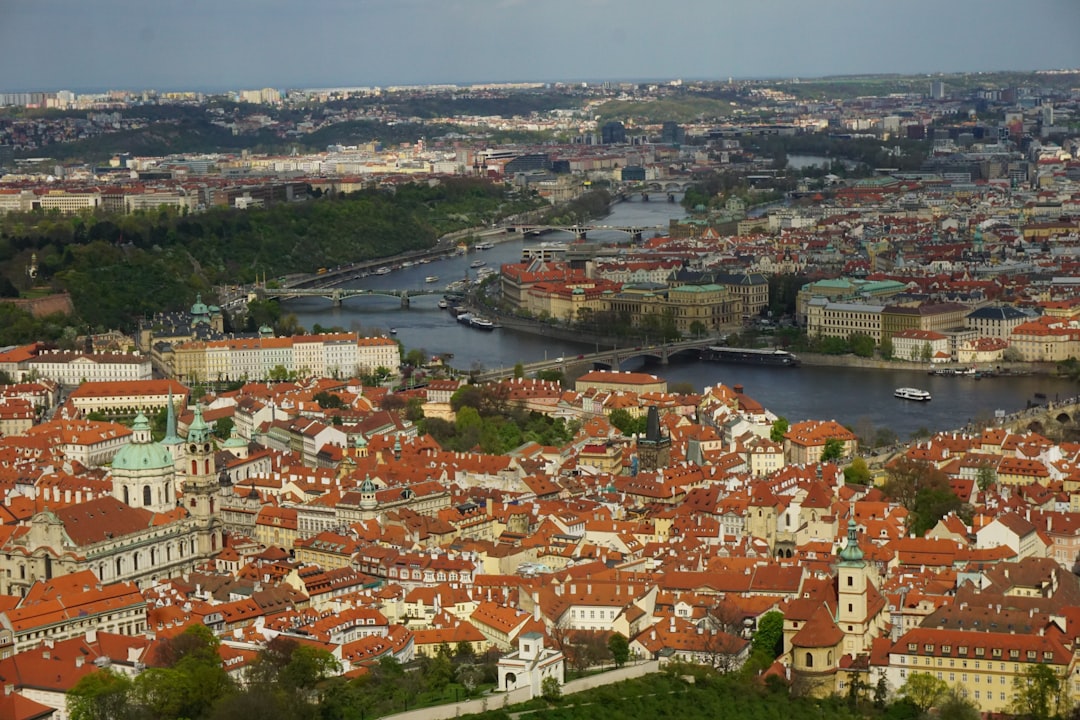
Prague is perhaps Europe’s greatest cinematic chameleon. With its Gothic spires, Renaissance facades, baroque churches, and medieval streets, the Czech capital has masqueraded as Paris, London, Vienna, Moscow, Berlin, and a dozen other cities on film. Directors and producers have discovered what locals have always known: Prague is a time capsule that can be any time, and a city that can be anywhere.
Why Prague Is Hollywood’s Favorite European Doppelgänger
The reasons are refreshingly practical and genuinely aesthetic. First, the architecture. Prague’s Old Town Square, with its 14th-century tower and astronomical clock, exists nowhere else on Earth—but when you frame it right, remove modern signage, and add period-appropriate vehicles, it becomes Renaissance Rome, medieval Vienna, or wartime Berlin. The Charles Bridge could be any European river crossing. The Jewish Quarter’s narrow alleyways evoke Warsaw’s ghetto. Neoclassical government buildings work for Moscow or St. Petersburg. This architectural diversity within a single city means productions can film multiple cities’ worth of scenes without ever leaving.
Second, the practical advantages: Czech film permits are straightforward to obtain, the local film commissions are eager to accommodate international productions, and costs run significantly lower than Western European alternatives. A crew can afford extended shoots in Prague that would blow budgets in London or Paris. The local infrastructure—soundstages at Barrandov Studios, experienced crews, post-production facilities—rivals anything in Western Europe.
Third, and perhaps most importantly: the city’s beauty is nearly universal. The Vltava River, the hillside castle, the golden light hitting old stone—these elements read as “European,” which is precisely what international productions need. They’re not filming Pragueness; they’re filming the idea of Europe itself.
The Architecture of Illusion: Which Prague Looks Like What?
Understanding Prague’s cinematic geography means knowing its neighborhoods and their visual associations.
Old Town (Staré Město) is the most internationally recognizable part of Prague, and therefore the most commonly dressed as somewhere else. The Old Town Square’s Gothic and Renaissance buildings can pass for Vienna, Berlin, or even Warsaw. The astronomical clock and tower have been featured in dozens of films as “a medieval European city center”—rarely as Prague itself.
Charles Bridge and its surroundings are endlessly filmable. The bridge’s Gothic towers, the statues lining its span, the Vltava views—these elements can be anywhere from medieval Prague to post-apocalyptic fantasy.
Malá Strana (the Lesser Town), with its baroque palaces and narrow streets climbing toward Prague Castle, evokes 18th-century Vienna just as convincingly as 17th-century Prague. Nerudova Street is particularly popular for shooting historical scenes.
Prague Castle area provides imperial grandeur. From certain angles, it passes for the Hofburg Palace (Vienna’s imperial residence), particularly in period films where interior shots are filmed elsewhere and the exteriors are Prague’s Strahov Monastery or the Archbishop’s Palace.
Holešovice and Letná, on the city’s periphery, offer industrial backdrops and Brutalist architecture that serve as modern or dystopian settings.
Films Where Prague Plays Someone Else
The Bourne Identity (2002)
Perhaps the most famous example of Prague-as-Paris is the opening of The Bourne Identity. Matt Damon’s amnesiac character stumbles through Parisian streets in the film’s opening sequence—but those are Prague streets, specifically in and around the Old Town and along the Vltava embankments. The production filmed extensively around Charles Bridge and Kampa Island, areas that, when dressed with Parisian street signs and cafés, successfully fool viewers into accepting them as the Seine’s banks.
The real giveaway is the Charles Bridge’s Gothic towers in the background—but most viewers never notice because they’re focused on the action. It’s a testament to Prague’s architectural flexibility that the film’s opening establishes “Paris” so convincingly that audiences accept it without question.
Visiting Tip: Walk across Charles Bridge early in the morning before crowds arrive. Turn around mid-bridge and look back toward the Old Town tower—you’ll see the view that appears in the opening sequence of The Bourne Identity.
The Gray Man (2022)
This Ryan Gosling-Chris Evans action film used Prague extensively as a European city setting, without pretending to be anywhere specific. Much of the film’s Prague scenes were shot in the Old Town, around Wenceslas Square, and in the streets near the National Museum.
Visiting Tip: Wenceslas Square, officially Václavské náměstí, is one of Prague’s largest public spaces and appears in numerous films. Visit late afternoon when the light is best and crowds are manageable.
Red Sparrow (2018)
Jennifer Lawrence’s spy thriller filmed extensively in Prague, using the city as a stand-in for Moscow. The Estates Theatre (Stavovské divadlo) features prominently, and much of the film’s espionage action unfolds in Prague’s recognizable locations dressed as Soviet Russia.
Three Colors (1993-1994)
Krzysztof Kieślowski’s final trilogy trilogy’s final installment, Three Colors: Blue, briefly uses Prague as Paris. Though not extensively filmed here, the film demonstrates how even brief Prague scenes work as European cities.
The Meta-Question: Why Does This Work?
There’s something profound about Prague’s role as cinema’s universal European city. It speaks to the film medium’s power to create illusion. A sign, a uniform, a vehicle, careful framing—these elements transform Prague’s medieval and baroque architecture into whatever location the narrative demands. The city becomes a blank canvas, not because it’s bland, but because it’s so thoroughly, timelessly European that it can be any European city.
This has economic and aesthetic consequences. For producers, Prague’s versatility means they can shoot “France and Austria and Germany” in a single city, saving weeks of location scouting and crew relocation. For cinematographers, Prague offers unparalleled architectural variety within walking distance—gothic, renaissance, baroque, neoclassical, modernist, brutalist elements all coexist in a few square kilometers.
The Paradox: When Prague Plays Itself
Interestingly, some of the greatest films shot in Prague—Amadeus, Anthropoid, Mission: Impossible—are actually using the city as itself, not as a stand-in. This suggests that Prague’s genuine identity is so cinematically powerful that directors don’t need to disguise it. Mozart really did perform at the Estates Theatre. Reinhard Heydrich really was assassinated in Prague. The city’s own history is compelling enough.
Visiting Prague as a Film Location Scout
If you’re interested in exploring Prague’s cinematic geography, several approaches work well.
Self-Guided Tours: Walk Charles Bridge at sunrise or sunset, when the light is best for photography. Explore the Old Town Square from multiple angles. Visit Kampa Island for views of the Charles Bridge and the city from unexpected perspectives. Walk Nerudova Street in Malá Strana for picture-perfect period architecture.
Organized Film Location Tours: Several Prague tour companies offer film-location-specific walks, particularly focusing on Mission: Impossible, Casino Royale, and other major productions. These tours provide context about which scenes were filmed where and often include anecdotes about production.
Studio Visits: Barrandov Studios (discussed in detail in a separate article) offers guided tours. Seeing the massive soundstages where interior scenes were filmed—interiors that establish “Vienna” or “Moscow” or “London”—completes the understanding of how the illusion works.
Museums and Archives: The Czech Film Museum, located in the Strahovský klášter (Strahov Monastery) area, has exhibits on Czech cinema history and international productions filmed in Prague.
The Larger Significance
Prague’s role as cinema’s universal European city reflects a unique moment in European history. After 1989, the fall of communism opened Prague to international film production. The city had been largely unavailable to Western filmmakers for 40 years, which meant its architecture remained relatively undamaged and unmodernized compared to other European capitals. By the 1990s, it was suddenly accessible—and it looked like no other city in Europe.
This convergence—post-Cold War opening, architectural preservation, production-friendly government policies, and genuine aesthetic beauty—created a unique opportunity. Prague became the go-to location for any production that needed “Europe” without the complications and costs of filming in the actual cities they were supposedly portraying.
Conclusion: The City in Disguise
Prague’s cinematic career as “anywhere in Europe” is unlikely to end soon. As long as filmmakers need European cities and budgets matter, Prague will continue to play Paris, Vienna, Berlin, Moscow, and mythical European cities that exist only in imagination. The city’s architects never intended to create a Hollywood backlot, yet that’s partly what Prague has become—with the crucial difference that it’s an authentic, living city where real Czechs live real lives, not a constructed set.
This is the paradox that makes Prague so cinematically valuable: it’s genuinely itself while being simultaneously everything else. It’s authentic European history masquerading as the abstract idea of Europe. And for film lovers, that duality makes it endlessly fascinating to explore, both on screen and on foot.




Leave a Reply