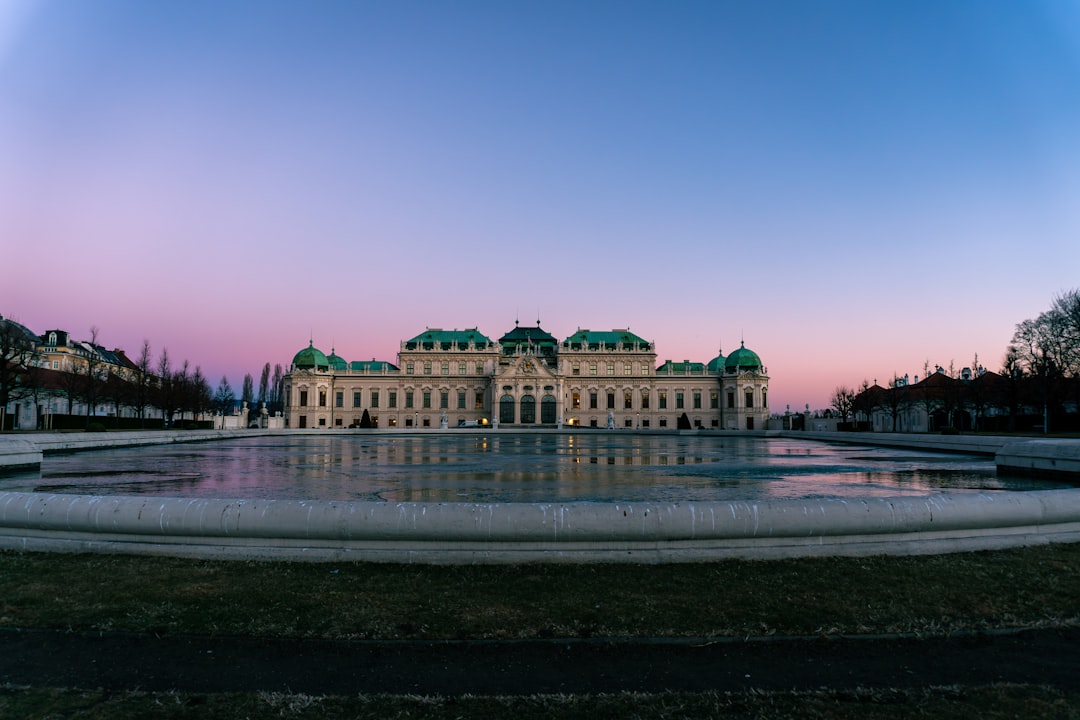
To walk through Prague today is to walk through a city shaped above all by the Habsburgs. The Prague Castle that dominates the skyline, the St. Vitus Cathedral with its soaring Gothic spires, the palaces and churches and gardens and monuments scattered throughout the city—the vast majority of what makes Prague beautiful and distinctive was built during the 400 years when the Habsburg Empire controlled the Czech lands. For much of that period, Prague wasn’t just an important city within the empire. It was the capital. It was where power resided. It was, for a brief extraordinary period, the center of the entire Holy Roman Empire.
Yet the Habsburg period is complicated for Czechs. It was a time of extraordinary cultural flourishing, of architectural magnificence, of intellectual ferment. It was also a time of political subjugation, of Czech independence being extinguished, of a nation’s identity being suppressed under imperial rule. The Habsburgs brought Prague to some of its greatest heights while simultaneously ensuring that it would, eventually, rise in rebellion against them.
Rudolf II and Prague’s Golden Age
The most glorious period of Habsburg Prague begins with Rudolf II, who became Holy Roman Emperor in 1576. Rudolf had inherited a sprawling, diverse, and often ungovernable empire. He decided that instead of trying to rule it from Vienna, he would move the imperial court to Prague. The year was 1583, and with that decision, Prague became the capital of the entire Holy Roman Empire.
This was an extraordinary elevation. Prague was transformed overnight from a provincial capital into the center of European power. Nobility, artists, scholars, and courtiers flocked to the city. Rudolf II, whatever his personal limitations as a political figure, had exquisite taste in art, science, and architecture. He became a patron of genius, and he set about making Prague a capital worthy of his vision.
Rudolf established the Kunstkammer (the “cabinet of curiosities”) in Prague Castle—one of the most remarkable collections of art, scientific instruments, and curiosities ever assembled. It contained everything from paintings by great Renaissance masters to shells, minerals, mechanical curiosities, and objects of extraordinary rarity. The Kunstkammer wasn’t just a museum in the modern sense—it was a repository of knowledge itself, a physical representation of the desire to understand and categorize the natural world. To walk through it was to see the Renaissance understanding of nature and art.
At the same time, Rudolf became a patron of astronomy and alchemy. He invited Tycho Brahe, the greatest astronomer of the age, to Prague. He hired Johannes Kepler, who would formulate the laws of planetary motion. He subsidized the alchemists who worked in the buildings along Golden Lane, the narrow street near Prague Castle where they attempted to transmute base metals into gold and to discover the philosopher’s stone.
Golden Lane remains one of Prague’s most popular tourist destinations. The tiny buildings where alchemists worked still stand, though they’re now souvenir shops and cafes. But when you walk the narrow street, you’re walking where some of the greatest scientific minds of the Renaissance worked. Kepler developed his theories of planetary motion in Prague, theories that would eventually lead Newton to formulate the law of universal gravitation. The alchemy pursued in Golden Lane, while not successful in its literal goals, was part of the broader Renaissance project of investigating the natural world.
It’s a paradox that defines Rudolf II’s Prague: it was a place where superstition (the belief in alchemy) and science (genuine astronomical observation) coexisted, where the pursuit of knowledge took forms we’d now recognize as pseudoscience but which were genuinely at the cutting edge of Renaissance thought. The Prague that Tycho Brahe and Kepler inhabited was a Prague of possibility, of intellectual ferment, of the sense that nature could be studied and understood.
The White Mountain and the End of Czech Independence
But this golden age didn’t last. Rudolf II was an erratic ruler—visionary as a patron, but increasingly unstable as a political leader. Toward the end of his reign, he suffered from what was likely mental illness. He became paranoid, withdrew from public life, eventually lost any real authority. The empire he ruled began to fragment.
The critical moment for Prague and the Czech lands came in 1620, at the Battle of White Mountain. This wasn’t just any battle—it was the moment where Czech independence effectively ended, where the region became fully integrated into the Habsburg empire as a subordinate territory, and where Prague ceased to be the capital of the empire (Vienna reclaimed that position).
The White Mountain battle was fought between the Czech nobility (who were rebelling against Habsburg authority, seeking to choose their own king) and the Habsburg forces. The Czech forces were defeated, decisively. The rebellion collapsed. The Czech nobility’s lands were confiscated, their power broken. Many of the rebel leaders were executed.
The defeat at White Mountain marked the end of the Bohemian Renaissance, the end of Prague’s brief moment as the center of the empire. The city that had been a capital of international importance was now a provincial capital of a subordinate kingdom within the larger empire.
The Counter-Reformation and Baroque Prague
But from the ashes of the White Mountain defeat arose something new: a Baroque Prague. The Habsburgs, traumatized by the Czech rebellion, determined that they would secure their control of the Czech lands through a combination of political repression and religious transformation. They would make Prague Catholic—thoroughly, completely, with no tolerance for Protestant heresy.
The Counter-Reformation in Prague was conducted with extraordinary vigor. Churches were rebuilt or newly constructed throughout the city. Baroque churches—with their soaring ceilings, their emotional intensity, their dramatic use of light and shadow—rose throughout Prague. St. Vitus Cathedral, which had been damaged during the religious conflicts, was rebuilt in Baroque style. The Church of Our Lady before Týn, the Church of St. Nicholas in Lesser Town Square—Prague’s skyline filled with Baroque spires.
This was religious architecture as political statement. The towering churches, the dramatic Baroque interiors, the emotional intensity of the design—all of it was meant to overwhelm, to inspire awe, to remind people of the power of the Church and the empire that supported it. The Baroque transformation of Prague wasn’t just aesthetic. It was a tool of political control.
The Habsburgs expelled or executed many of the Czech Protestant nobility. They brought in German and Italian merchants and artisans. They elevated German language in the administration, reducing Czech to a second-class language. The Czech lands became, in many ways, a colony of the Habsburg empire, a source of revenue and resources for Vienna, increasingly administered by German-speaking officials who had little connection to Czech culture.
This period of Baroque Prague (roughly 1620-1750) saw the city rebuilt in magnificent style but also saw Czech independence and Czech language suppressed. For two centuries, Prague remained largely Baroque, its skyline dominated by the religious and secular architecture of the counter-reformation, its population increasingly German-speaking, its Czech identity increasingly marginalized.
The 19th-Century National Revival
But suppression of national identity, when sustained for two centuries, often produces a reaction. In the nineteenth century, a Czech National Revival began to take shape. Czech intellectuals, artists, and intellectuals began consciously reconstructing Czech language, literature, and history. They studied medieval Czech texts. They promoted Czech as a literary language. They created a vision of Czech national identity based on the medieval past—on Jan Hus, on the Hussite Wars, on a sense of being a distinct people with distinct rights.
This Czech National Revival was the intellectual foundation for the Czech nationalism that would eventually, in 1918, lead to the creation of the independent Czechoslovak state. During the nineteenth century, Prague was a city where Czech and German cultures coexisted in tension. German was the language of administration and the educated elite. Czech was the language of ordinary people, increasingly becoming the language of national pride and identity.
Prague’s National Theatre, completed in 1883, became the symbol of the Czech National Revival. It was built with donations from ordinary Czechs—merchants, craftsmen, ordinary citizens—each giving what they could. The theatre became a temple to Czech national culture, a place where Czech language and Czech identity could be celebrated and performed.
Prague Under Austro-Hungarian Rule: A Complex Legacy
By the end of the 1800s, Prague had become a remarkable city of cultural contrast and tension. The Habsburg empire had built most of what made the city physically beautiful—the castle, the cathedral, the Baroque churches, the palaces. But that same empire had suppressed Czech language and Czech independence. Habsburg rule had brought architectural magnificence while denying political freedom.
When you walk through Prague today, you’re walking through a city shaped entirely by this contradiction. The grandeur of the Prague Castle, St. Vitus Cathedral, the Baroque churches, the palaces and gardens—all of this is Habsburg legacy. But so is the memory of suppression, of Czech language excluded from official life, of Czech nationalism denied. The city is beautiful because the Habsburgs made it beautiful, but it is also a city shaped by resistance to Habsburg rule.
The Austro-Hungarian Empire continued to rule the Czech lands until 1918. During World War I, Czech soldiers were conscripted to fight for Austria-Hungary, often facing armies fighting for independence (including Russian armies fighting in Eastern Europe). By the end of the war, the Austro-Hungarian Empire had collapsed. In 1918, the independent Czechoslovak state was declared, with Prague as its capital.
Where to See the Habsburg Legacy
When you visit Prague, the Habsburg period is unavoidable. You can’t walk through the city without confronting it.
Start with Prague Castle itself. Walk through the courtyards. Enter St. Vitus Cathedral, one of the greatest Gothic structures in Europe, rebuilt and expanded in the Baroque period. The Cathedral contains the tombs of Czech kings and saints. Its soaring ceilings and dramatic design are meant to inspire awe.
Visit Golden Lane, the narrow street near the castle where alchemists and scientists worked. Stand in the tiny spaces where Kepler may have stood, imagining the universe.
Walk through the Baroque churches—St. Nicholas in Lesser Town, the Church of Our Lady before Týn in Old Town. Stand inside them and feel the emotional intensity, the drama, the theatrical quality of Baroque design. These buildings were designed to move you, to make you feel the presence of the divine.
Visit Prague’s museums, particularly the National Museum. The exhibits will tell you about the 19th-century National Revival, about how Czech identity was reconstructed and championed.
A Complex Inheritance
The Habsburg period left Prague with a complex legacy. On one hand, it created one of Europe’s most beautiful cities. The architecture, the gardens, the monuments—this is all Habsburg. On the other hand, it left Prague as the capital of a nation that had been denied political independence, whose language had been suppressed, whose identity had been marginalized.
When Czechs finally achieved independence in 1918, it felt like liberation—liberation not just from Austria-Hungary but from four centuries of foreign rule. The Prague that emerged as the capital of Czechoslovakia was a city ready to celebrate its own identity, to promote its own language and culture, to stand once again as a major European capital.
Yet the Czechs couldn’t simply erase the Habsburg legacy. It’s too deeply embedded in the city. The Prague of today is, in many ways, Rudolf II’s Prague—a Prague shaped by his architectural vision, his collecting, his gathering of the greatest minds of the age. But it’s also a Prague that ultimately rejected Habsburg rule, that asserted its own independence, that chose to be Czech rather than imperial subjects.
Walking through Prague today, you’re walking through these tensions—between imperial grandeur and national identity, between foreign rule and independence, between the beauty that the Habsburgs created and the autonomy that Czechs claimed for themselves. It’s what makes Prague not just beautiful but meaningful—a city that is beautiful precisely because it has resisted the forces that tried to erase its identity, that has maintained a sense of self despite four centuries of foreign rule.
The Habsburgs built much of Prague’s physical beauty. But the Czechs built Prague’s identity, and in the end, identity proved stronger than empire.




Leave a Reply