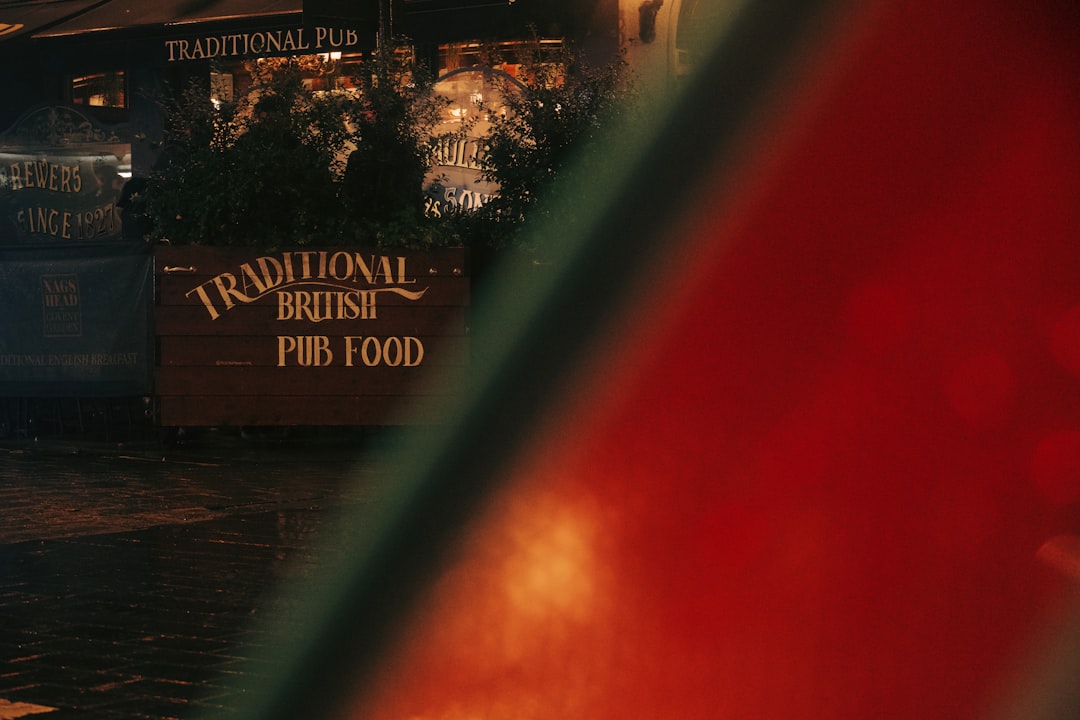
The pub — short for “public house” — is one of Britain’s most distinctive and enduring cultural institutions. There are roughly 46,000 of them in the United Kingdom, and while that number has been declining in recent decades, the pub remains the social heart of British life in a way that has no exact equivalent in American culture. It is not a bar. It is not a restaurant. It is not a community center, though it can function as all three. The pub is, in its essence, a place where a community comes to be a community.
A Brief History
Pubs trace their lineage back to Roman taverns and Anglo-Saxon alehouses. By the medieval period, alehouses run by local women (called “alewives”) were a fixture of English village life. The term “public house” emerged in the 17th century to distinguish these communal drinking establishments from private residences. The great era of pub building was the Victorian period, which gave Britain many of the ornate, etched-glass, dark-wood pubs that still stand today. Walk into a Victorian pub in London, Manchester, or Edinburgh, and you are standing in a room that has hosted conversations, arguments, celebrations, and commiserations for 150 years.
Ordering at the Bar
The most immediately foreign aspect of pub culture for American visitors is the absence of table service. In a traditional British pub, you order and pay at the bar. There is no waiter coming to your table. You walk up, wait your turn (there is usually no formal line — the bartender keeps mental track of who arrived when), order your drinks, pay, and carry them back to your table. This applies to food orders at many pubs as well, though some will bring food to your table after you order at the bar. Tips are not expected at a pub bar, though telling the bartender to “have one yourself” is a traditional way of showing appreciation — they will add the price of a drink to your tab.
The Rounds System
If you are drinking with British people, you will encounter the rounds system. The convention is simple: one person goes to the bar and buys drinks for everyone in the group. The next round, someone else pays. And so on. The key social rule is that you must buy your round. Skipping your round — or worse, conveniently leaving before it is your turn — is one of the gravest social offenses in British culture. It will be noticed, remembered, and quietly held against you for years.
For visitors, the rounds system can be daunting if the group is large, as buying eight pints at London prices is not cheap. It is acceptable to express this concern, and most Brits will understand. In large groups, people often split into smaller sub-groups for rounds purposes. But if you are in a group of three or four, participate fully. It is the price of entry to British social life, and it is almost always worth it.
Real Ale and CAMRA
Britain’s beer culture is distinctive and worth exploring. While lagers (Stella Artois, Carling, Peroni) are widely available, the soul of the British pub is cask-conditioned real ale — beer that undergoes a secondary fermentation in the cask and is served at cellar temperature using a hand pump (the tall handles you see on the bar). Real ale is flatter, warmer, and more complex in flavor than the carbonated, ice-cold lagers that Americans are accustomed to.
The Campaign for Real Ale (CAMRA), founded in 1971, is a consumer organization dedicated to preserving this tradition. Thanks in part to CAMRA’s advocacy, cask ale has survived the industrial homogenization that wiped out many local brewing traditions elsewhere. Today, Britain has over 1,800 breweries — more per capita than almost any country in the world — and many produce cask ales available only in local pubs. Ask the bartender for a recommendation, and try a half-pint if you are unsure.
The Sunday Roast
Many pubs serve a traditional Sunday roast, and if you are in Britain on a Sunday, you should make this your lunch plan. A proper roast consists of roasted meat (beef, lamb, chicken, or pork), roast potatoes, Yorkshire pudding (a savory batter pudding, not a dessert), seasonal vegetables, and gravy. Good pub roasts are served with generous portions at reasonable prices and are accompanied by the warm fog of conversation that fills a pub on a lazy Sunday afternoon. Booking ahead is advisable, as popular pubs fill their Sunday roast slots quickly.
The Pub Quiz
On one or two evenings a week, many pubs host a quiz night. Teams of four to six compete to answer rounds of trivia questions, usually covering general knowledge, current events, music, sport, and a picture round. The prizes are modest — often a bar tab or a bottle of wine — but the competition can be fierce. For visitors, quiz night is a fantastic way to spend an evening and meet locals. Most pubs allow walk-in teams, and joining forces with strangers at the bar is part of the tradition. Your knowledge of American geography or pop culture may prove surprisingly useful in the “specialist” rounds.
The British pub is under pressure — from rising rents, supermarket alcohol pricing, and changing social habits. But it endures because it serves a need that no app or algorithm can replace: the need for a place where you can sit down among your neighbors, share a drink, and belong to something. For visitors, an evening in a good pub offers something more valuable than any museum or cathedral: a living, breathing encounter with British life as it is actually lived.




Leave a Reply