Walk into a traditional Dutch restaurant, scan the menu, and you’ll see something that might confuse you: dishes with names you can’t pronounce, ingredient combinations that seem unusual, flavors that feel simultaneously exotic and familiar.
This is Dutch cuisine in the 21st century — a cuisine that cannot be understood without understanding 350 years of Dutch colonial presence in Indonesia.
The Netherlands was not a major culinary power in medieval Europe. Dutch food was practical, based on what grew in a flat, wet climate: potatoes, cabbage, grains, dairy. It was sturdy and plain. But then the Dutch began their colonial enterprise, particularly in what is now Indonesia (then the Dutch East Indies), and food changed forever.
Rijsttafel: The Colonial Legacy on a Plate
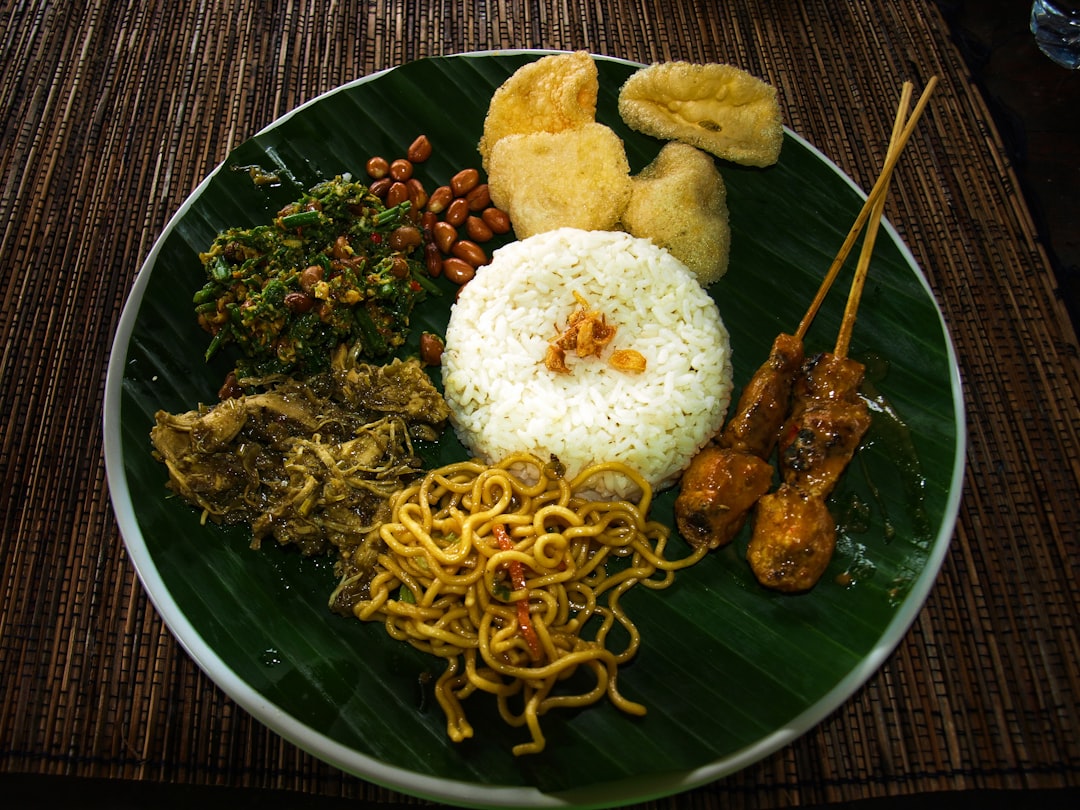
Rijsttafel — literally “rice table” — is the iconic dish that represents Dutch-Indonesian fusion. It’s an elaborate meal featuring rice with 12 to 40 small dishes surrounding it: satay (skewered meat), sambals (chile pastes), curried vegetables, fried shrimp crackers, fish dishes, and more.
It’s not originally Indonesian. Instead, it’s a Dutch colonial invention. Back in the Dutch East Indies, wealthy colonizers would host feasts where local servants would prepare elaborate spreads of small dishes. Eating rijsttafel was a display of wealth and colonial power. After independence, the tradition moved to the Netherlands itself, becoming a Dutch-Indonesian culinary tradition.
Today, ordering rijsttafel is a tourist experience, but it’s also genuinely reflective of how completely Indonesia shaped Dutch food culture.
What’s Actually in Rijsttafel
A typical rijsttafel includes:
The Rice Base — a mound of white or yellow rice (often cooked with turmeric or coconut milk) forms the foundation.
Sambals — chile-based condiments with varying heat levels. Sambal oelek (ground chiles), sambal matah (with shallots and garlic), sambal kacang (peanut-based) are common.
Satay — grilled meat (usually chicken or pork) on skewers with peanut sauce. This is practically the national dish of Indonesia and essential to Dutch-Indonesian cuisine.
Gado-gado — boiled vegetables (cabbage, bean sprouts, eggs) with peanut sauce.
Vegetables curried — often with coconut milk, spices, and sometimes additional proteins.
Fried items — crackers, tempeh, or spring rolls.
Accompaniments — fried onions, cucumber slices, more rice.
Protein options — beef rendang, shrimp, fish.
The whole spread is designed to be mixed and matched. You add different components to your rice, taste, adjust, and keep going. It’s interactive eating — creating your own combinations rather than eating a single prepared dish.
The Experience
Ordering rijsttafel is a theatrical experience. Everything arrives on multiple plates and small bowls. It looks excessive. It’s meant to. You combine flavors, find combinations you like, and use the meal as an exploratory adventure in taste.
The flavors are bold: coconut, chile heat, peanut richness, fresh herbs. It’s a complete departure from traditional Dutch food’s simplicity.
For visitors, rijsttafel is where you’ll encounter the full depth of Indonesian influence on Dutch cuisine.
The Indonesian Influence Beyond Rijsttafel
But rijsttafel is just the most formal expression of Indonesian influence. Everyday Dutch food is saturated with Indonesian flavors.
Nasi Goreng — fried rice with vegetables, egg, and meat. It’s on nearly every Dutch menu and is probably eaten more commonly than rice-based traditional Dutch dishes.
Bami — fried noodles with similar vegetables and proteins. You’ll find bami stands in shopping centers, corner restaurants, and everywhere food is served.
Satay — grilled meat with peanut sauce is a standard snack, appetizer, or light meal.
Gado-gado — vegetable salad with peanut sauce appears on menus as both a proper dish and a side.
Rendang — meat cooked in coconut spices until incredibly tender, a dish that’s become thoroughly Dutch.
Bakso — a meatball soup with roots in Indonesia and Malaysia, now common Dutch comfort food.
In fact, if you’re looking for Indonesian restaurants in the Netherlands, you’ll find many, but honestly, the cuisine is so integrated into Dutch food culture that you encounter it everywhere — in regular Dutch restaurants, street food stands, and casual eateries.
The Snackbar Culture: Dutch Fast Food
If rijsttafel is formal dining’s Indonesian legacy, the snackbar represents casual food’s embrace of global flavors.
A typical Dutch snackbar is a small, casual establishment (often operating from a window or counter) that serves quick, fried foods. While some traditional options exist, most snackbars have a multiethnic menu heavily influenced by Indonesian, Turkish, and general European snack traditions.
Traditional and Modern Snackbar Foods
Kroket — a fried cylinder of a creamy meat ragout or vegetable filling, coated in breadcrumbs and deep-fried until golden. Often served with mustard. It’s one of the most iconic Dutch snacks.
Bitterbal — smaller versions of kroketten, usually a single bite. They’re especially popular as appetizers (called borrelhapjes — snacks for drinks).
Frikandel — a Dutch sausage, fried or grilled, served with various condiments. You’ll see food stands selling frikandellen from windows or street carts.
Kaassoufflé — fried cheese puffs, crispy outside with melted cheese inside.
Patat — Dutch-style french fries, cooked to a specific texture and served with various toppings: mayonnaise (not ketchup — important distinction), curry sauce, satay sauce.
Chicken kebab/Shawarma — reflecting more recent Turkish and Middle Eastern influence in Dutch food culture.
Falafel and hummus — increasingly common.
Spring rolls and other Asian snacks — reflecting broader globalization.
The snackbar is where street food happens in the Netherlands. For tourists on a budget or in a hurry, snackbars are everywhere and offer quick, cheap meals.
Eating at a Snackbar
Order at the counter or window — snackbars are casual; you order, pay, and often eat standing up or walk away with food.
Try patat — Dutch fries are worth experiencing. They’re cooked in a specific way (double-fried, then rested) and have a distinct texture.
With mayo, not ketchup — traditionally, patat is served with mayo. If you ask for ketchup, you’ll get funny looks. The Dutch are weirdly passionate about this.
Portions are generous — a snack often suffices for a light meal.
It’s cheap — a full snack meal might cost €5-10.
Quality varies — some snackbars are excellent; others are mediocre. Finding a good one with reputation matters.
Other Important Dutch Food Traditions
While Indonesian influence dominates modern Dutch cuisine, other traditions remain important.
Cheese Culture
The Netherlands is famous for cheese, and this reputation is well-deserved. Dutch cheeses like Gouda, Edam, and Maasdam are exported worldwide. Locally, you’ll find countless regional varieties, aged versions, flavored versions, and smoked versions.
Cheese markets in places like Alkmaar and Edam still operate in traditional ways, with cheese wheels being sold ceremonially. These are partly tourist attractions now, but they reflect a genuine Dutch cheese-making tradition.
Raw Herring and Fish
One of the more challenging Dutch foods for visitors: kibbeling (battered fish) and especially raw herring (haring).
Raw herring is a traditional Dutch snack — fresh herring, either whole or filleted, typically served with onion and pickle. To eat it properly, you’re supposed to hold the herring by its tail, tilt your head back, and lower it into your mouth.
The flavor is intense: fishy, salty, fresh. It’s an acquired taste, but it’s genuinely Dutch and worth trying.
Stroopwafels
These thin waffle cookies with a gooey caramel center are perhaps the most recognizable Dutch treat internationally.
Proper stroopwafels are best eaten warm (placed over a cup of hot coffee or tea so the caramel softens). They’re commonly found at markets and shops.
Poffertjes
Tiny, puffy pancakes dusted with powdered sugar. They’re traditionally a street food and are delicious as a snack or light breakfast.
Oliebollen and New Year’s Tradition
Deep-fried pastry balls, often filled with fruit or custard, oliebollen are a New Year’s Eve tradition. They’re typically eaten between December 28th and January 1st.
The Colonial Complexity
Understanding Dutch food requires grappling with its colonial history honestly.
The Indonesian influence in Dutch cuisine is the result of 350 years of Dutch colonial occupation. That occupation extracted wealth, imposed political systems, and caused genuine harm to Indonesian people. Yet it also created a cultural fusion that is genuinely beautiful.
For Dutch people, Indonesian food is simply normal — it’s so integrated into daily cuisine that few think about its colonial origins. For visitors, it’s an opportunity to appreciate the flavors while acknowledging the complicated history that brought them to the Netherlands.
Many Dutch people today recognize this complexity. There’s growing interest in understanding colonial history more critically, including food history. Some restaurants now emphasize Indonesian culinary traditions explicitly, honoring the origins of dishes that became Dutch.
Dining Out and Food Culture
Some observations about eating in the Netherlands:
Lunch is not large — most Dutch people eat a light lunch (sandwich, bread with cheese, soup) and save eating for dinner.
Dinner is the big meal — typically eaten 5-6 PM. Restaurants often have early-bird pricing; eating after 7 PM is later by Dutch standards.
Vegetarian/Vegan options are excellent — the Netherlands has strong vegetarian and vegan movements; nearly every restaurant has substantial meatless options.
Tipping is optional but appreciated — it’s not obligatory like in the US, but rounding up or adding 5-10% for good service is normal.
Prix fixe menus are common — many restaurants offer set menus at set prices, often better value than ordering individual items.
Food as Cultural Portal
For visitors, trying Dutch food — from rijsttafel to snackbar frikandellen to raw herring — is participating in Dutch culture. These foods tell stories: of colonial history, of practical pragmatism (snackbars feed busy people quickly), of celebration (rijsttafel as feast), of daily life (cheese and bread).
The fact that Indonesian food is so thoroughly integrated into Dutch cuisine that most Dutch people don’t think of it as foreign is itself a lesson. It demonstrates how completely colonial relationships transformed both countries, and how food carries that history — complicated, beautiful, contested, but undeniably real.
Come hungry. Try everything. And know that in every dish, you’re tasting Dutch history.




Leave a Reply