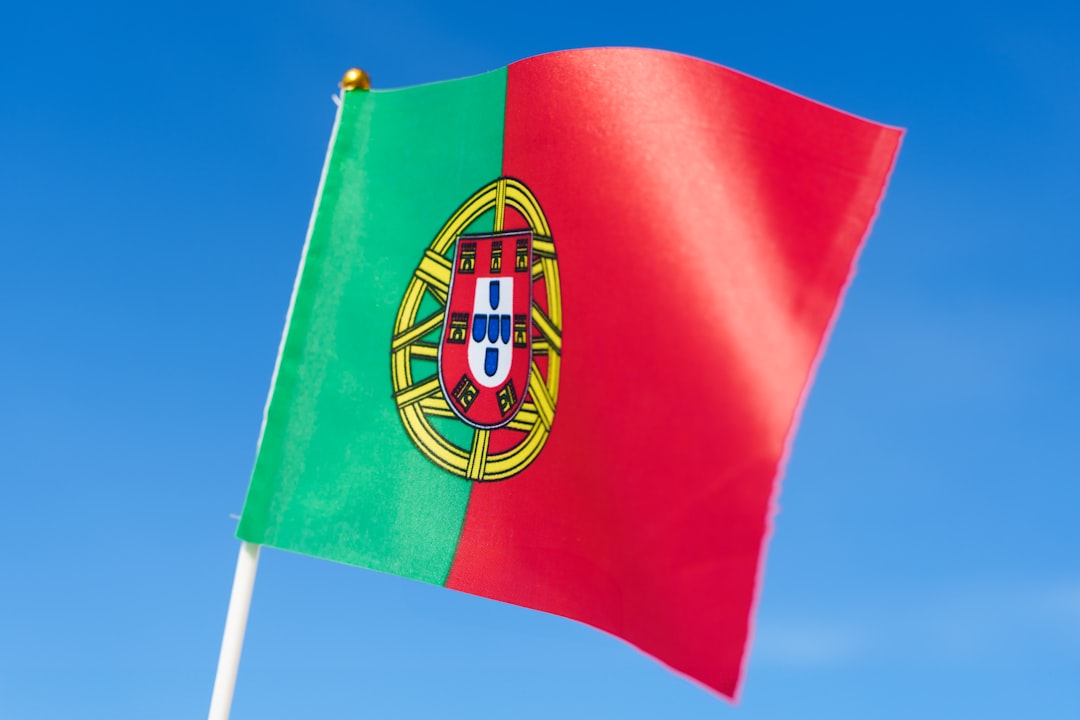
When most people think of twentieth-century European dictators, certain names come to mind: Hitler, Mussolini, Franco, Stalin. But there’s another name that should be on that list, and yet is often absent from international awareness: António de Oliveira Salazar, who ruled Portugal for thirty-six years and was Europe’s longest-serving dictator of the twentieth century.
Salazar is often called Portugal’s forgotten dictator—not because he was less brutal than other European autocrats, but because he was quieter about it. He didn’t build monuments to himself the way Mussolini did. He didn’t engage in the public spectacles of violence that characterized other dictatorships. He was, in many ways, a quiet man. He was an economics professor who became a dictator, and he ruled through bureaucratic control, censorship, and a secret police apparatus that was efficient, terrifying, and largely invisible to international observers.
Salazar’s Estado Novo—the “New State”—lasted forty-one years, from 1933 until 1974. It was one of the longest-lasting dictatorships in European history. And for most of that time, Portugal was barely on the international radar. The dictatorship was so stable, so normalized, that few people outside Portugal were even aware it existed.
The Background: Chaos and Crisis
To understand Salazar, you have to understand the chaos that preceded him. Portugal’s First Republic (1910-1926) was a disaster. The country was poor, underdeveloped, and heavily in debt. The political system was fragmented and dysfunctional—there were over one hundred governments in sixteen years. Inflation was rampant. The economy was in freefall.
In 1926, the military seized power in a coup, establishing a military dictatorship. But the military rulers quickly proved to be as incompetent as the politicians they had replaced. The coup had been supposed to save the country, but it was becoming clear that the generals didn’t know what they were doing.
In 1928, the military leaders turned to a Finance Minister named António de Oliveira Salazar to help stabilize the economy. Salazar was a quiet, intellectual man—a university professor of economics. He was not a typical dictator. He wore simple clothes, maintained a modest lifestyle, and preferred reading in his office to public spectacles.
But Salazar was ruthlessly effective. He implemented a draconian austerity program, cutting government spending dramatically. He balanced the budget. He restructured the debt. Within a few years, Portugal’s financial crisis was resolved.
The military leadership, impressed by his success, gradually gave Salazar more and more power. By 1932, Salazar was Prime Minister. By 1933, he had crafted a new constitution establishing the Estado Novo—the “New State”—a corporatist, authoritarian regime that would last for forty-one years.
The Ideology of the Estado Novo
The Estado Novo was not a fascist regime in the strict sense—it wasn’t based on the cult of personality the way Nazi Germany or Mussolini’s Italy were. But it shared many characteristics with fascism: it was authoritarian, it suppressed opposition, it emphasized the nation above individual rights, it collaborated with the Catholic Church to maintain social control.
The Estado Novo’s official ideology emphasized hierarchy, order, and the subordination of individual interests to the state. Society was organized corporatistically—different sectors of the economy were organized into corporations, theoretically managed by representatives of workers and employers, but actually controlled by the state. It was a system designed to prevent conflict by eliminating autonomous organizations that could challenge state authority.
The regime was also intensely Catholic. Portugal, Salazar believed, was a Catholic nation with a divine mission. The Church was given privileged status and was expected to promote loyalty to the regime. Religious education was compulsory. Divorce was forbidden. The regime presented itself as the defender of Catholic values against the godlessness of communism.
The PIDE: Secret Police and Terror
If Salazar’s dictatorship differed from more obvious fascist regimes in ideology, it was equally ruthless in its methods. The instrument of that ruthlessness was the PIDE—the Polícia Internacional e de Defesa do Estado (International and State Defense Police).
The PIDE was established in 1945, replacing an earlier secret police organization. It was modeled partly on the Gestapo and the Soviet secret police. The PIDE maintained an extensive network of informants and spies. They monitored political opposition, arrested dissidents, and conducted torture as a standard part of interrogation.
The PIDE’s headquarters in Lisbon, at the Rua António Maria Cardoso, was a place of dread. People who were arrested by the PIDE often disappeared for weeks or months. During that time, they would be interrogated—often under torture. The regime never officially acknowledged torture, but everyone in Portugal knew it happened. The use of torture was not the exception but the rule in PIDE interrogations.
Thousands of people were arrested, tortured, and imprisoned by the PIDE. Many died. Others were broken by the experience and emerged as shadows of their former selves. The regime maintained prisons in remote locations—the notorious Tarrafal concentration camp on the island of Cape Verde was where the regime sent its most dangerous political prisoners.
The fear that the PIDE inspired was pervasive. Neighbors might be informers. Casual remarks could be reported to the police. Someone could be arrested at any moment for criticizing the regime or expressing sympathy for the opposition. This climate of fear—more than overt repression—was perhaps the PIDE’s greatest tool in maintaining control. People learned to be silent, to avoid expressing opinions, to watch what they said.
Censorship and Cultural Suppression
Beyond the police apparatus, the Estado Novo maintained control through comprehensive censorship. A government agency called the Comissão de Censura (Censorship Commission) reviewed all publications, films, plays, and public speech. Anything that was deemed threatening to the regime or to public order could be censored.
This meant that critical journalism was impossible. Opposition political parties were banned or heavily restricted. Intellectuals and artists who criticized the regime faced censorship or worse. Writers sometimes had to smuggle their manuscripts out of the country to be published. Filmmakers had to craft their films in ways that would pass censorship while still conveying subversive messages.
The cultural life of Portugal was stifled. Innovation in literature, film, theater, and art was constrained by the need to avoid censorship. The regime promoted traditional Portuguese culture—folk music, folklore, traditional values—as a way of maintaining social stability. Anything that seemed modern, cosmopolitan, or challenging to traditional values was viewed with suspicion.
Economic Stagnation and Emigration
Salazar’s economic policies were effective at balancing the budget and preventing inflation, but they came at a cost. The regime refused to invest significantly in modernization or development. Infrastructure was neglected. The government spent enormous amounts on the colonial wars, but very little on upgrading industry or technology.
As a result, the Portuguese economy stagnated. By the 1950s and 1960s, while other European countries were experiencing rapid economic growth, Portugal fell further and further behind. Wages were low. Unemployment was high, particularly in rural areas. Living standards remained depressed.
The result was massive emigration. Hundreds of thousands of Portuguese left the country, seeking work and opportunity in France, Germany, Brazil, and elsewhere. This emigration was partly encouraged by the regime—it reduced unemployment and removed people who might be discontent. But it also meant that Portugal lost an enormous portion of its young, educated, mobile population.
The Colonial Wars
The most destabilizing aspect of the Salazar regime was its refusal to accept that colonialism was ending. In 1961, independence movements in Angola began a revolt. In 1964, similar revolts began in Guinea-Bissau and Mozambique. The regime’s response was to fight.
For thirteen years, from 1961 to 1974, Portugal fought brutal colonial wars in three African territories. The wars were unwinnable. The Portuguese military was outnumbered and fighting in unfamiliar terrain. The independence movements had popular support and determination. And yet the regime refused to negotiate or accept defeat.
The human cost was enormous. Over 100,000 Portuguese soldiers were killed or wounded. Hundreds of thousands of African civilians died. Over a million people were displaced from their homes. The wars destroyed infrastructure, disrupted societies, and created a generation of traumatized veterans.
The colonial wars were crucial in setting the stage for the Carnation Revolution. The military officers who eventually conspired to overthrow Salazar’s successor, Marcelo Caetano, were primarily motivated by the wars. They had seen the futility of fighting unwinnable wars. They had lost comrades. They were exhausted.
The Succession and the End of the Regime
Salazar suffered a stroke in 1968 and was replaced as Prime Minister by Marcelo Caetano. Caetano was a more moderate figure in some ways, but he failed to address the fundamental problems facing the regime: the colonial wars were still unwinnable, the economy was still stagnant, and the PIDE’s repression continued.
By the early 1970s, the regime was showing signs of strain. The colonial wars were consuming resources and generating discontent among the military. The economy was weak. Opposition was growing, even in the context of heavy censorship and police repression.
In April 1974, military officers associated with the Armed Forces Movement (MFA) launched a coup. Within hours, the regime had collapsed. It was a surprisingly quick end for a dictatorship that had lasted forty-one years.
The Legacy of Salazar
Salazar died in 1970, and his regime did not long survive him. But his legacy persisted in complicated ways.
On the one hand, Salazar is often credited with bringing economic stability to Portugal and preventing the chaos of the early republic from recurring. His economic policies, though austere, were effective at balancing budgets and controlling inflation. In this sense, he “saved” Portugal from total economic collapse.
On the other hand, Salazar’s regime left Portugal enormously behind. While other European countries modernized and developed, Portugal stagnated. The regime’s refusal to invest in education, technology, and infrastructure left Portugal far behind its European neighbors. The colonial wars devastated Portuguese soldiers and African populations. The PIDE’s repression of dissent and the censorship of culture created a climate of fear and suppression.
It took decades after the revolution for Portugal to catch up to the rest of Europe. The country had to rebuild its economy, create a functioning democracy, and process the trauma of the dictatorship and the colonial wars. These challenges consumed Portugal for the decades after 1974.
Why Salazar is Forgotten
Salazar is less famous than other twentieth-century dictators partly because he was less flamboyant. He didn’t build giant monuments. He didn’t make grand speeches. He didn’t engage in public spectacles of power.
He was also less internationally visible. Portugal was not at the center of European affairs. The Second World War happened on the margins of Portuguese politics—Salazar managed to keep Portugal neutral. During the Cold War, Portugal was on the Western side, so Western powers didn’t look too closely at the dictatorship. When journalists and observers did look at Portugal, they were sometimes blinded by propaganda about how stable and orderly the regime kept the country.
Salazar is also less famous than Hitler or Mussolini because, in the end, his regime was peacefully overthrown. The Carnation Revolution of 1974 brought democracy without a major bloodbath. In this sense, the dramatic end of the dictatorship tends to overshadow the long, quiet years of authoritarianism that preceded it.
Visiting the Dictatorship’s Sites
For travelers interested in this period, several sites in Lisbon commemorate the dictatorship and the revolution:
The PIDE headquarters building (now housing a museum) at Rua António Maria Cardoso preserves some cells and documents of the secret police. It’s a sobering place, a reminder of the repression that characterized the regime.
The Museu do Aljube (Aljube Prison Museum) houses a political prison that was used by the regime. The building preserves cells, documents, and exhibits related to political imprisonment under the dictatorship.
The Carnation Revolution Museum (Museu da Revolução dos Cravos) includes exhibits on the dictatorship as well as on the revolution itself.
Understanding the Dictatorship
Salazar’s Estado Novo is an important case study for understanding how dictatorships work. It shows that dictatorship doesn’t always require the overt violence and spectacle that characterize the worst-known twentieth-century dictatorships. It shows that a regime can maintain control through a combination of secret police, censorship, and pervasive fear—all managed quietly, bureaucratically, without enormous public displays of power.
It also shows the human cost of authoritarianism—the people tortured by the PIDE, the soldiers who died in unwinnable colonial wars, the students and intellectuals who had to suppress their aspirations because of censorship, the millions who emigrated because they saw no future in their own country.
Understanding Salazar and the Estado Novo is understanding a crucial part of Portuguese history and a sobering reminder of how fragile democracy is and how easily freedom can be suppressed.




Leave a Reply