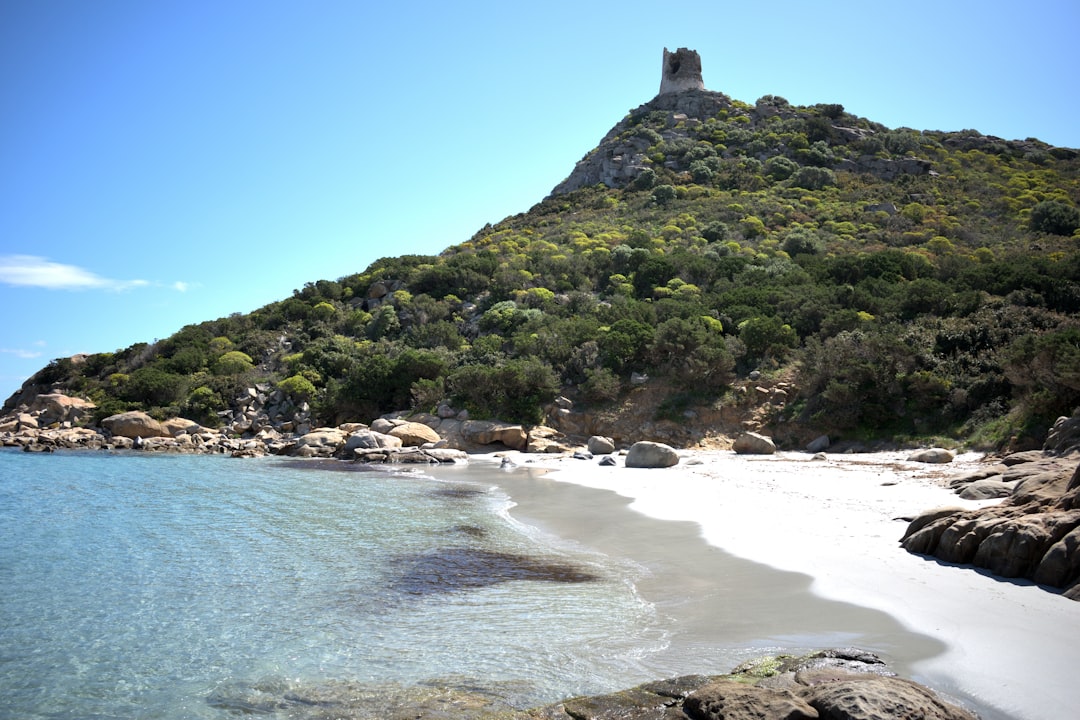
Italy’s two largest islands sit at opposite ends of the country’s southern coastline, and while they share a Mediterranean climate, a love of good food, and beaches that would make the Caribbean envious, they are remarkably different in character. Sardinia is wild, sparsely populated, and self-contained, with a culture that feels as much its own nation as part of Italy. Sicily is operatic, complex, and layered with three millennia of conquest and reinvention. Choosing between them depends on what kind of trip you are looking for — and fortunately, either choice is an excellent one.
Beaches: Caribbean-Clear vs. Dramatic and Varied
Sardinia wins the beach contest, and it is not particularly close. The island’s coastline is one of the most spectacular in the Mediterranean, ranging from the granite-bouldered coves of the northeast (think La Maddalena archipelago and the Costa Smeralda) to the vast sand dunes of Piscinas on the southwest coast and the surreal pink-sand beach of Spiaggia Rosa on Budelli. The water is a translucent turquoise that seems digitally enhanced but is entirely real. Cala Goloritzé, accessible only by boat or a steep hike, regularly appears on lists of the world’s most beautiful beaches.
Sicily’s beaches are more varied and less uniformly perfect, but they have their own appeal. The beaches of San Vito Lo Capo in the northwest have fine white sand and clear water rivaling Sardinia’s best. The Aeolian Islands, reachable by ferry from Milazzo, offer volcanic black-sand beaches and hot-spring swimming. Taormina’s Isola Bella is dramatically set beneath the ancient Greek theater. Sicily’s beaches tend to be more accessible and less exclusive than Sardinia’s high-end northeast coast, and you are more likely to find a lively beach scene with vendors, bars, and families rather than pristine isolation.
History and Culture: Layers upon Layers vs. Ancient and Unique
Sicily is one of the most historically rich places in Europe. Greeks, Romans, Arabs, Normans, Spanish, and finally Italians have all ruled the island, and each left indelible marks. The Valley of the Temples at Agrigento is one of the best-preserved ancient Greek sites anywhere, its golden-stone temples standing against a Mediterranean sky. Syracuse contains a Greek theater still used for performances, while Palermo’s Cappella Palatina blends Norman, Byzantine, and Arab artistry in a single jewel-box chapel. The Arab-Norman churches of Monreale and Cefalù feature mosaics of almost hallucinatory beauty.
Sardinia’s cultural heritage is different and, in some ways, more mysterious. The island’s most distinctive archaeological sites are the nuraghi — stone tower complexes built by the Nuragic civilization between 1900 and 730 BC. Over 7,000 of these structures dot the island, and the largest, Su Nuraxi at Barumini (a UNESCO World Heritage Site), is a multi-towered fortress of remarkable sophistication. The Giants’ Tombs, Domus de Janas fairy houses carved into rock, and the enigmatic bronze figurines of the Nuragic people give Sardinia an archaeological character entirely its own.
Food: Rich and Complex vs. Pastoral and Pure
Sicilian cuisine is arguably Italy’s most diverse. Arab influence brought couscous to the west coast (Trapani’s fish couscous is legendary), eggplant and sweet-sour combinations to the wider kitchen (the classic caponata), and the tradition of elaborate sweets — cassata, cannoli, granita with brioche. Palermo’s street food scene is raucous and thrilling: arancine (fried rice balls), panelle (chickpea fritters), and sfincione (spongy Sicilian pizza) can be had for a few euros from market vendors. The seafood is extraordinary — swordfish, sardines, red prawns from Mazara del Vallo — and the wines, particularly Nero d’Avola reds and Etna whites from volcanic soils, are world-class.
Sardinian food is simpler but no less delicious: roast suckling pig (porceddu), culurgiones (ravioli stuffed with potato, pecorino, and mint), pane carasau (paper-thin crispy bread), and an astonishing variety of sheep’s milk cheeses. The island’s pastoral tradition means the cuisine is meat- and cheese-heavy inland, shifting to seafood on the coasts. Bottarga (dried mullet roe) from Cabras is Sardinia’s most prized delicacy, grated over pasta like amber gold.
Getting Around and Budget
Both islands essentially require a car for proper exploration, though Sicily has a more developed public transit network. Palermo and Catania are well-connected by bus and train, and you can manage a Sicily trip using public transport if you are flexible. Sardinia’s public transit is more limited, and many of the island’s best beaches and interior attractions are only reachable by car. Rental cars are affordable on both islands, typically 25 to 40 euros per day.
- Choose Sardinia if: You prioritize beaches, prefer a quieter and more nature-focused trip, enjoy hiking and outdoor activities, and want to see something genuinely different from mainland Italy.
- Choose Sicily if: You love history, want vibrant cities and street food, enjoy a more energetic and social atmosphere, and want to combine cultural sightseeing with beach time.
- Budget edge: Sicily is generally slightly cheaper for accommodation and dining, and easier to visit without a car. The Costa Smeralda in northeast Sardinia is one of the most expensive destinations in the Mediterranean, though the rest of the island is quite reasonable.




Leave a Reply