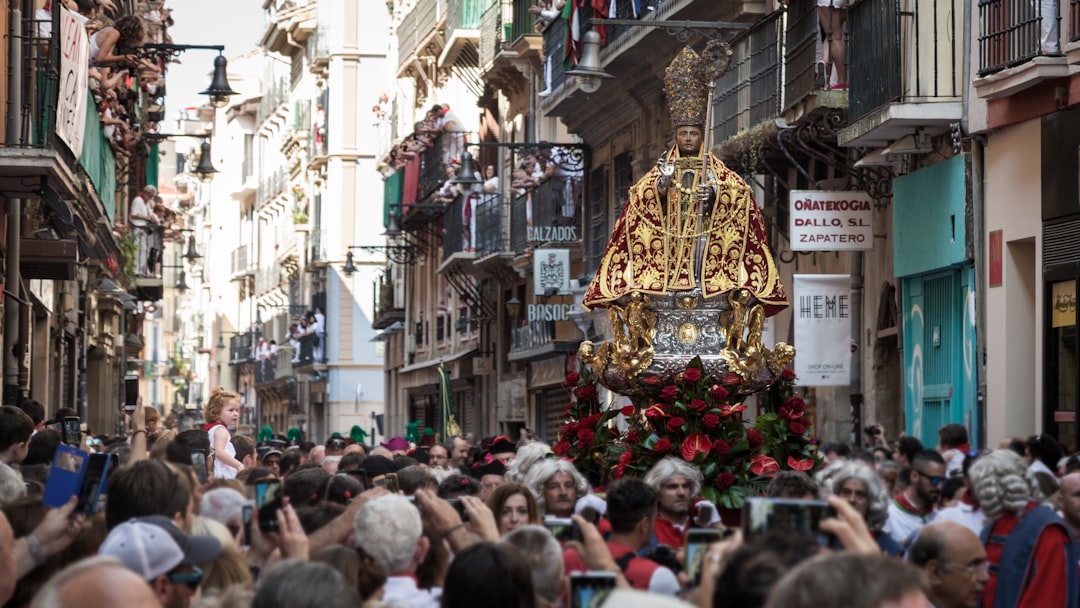
On a night in March or April, depending on the Christian calendar, Spanish cities transform. At midnight or later, streets fill with processions of robed figures in pointed hoods, carrying ornate religious floats that take dozens of people to move. Drummers beat ancient rhythms. Singers perform flamenco-influenced songs to the Virgin Mary. The atmosphere is simultaneously sacred and spectral, medieval and emotionally overwhelming.
This is Semana Santa (Holy Week), and it’s one of Spain’s most profound cultural experiences. It’s also one that tourists often misunderstand because the imagery is unfamiliar and sometimes unsettling. But Semana Santa is genuine religious expression, historical tradition, and emotional catharsis all fused together. Understanding it requires setting aside preconceptions and seeing it as Spaniards do: with reverence, passion, and deep emotional connection.
The Cofradías: The Heart of Semana Santa
Semana Santa is organized and carried out by cofradías (brotherhoods)—religious organizations that have existed for centuries. Some cofradías have been around since medieval times. Some have a few hundred members; others have thousands.
A cofradía is essentially a religious and charitable organization. Members attend church together, participate in charity work, and most importantly, organize and participate in Holy Week processions. Belonging to a cofradía is a serious commitment. Many members have belonged for decades, and some families pass membership down through generations.
The cofradía maintains traditions, costumes, music, and religious practices that have sometimes been continuous for 500 years. This continuity is central to Semana Santa’s power—you’re not watching a performance, you’re participating in a living historical tradition.
The Nazarenos and the Pointed Hoods
The most distinctive image of Semana Santa is the nazarenos—cofradía members wearing long robes and pointed hoods (capirotes) that completely cover their heads. The similarity to Ku Klux Klan robes is immediate and unsettling to modern viewers, especially North Americans.
Here’s what you need to know: the KKK intentionally copied Spanish Semana Santa imagery (among other historical references) when they formed in the late 1800s. The Spanish tradition predates the KKK by centuries—the pointed hoods were worn in Spain for hundreds of years before the KKK ever existed.
In Spain, the hood and robe serve a purpose: they represent humility and anonymity. You don’t process as yourself—you process as part of the cofradía, your individual identity hidden. The robe and hood mean “I am not important; the religious tradition is important.”
Different cofradías wear different colors. You’ll see purple (penitence), white (purity), red (Christ’s sacrifice), and black robes. Some cofradías dress more elaborately; others keep things simple.
The pointed hood sometimes has the cofradía’s symbol embroidered on it. It’s never a racist symbol in Spain—it’s a religious symbol with a long history. Context matters.
That said, understand that many Spanish people are aware of the KKK’s appropriation and sometimes uncomfortable with the historical coincidence. This doesn’t change the tradition—Semana Santa remains important to Spanish culture—but it’s worth being sensitive to the imagery.
The Pasos: Ornate Floats of Religious Art
A paso is an ornate float depicting a scene from Christ’s passion or the Virgin Mary. These floats are masterpieces of religious art, often decorated with flowers, candles, and precious materials. Some pasos are centuries old.
A paso is typically 15-30 feet tall and weighs several tons. It requires 30-50 people to carry it in procession. These carriers (costaleros) walk inside and under the float, supporting it on their shoulders. The work is physically demanding—a paso might be carried for two hours straight.
The main paso in a procession usually depicts either Christ carrying the cross, the Crucifixion, or the Virgin Mary. Different cofradías have different pasos, and seeing different pasos is part of the pilgrimage experience of Semana Santa.
The Saetas: Flamenco Prayer
At moments during the procession, someone in the crowd will spontaneously sing a saeta—a brief, intensely emotional flamenco-style song directed at the paso or the Virgin Mary.
A saeta might last 20 seconds or a couple of minutes. The singer—often someone from the crowd, not a professional—pours emotion into the song. The lyrics are typically improvised prayers or expressions of devotion. The melody is flamenco-influenced, using minor keys and the characteristic flamenco phrasing that expresses deep emotion.
When a great saeta is sung, the entire procession sometimes stops to listen. At the end, there’s often a moment of profound silence before the procession continues.
Saetas are the emotional apex of Semana Santa. They’re not premeditated; they happen when someone feels moved to sing. This spontaneity makes them powerful—you’re witnessing genuine emotion, not performance.
Regional Traditions: Different Semana Santas
Semana Santa is celebrated throughout Spain, but the tradition varies dramatically by region. The most famous celebrations are in the south and central Spain.
Seville: The Epicenter
Seville’s Semana Santa is considered the most important in Spain. The processions are enormous, the cofradías numerous, and the emotional intensity is overwhelming. Seville celebrates for the entire Holy Week, with multiple major processions each day.
The most famous is the Madrugá (literally “early morning”)—the overnight procession that starts around midnight and continues until sunrise. The Madrugá features some of the most important cofradías and some of the city’s most emotionally intense moments.
Visiting Seville during Semana Santa means dealing with massive crowds (hundreds of thousands of people), extremely high hotel prices, and the need to plan well in advance. But the experience is incomparable.
Málaga: Emotional and Accessible
Málaga’s Semana Santa is intense but less overwhelming than Seville’s. The city has dozens of cofradías and a strong tradition. The advantage for travelers is that Málaga is somewhat less touristy than Seville, so you’ll see more local participation and less commercialization.
Valladolid: Austerity and Tradition
Valladolid in Castilla y León has a distinct tradition—the cofradías here are known for maintaining historical accuracy and austerity. The processions focus on religious devotion rather than spectacle.
Cuenca: The Haunting Tradition
Cuenca has a unique tradition where costaleros walk bare-footed carrying extremely heavy pasos through narrow medieval streets. It’s extraordinarily difficult and painful, which is part of the religious significance—the suffering of the costaleros mirrors Christ’s suffering.
Granada: Beauty and Tradition
Granada’s Semana Santa includes processions, but the city is also known for its cofradía traditions and the general integration of Semana Santa into daily life. The processions are beautiful and less overwhelming than Seville’s.
The Religious Meaning vs. Cultural Significance
This is important: Semana Santa has religious meaning for religious Spaniards and cultural significance for secular ones.
Some participants are deeply religious and see Semana Santa as genuine spiritual practice. Others participate because their family has for generations, or because it’s part of their community identity, without necessarily being personally religious.
Tourists sometimes ask if it’s appropriate to watch if they’re not religious. The answer is absolutely yes. Semana Santa is part of Spanish cultural heritage, and it’s appropriate to observe and appreciate it regardless of your personal beliefs.
That said, be respectful. Don’t treat it like a carnival or costume party. Don’t make jokes about the imagery. Don’t block processions to get photographs. These are people engaged in religious practice, not putting on a show for tourists.
When and Where to Experience Semana Santa
Semana Santa occurs in March or April, depending on the Christian calendar. It always ends on Easter Sunday.
If You Want the Full Experience:
Go to Seville if you can tolerate crowds and expense. Book accommodations months in advance. Plan to spend your entire week watching processions and experiencing the culture. This is the most intense and most famous Semana Santa.
If You Want Authentic Without Overwhelming Crowds:
Go to a smaller city like Cuenca, Valladolid, Granada, or Málaga. These cities have genuine traditions, fewer tourists, and a more local feeling.
If You Want to See Just One Procession:
The Madrugá in Seville is the single most important procession. If you can only see one, try to see this one. It starts around midnight and lasts until dawn.
Other notable processions include Holy Thursday evening in Seville, Good Friday morning (when the most important pasos process), and Good Friday evening.
Practical Advice for Experiencing Semana Santa
Book Accommodations Early:
If you want to be in a major Semana Santa city, book your hotel 4-6 months in advance. Prices spike dramatically during Holy Week. Some hotels charge 2-3 times their normal rate.
Consider a Package Tour:
For Semana Santa in Seville, many tour companies offer packages that include accommodation, reserved seating for processions, and guided tours. This takes the logistics stress out of the equation, though it’s more expensive than organizing yourself.
Get Good Spots:
To watch processions, you can either line the streets (free, but require arriving early and standing for hours) or buy a seat in a grandstand or reserved area (expensive—€30-100, but you get a guaranteed view and a place to sit).
Expect Crowds:
Even in smaller cities, Semana Santa is popular. Expect dense crowds, especially for major processions. Give yourself extra time to get anywhere.
Bring Patience:
Processions don’t run on strict schedules. A procession might take 2-4 hours to pass a given point. You’ll stand around waiting. This is normal. Bring water, snacks, and patience.
Dress Warmly:
Even in March or April, evenings can be cool in Spanish cities, especially if you’re standing outside for hours. Bring a jacket.
Wear Good Shoes:
If you’re walking to viewing spots, you’ll be on your feet a lot. Wear comfortable shoes.
Don’t Bring Large Backpacks:
Security for Semana Santa crowds is strict. Large bags might be prohibited or require searches. Travel light.
Understanding the Emotional Power
What makes Semana Santa so moving, even for non-religious observers, is that it’s genuine emotion in a public space. In modern life, we tend to keep emotions private. We’re embarrassed by outward displays of feeling.
But in Semana Santa, Spaniards allow themselves to feel and express emotion publicly. The costaleros suffer carrying 3-ton floats. The saeta singers pour their hearts into improvised prayer-songs. The crowds cry. The participants engage in a tradition that matters to them.
This authenticity is increasingly rare in modern life. We perform for cameras and curate our emotions. But Semana Santa isn’t performed—it’s lived.
When you watch a saeta and see both the singer and the crowd moved to tears, you’re witnessing something that exists outside normal social conventions. You’re seeing what humans have created to express grief, devotion, suffering, and hope.
That’s worth traveling to experience.
A Note on Photography
Many Semana Santa cofradías request that you don’t photograph their processions. This is sometimes a matter of tradition, sometimes a matter of respect for the religious significance of the event.
Ask before photographing. Many cofradías will tell you it’s fine; some will ask you not to. Respect their wishes. Your memory of the experience will be more valuable than a photograph anyway.
The Meaning That Endures
Semana Santa persists in Spain because it represents something deeper than religion: it represents community, tradition, continuity, and the human need to process suffering and meaning through ritual and art.
In a modern world of constant change and shallow connection, Semana Santa offers a week of intense, meaningful community engagement. It’s why even secular Spaniards find Semana Santa moving. It’s why families participate together. It’s why cofradías maintain traditions that are 500 years old.
When you experience Semana Santa, you’re not just witnessing religious ritual—you’re witnessing how humans have created meaning and community for centuries. You’re watching culture continue because it matters.




Leave a Reply