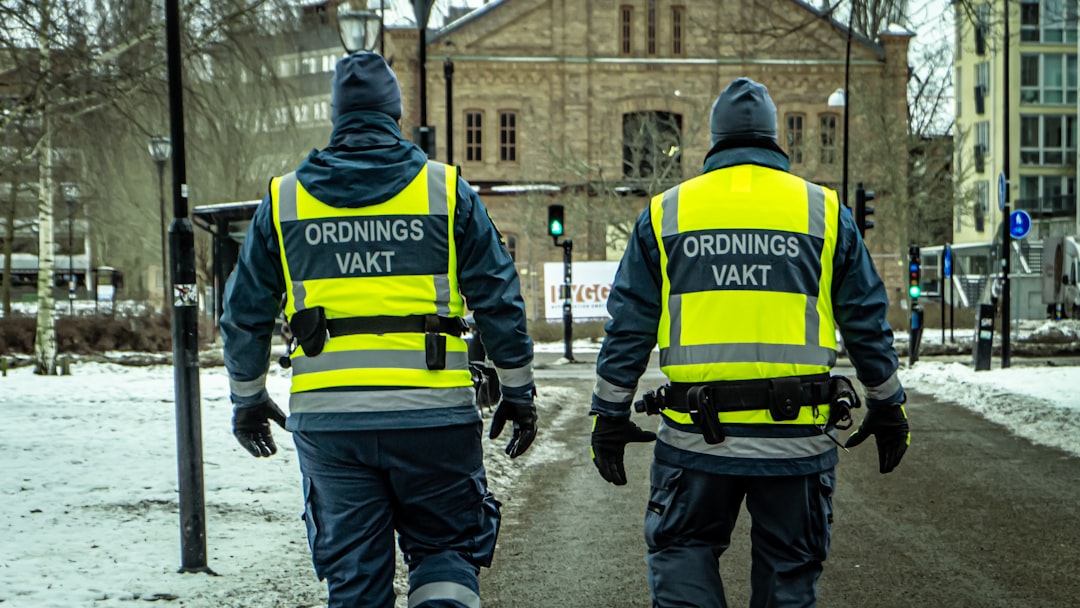
Hopefully you won’t need this article. Sweden is one of the world’s safest countries, with excellent emergency services, well-maintained healthcare, and generally low crime rates. But travel means things can go wrong—you might get lost, injured, sick, or find yourself in a situation where you need help. Knowing emergency vocabulary and safety phrases in Swedish could make the difference between a minor inconvenience and a serious problem. This guide covers everything from calling emergency services to navigating pharmacies to handling winter-related emergencies.
Calling Emergency Services (112)
The most important number in Sweden is 112 (EN-TOL-TVA) – the emergency number for police, ambulance, and fire services. Everyone in Sweden knows this number, and it works on any phone, even without a SIM card.
Jag behöver hjälp! (yag beh-HUV-er YELL-p) – I need help!
Det är en nödsituation! (det ehr en NUD-sit-oo-ah-shon) – It’s an emergency!
Ring 112! (ring EN-TOL-TVA) – Call 112!
Jag har varit i en olycka (yag har VAH-rit ee en oh-LYK-ah) – I’ve been in an accident.
Någon är skadad (NAHG-on ehr SKAH-dahd) – Someone is injured.
Där är en brand! (der ehr en BRAHND) – There’s a fire!
Var är närmaste polisstation? (var ehr NER-mas-teh poh-LEES-stah-shon) – Where’s the nearest police station?
Jag har blivit bestjälen (yag har BLIV-it bes-STEL-en) – I’ve been robbed.
When you call 112:
- Stay calm and speak clearly
- Describe what’s happening
- Give your location (address, street intersection, landmark)
- Stay on the line until help arrives
- Follow instructions from emergency services
Swedish emergency services are professional, efficient, and English-speaking. If you’re in distress and speak English, the operators can often switch to English, but having basic Swedish phrases ready is helpful.
Medical Emergencies
Jag mår inte bra (yag MAWR int-eh brah) – I’m not feeling well.
Jag behöver en läkare (yag beh-HUV-er en LEH-kah-reh) – I need a doctor.
Jag har ont i huvudet (yag har ont ee HOO-vud-et) – I have a headache.
Jag har ont i magen (yag har ont ee MAH-gen) – I have a stomach ache.
Jag har feber (yag har FEH-ber) – I have a fever.
Jag mår illa (yag MAWR IL-ah) – I feel sick/nauseous.
Jag har kräkts (yag har KREKS-ts) – I’ve vomited.
Jag kan inte andas (yag kan int-eh AHN-das) – I can’t breathe.
Jag har ont i bröstet (yag har ont ee BRUS-tet) – I have chest pain.
Det gör väldigt ont (det YUR VEL-digt ont) – It hurts a lot.
Jag har allergier (yag har ah-LER-gee-er) – I have allergies.
Jag är diabetiker (yag ehr dee-ah-BEH-tee-ker) – I’m diabetic.
Jag tar medicin för… (yag tar meh-dee-SEEN for) – I take medication for… (then fill in the condition)
Vilka mediciner tar du? (VIL-kah meh-dee-SEE-ner tar doo) – What medications do you take? (The doctor might ask)
Hospital & Healthcare Vocabulary
Sjukhus (SHUK-hoos) – Hospital
Akutmottagning (ah-KUT-mot-tahg-ning) – Emergency room/Accident & Emergency
Vårdcentral (VAWRD-sen-trahl) – Health center/Clinic
Läkare (LEH-kah-reh) – Doctor
Sjuksköterska (SHUK-skur-tehr-skah) – Nurse
Tandläkare (TAHND-LEH-kah-reh) – Dentist
Kirurgisk operation (kee-RUR-jisk oh-peh-rah-SHON) – Surgery
Röntgen (RUNT-gen) – X-ray
Blodprov (BLUD-pruv) – Blood test
Medicin (meh-dee-SEEN) – Medicine/Medication
Receptfritt (reh-SEP-frit) – Over-the-counter (doesn’t require prescription)
Med recept (med reh-SEP-t) – With prescription
Most Swedish healthcare is excellent and English-speaking. If you’re seriously ill or injured, you’ll be taken care of very well. Sweden has universal healthcare, which means as a visitor you’ll still receive care, though you may be asked to pay or submit to insurance later.
Pharmacy Phrases (Apotek)
Apotek (ah-poh-TEK) – Pharmacy (the Swedish word for pharmacy)
Jag behöver medicin för… (yag beh-HUV-er meh-dee-SEEN for) – I need medicine for…
Jag är allergisk mot (yag ehr ah-LER-jisk mot) – I’m allergic to…
Har du något för huvudvärk? (har doo NAHG-ot for HOOD-vahd-verk) – Do you have anything for a headache?
Jag behöver något för… (yag beh-HUV-er NAHG-ot for)
- magont (MAH-gont) – stomachache
- ont i halsen (ont ee HAHL-sen) – sore throat
- diarré (dee-ah-REH) – diarrhea
- förkylning (for-KYLL-ning) – common cold
- allergier (ah-LER-gee-er) – allergies
Vilken dos? (VIL-ken dohs) – What’s the dose?
Hur ofta ska jag ta det? (hoor OF-tah skah yag tah det) – How often should I take it?
Före eller efter maten? (FUR-eh EL-er EF-ter MAH-ten) – Before or after meals?
Finns det biverkningar? (fins det bee-VER-king-ar) – Are there side effects?
Swedish pharmacies are modern and well-stocked. Pharmacists speak English and are helpful. If you have a prescription from your home country, they can often fill it in Sweden, though brand names might differ.
Police Interactions
Hopefully you won’t need this section, but if you do:
Jag behöver polis (yag beh-HUV-er POH-lees) – I need police.
Jag har gjort en anmälan (yag har YORT en AHN-meh-lahn) – I’m making a report.
Min väska har blivit stulen (min VES-kah har BLIV-it STOO-len) – My bag has been stolen.
Min telefon har försvunnit (min teh-leh-FON har FOR-SVEN-nit) – My phone has gone missing.
Jag har blivit överfallen (yag har BLIV-it U-ver-FAL-len) – I’ve been assaulted.
Var är vittnen? (var ehr VIT-nen) – Where are the witnesses?
Jag behöver hjälp att rapportera detta (yag beh-HUV-er YELL-p att RAH-por-TEH-rah DET-ah) – I need help reporting this.
Kan jag få ett rapportnummer? (kan yag faw et RAH-port-NUM-er) – Can I have a report number? (Important for insurance claims)
Swedish police are professional and generally English-speaking. They’re not typically aggressive or corrupt. If you’re in a situation where police are needed, be direct about what happened and cooperate fully.
Lost or Stolen Items
Jag har förlorat mitt pass (yag har FOR-luh-raht mit pas) – I’ve lost my passport.
Jag har förlorat mina resecheckar (yag har FOR-luh-raht MEE-nah REH-seh-CHECK-ar) – I’ve lost my traveler’s checks.
Min kreditkort har stulits (min KREH-dit-kort har STUL-its) – My credit card has been stolen.
Var är det förlorade och hittat-kontoret? (var ehr det FOR-luh-rah-deh ok HIT-taht-KON-toh-ret) – Where’s the lost and found? (literally “lost and found office”)
Jag tappade min plånbok på tåget (yag TAH-pah-deh min PLAWN-bok paw TAW-get) – I dropped my wallet on the train.
Finns det kameror här? (fins det KAH-meh-ror hehr) – Are there cameras here? (For stolen items)
Kan du blockera mitt kreditkort? (kan doo BLOK-EH-rah mit KREH-dit-kort) – Can you block my credit card? (To your bank)
If you lose important documents, contact your embassy immediately. Sweden has excellent embassy services, and staff will help you get replacement documents.
Car Breakdown & Accidents
Jag har fått en punktering (yag har FAWT en PUNK-teh-ring) – I’ve got a flat tire. (literally “got a puncture”)
Min bil har gått sönder (min BEEL har GAWT SUN-der) – My car has broken down.
Motorn går inte (MOH-torn gawr int-eh) – The engine won’t start.
Jag behöver en bärgare (yag beh-HUV-er en BER-gah-reh) – I need a tow truck.
Jag har krockat (yag har KROK-aht) – I’ve had a car accident.
Det var inte min fel (det var int-eh min fel) – It wasn’t my fault.
Är du skadad? (ehr doo SKAH-dahd) – Are you injured?
Jag behöver ett försäkringsformulär (yag beh-HUV-er et fur-SEK-rings-FOR-moo-ler) – I need an insurance form.
Vad är ditt försäkringsnummer? (vahd ehr dit fur-SEK-rings-NUM-er) – What’s your insurance number?
Du körde över gränsen för hastigheten (doo SHUR-deh U-ver GREN-sen for HAHS-tig-heh-ten) – You exceeded the speed limit. (If a police officer stops you)
Sweden has strict traffic laws. Speed limits are taken seriously, and drunk driving is not tolerated. If you rent a car, understand local traffic laws and follow them carefully.
Winter & Cold Weather Emergencies
Sweden’s winters can be severe, and certain vocabulary is useful:
Det är väldigt kallt (det ehr VEL-digt KAHLT) – It’s very cold.
Jag har erfragt (yag har ER-frusk-nit) – I have frostbite. (literally “frost-bitten”)
Jag har hypotermi (yag har hY-poh-TER-mee) – I have hypothermia.
Snöstorm (SNUR-storm) – Snowstorm.
Vägen är glatt (VEH-gen ehr glaht) – The road is slippery.
Vägen är blockerad av snö (VEH-gen ehr blok-RAD av snur) – The road is blocked by snow.
Min bil har fastnat i snön (min BEEL har FAHS-nat ee SNURN) – My car is stuck in the snow.
Jag behöver värme (yag beh-HUV-er VER-meh) – I need warmth/heat.
Är det säkert att åka nu? (ehr det SEH-kert att AW-kah noo) – Is it safe to drive now?
Swedish infrastructure handles winter well, but conditions can still be dangerous. Never drive in severe weather without proper winter tires, and always check weather reports before traveling.
Mental Health & Darkness-Related Issues (SAD)
Sweden’s winters are dark, and some people experience depression during this time. If you or someone with you is struggling:
Jag mår dåligt psykiskt (yag MAWR DAHL-igt PSY-kist) – I’m struggling mentally.
Jag har depression (yag har deh-PRES-shon) – I have depression.
Jag är väldigt ledsen (yag ehr VEL-digt LED-sen) – I’m very sad.
Jag behöver att prata med någon (yag beh-HUV-er att PRAH-tah med NAHG-on) – I need to talk to someone.
Finns det en psykolog här? (fins det en psy-KOH-log hehr) – Is there a psychologist here?
Jag tänker på att skada mig själv (yag TEN-ker paw att SKAH-dah may SHELL-v) – I’m thinking about harming myself. (Serious crisis—seek help immediately)
Jag vill ta mitt liv (yag vil tah mit leev) – I want to take my life. (Call emergency services immediately: 112)
If you’re experiencing mental health issues during winter darkness, reach out. Sweden has good mental health services, and it’s very common for people to struggle with seasonal depression (Seasonal Affective Disorder). There’s no shame in seeking help.
Darkness & Winter Vocabulary
Det är mörkt (det ehr MURKT) – It’s dark.
Det är väldigt mörkt här (det ehr VEL-digt MURKT hehr) – It’s very dark here.
Polarnatt (poh-LAR-naht) – Polar night (the time when the sun doesn’t rise in northern Sweden).
Ljusfrånvaro (LYOOS-frawn-VAH-roh) – Absence of light.
Jag behöver solljus (yag beh-HUV-er SOL-lyoos) – I need sunlight.
For visitors traveling during winter darkness (October-February), be aware that daylight is very limited, especially in northern Sweden. This is an adjustment for many people, but it’s also what makes the winter season special. The darkness brings clear skies perfect for northern lights viewing, and the white snow creates a beautiful landscape.
Asking for Help
Kan du hjälpa mig? (kan doo YELL-pah may) – Can you help me?
Jag behöver hjälp (yag beh-HUV-er YELL-p) – I need help.
Ursäkt, kan du hjälpa mig? (oor-SECT, kan doo YELL-pah may) – Excuse me, can you help me?
Jag är helt vilse (yag ehr helt VIL-seh) – I’m completely lost.
Jag vet inte vad jag ska göra (yag vet int-eh vahd yag skah YUR-ah) – I don’t know what to do.
Det gick något fel (det gick NAHG-ot fell) – Something went wrong.
Kan du tala långsammare? (kan doo TAH-lah LAWNG-sah-mah-reh) – Can you speak slower?
Jag förstår inte, kan du säga det på engelska? (yag for-STAWR int-eh, kan doo SEH-yah det paw ENG-el-skah) – I don’t understand, can you say that in English?
Swedes are generally very helpful. If you need assistance, asking directly is appropriate and will usually result in genuine help.
Embassy & Consulate Phrases
Var är den amerikanska ambassaden? (var ehr den ah-MEHR-ee-KAHN-skah ahm-bahs-AH-den) – Where’s the American embassy? (substitute your country)
Jag behöver hjälp från min ambassad (yag beh-HUV-er YELL-p frawn min ahm-bahs-AHD) – I need help from my embassy.
Jag har förlorat mitt pass och behöver ett nytt (yag har FOR-luh-raht mit pas ok beh-HUV-er et NYT) – I’ve lost my passport and need a new one.
Jag behöver en notariserad kopia (yag beh-HUV-er en noh-tah-ree-SAHD KOH-pee-ah) – I need a notarized copy.
Hur lång tid tar det? (hoor LAWNG teed tar det) – How long does it take?
Most embassies in Sweden are in Stockholm. Embassy staff speak English and can provide significant assistance if you’re in serious trouble. Contact information should be registered with your embassy before you travel.
Final Thoughts on Safety in Sweden
Sweden is genuinely one of the world’s safest countries. The likelihood of encountering an emergency is low. That said, being prepared with basic safety vocabulary and knowing how to call for help is wise for any traveler.
Key takeaways:
Travel with confidence, but travel smart. Knowing these phrases means you’re prepared for situations you hope never happen. And if they do, you’ll be able to communicate effectively and get the help you need.
Lycka till och håll dig säker! (Good luck and stay safe!)




Leave a Reply