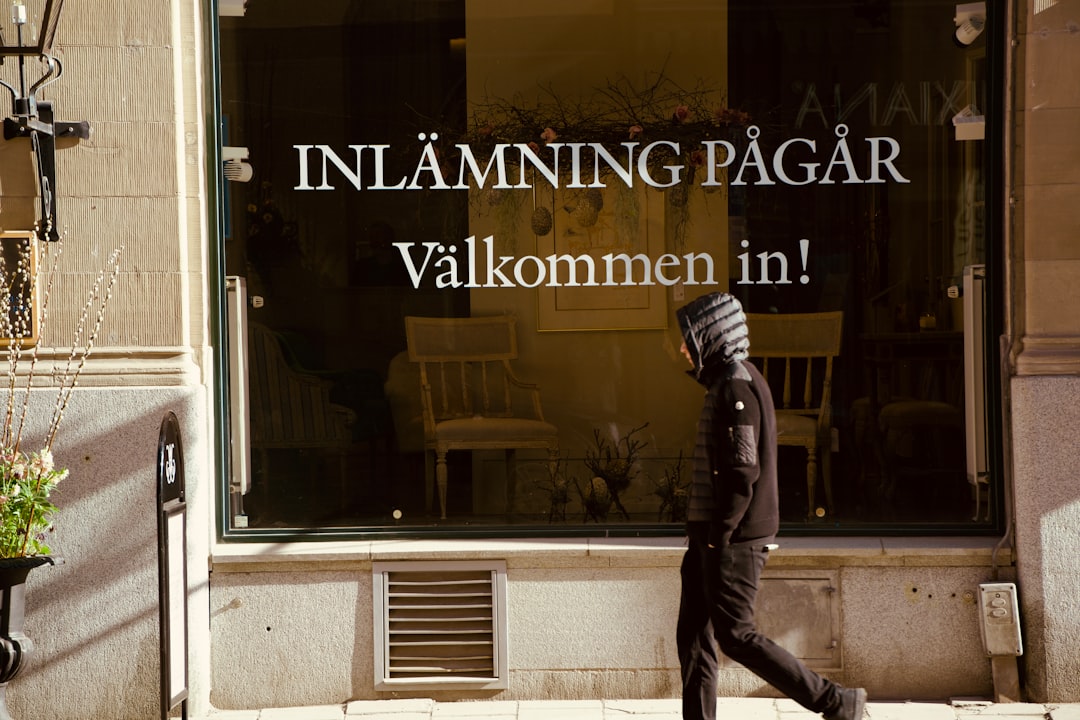
Content Disclaimer: This article contains descriptions of Swedish insults, profanity, and strong language for educational purposes. It’s intended to help travelers understand authentic local speech patterns and cultural context. This content is not meant to encourage disrespectful behavior; rather, it provides language education for those wanting to understand Swedish culture in depth.
Here’s something that might surprise you about Sweden: beneath the polite exterior, Swedes have a surprisingly colorful vocabulary when it comes to swearing and insults. In fact, Swedes seem to have a very different relationship with profanity compared to English speakers. They swear more frequently in private conversation than English speakers, but they maintain stricter social boundaries about when and where such language is appropriate. Understanding Swedish insults and swear words gives you insight into authentic local culture and helps you navigate social situations with appropriate awareness.
The Swedish Approach to Swearing
Before diving into specific words, it’s important to understand the cultural context. Swedes are generally very polite in formal and public settings. You won’t hear much cursing in professional environments, customer service, or with strangers. However, among friends, in casual settings, and especially when frustrated or drinking, Swedes absolutely let loose.
Interestingly, Swedish swearing is often quite creative and frequently references the devil, religion, or bodily functions—a legacy of Lutheran Swedish culture where religious imagery provides rich metaphorical territory for creative cursing. They also borrow heavily from English and other languages when swearing, which is why you’ll hear English profanity mixed into Swedish conversations far more often than other English loanwords.
Mild Insults & Expressions of Frustration
These are things you might hear in casual conversation or when someone is mildly annoyed. They’re not severe enough to cause real offense, but they show frustration:
Idiot (ee-dee-OT) – Idiot. Just as direct as English.
Dummare (DUM-ah-reh) – Dumber/more stupid. Comparative form of “dumb.”
Odum (oh-DOOM) – An old-fashioned insult meaning “fool” or “dolt.” You might hear this from older Swedes or in humorous contexts.
Luffar (LUF-ar) – Vagrant or hobo. An old insult that’s somewhat dated.
Dåre (DAW-reh) – Fool or madman. More theatrical than mean-spirited.
Klåpare (KLOH-pah-reh) – A clumsy person. More amusing than insulting.
Babbe (BAH-beh) – A stupid or silly person. Quite mild and often used affectionately among friends.
Moderate Swear Words
These are words you’ll hear regularly in Swedish casual conversation. They’re stronger than mild insults but not the strongest expressions available. Swedes use these relatively freely when frustrated, though not in formal settings:
Jäklar (YEK-lars) – Bloody hell/dammit. Similar in intensity to English “damn.”
Helvete (HEL-vet-eh) – Hell. Direct translation, used similarly to “damn it all.”
Skiten (SKEE-ten) – Shit. The basic Swedish profanity. Used when frustrated: “Det är helt skiten!” (det ehr helt SKEE-ten) – “That’s complete shit!”
Förbannad (for-BAH-nad) – Damned/cursed. “Det är förbannat!” (det ehr for-BAH-nat) – “That’s damn annoying!”
Miffi (MIF-ee) – A mild euphemism for shit, used by those who want to swear without fully swearing. Like saying “darn” instead of “damn.”
Bög (bug) – Derogatory term for a gay man. Note: This term is considered offensive and should absolutely never be used. It’s mentioned here for awareness only.
Strong Expletives
These are the heavy hitters of Swedish profanity. You’ll hear them in moments of genuine anger, frustration, or among close friends in very casual settings. These are words you should understand but absolutely not use, especially as a foreigner:
Fan (fahn) – Damn. This is ubiquitous in Swedish. Swedes say “fan” the way English speakers say “damn.” You’ll hear it constantly: “Fan va nice!” (fahn vah NEES) – “Damn, that’s nice!” or “Fan vad tråkigt” (fahn vahd TRAW-kigt) – “Damn, that’s boring.”
Satans (sah-TAHNS) – Damn it/damn. Related to “satan” (Satan), this gets used with similar frequency to “fan.”
Helvetes… (HEL-vet-es) – Hell of a… Used as an intensifier: “Helvetes jobbigt” (HEL-vet-es YUB-bigt) – “Hellishly difficult.”
The word Swedes use most commonly that English speakers would consider genuinely profane is fan, which they use in contexts where English speakers might not swear at all. This is one of the biggest differences between English and Swedish use of profanity. Swedes say “fan” like we say “gosh”—it’s almost habitual, not necessarily expressing strong emotion.
Creative Swedish Insults
Swedes have some truly imaginative insults that don’t have direct English equivalents:
Kräka (KREK-ah) – A despicable person or someone who betrays others. More colorful and context-specific than a standard insult.
Krake (KRAH-keh) – Related to above; someone untrustworthy or worthless.
Skithöna (SKIT-hun-ah) – Literally “shit hen,” a very derogatory term for a woman (gender-specific and absolutely not something to use).
Besserwisser (BES-ser-vis-er) – A know-it-all. This one’s actually a German loanword and Swedes use it to describe someone who’s constantly showing off their knowledge.
Tjomme (CHOM-eh) – A guy/buddy. Used affectionately among friends: “Tjomme, det var inte bra!” (CHOM-eh, det var int-eh brah) – “Buddy, that wasn’t good!” Can be insulting depending on tone.
Skithövel (SKIT-hö-vel) – A contemptible person. Combines “shit” with “shovel” for a particularly creative insult.
Devil-Themed Swearing
One of the most distinctive features of Swedish profanity is its religious imagery, particularly references to the devil and hell. This is a holdover from when the church was extremely influential in Scandinavian culture:
Djävlar (DYEV-lars) – Devils/the devil. Used as an exclamation: “Djävlar va coolt!” (DYEV-lars vah KOLT) – “Damn, that’s cool!”
Helvete (HEL-vet-eh) – Hell. As mentioned above, this is incredibly common.
Satans (sah-TAHNS) – Satan’s/Satan. Used as an intensifier.
Djävulskula (DYEV-uls-KOO-lah) – Devil’s ass. A creative insult combining devil references.
These devil-related words are fascinating from a cultural perspective. They reflect centuries of Lutheran influence and represent one of the older layers of Swedish cursing. Younger Swedes might use these terms less frequently, instead borrowing English profanity.
Swedish vs. Norwegian & Danish Swearing
The Scandinavian languages are similar, but their approaches to swearing vary:
Swedish uses a lot of devil and hell references, and incorporates many English words. Swedes seem most comfortable with words related to bodily functions and somewhat comfortable with devil-related swearing.
Norwegian swearing is less severe overall and uses somewhat different vocabulary, though it shares the devil theme.
Danish has even more different vocabulary and is reportedly somewhat less harsh in tone, though this is subjective.
If you know someone from Denmark or Norway, you’ll notice their swearing patterns differ. Norwegian “helvete” (hell) might be slightly less intense than Swedish “helvete,” though they’re etymologically identical. It’s more about cultural attitudes than linguistic differences.
The Public/Private Divide
Here’s where Swedish culture becomes really interesting: Swedes maintain a strict division between public politeness and private casualness. You might hear a Swede swearing like a sailor at an after-work drinks gathering, but that same person would be impeccably polite and profanity-free in a professional meeting or customer service situation.
This is important for travelers to understand. If a Swede is speaking to you in English and suddenly switches to casual Swedish with friends, you might be surprised at how different their language becomes. It’s not personal; it’s just the cultural code-switching between “work/public Swedish” and “casual/private Swedish.”
Passive Aggression & The Swedish Way
Interestingly, Swedes often don’t resort to direct insults even when frustrated. Instead, they use a very specific form of passive aggression and what might be called “cold politeness.” Someone might say something technically polite but with a tone or context that makes it cutting.
For example, rather than saying “You’re stupid,” a Swede might say “Det var en intressant tanke” (det var en in-treh-SANT TAHN-keh) – “That was an interesting thought” – with a raised eyebrow and tone that makes clear they mean the opposite.
This kind of subtle communication is uniquely Swedish and often more cutting than direct insults. If you notice a Swede’s smile becoming more fixed, their language becoming more polite and formal, and their responses getting shorter—you might have inadvertently offended them. The iciness can be far more effective than any swear word.
What You Should Actually Do
As a traveler or visitor, here’s the practical advice: Don’t use these words. Even if you learn them, understand them, and can pronounce them perfectly, using them as a foreigner is almost guaranteed to come across wrong. Swedes find it strange (and sometimes amusing or off-putting) when foreigners use their swear words.
However, knowing these words helps you:
- Understand conversations happening around you
- Recognize when someone is genuinely angry versus just being casually colorful
- Appreciate the cultural context of Swedish expression
- Navigate social situations with appropriate awareness
If you hear Swedes swearing around you, it usually means they’re comfortable with you and have relaxed their formal boundaries. It’s not offensive to you; they’re just being casual. That said, you should maintain your own standards and not feel obligated to match their level of profanity.
The Bottom Line
Swedish swearing is creative, frequent in casual contexts, and culturally fascinating. It reflects Swedish values, history, and the way they navigate the tension between public politeness and private authenticity. Understanding it enriches your appreciation of Swedish culture, even if you never actually use any of these words yourself.
The most Swedish thing you can do is respect the cultural context while maintaining your own boundaries—which is, coincidentally, exactly how Swedes approach nearly everything.




Leave a Reply