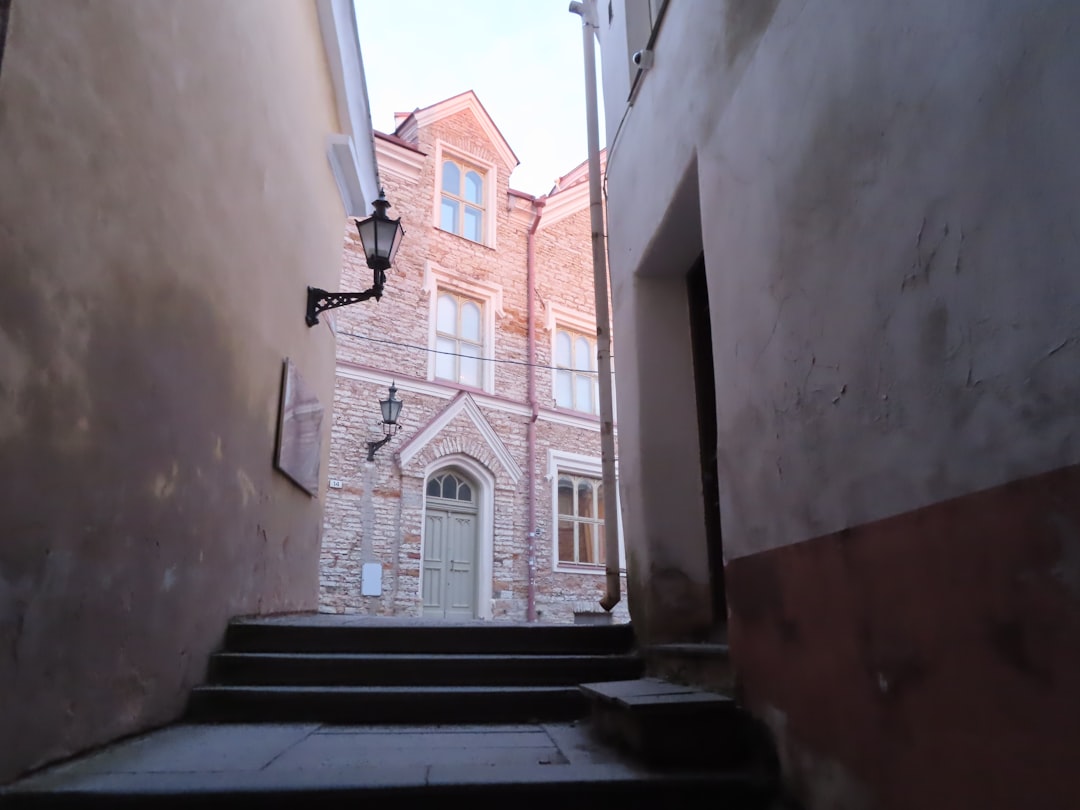
There is a moment, walking through the arched gateway of the Viru Gate into Tallinn’s Old Town, when the twenty-first century simply vanishes. Cobblestone lanes wind between pastel-painted merchant houses with red-tiled roofs. Gothic church spires puncture the skyline. A medieval town wall, almost entirely intact, encircles the whole district like a stone embrace. Tallinn’s Old Town is a UNESCO World Heritage site and one of the best-preserved medieval cities in Northern Europe, yet it remains astonishingly under-visited compared to Prague, Kraków, or Dubrovnik. For now, at least, it is still possible to walk these streets without feeling like you are in a theme park.
Toompea: The Upper Town
Tallinn’s Old Town is divided into a lower town, where the merchants and craftsmen lived, and the upper town of Toompea, the limestone hill where the nobility and clergy held court. Start on Toompea, where two viewing platforms—Kohtuotsa and Patkuli—offer storybook panoramas across the rooftops to the harbour and the Gulf of Finland beyond. On a clear day, you can see the coast of Finland, seventy kilometres to the north.
Toompea Castle, rebuilt many times since its thirteenth-century origins, now houses the Estonian Parliament, and its pink Baroque facade looks almost comically cheerful for a seat of government. Next door, the Alexander Nevsky Cathedral, built in 1900 when Estonia was part of the Russian Empire, is a confection of onion domes and elaborate Orthodox iconography. The Estonians have had a complicated relationship with this building—it was nearly demolished in the Soviet era—but it stands today as part of the city’s layered history and is free to enter. The interior, lit by candles and heavy with incense, is genuinely moving.
The Lower Town: Merchants and Marzipan
Descend the Long Leg or Short Leg (Pikk Jalg and Lühike Jalg—the streets are really called this) into the lower town and emerge onto Raekoja plats, the Town Hall Square. Tallinn’s Town Hall, dating to 1404, is the only surviving Gothic town hall in Northern Europe, and its slender spire is crowned by a weather vane called Old Thomas, the city’s symbol since 1530. The square fills with café terraces in summer and a Christmas market in December that is consistently ranked among Europe’s best.
From the square, explore the surrounding streets: Viru, Müürivahe, Pikk, Lai. The medieval apothecary on Raekoja plats, operating since at least 1422, claims to be the oldest continuously running pharmacy in Europe. Whether or not the claim holds up to strict historical scrutiny, the jars of dried herbs and bizarre historical remedies make for an entertaining visit. Nearby, the Kalev Marzipan Museum demonstrates the art of hand-painting marzipan figures, a tradition dating to the fifteenth century when marzipan was considered a medicine.
Beyond the Walls: Telliskivi and Kadriorg
Step outside the Old Town and you encounter a very different Tallinn. The Telliskivi Creative City, a former industrial complex ten minutes’ walk north of the old walls, has been transformed into a buzzing district of co-working spaces, galleries, vintage shops, street food stalls, and craft breweries. On weekends, a flea market fills the central courtyard. This is where young Estonians actually spend their time, and it provides a necessary counterpoint to the medieval romance of the Old Town.
East of the centre, the Kadriorg district is anchored by a Baroque palace built by Peter the Great in 1718 for his wife Catherine. The palace now houses the Estonian Art Museum’s foreign collection, but the surrounding park—landscaped gardens, swan ponds, wide gravel paths beneath chestnut trees—is reason enough to visit. At the far end of the park, the KUMU art museum, a striking piece of modern architecture set into the limestone hillside, contains the country’s most comprehensive collection of Estonian art from the eighteenth century to the present.
The Digital Nomad Capital of Europe
Estonia punches far above its weight in technology. It introduced the world’s first e-residency programme, votes online, and runs much of its government on a blockchain-based digital infrastructure. Tallinn’s fast internet, affordable co-working spaces, and growing number of cafés catering to laptop workers have made it a magnet for digital nomads. A co-working day pass costs around ten to fifteen euros. The food hall at Balti Jaama Turg, beside the train station, offers cheap and varied lunches—from Georgian khachapuri to Vietnamese pho—in a setting that would not be out of place in Berlin or Amsterdam.
Day Trip to Helsinki
Tallinn sits just eighty kilometres from Helsinki across the Gulf of Finland, and high-speed ferries make the crossing in about two hours. This makes it trivially easy to combine the two cities. A day trip to Helsinki—or, for that matter, from Helsinki to Tallinn—is one of Northern Europe’s great easy excursions. Ferries depart several times daily from Tallinn’s D-terminal, within walking distance of the Old Town, with return tickets starting from about twenty euros if booked in advance. Many visitors fly into one city and out of the other, spending a few days in each.



Leave a Reply