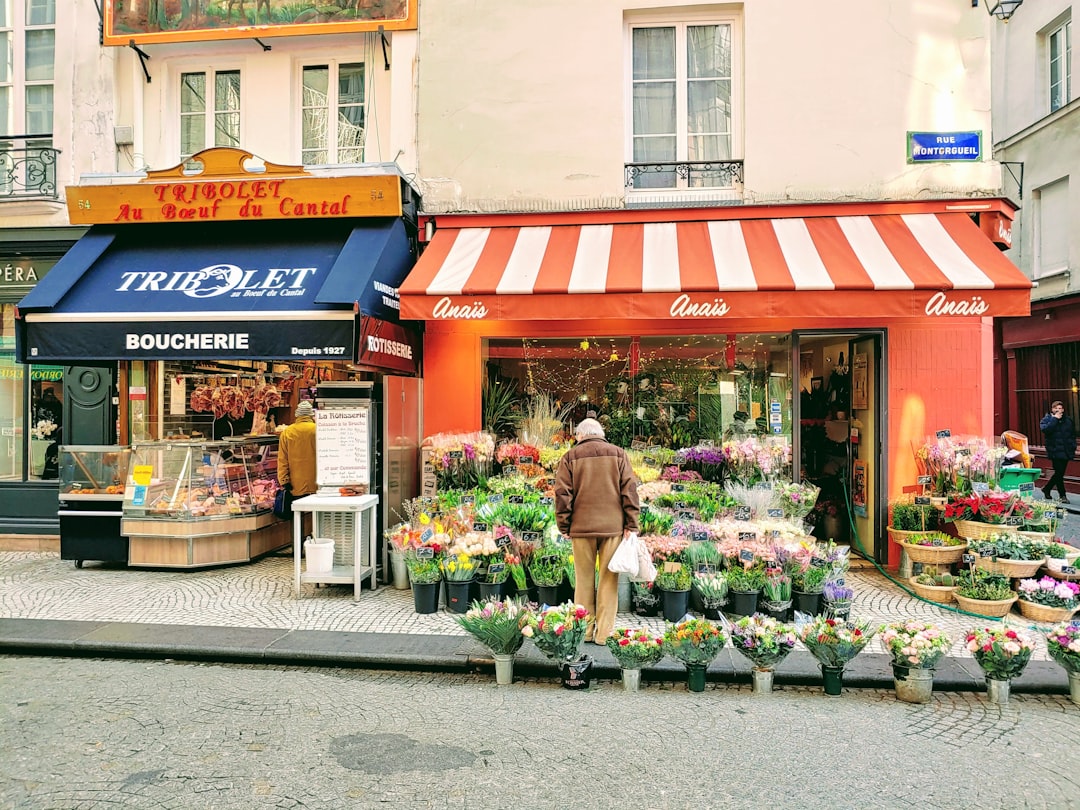
The French market—the open-air marché that appears in a town square on Tuesday or Saturday morning and disappears by afternoon—is not primarily about shopping. Yes, people buy food there. But the market is really about ritual, about community, about a kind of daily life that has barely changed in centuries. Understanding this distinction will completely transform how you experience a French market, whether you’re in a tiny Provençal village or the heart of Paris.
A French person doesn’t go to the market because the groceries are cheaper (though they might be). They go because the market is where life happens. Where you see your neighbors, where you negotiate the quality of vegetables, where you taste cheese samples and have five-minute conversations about the weather with strangers. The market is democracy in its most authentic form. And yes, you can participate.
The Ritual: Saturday Morning in France
In most French towns, the primary market day is Saturday morning. This is not a suggestion. This is life in France. Families wake up, have coffee, put on decent clothes, and head to the market. Elderly French women navigate crowds with single-minded purpose. Young professionals squeeze in a market run before heading to lunch plans. Tourists wander through looking overwhelmed. By early afternoon, the market vanishes like it was never there, and the square returns to normal. Come back at 2 p.m., and there will be no evidence anything happened.
If your accommodation has a kitchen, you should go to the market. Not because you absolutely must cook, but because being at a French market on Saturday morning is experiencing France in its most authentic, unperformed state. This is how French people actually live.
Tuesday and Wednesday markets are less crowded than Saturday’s. Wednesday is often the secondary market day in larger cities. Some neighborhoods have daily markets. The schedule varies by city, but every town has one. Your hotel or Airbnb host will tell you the time and location, or you can ask any local.
What to Buy and When: Seasonality Actually Matters
Here’s something that will shock Americans about French markets: the vegetables and fruits you see are what’s actually in season right now. You won’t find strawberries in January or tomatoes in November. This isn’t a limitation—it’s the entire point. Everything at the market is fresh, picked recently, and at its actual best.
In spring, you’re buying asparagus, artichokes, spring onions, early lettuce, and peas. In summer, stone fruit (peaches, apricots, plums), berries, tomatoes that actually taste like something, zucchini, and eggplant. Fall brings mushrooms, grapes, figs, plums, and the first of the winter squash. Winter means root vegetables, cabbage, endive, and citrus.
This matters not just for taste—it matters for price. Buy strawberries in January and they’re outrageously expensive and mostly water. Buy them in May and they’re cheap and glorious. Buy tomatoes in August and they’ll change your relationship with food. Buy them in March and they’re pointless.
The practical thing: just look at what’s abundant and cheap. That’s what’s ready. Don’t have a shopping list of specific vegetables—ask a vendor what’s good this week. Tell them you’re cooking dinner and ask what they recommend. This interaction is not a joke or a performance—it’s completely normal and often leads to actual recommendations.
The Vendor Relationship: How to Interact Without Being Rude
Here’s the primary rule that will prevent every social disaster: don’t touch the produce. The fruits and vegetables are displayed beautifully for looking. If you want to buy something, you ask the vendor to select it for you. You say “Donnez-moi 500 grammes de tomates, bien rouges” (Give me 500 grams of tomatoes, nice and ripe).
This isn’t because vendors are protective or rude. It’s because they know their produce. They know which tomatoes are perfectly ripe, which ones will be perfect for sauce, which ones should be eaten today. They’ll select better tomatoes for you than you would select for yourself. This is them being helpful, not them preventing you from touching things.
The transaction works like this: you point at what you want or say what you want. The vendor asks how much (by weight, usually kilos or grams, or sometimes just “un kilo de tomates”—one kilo of tomatoes). They select the items, put them on an old-fashioned scale, add or remove items to hit your requested amount, put them in a bag, and tell you the price. You pay. That’s it.
Vendors often remember regular customers. A woman might come to the same vegetable stand every Saturday and have a slightly different conversation each time. “Marie! The usual? These tomatoes are exceptional this week.” If you go to the same market several times, vendors start to recognize you and might save the good stuff.
Don’t worry about your French. Saying “Bonjour, un kilo de tomates, s’il vous plaît” and then “Combien ça coûte?” (How much is it?) is enough. Most vendors will understand, will speak simply to you, and will help you figure it out.
The Vendors and the Categories
Different vendors sell different things, and they form a kind of hierarchy. The vegetable vendors are numerous and competitive—they want your business. Cheese vendors are fewer and more prestigious, often positioned as the special event at the market. Meat vendors, fish vendors, bread vendors, flower vendors, olive oil vendors, honey vendors, jam vendors—they’re all there, each with their territory.
The bread vendors are a pilgrimage if you’re staying somewhere with a kitchen. French bread from a market vendor is incomparably better than anything from a supermarket. Buy a baguette, eat it that day. Buy pain de campagne (country bread), it lasts longer.
The cheese vendors are the ambassadors. They want you to taste things. They’re proud of their selection. Ask them. “Avez-vous quelque chose de bon et pas trop fort?” (Do you have something good and not too strong?) They’ll point you toward something perfect. Cheese is the most social part of the market—people have long conversations about which cheese they should buy.
The flower vendors often position themselves at the entrance or edges. French people buy flowers for their homes, and these are beautiful, fresh, inexpensive flowers. If you’re staying somewhere for more than a few days, buying flowers from the market is a lovely way to make your temporary space feel like home.
The Markets of Paris
In Paris, the market experience varies by neighborhood.
Marché Bastille runs Friday through Sunday morning along the Boulevard Richard-Lenoir. This is one of Paris’s biggest and most atmospheric markets, crowded and lively, genuinely a great experience.
Marché Aligre is in the 12th arrondissement and has been running since the 1700s. It’s smaller, more neighborhood-focused, and charmingly chaotic. The surrounding streets have vintage shops and casual cafés.
Marché Raspail in Saint-Germain runs Wednesday and Sunday. It’s more upscale and includes more prepared foods and luxury items alongside regular produce.
Marché Bastille, Bastille, Bastille if you only do one Paris market. It’s the most authentic and accessible.
Covered markets still exist in Paris, a remnant of 19th-century market culture. These are called “Halles” (Les Halles tradition). They’re mostly restaurants and small shops now, but a few still function as actual food markets. They’re cool to walk through but don’t have the Saturday morning energy of outdoor markets.
Provence Markets: A Category Unto Themselves
If you’re visiting Provence, the markets are even more important and more impressive than in northern France. The produce is more abundant, more colorful, more diverse. Every substantial town has a market, and visiting them is not optional—it’s part of visiting Provence.
Marché aux Fleurs in Nice is famous because half the market is literally flowers. It’s a riot of color and scent. The other half is produce and street food.
Markets in Provence towns like Avignon, Arles, Aix-en-Provence, and Vaison-la-Romaine are institutions. People don’t just buy vegetables there—they eat breakfast, grab lunch, do their weekly shopping, and socialize. Markets in Provence often run into mid-afternoon, which is shocking compared to northern French markets that are done by noon.
The Social Function: Why This Matters
The French market system exists because it serves a social function that grocery stores don’t. You see people you know. You interact with people who know their products deeply. You participate in democracy—the market functions on negotiation and word-of-mouth reputation, not on brand loyalty and shelf placement.
In a supermarket, you’re one person among many. At a market, you’re a customer with agency. A vegetable vendor cares whether you come back. A cheese vendor remembers what you bought last week. This is commerce in its most human form.
For travelers, this means the market is where you actually meet local life. Sit at a café overlooking the market and watch people. You’re watching a ritual that hasn’t fundamentally changed. You’re witnessing how French people actually live their daily lives.
Practical Tips for Your First Market Visit
Bring a reusable bag or two. Markets expect you to bring bags. You’ll get a few bags from vendors, but one of your own is smart.
Bring cash. Not everywhere, but a surprising amount of market vendors still prefer cash.
Go hungry. You’ll see foods you want to taste. Some vendors sell prepared foods—rotisserie chicken, crepes, jambon, olives, prepared salads. Eating breakfast or lunch at the market is completely normal.
Go early. Markets are best from 8 a.m. to 10 a.m., before the serious crowds and before the best stuff sells out.
Don’t have a rigid list. Ask vendors what’s good. The market tells you what to cook, not the other way around.
The market is patient. Even if you don’t speak French well, even if you’re confused about what to buy, vendors will help you. You’re not holding anyone up. Markets move at a leisurely pace because their entire purpose is to not hurry.
Why Markets Matter in French Culture
The French market represents a refusal to let modernity eliminate traditional ways of living. Yes, there are supermarkets. Yes, people shop there. But the market persists because it fills a need that supermarkets don’t—the need for quality, freshness, community, and the simple pleasure of daily life conducted in public with people you see regularly.
By going to the market, you’re not being a romantic tourist. You’re participating in something that French people take seriously as a way of actually living well. You’re understanding that in France, eating well isn’t about fancy restaurants or expensive ingredients. It’s about having access to perfect tomatoes in August and knowing the person who grew them.
Go to the market. Buy something. Cook it if you can. If you can’t, just eat it and remember it. That tomato you buy on a Saturday morning in France will taste better than any tomato you’ve ever bought, and you’ll understand why a French person would wake up early specifically to buy it.




Leave a Reply