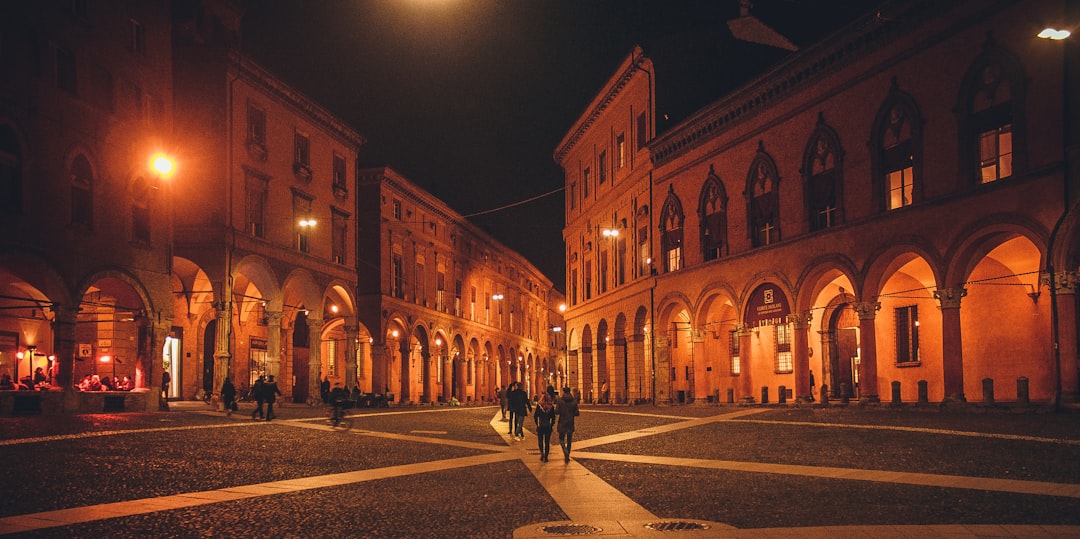
Every evening, as the heat of the day begins to ease and the light turns golden, something beautiful happens in towns and cities across Italy. People get dressed, step out of their homes, and walk. Not to get anywhere in particular. Not for exercise. They walk to see and be seen, to greet neighbors, to let children run ahead, to buy a gelato, and to participate in one of Italy’s most enduring and least understood social rituals: the passeggiata.
What the Passeggiata Actually Is
The word itself simply means “a walk,” but calling the passeggiata a walk is like calling opera “singing.” The passeggiata is a communal, ritualized evening stroll that typically takes place between about 5:00 and 8:00 PM, depending on the season and region. In southern Italy and Sicily, where summer heat lingers, it might not begin until after 7:00 PM. In northern cities, it tends to start earlier. The timing is never fixed by a clock — it is governed by light, temperature, and a collective sense that now is the moment.
The route is almost always the same: the corso, or main street, of the town. In Rome, it might be Via del Corso itself, or the streets around Piazza Navona. In a small Sicilian hill town, it will be whatever central street connects the main piazza to the church. People walk back and forth along this route, sometimes for an hour or more, stopping to chat, window-shop, or sit at a café. The repetition is the point. You see the same people multiple times in an evening. Conversations left unfinished on the first pass get picked up on the second.
Dressing the Part
One of the first things visitors notice about the passeggiata is how well-dressed everyone is. This is not an accident. Italians have a concept called “bella figura” — literally “beautiful figure” — that encompasses not just appearance but a general sense of presenting oneself well to the world. The passeggiata is bella figura in action. You will see elderly men in pressed linen shirts, teenagers in carefully chosen sneakers and sunglasses, mothers pushing strollers while wearing heels, and children dressed as if posing for a catalog.
This is not vanity, or at least not only vanity. It is respect — for the community, for the occasion, for the simple act of appearing in public. In a culture where how you present yourself is a form of communication, the passeggiata is a daily conversation conducted in fabric and posture.
The Social Engine
Beneath its charm, the passeggiata serves serious social functions. In Italian towns, especially smaller ones, it is the primary mechanism for maintaining community bonds. It is where news is exchanged, where teenagers flirt under the watchful eyes of grandparents, where business owners gauge the mood of their neighbors, and where the elderly remain connected to the life of the town rather than disappearing behind closed doors.
For young people, the passeggiata has historically been a courtship ritual. Before dating apps and social media, the evening walk was where young men and women could see each other, make eye contact, and — under layers of family supervision — begin the delicate process of showing interest. Even today, in smaller towns, the passeggiata retains some of this function, though smartphones have admittedly changed the dynamics.
How Tourists Can Join In
The beautiful thing about the passeggiata is that it requires no ticket, no reservation, and no special knowledge. You simply walk. Find the main street of whatever town you are in, head out in the early evening, and let yourself be carried by the flow. A few tips: dress a bit better than you might for a casual walk at home. Leave the baseball cap and athletic shorts behind. Walk slowly — this is emphatically not a power walk. Stop for gelato or an aperitivo. Make eye contact and nod at people. You are not intruding; you are participating.
Some of the finest passeggiata experiences happen not in Rome or Florence but in smaller towns: Lecce in Puglia, Ragusa in Sicily, Lucca in Tuscany, or Perugia in Umbria. In these places, the ritual retains its full character, undiluted by mass tourism. Walk the corso on a warm evening in a Puglian town, and you will understand something about Italian life that no museum or monument can teach you: that the ordinary act of walking among your neighbors, with no destination and no agenda, can be one of the great pleasures of being alive.




Leave a Reply