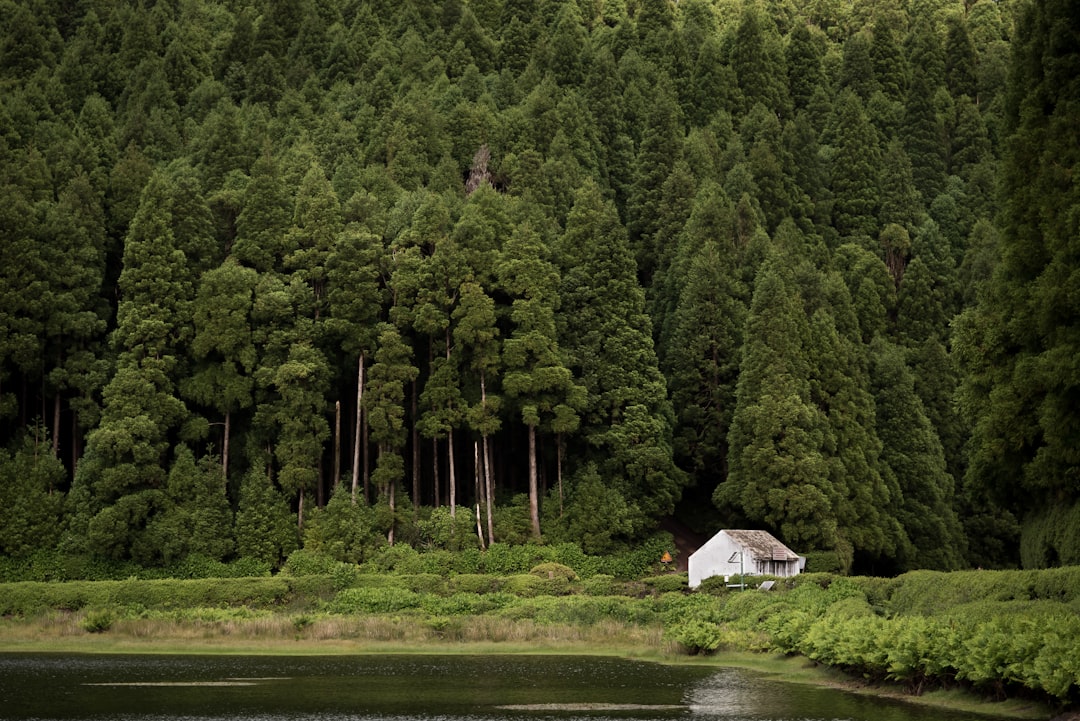
Fourteen hundred kilometres from the Portuguese mainland, roughly a third of the way across the Atlantic toward North America, nine volcanic islands rise from the ocean floor like the spine of some submerged mountain range. The Azores are an autonomous region of Portugal, but they feel like their own world entirely—a place of crater lakes in impossible shades of green and blue, hot springs heated by magma, roads lined with wild hydrangeas in every colour from cobalt to lilac, and a quality of light and silence that is difficult to describe and harder to forget. If Europe had a Hawaii, this would be it, minus the crowds, the resorts, and the prices.
São Miguel: The Green Island
Most visitors begin on São Miguel, the largest island and home to the regional capital, Ponta Delgada. The city itself is pleasant—white-washed buildings with dark basalt trim, a handsome waterfront, good restaurants—but the real draws lie outside it. The twin lakes of Sete Cidades, nested inside a massive volcanic caldera in the island’s west, are the Azores’ signature image. One lake appears blue, the other green, separated by a narrow bridge. A viewpoint called Vista do Rei (King’s View) offers the classic panorama, though for a more dramatic experience, hike the full rim of the caldera on the Mata do Canário trail, which takes four to five hours and passes through dense laurel forest, abandoned tea plantations, and fog that rolls in and out like theatrical curtains.
On the eastern end of São Miguel, the village of Furnas sits inside another caldera and is famous for its geothermal activity. Fumaroles hiss and bubble in the Furnas Lake area, where locals cook cozido das Furnas—a traditional stew of beef, pork, chicken, sausage, and root vegetables—by lowering sealed pots into volcanic steam holes in the ground and leaving them for six hours. The result is extraordinarily tender, slow-cooked by the earth itself. You can watch the pots being lowered in the morning and return at lunchtime when they are unearthed. Several restaurants in the village serve the dish daily. Nearby, the Terra Nostra botanical garden features one of the Azores’ most beloved attractions: a vast thermal pool of iron-rich water, naturally heated to around thirty-five degrees Celsius and stained a golden amber colour. Swimming in it, surrounded by centuries-old trees and exotic plants, feels like bathing in warm tea.
Whale Watching and the Open Atlantic
The Azores sit along major whale migration routes, and the archipelago is one of the best places in the world for cetacean encounters. Over twenty species have been recorded in these waters, including sperm whales (present year-round), blue whales (spring), sei whales, and several species of dolphins. Whale-watching tours depart from Ponta Delgada on São Miguel and from Lajes do Pico on Pico island, where a former whaling tradition has been transformed into a conservation success story. Former lookout towers, once used to spot whales for harpoon boats, now guide tour operators to respectful, responsible wildlife encounters. Seeing a sperm whale surface, exhale, and then lift its enormous tail fluke before diving into the deep Atlantic is an experience that reshapes your sense of the natural world.
Beyond São Miguel: Terceira, Pico, and Flores
Terceira, the third-largest island, centres on the UNESCO-listed town of Angra do Heroísmo, whose Renaissance centre was painstakingly rebuilt after a devastating earthquake in 1980. The island is known for its Impérios—small, brightly painted chapels dedicated to the Holy Spirit, found in every village—and for its alcatra, a beef stew slow-cooked in clay pots that ranks among the finest comfort foods in Portuguese cuisine. Terceira also has one of the most extensive lava tube systems in the world. The Algar do Carvão, a vertical volcanic chimney that you descend via a staircase into an underground cathedral of stalactites and a clear underground lake, is worth the trip to Terceira alone.
Pico island is dominated by Mount Pico, Portugal’s highest peak at 2,351 metres, whose conical summit often floats above a sea of clouds. The climb is non-technical but demanding—about seven hours round trip—and on a clear day the view from the top encompasses all five of the central group islands. At sea level, Pico’s UNESCO-listed vineyards are planted in tiny stone-walled enclosures called currais, built from black basalt to protect the vines from Atlantic winds. The resulting wines, particularly the Verdelho white, are rare and excellent.
For those seeking true remoteness, Flores—the westernmost island, and technically the westernmost point of Europe—offers waterfalls cascading from volcanic cliffs, crater lakes rimmed with hydrangeas, and a population of under four thousand people spread across an island so lush it seems to vibrate with green.
Getting There and Getting Around
- SATA Azores Airlines and Ryanair fly to Ponta Delgada from Lisbon (about two and a half hours). Direct flights also operate from several European cities and from Boston and Toronto.
- Inter-island flights with SATA are short (thirty to ninety minutes) but can be expensive in peak season. Ferries operate between the central group islands (Faial, Pico, São Jorge, Terceira, Graciosa) in summer.
- A rental car is essential on every island. Public transport exists but is limited, and the best scenery is often down unpaved roads to remote viewpoints.
- The weather is unpredictable. Pack layers, rain gear, and patience. A local saying holds that you can experience all four seasons in a single day—this is not an exaggeration.



Leave a Reply