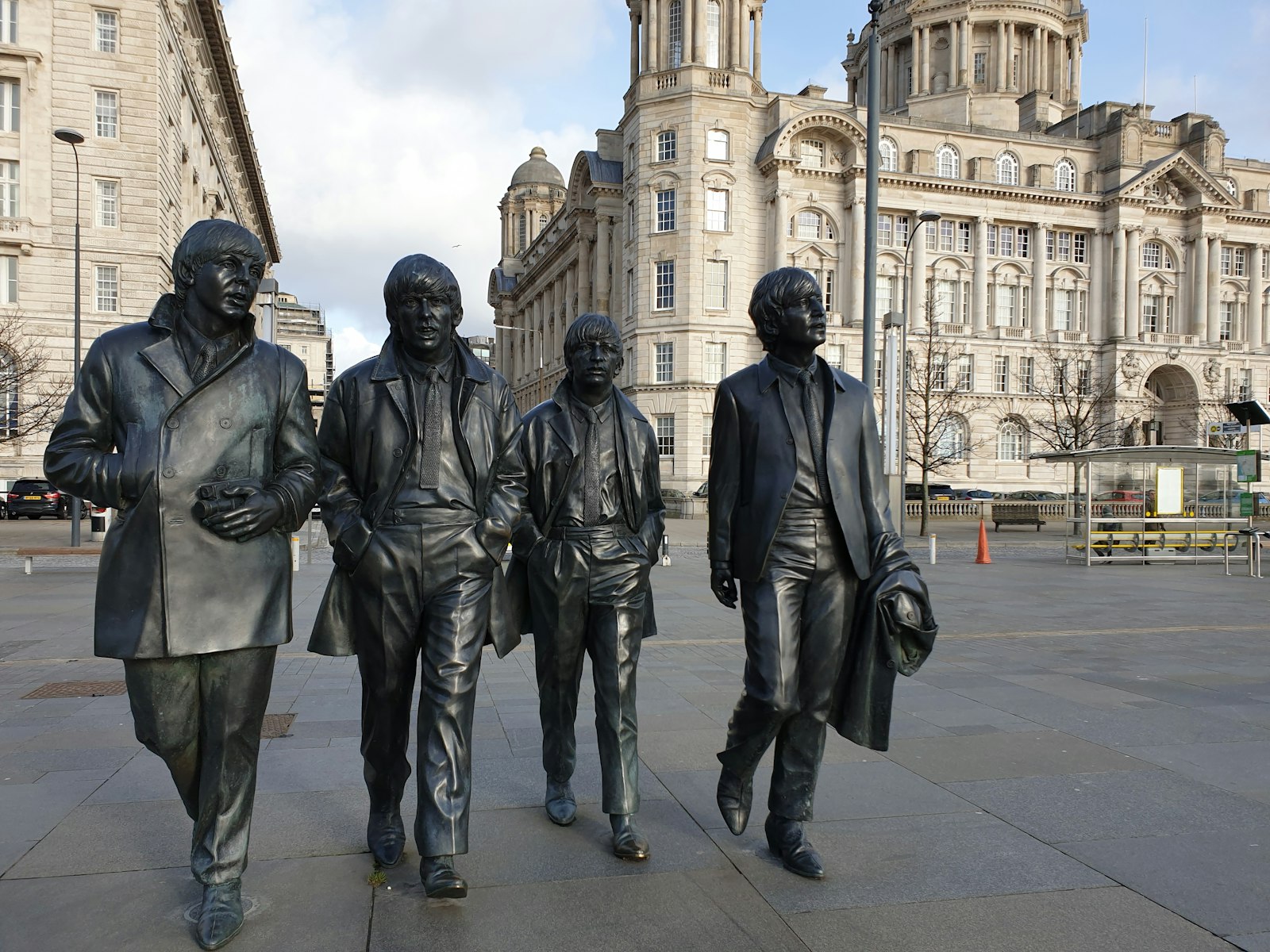
Liverpool is indelibly linked to The Beatles—the city that produced the world’s most influential band and shaped the course of popular music forever. While The Beatles had international success and spent much of their career in London and beyond, Liverpool remains the essential pilgrimage destination for understanding their roots, influences, and early development. For music fans, a Beatles Liverpool tour combines filming locations from A Hard Day’s Night, heritage sites connected to band members’ lives, and the broader cultural and musical heritage of a city that shaped popular music’s trajectory.
The Cavern Club
The Cavern Club is the birthplace of The Beatles as a serious band. Located in Matthew Street in Liverpool’s city center, the Cavern was a basement jazz club that became the epicenter of the 1960s Mersey Sound. The Beatles performed there over 250 times in the early 1960s, and it’s where they developed the raw energy and musicianship that would define their sound.
The original Cavern Club was demolished in the 1970s, but it’s been meticulously reconstructed on the same site using original architectural plans and period-appropriate materials. The reconstructed Cavern (opened in 1984) is functional—it’s a working venue with live music performances, particularly Beatles covers—and it’s accessible to visitors. Entry is free to walk in, though there are usually small charges for live performances.
Standing in the Cavern Club basement, with its brick walls and intimate scale, you appreciate the acoustic qualities and the sense of close community that made the venue legendary. The Beatles’ raw talent and the enthusiastic Cavern audiences created a feedback loop of artistic energy that shaped the band’s early development. The surrounding area has been redeveloped as Matthew Street, with Beatles-themed shops and restaurants.
Penny Lane
Paul McCartney’s “Penny Lane” references the actual street in Liverpool’s Toxteth area, a residential neighborhood where McCartney walked regularly as a child. Penny Lane itself is a modest street with Victorian terraces, local shops, and a bus shelter that inspired the song’s imagery. The street has become a pilgrimage destination for Beatles fans, though it’s important to manage expectations—it’s a real residential street, not a theme park or major tourist attraction.
You can walk Penny Lane, photograph the street, and appreciate the architectural backdrop that inspired one of The Beatles’ most perfect pop songs. The bus shelter referenced in the song has been refurbished with artwork celebrating the song’s connection to the street. Nearby is a small information plaque explaining the street’s significance.
The neighborhood itself is modest and residential, which is precisely the point—McCartney’s genius was transforming ordinary Liverpool streets into universally resonant pop art. Visiting Penny Lane grounds the abstraction of the song in geographical and social reality.
Strawberry Field
Strawberry Field (technically “Strawberry Fields,” but the song refers to it as singular) is another location that inspired John Lennon’s songwriting. Located in the Woolton area of south Liverpool, Strawberry Field was a Salvation Army home and garden—a place where Lennon would sometimes sneak through the gates to play.
Today, Strawberry Field remains a Salvation Army property, but the gates and surrounding area are accessible to visitors. The entrance gates are iconic—they’re exactly as they appear in the song’s cultural imagination, with the famous red gates and surrounding walls. In 2019, Strawberry Field underwent a complete renovation and now includes a visitor center (entry around £7-8 USD) that tells the story of Lennon’s connection to the place and the song’s cultural significance.
The Strawberry Field visitor center is genuinely well-done, with interactive elements, historical information, and an appreciation for both the song’s cultural impact and the actual place’s history. The gardens are open (seasonally), and you can walk the grounds that inspired Lennon’s most celebrated solo composition.
Childhood Homes: Mendips and 20 Forthlin Road
The Beatles story is fundamentally a story of Liverpool working-class youth. Two childhood homes have been preserved as heritage sites:
Mendips in Woolton was John Lennon’s childhood home (1946-1963), where he lived with his Aunt Mimi and Uncle George. The house is owned by the National Trust and is open to visitors via guided tour (booking ahead is essential). Entry is around £8-9 USD per person. The tour provides intimate understanding of Lennon’s early life—the rooms where he practiced guitar, studied, and developed the musical sensibility that would define The Beatles.
20 Forthlin Road in Allerton was Paul McCartney’s childhood home (1955-1964), where he lived with his father and brother after his mother’s death. The National Trust also manages this property, offering guided tours. Entry is around £8-9 USD. The house feels different from Mendips—more modest but equally significant in understanding McCartney’s formative years and the musical development that occurred within these walls.
Both houses are in residential neighborhoods and are accessed via organized tours only. Booking ahead is essential, as tours fill quickly, particularly during summer months. The tours last about 45 minutes and include the houses plus surrounding areas. Understanding where and how The Beatles lived deepens appreciation for the cultural achievement and the unlikely circumstances that produced the world’s greatest band.
The Beatles Story Museum
Located on the Liverpool Waterfront (in Albert Dock), The Beatles Story is a comprehensive museum dedicated to the band’s history, career, and cultural impact. The museum features:
- Original instruments and equipment
- Photographs and memorabilia
- Interactive displays about recording and performances
- Information about band members’ lives and individual careers
- Context about the broader 1960s musical and cultural landscape
Entry is around £15-17 USD, and you can easily spend 2-3 hours exploring. The museum is well-curated and provides essential context for understanding The Beatles’ career arc from Liverpool teenagers to global phenomenon. Even if you’re not a obsessive Beatles fan, the museum offers valuable insights into popular music history and 1960s cultural change.
The Beatles Story is located in Albert Dock, a historic waterfront area that’s been redeveloped with shops, restaurants, and other attractions. You can combine a museum visit with the dock area exploration and meals.
Magical Mystery Tour Bus
The Magical Mystery Tour bus—inspired by the band’s 1967 film of the same name—operates guided coach tours of Liverpool Beatles locations. The bus departs from Albert Dock and follows a set route hitting major Beatles sites while providing historical narration. Tours last about 2 hours and cost around £15-18 USD per person.
The Magical Mystery Tour bus is a bit touristy, but it’s an efficient way to see multiple locations without needing a rental car. The tour includes professional narration and context that enhance understanding of the sites you’re visiting.
Abbey Road Studios, London
While The Beatles are most associated with Liverpool, much of their recording work happened at Abbey Road Studios in London. Abbey Road Studios (located in the St. John’s Wood neighborhood of northwest London) is where they recorded the vast majority of their most famous songs—from “Please Please Me” to “A Day in the Life.”
Abbey Road Studios is not open to the general public for facility tours (it’s an active recording studio), but you can visit the famous zebra crossing outside the studio—the crossing made iconic by the Abbey Road album cover. The crossing is located on Abbey Road itself, and fans photograph themselves recreating the album cover pose. It’s somewhat chaotic (it’s an actual active street), but it’s a significant Beatles pilgrimage site.
The surrounding St. John’s Wood neighborhood is upscale residential, with good restaurants and shops. A Beatles London pilgrimage could combine Abbey Road with other London cultural sites and attractions.
A Hard Day’s Night Locations, Liverpool
A Hard Day’s Night (1964) was filmed in Liverpool and London, with significant portions shot in the city itself. The film’s locations, while not always obviously marked, provide a historical document of 1960s Liverpool. The Cavern Club (reconstructed), Penny Lane, surrounding streets, and various Liverpool locations appear in the film, making it a useful reference for a location-based tour.
You can obtain a guide at The Beatles Story or local tourism offices that identifies A Hard Day’s Night filming locations. However, many are now demolished or redeveloped, so the value is more in understanding the film’s historical context than seeing specific preserved sites.
Liverpool’s Broader Musical Heritage
While The Beatles are the ultimate Liverpool musical story, the city has substantial broader musical heritage:
Spending time in Liverpool beyond just Beatles sites provides appreciation for the city’s musical culture and the broader artistic context that produced The Beatles.
Planning a Beatles Liverpool Tour
Liverpool is easily accessible from London (about 2 hours by train from Lime Street Station) and makes an excellent 2-3 day destination:
Day 1:
Day 2:
Day 3:
Best Time to Visit:
Accommodation and Food:
A Beatles Liverpool tour is ultimately a pilgrimage to understand one of music’s most significant stories—not just the band’s music, but the city, culture, and circumstances that produced them. It’s a way to ground the abstract achievement of revolutionary music in the concrete geography, neighborhoods, and history of an actual place. For music fans and cultural historians alike, it’s an experience that deepens understanding of both The Beatles and the broader cultural transformation they represented.




Leave a Reply