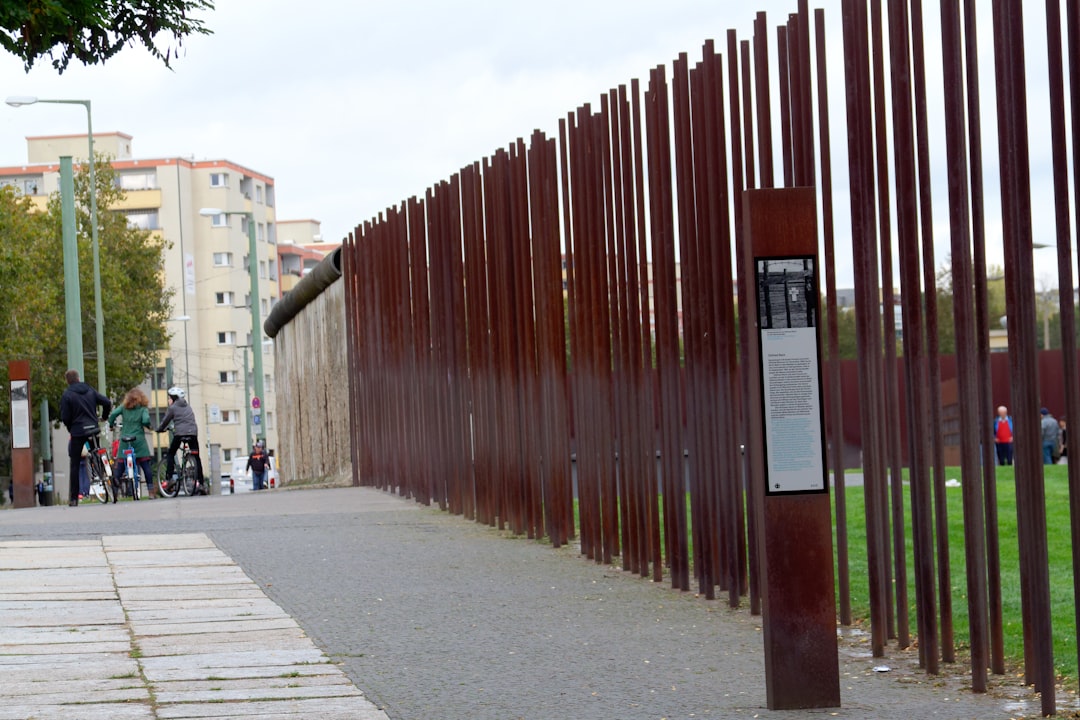
The Berlin Wall stands as one of history’s most powerful symbols of division, yet today it’s also a symbol of unity and hope. Walking through Berlin, you’ll encounter its remnants around nearly every corner—some preserved as solemn memorials, others painted with vibrant street art. To truly understand this city and this wall, you need to know the story of why it went up one August night in 1961, what daily life was like on both sides, and how its dramatic fall on November 9, 1989, changed the world.
Before the Wall: A City Divided
After Nazi Germany’s defeat in 1945, Berlin was split among the four Allied powers—the United States, Britain, the Soviet Union, and France. What seemed like a temporary arrangement became permanent. The Western zones (American, British, and French) eventually merged into West Berlin, a thriving capitalist enclave of 2.2 million people surrounded entirely by East German communist territory. East Berlin, meanwhile, became the capital of the newly formed German Democratic Republic (GDR).
The contrast couldn’t have been starker. West Berlin gleamed with neon, jazz, and prosperity. Shop windows displayed consumer goods that East Germans could barely imagine. Meanwhile, East Berlin suffered from shortages, gray brutalist architecture, and the Stasi’s omnipresent surveillance apparatus. By 1961, the psychological and economic gulf between the two halves had become a crisis.
The trigger: East Germans were leaving. Thousands crossed daily into West Berlin, then onward to West Germany and beyond. By summer 1961, an average of 3,000 East Germans were fleeing each day. For the communist regime, this was a hemorrhage of their population—and a propaganda disaster. Something had to be done.
The Wall Goes Up: August 13, 1961
On August 13, 1961, at 1 AM, Soviet leader Nikita Khrushchev gave the order. East German authorities, following Soviet instructions, began Operation Rose—the construction of a barrier around West Berlin. Barbed wire was strung. Soldiers blocked crossings. Within days, a hasty fence appeared, followed by concrete blocks and then the actual wall.
Berliners awoke to find their city literally divided overnight. Families were separated. Workers couldn’t reach their jobs. An entire world had been cleaved in two. The official name was the “Anti-Fascist Protection Rampart,” though everyone knew it for what it was: a prison wall keeping people in.
The initial barrier was crude and porous. In those first weeks and months, determined Berliners attempted daring escapes. Some simply climbed over. Others hid in car trunks. A few used false papers. The regime responded by making the wall higher, thicker, and more sophisticated. Within a year, it had evolved into a fearsome structure: 12 feet high, made of reinforced concrete, topped with barbed wire and angled outward to prevent climbing.
The Death Strip: A Regime of Terror
But the wall itself was just the most visible part of a complex security apparatus. Behind it lay the “death strip”—a no-man’s-land 160 feet wide filled with sand to show footprints, rows of raked gravel, anti-vehicle obstacles, and more barbed wire. Guard towers stood at regular intervals. Spotlights lit the area at night. A second inner wall ran behind this, sealing off the western side of East Berlin from the outer wall visible to the world.
Shot on sight orders were real and tragically enforced. At least 140 people died trying to cross (the exact number remains disputed). Some of the most poignant stories involve children. Peter Fechter, an 18-year-old, was shot and left bleeding in the death strip; Western guards could see him but were powerless to help, and Soviet authorities refused to retrieve him for hours. His cries eventually fell silent. He became the wall’s most famous victim.
The regime intensified security constantly. Guard patrols increased. Minefields were added. Dogs and barbed wire were everywhere. For the 3.5 million East Berliners, the wall wasn’t just a physical barrier—it was psychological oppression. You couldn’t escape. The government knew you wanted to escape, so they watched you. The Stasi secret police made paranoia an instrument of control.
Escape Attempts: Ingenuity Against Tyranny
Yet despite the danger, people never stopped trying. The stories of escape from East Berlin read like adventure novels. There was the “Tunnel 57” in 1964, when West Berliners dug under the wall and smuggled 57 people to freedom before the Stasi discovered it. In 1979, two families built a hot-air balloon from plastic and bedsheets and drifted over the wall into West Berlin. Another group created a fake diplomatic pass that worked for months. Someone even swam across the Spree River on a particularly dark night.
The creativity was matched only by the desperation. A woman hid in the chassis of a car. Someone was rolled inside a carpet. A young man jumped from a second-story window on the eastern side directly onto the roof of a Western vehicle below. These weren’t just escapes—they were acts of defiance against a system that claimed to own its people.
Life on Both Sides
West Berlin, despite being surrounded by hostile territory, became the most American city in Germany. Neon signs advertised Western consumer goods, jazz clubs thrived, and the city earned a reputation for bohemian excess. Artists, musicians, and misfits congregated here. The government subsidized West Berlin heavily, making it a showcase for capitalism’s success. By the 1980s, it was a glittering, cosmopolitan place—almost deliberately so.
East Berlin, meanwhile, was gray, ordered, and surveil- lanced. Buildings were functional rather than beautiful. Consumer goods were rationed. Yet people endured. They developed their own culture, their own ways of finding joy and meaning. Music thrived in underground clubs. Sports were state-sponsored and served propaganda purposes—East German athletes became Olympic superpowers. Literature and film flourished, often with subversive undertones that the regime grudgingly tolerated.
Checkpoint Charlie: Theater and Tension
Checkpoint Charlie, the most famous crossing point between East and West Berlin, became a stage for Cold War drama. Named after the phonetic letter “C,” it was the only crossing available to foreigners and diplomats. The famous photo of an American tank facing a Soviet tank across the checkpoint—a tense standoff in 1961—became one of the Cold War’s iconic images.
Today, Checkpoint Charlie is a tourist attraction, complete with actors dressed as soldiers and visitors eager to snap photos. But it’s worth understanding what it actually was: a place where tension lived every second. Guards checked papers obsessively. Undercover agents watched for suspected escapees. It was theater, yes, but theater with deadly stakes.
November 9, 1989: The Wall Falls
By autumn 1989, the Eastern Bloc was crumbling. Poland, Hungary, and Czechoslovakia were loosening their communist grip. Thousands of East Germans were flooding through Hungary into Austria, then to West Germany. The regime was losing control of its own population.
On November 9, 1989, East German spokesman Günter Schabowski fumbled an announcement about new travel regulations. In doing so, he essentially declared that anyone could leave. People rushed to the wall. Bewildered guards, lacking clear orders to shoot (the Stasi had been weakened by internal strife), simply let them pass. Champagne bottles flew. Strangers embraced. People danced on top of the wall, swinging sledgehammers and pickaxes. The image of jubilant Berliners on the wall, faces painted, flowers in hair, became the defining photo of the Cold War’s end.
Within weeks, bulldozers began dismantling most of the wall. The concrete sections were collected as souvenirs. But preservation efforts soon began—not of the wall itself, but of its memory.
Visiting Today: Where History Lives
East Side Gallery preserves the longest remaining stretch of the wall—about half a mile of concrete painted with murals by artists from around the world. This is visceral: seeing the wall, touching it, understanding its massive scale. The art transforms it into something less terrifying than historical, yet somehow that’s more poignant.
Bernauer Straße offers a more scholarly approach. The street literally bordered the wall, and homes on one side became the border. You can see windows bricked over, escape attempts reconstructed, and the exact positions where tragedy occurred. The chapel here, meant to honor those who died, is deeply moving.
Checkpoint Charlie is touristy but unavoidable. The museums around it provide context, though you’ll wade through crowds of visitors posing for photos. The Museum of the Wall Victims offers important testimony from people who lived through the division.
The DDR Museum on Museum Island is excellent for understanding everyday East German life. You can sit in actual East German cars, watch period television broadcasts, and see what consumer goods looked like (or didn’t).
Mauerpark (Wall Park) was built on the border after reunification. It features a stretch of the outer wall and a wonderful open-air Sunday flea market where Berliners mix with tourists in joyful commerce—the opposite of what the wall represented.
The Wall’s Legacy Today
The Berlin Wall’s physical presence lasted just 28 years, but its psychological impact lasted decades longer. Germans speak of “Wall in the head”—the invisible division that persisted long after the concrete came down. Economic disparities between East and West took years to level out. East Germans’ identity, tied to their nation that no longer existed, created a strange nostalgia called “Ostalgie.”
Walking Berlin today, you navigate between these two worlds constantly. Modern Berlin is thrillingly unified, yet you can still sense the boundary. Some Berliner districts retain distinctly Eastern or Western character. The city’s restaurants, clubs, and neighborhoods show the influence of both legacies.
The wall’s fall symbolized more than just Germany’s reunification. It represented the end of the Cold War itself. The image of people dancing on the wall—free, jubilant, celebrating their humanity—became the moment when history seemed to promise that freedom and unity could triumph over division and fear.
When you visit Berlin, take time at the wall’s remnants. Touch the concrete. Read the stories. Understand that this wasn’t just architecture—it was ideology made physical. And then walk freely from East to West, as millions do daily, and grasp the profound gift of that freedom.




Leave a Reply