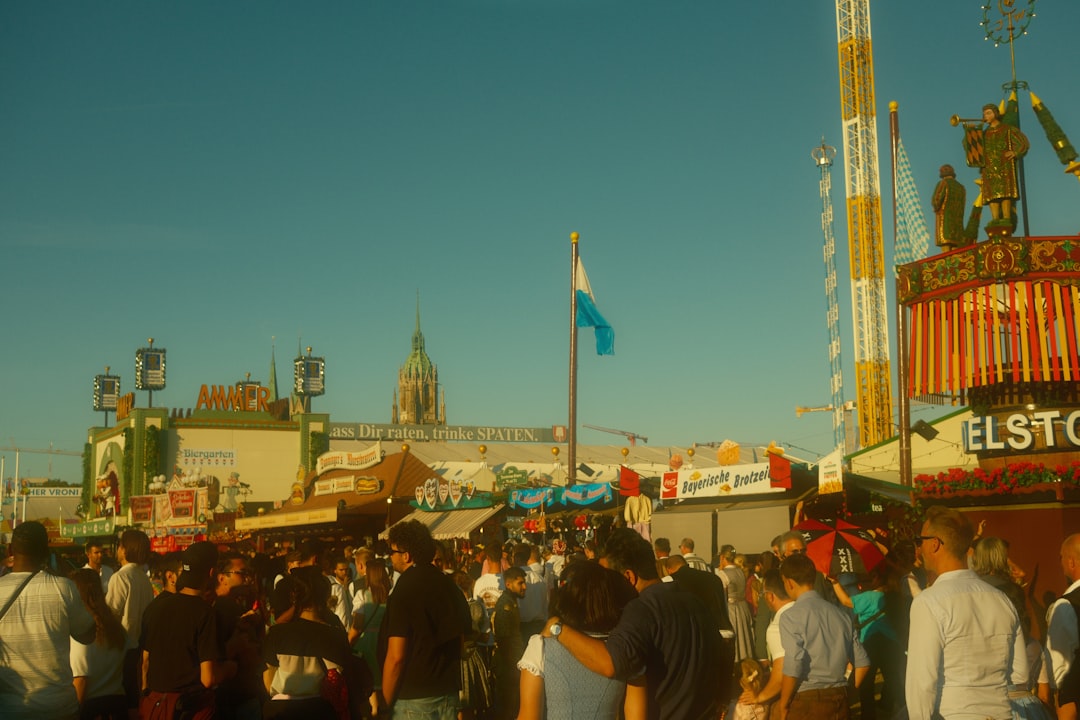
On a warm evening in Munich, the Augustiner-Keller beer garden holds six thousand people under the spreading canopy of old chestnut trees. Families sit at long wooden tables, toddlers chase each other between the benches, elderly couples share a plate of Obatzda (a pungent Bavarian cheese spread), and groups of friends raise their Mass — liter-sized glass mugs — in casual toasts. Someone has brought a whole roast chicken in a paper bag. Someone else has unpacked a Tupperware container of potato salad. The beer garden is not a restaurant. It is something more interesting: a public living room where an entire city comes to eat, drink, and exist together under open sky.
The 1812 Origin Story
The beer garden tradition has a surprisingly specific origin. In the early 19th century, Bavarian breweries stored their beer in underground cellars along the Isar River, where the cool temperatures kept the beer from spoiling during warm months. To further insulate these cellars, the breweries planted chestnut trees above them, whose broad leaves provided dense shade. Before long, the breweries began placing tables and benches among the chestnuts and selling beer directly to the public from the cellar.
This irritated Munich’s smaller tavern keepers and innkeepers, who complained that the breweries were stealing their food business. King Maximilian I of Bavaria brokered a compromise in a royal decree of 1812: the breweries could continue selling beer outdoors, but they were not permitted to serve food. Customers would have to bring their own. This ruling gave birth to the defining feature of the traditional Bavarian beer garden: the right to bring your own food. Over two centuries later, this tradition persists in many of Munich’s most beloved establishments.
How a Beer Garden Works
A traditional Bavarian beer garden has two sections. The Selbstbedienung (self-service) area consists of plain wooden tables with no tablecloths, where customers buy beer at a counter, find their own seats, and bring whatever food they like. The Bedienung (served) area has tablecloths, table service, and a food menu. The self-service section is where the authentic beer garden experience lives. You grab a seat wherever there is space — sharing a table with strangers is not just accepted but expected — buy a Mass of beer, unpack your food, and settle in.
The Mass itself is an institution. A full liter of beer, served in a heavy glass mug, it is the standard beer garden measure. Watching a seasoned Kellnerin (waitress) carry ten or twelve Mass at once — an act of strength and balance that seems to defy physics — is one of the incidental pleasures of any beer garden visit. The beer is typically a Helles (pale lager) or Weissbier (wheat beer), served cold but not ice-cold, because proper beer deserves proper temperature.
Bring Your Own Food
The bring-your-own-food tradition is central to what makes beer gardens democratic spaces. At a table in the self-service section, you might find a construction worker eating Leberkäse (a Bavarian meatloaf) from a nearby butcher, a family unpacking a picnic of bread, cheese, and radishes, and a group of university students sharing supermarket pretzels. There is no judgment about what you bring, and no obligation to buy food from the beer garden itself (though the food they do sell — roast chicken, giant pretzels, pork knuckle, and the aforementioned Obatzda — is usually excellent and reasonably priced).
The one rule is that you must buy your drinks on-site. Bringing your own beer to a beer garden is a violation roughly equivalent to bringing your own popcorn to a movie theater, except worse, because beer is the entire economic engine of the institution.
Munich’s Greatest Beer Gardens
Munich has more famous beer gardens than any other city, and they vary in character:
- Augustiner-Keller — Perhaps the most beloved among locals. The beer is tapped from wooden barrels, which purists insist produces a superior flavor. The chestnut-shaded garden holds 5,000 and fills on warm evenings.
- Hirschgarten — The largest beer garden in the world, with 8,000 seats in a former royal deer park. Despite its size, it maintains a relaxed, family-oriented atmosphere.
- Chinesischer Turm (Chinese Tower) — Located in the English Garden park, this is the most famous beer garden among tourists. The pagoda-style tower and brass band on summer Sundays make it photogenic, though locals sometimes consider it overrun.
- Viktualienmarkt — A small beer garden in the center of Munich’s famous food market. Buy provisions from the surrounding stalls and enjoy them with a Mass at the communal tables.
- Seehaus — Overlooking a lake in the English Garden, this is the most scenically situated of Munich’s major beer gardens. Arrive by foot, bicycle, or even rowboat.
Beyond Bavaria
While the beer garden is a Bavarian invention, the concept has spread across Germany in modified forms. In Berlin, biergartens tend to be more casual and eclectic, sometimes incorporating street food from various cuisines. In Cologne, the outdoor drinking culture centers on Kölsch — the light, top-fermented beer served in small 200ml glasses called Stangen — rather than Bavarian lagers. In northern Germany, you might find a beer garden-style setup at a brewery or riverside restaurant, but the specific traditions of self-service and bring-your-own food are less common outside Bavaria.
For visitors to Germany, an evening in a proper Bavarian beer garden is not optional. It is the single best introduction to the German capacity for Gemütlichkeit — that untranslatable word encompassing coziness, warmth, good cheer, and the particular happiness of being among friendly people in a comfortable place. Find a seat under the chestnuts, order a Mass, and stay until the light fades and the lanterns come on. This is Germany at its most generous and most human.




Leave a Reply