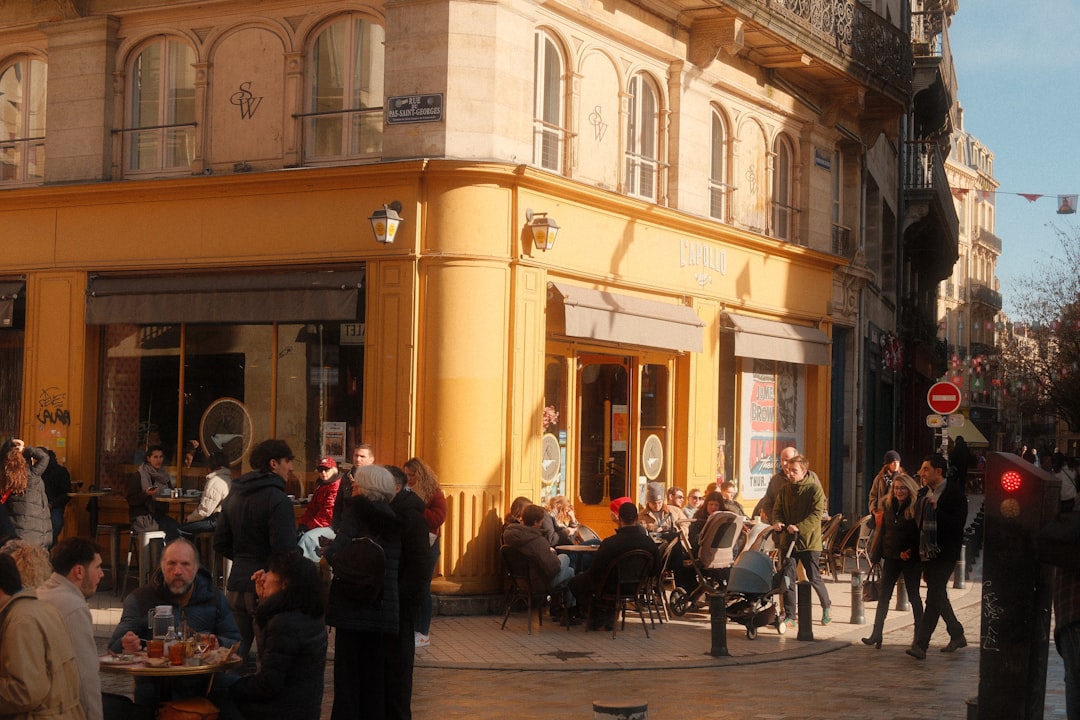
The French café is not a place to grab a coffee and run. It’s not optimized for efficiency. It’s the opposite of that. A French café is a place where you can sit for three hours, nursing a single espresso and a small glass of water, reading a newspaper or thinking about your life, and you’re not expected to leave or to consume anything else. The chair you occupy, the table space, the ambient atmosphere of people reading, talking, existing in public—that’s what you’re paying for. The coffee is almost secondary.
Understanding café culture is fundamental to understanding France. The café is where intellectual life happens, where friendships form, where people conduct the business of living a life that’s not entirely private. It’s where the Enlightenment thinkers debated, where existentialists worked, where Parisians have always gone to think and exist in the presence of other people. The café is so fundamental to French life that if you want to understand how French people actually live, you need to spend time sitting in one.
The History: From Enlightenment to Existentialism
The café as an institution in France dates to the 17th century, but it became culturally important in the 18th century during the Enlightenment. Café Procope, founded in 1686 in Paris, is often cited as the first café, though this is debatable. What matters is that by the Enlightenment, cafés were where philosophers and intellectuals gathered to argue, think, and shape the intellectual landscape that would eventually lead to the French Revolution.
Voltaire spent much of his life in cafés. Rousseau debated there. The Encyclopédie was discussed in cafés. The café was where intellectual life conducted itself, where anyone with ideas could come and participate in conversation. The café was democratizing—not everyone could attend university or belonged to an academy, but anyone could buy a coffee and sit in a café and hear ideas.
This tradition continued through the 19th and 20th centuries. The Café de Flore and Les Deux Magots, both in Saint-Germain in Paris, became famous during the existentialist period. Jean-Paul Sartre wrote at Café de Flore. Simone de Beauvoir met him there. Albert Camus was a regular. These weren’t young people trying to look cool—they were intellectuals who quite literally conducted their work in cafés.
Why? Partly because the alternative might have been cold apartments. Partly because the café was a semi-public space where you could work but also exist in the presence of others. Partly because the café was social—you could think and be interrupted by ideas from other people. The boundaries between private work and public existence were porous in a way that made cafés genuinely productive places.
This history isn’t just nostalgia. The idea that a café is a legitimate place to spend time, to think, to work, to exist publicly—that idea is still alive in French culture.
The Economics: You’re Renting the Chair, Not the Coffee
Here’s the thing that confuses Americans: a café in France is not charging you for the coffee. They’re charging you for the space, the chair, the table, the permission to sit there for three hours. The coffee is almost incidental.
This is literally reflected in pricing. In Paris and other major cities, there’s typically a “comptoir” (standing) price and a “terrasse” (sitting) price. A coffee at the counter might cost 1.50 euros. The same coffee, sitting at a table, costs 3 or 4 euros. You’re not paying for a different coffee. You’re paying for the right to sit down and occupy space.
In tourist-heavy areas, this multiplies dramatically. A coffee at a table on the Champs-Élysées costs 8 euros. Same coffee, different location, different price. You’re paying for the location and the permission to sit.
This model means you can sit in a café with a single espresso for hours and no one will bother you. You’re not expected to buy more. You’ve paid your sitting fee. The café is happy. You’re happy. Everyone’s fine.
This is radically different from American coffee culture, where you’re expected to continuously consume. American coffee shops expect you to get a coffee, drink it, and leave. If you sit for three hours with one coffee, you feel guilty. The whole model is built around churn and consumption. French cafés are built around the opposite—the expectation that you’ll sit, that you’ll occupy space, that your presence is valuable.
Café Types: Café, Brasserie, Bistro, Wine Bar
The terms are confusing because they’re not precisely defined. They overlap. But there are some rough distinctions.
A café is the casual place where you get coffee, a quick pastry, maybe a light lunch. It’s often small, operated by a single person or a couple. Prices are low. Atmosphere is neighborhood-focused. A café is where you see the same people regularly and they know you by sight.
A brasserie is bigger, more formal, serves full meals with wine, usually with a zinc bar where you can stand. Brasseries are often beautiful—they have mirrors, art deco details, a sense of history. Famous Parisian brasseries are institutions. L’Alsacienne near Luxembourg is a classic. Dinner at a brasserie is fancier and more expensive than at a café.
A bistro is in between—casual but food-focused, with fuller menus than a café, but less formal than a brasserie. Prices are moderate.
A wine bar (bar à vin) is specifically focused on wine, usually with a small food menu (charcuterie, cheese) meant to accompany wine.
In practice, all of these serve essentially the same function—they’re public spaces where you can sit, consume something, and exist. The distinctions matter less than the fact that they all serve this fundamental need for public-but-not-fully-public space.
The Zinc Bar: The Counter and Counter Culture
One distinctive feature of French cafés is the zinc bar—the counter where you stand to order. “Zinc” literally refers to the zinc-topped counters that traditional cafés had, though it’s used metaphorically for any café counter.
The zinc bar is how you order if you want quick service. You stand at the counter, you order, you drink, you pay, you leave. It’s efficient. It’s social in a way—you’re standing shoulder-to-shoulder with other people doing the same thing. There’s an etiquette to it. You’re not sitting; you’re occupying a standing space briefly.
For casual coffee or a quick beer, standing at the counter is completely normal. For longer visits, you sit at a table.
The Terrasse: The Outside Seating and Paris-Watching
A café’s terrasse (terrace) is the outdoor seating. In Paris and other cities, cafés often have tables on the sidewalk. These are premium—they cost more because you’re exposed to the weather but also you get to watch Paris. The terrasse is where you sit to people-watch, to be seen, to participate in the public theater of the street.
In winter, terrasses often have heaters and blankets, because Parisians are not going to give up outdoor café sitting just for weather.
The terrasse has a social function beyond sitting. You’re performing a kind of Parisian-ness just by sitting there. You’re existing in public, in the way that’s central to French café culture.
What to Actually Order and How to Order It
In a café, you order simply. Coffee, in French, is typically just “un café” (which means espresso) or “un café allongé” (an espresso with hot water, similar to Americano). “Un café crème” is espresso with hot milk, closer to a cappuccino but smaller. For an actual latte situation, you might order “un grand crème” (a large espresso with milk).
If you want just a pastry and water, that’s fine. A croissant and water. No one will judge you.
Wine by the glass is common. “Un verre de rouge” (a glass of red) or “Un verre de blanc” (a glass of white). Beer is often Kronenbourg or another common French/European brand.
The water that comes with your coffee—always accept it. In France, that small glass of water is your companion. You sip it between sips of coffee. It’s normal and it aids digestion.
The Historic Cafés: When Location Becomes Part of the Experience
Some cafés in Paris have become institutions because of their history or their location.
Café de Flore in Saint-Germain is famous (perhaps too famous) for existentialist history. It’s expensive, it’s touristy, but if you want to sit where Sartre sat, it’s an experience.
Les Deux Magots, across the street from Café de Flore, is similar—famous, expensive, historic.
Café de la Mairie in the Latin Quarter is a classic neighborhood café where students and locals gather.
Café Procope claims to be the oldest, though much of its current form is restoration.
Café de Paix overlooks the Opéra and is glamorous in a 19th-century way.
Honestly, you don’t need to go to the famous ones. Every neighborhood has cafés that have been operating for decades, where the same people sit in the same seats, where the owners know regular customers. These neighborhood cafés are where actual café culture lives. The famous ones are museums of café culture—important historically, but not necessarily where you’ll experience the living tradition.
Café Etiquette: How to Behave
Order simply. Say bonjour first. Don’t snap your fingers. Sit where indicated or ask “Puis-je m’asseoir ici?” (May I sit here?). You’re not in a hurry. Don’t expect constant service. Your server is not your friend, but they’re professional and helpful.
If you sit at a table, you occupy that space as long as you want. No one will try to rush you.
Tipping is not required but rounding up to the nearest euro or leaving a euro or two is appreciated.
Use the bathroom if you need it, but typically buy something first.
Don’t be loud or disruptive. Cafés are places where people are thinking, reading, working, having quiet conversations. Respect that.
Café Culture Dying But Alive
It’s true that French café culture is not what it was. Young Parisians carry phones and use WiFi. Some cafés have installed WiFi to stay relevant. The ritual of sitting is less universal. But the culture persists, and there’s something genuinely French about a person sitting alone in a café, drinking coffee slowly, reading a newspaper, not on their phone, just existing.
When you spend time in a French café, you’re participating in a centuries-old tradition of public intellectual life and human existence conducted at a table with a small cup of coffee and an infinite amount of time.
Go to a café. Sit. Order a coffee. Drink it slowly. Don’t rush. Read a book or newspaper or just watch people. Understand that you’re not wasting time—you’re spending time in exactly the way French culture values. You’re sitting. You’re thinking. You’re existing in public in a way that marks you as understanding something essential about how to live.
The French café isn’t about the coffee. It’s about the belief that sitting, thinking, and existing in public are valuable uses of time. In a world obsessed with productivity and consumption, that’s a genuinely radical idea. And it’s still alive in France, waiting for you to pull up a chair.




Leave a Reply