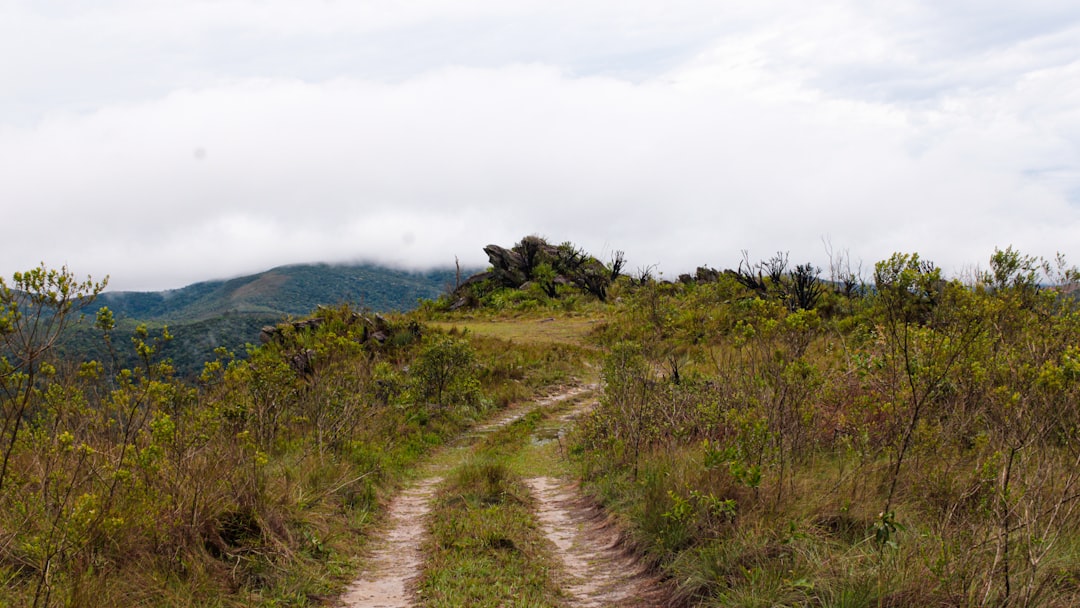
Every year, hundreds of thousands of people from around the world lace up their boots and walk across northern Spain to the Cathedral of Santiago de Compostela, where tradition holds that the remains of the Apostle James lie buried. The Camino de Santiago — the Way of Saint James — is one of the oldest and most important Christian pilgrimage routes, with a documented history stretching back over a thousand years. But it has also become something more than a religious journey: part long-distance hike, part social experiment, part moving meditation on what it means to strip life down to its essentials and simply walk.
A Thousand Years of History
According to tradition, the body of Saint James the Apostle was transported to the northwestern corner of Spain after his martyrdom in Jerusalem around 44 AD. The tomb was supposedly rediscovered in 814 AD by a hermit guided by a star — hence “Compostela,” often interpreted as deriving from campus stellae, “field of the star.” Whether the bones are actually those of Saint James is historically unprovable, but it hardly matters: by the tenth century, pilgrims were walking to Santiago from across Europe, and by the twelfth century the route had become one of Christendom’s three great pilgrimages, alongside Rome and Jerusalem.
The Codex Calixtinus, compiled around 1140, is essentially the world’s first travel guide — a detailed description of the route from France to Santiago, including advice on which rivers were safe to drink from (and which would kill your horse), which towns had good hospitals, and which locals were trustworthy. It divided the French approach into four routes that converged at Puente la Reina in Navarra, and its descriptions remain recognizable to modern pilgrims. UNESCO designated the French routes and Spanish routes as World Heritage Sites in 1993 and 1998 respectively.
The French Way: The Classic Route
The Camino Francés — the French Way — is the most popular route, covering approximately 780 kilometers from Saint-Jean-Pied-de-Port on the French side of the Pyrenees to Santiago de Compostela. Most walkers complete it in 30 to 35 days, covering 20 to 30 kilometers per day. The route crosses the Pyrenees on the first day in a demanding climb to Roncesvalles, then traverses the vineyards of Navarra, the wheat fields of the Meseta (the central Spanish plateau, beloved and loathed in equal measure for its flatness and exposure), the green mountains of Galicia, and finally arrives at Santiago’s magnificent Baroque cathedral.
Along the way, pilgrims pass through cities with extraordinary historical and artistic heritage: Pamplona (of running-of-the-bulls fame), Burgos (with its Gothic cathedral, a UNESCO World Heritage Site), León (whose cathedral has the finest collection of medieval stained glass in Spain), and Astorga (with a Gaudí-designed bishop’s palace). The route is marked by yellow arrows and shell symbols — the scallop shell has been the Camino’s emblem since the Middle Ages — and navigation is straightforward.
The Pilgrim’s Credential and Albergues
Pilgrims carry a credencial — a pilgrim’s passport — that they stamp at churches, albergues, cafés, and municipal offices along the route. The credencial serves both as a souvenir and as proof of pilgrimage: to receive a Compostela (certificate of completion) at the Pilgrim’s Office in Santiago, you must have walked at least the final 100 kilometers or cycled the final 200 kilometers, with stamps to prove it. This is why many pilgrims with limited time begin in Sarria, the last major town more than 100 kilometers from Santiago.
Albergues — pilgrim hostels — line the route, ranging from basic municipal facilities with bunk beds for a small donation to privately run hostels with better amenities and slightly higher prices. The albergue experience is central to the Camino’s social culture: pilgrims share dormitories, cook communal meals, tend each other’s blisters, and form intense if temporary friendships. The nightly ritual of arriving, showering, washing clothes, and gathering for dinner creates a rhythm that quickly becomes the structure of daily life.
Arriving at Santiago
The moment of arrival at Santiago’s Praza do Obradoiro — the vast square in front of the cathedral — is overwhelming for most pilgrims regardless of their religious beliefs. After weeks of walking, the sight of the cathedral’s Baroque western facade produces tears, laughter, embraces, and often a profound sense of disorientation: the walking is over, and a purpose that has organized every waking moment suddenly evaporates. The Pilgrim’s Mass, held daily at noon, includes the occasional swinging of the Botafumeiro — an enormous incense burner that arcs across the transept on a system of ropes and pulleys. Tradition holds that the Botafumeiro was originally introduced to mask the smell of unwashed pilgrims, and after 780 kilometers on foot, this explanation seems entirely plausible.
Why People Walk
Motivations for walking the Camino range from devout religious faith to athletic challenge to simple curiosity. Many pilgrims describe a transformation that has less to do with spirituality in the conventional sense and more to do with the experience of sustained simplicity — weeks of carrying everything you need on your back, walking from sunrise to early afternoon, and having no obligation beyond putting one foot in front of the other. In a world of constant connectivity and endless choice, the Camino offers something radical: a single direction, a clear purpose, and the company of strangers who are all, quite literally, on the same path.




Leave a Reply