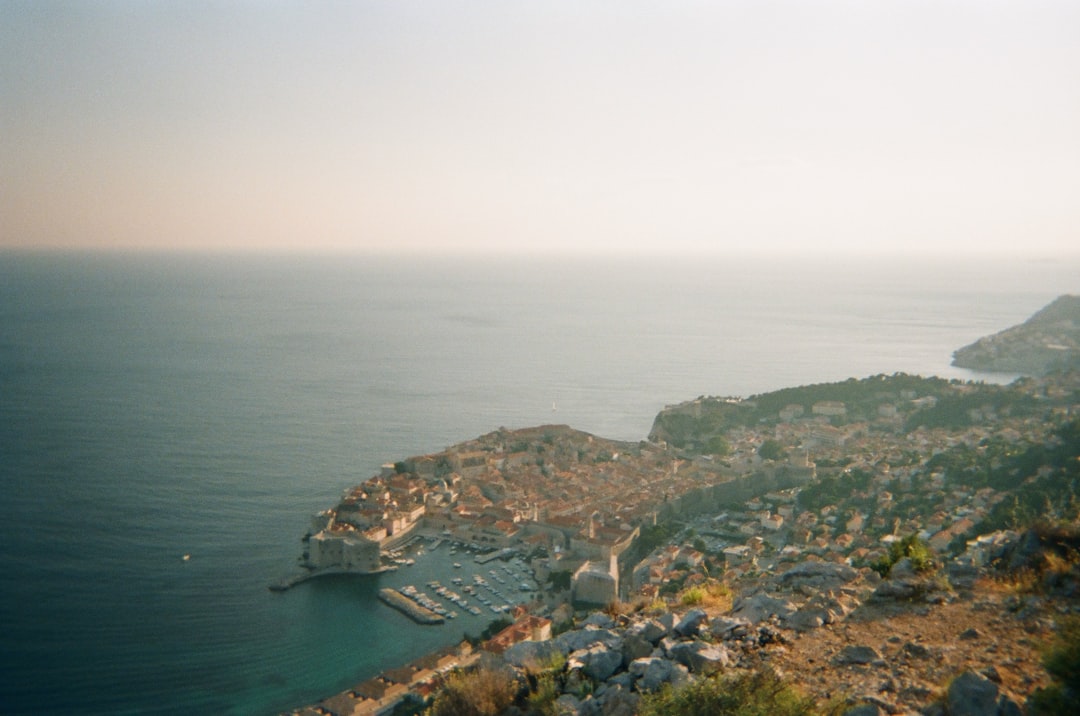
Croatia’s Dalmatian coast is one of the Mediterranean’s most beautiful stretches of shoreline—a thousand-kilometre ribbon of limestone cliffs, walled medieval towns, and islands scattered across water so clear it seems to have been digitally colour-corrected. It is also, increasingly, one of the most crowded. Dubrovnik, the crown jewel, now receives more than a million cruise ship passengers per year, and on peak days its marble-paved Stradun is so packed that movement becomes a shuffling queue. But here is the secret the cruise ships cannot reach: the rest of the coast is vast, varied, and far less trampled. You just have to know where to go.
Split: A Living Palace
Split, Croatia’s second-largest city, is built in and around the ruins of the Roman Emperor Diocletian’s retirement palace, constructed at the turn of the fourth century. This is not a roped-off archaeological site—people live, work, and hang their laundry inside the palace walls. The basement halls, once buried under centuries of debris, have been excavated and now host a market and exhibition space. The Peristyle, the palace’s central courtyard, is flanked by granite columns and serves as an open-air café where you can drink espresso on stones that a Roman emperor once walked. The Cathedral of Saint Domnius, built inside Diocletian’s own mausoleum, is one of the oldest functioning cathedrals in the world.
Split works brilliantly as a base for island-hopping. The ferry terminal sits right below the palace walls, and catamarans depart daily for Hvar, Brač, Vis, and Korčula. The Riva, the palm-lined waterfront promenade, fills with locals every evening for the passeggiata. Climb Marjan Hill, the forested peninsula west of the old town, for sunset views over the harbour and the islands beyond.
Korčula: The Anti-Dubrovnik
Korčula’s old town, perched on a small peninsula jutting into the Pelješac Channel, looks remarkably like a miniature Dubrovnik—the same honey-coloured stone walls, the same red rooftops, the same fortified towers. But Korčula receives a tiny fraction of the visitors, and the atmosphere is entirely different. The narrow streets are arranged in a herringbone pattern, designed to channel sea breezes while blocking harsh winds. Marco Polo allegedly was born here (Korčula disputes this claim with Venice, naturally), and his supposed birthplace is now a small museum.
The island’s interior is blanketed in vineyards, olive groves, and dense pine forest. Rent a scooter and explore the southern coast, where small coves with pebble beaches offer swimming in crystalline water without another soul in sight. The local white wines, Pošip and Grk, are exceptional and almost impossible to find outside Croatia. Drink them with grilled fish on a harbourfront terrace and wonder why anyone fights through the crowds in Dubrovnik instead.
Vis: The Island That Time Forgot
Vis is the farthest inhabited island from the mainland, and its remoteness is its greatest asset. Used as a Yugoslav military base until 1989, it was closed to foreign visitors for decades, which inadvertently preserved it from the development that transformed other islands. The town of Komiža, on the western coast, is a fishing village of stone houses and bobbing boats that looks like it has changed very little in a century. The island’s interior is dotted with abandoned military tunnels, now atmospheric curiosities to explore on foot or by bike.
From Vis, take a boat excursion to the Blue Cave on the tiny island of Biševo, where sunlight enters through an underwater opening and illuminates the cave interior in an otherworldly electric blue. Visit before 11 a.m. for the best light. Back on Vis, seek out a konoba (traditional tavern) and order the local specialty: slow-cooked octopus under a peka, a domed metal lid buried in hot coals. It is one of the finest meals you will eat in Croatia.
Šibenik and Hvar: Contrasts in Stone
Šibenik, often overlooked between Split and Zadar, has a UNESCO-listed cathedral that is an architectural marvel—the Cathedral of St. James, built entirely of stone and brick without any wood or mortar in its construction. The town itself is quieter and more workaday than its glamorous neighbours, which gives it an authenticity that feels increasingly rare on this coast. The nearby Krka National Park, with its terraced waterfalls and swimming areas, makes a superb day trip.
Hvar, by contrast, is the coast’s most fashionable island, with a reputation for nightlife, yacht crowds, and celebrity sightings. But even here, you can escape the scene. Hvar Town’s fortress, a steep climb above the harbour, offers sweeping views of the Pakleni Islands. Rent a small boat and motor out to one of those islands for a secluded beach lunch. Or skip Hvar Town entirely and head to Stari Grad, one of the oldest settlements in Europe, where a quieter pace prevails and the UNESCO-listed agricultural plain stretches inland in a patchwork of ancient stone walls and lavender fields.
Timing and Transport Tips
- The cruise ship peak runs from May through October, with the worst congestion in July and August. Visit in late September or early October for warm seas, thinner crowds, and lower prices.
- Jadrolinija operates the main ferry network. Book car ferries well in advance for summer travel. Foot passengers can usually walk on, but catamarans do sell out.
- Check cruise ship schedules for Dubrovnik at websites like cruisemapper.com. Days with no ships in port are dramatically more pleasant.
- A rental car is useful on the mainland but unnecessary on the islands, where scooters, bikes, and local buses will get you everywhere you need to go.



Leave a Reply