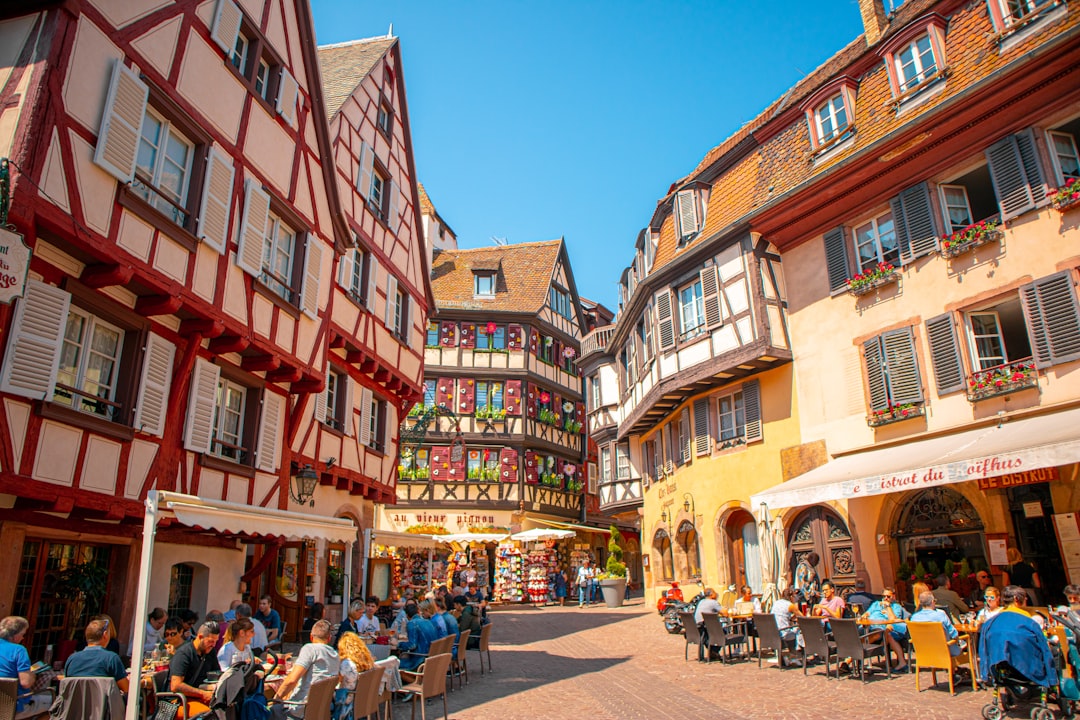
One of the most shocking things visitors witness in Denmark is the sight of babies sleeping in prams outside cafés and restaurants. It might be winter, it might be afternoon, and the parents are inside, visible through the window, having coffee. The baby is outside alone, sleeping peacefully.
This practice—common in Scandinavia and most normal to Danes—horrifies many visitors, particularly Americans. It seems like neglect, a violation of child safety. Yet it’s entirely intentional, rooted in specific Danish values about freedom, trust, and childhood. The practice is not unique to Denmark but nowhere is it as commonly seen, and nowhere does it represent such a complete philosophy about how society should function.
This is not a single cultural practice but rather an expression of a broader Danish concept called “frihed”—freedom. Understanding Danish trust requires understanding what freedom means in Danish culture and how it relates to personal responsibility, community safety, and the kind of society Danes believe they’ve built.
The Unlocked Bicycle and the Trust-Based System
Before discussing babies in prams, let’s start with bicycles. In Copenhagen, thousands of people park their bicycles unlocked. The bicycle stands are full of bikes with no locks, no security measures beyond perhaps a cable loosely connecting wheel to frame. In a city of 600,000 people, bicycle theft is not a significant problem.
This seems impossible to people from places with higher crime. Yet it’s normal. The bicycles stay where they’re left. People trust that their neighbors won’t steal their bikes. This trust is generally justified.
This is a trust-based system. Rather than preventing theft through security measures, the system relies on the assumption that most people are honest and that community pressure discourages theft. It works because theft is genuinely rare, and when it happens, it’s treated as shocking—a violation of the social contract.
Bicycles are one expression of this, but the principle extends through Danish society. Shops have honesty boxes—boxes where you put money for goods. Farmers sell vegetables from stands with no attendant; you pick what you want and leave money. Public spaces don’t require constant security measures. The assumption is that people will behave honestly.
This wouldn’t work in a society with high crime. It works in Denmark because crime rates are low and because the cultural values support honesty. The low-security, high-trust system is both a cause and effect of the safe, honest society.
Babies Sleeping Outside: The Philosophy
Now, back to babies in prams outside cafés. Danes leave babies outside for several reasons, all related to values about childhood, independence, and trust:
Fresh air: Danes believe that babies need fresh air, even in winter. A baby sleeping in cool air is thought to be healthier than one in a heated indoor environment. This reflects values about natural child-rearing.
Independence: Leaving a baby outside signals that the parent isn’t anxious about the child’s safety. It models the kind of calm confidence about the world that Danes want children to learn.
Realistic assessment of danger: Statistically, a baby sleeping in a pram on a Copenhagen street is extremely safe. The risk of kidnapping or harm is vanishingly small. Keeping the baby inside based on fear rather than realistic risk assessment would be overprotective.
Practical considerations: Parents want to have coffee with friends. Why can’t they? The baby is nearby, safe, sleeping. The practical solution is reasonable.
The child’s experience: Babies sleeping outside experience the world—sounds, light changes, weather. This sensory experience is thought to be good for development.
The practice expresses trust: trust that the community won’t harm your child, trust that you’ve built a society where children are safe, trust that you don’t need to control every aspect of your child’s environment.
When visitors express shock, Danes often respond with genuine confusion. Of course you can leave your baby outside. Why wouldn’t you? What danger is there? The incomprehension is real—the values are so different that the question itself doesn’t make sense to Danes.
Children’s Independence: Kids on Public Transit
This same philosophy extends to children’s independence more broadly. Danish children ride public transportation alone from age 7 or 8. They walk to school alone. They navigate neighborhoods without constant adult supervision.
Parents in other countries are sometimes horrified by this. They see it as dangerous, as neglectful. But Danish statistics on child safety don’t support the idea that this freedom creates danger. Children in Denmark are statistically safe.
The philosophy is explicit: children develop confidence, competence, and independence through doing things alone. Hovering parental supervision teaches dependence. Allowing children to navigate the world teaches capability.
This connects to broader values about child development. The Danish approach emphasizes play-based learning and child-directed activity. Structured, adult-supervised activities are much less common in Denmark than in many other countries. Children are expected to organize their own play, to navigate their own conflicts, to develop independence.
For visitors from cultures with intensive parenting styles, seeing Danish children navigating independence can feel shocking. An 8-year-old on a bus alone, without a phone to communicate with parents, seems reckless. But the Danish perspective is that this child is learning what all children need to learn: how to take care of themselves, how to problem-solve, how to be competent in the world.
Low Crime, High Trust: Why Danish Freedom Is Possible
Danish trust-based systems are only possible because crime rates are low. This isn’t accidental. Several factors contribute:
Economic equality: Extreme poverty is rare. Most people have basic security. Crime rates are higher in societies with severe inequality because desperation drives crime. Denmark’s comprehensive welfare state and relatively equal distribution of wealth means fewer people are driven to crime.
Social cohesion: The values of Janteloven and egalitarianism create community cohesion. People feel connected to their society. The social pressure against harming community members (by theft, violence, etc.) is strong.
Effective policing: Danish police are well-trained, generally well-regarded, and relatively effective. But the philosophy is community-oriented rather than militaristic. The police are not an occupying force but part of the community.
Cultural values: Theft is seen not just as illegal but as morally wrong. Harming others violates the community. These values are internalized and reinforced.
Practical factors: The small size and relatively homogeneous population (though becoming more diverse) makes community pressure effective. Everyone knows everyone, at least indirectly.
The combination of these factors creates a society where trust-based systems work. Because crime is low, you can leave your bicycle unlocked, your baby outside, your store unattended.
How Freedom and Responsibility Are Linked
In Danish culture, freedom and responsibility are explicitly connected. You have the freedom to leave your baby outside because you have the responsibility to live in a society where this is safe. You have the freedom to ride your bike without a lock because you have the responsibility to live honestly.
This is quite different from individualistic conceptions of freedom that emphasize freedom from constraint. Danish frihed emphasizes freedom within a social contract that requires responsible behavior.
Children are taught this explicitly. You have the freedom to play outside alone, but you have the responsibility to be careful, to be home by a certain time, to let parents know where you are. You have the freedom to organize your own education to some degree, but you have the responsibility to learn.
This framework means that freedom is not opposed to community; it’s enabled by community. You’re free because you can trust others and others can trust you.
The “Free-Range” Childhood
Danish childhood is often described as “free-range”—children are given considerable autonomy, allowed to play outside, to take risks (carefully), to explore. This differs from some other parenting cultures where children are more supervised and scheduled.
The free-range approach reflects values about how children develop into capable, independent adults. It also reflects practical realities—modern Danes remember their own free-range childhoods and see no reason to change the model.
For visitors from cultures with more intensive parenting, observing Danish children’s freedom can feel both appealing (they seem so happy and capable) and anxiety-inducing (isn’t all that unsupervised play dangerous?).
The Danish perspective is that some risk is necessary for development. Children need to figure out how to resolve conflicts with peers, to manage minor injuries, to navigate the world. Protecting them from all risk leaves them unprepared for life.
The Trust Society: What It Requires
For a society built on trust to function, several things must be true:
High social cohesion: People must identify with their community and care about others’ wellbeing. This is strengthened by relative economic equality and shared values.
Low corruption: Government and institutions must be trustworthy. Corruption destroys trust-based systems because if officials can’t be trusted, the whole system collapses.
Cultural consensus: People must share broadly similar values about right behavior. This is easier in relatively homogeneous societies but challenging as diversity increases.
Effective systems: While trust-based, the systems that exist must actually work. Police must solve crimes. Healthcare must work. Public transportation must be reliable.
Modest size: Very large societies find trust-based systems harder to maintain. Everyone-knows-everyone dynamics that create community pressure work better in smaller populations.
Denmark has most of these factors, which is why its trust-based systems function. As Denmark becomes more diverse, some worry that trust-based systems might become harder to maintain. But so far, the culture has proven remarkably resilient.
What Tourists Notice: The Culture of Freedom
For visitors, the Danish culture of freedom and trust is apparent everywhere:
- Parks where children play without parents hovering
- Sidewalk displays of goods with no security
- Public transportation that feels safe and welcoming
- A general atmosphere of people treating each other well
- An absence of the aggressive security measures present in less trusting societies
- A sense that people generally follow rules not because they’re forced to, but because it’s the right thing to do
This can feel refreshing to visitors from more security-conscious cultures. You notice the absence of barriers, guards, and constant vigilance. People seem relaxed, less fearful.
The Limits and Challenges
It’s important to note that Danish trust-based systems work within specific contexts and face challenges:
Immigration and diversity: As Denmark becomes more diverse, cultural values sometimes diverge. The shared understanding of right behavior that sustains trust-based systems is harder to maintain when people come from different backgrounds with different values.
Scale and growth: As society becomes larger and more complex, trust-based systems become harder to maintain. They work in small communities; they’re harder in large anonymous societies.
Generational change: Younger Danes, particularly those from immigrant backgrounds or from urban areas, may not share the same trust-based values as their parents. The younger generation is more individualistic in some ways.
Modern technology: Systems designed for face-to-face communities (where social pressure is immediate) function differently in digital contexts where anonymity is possible.
These challenges are real, but they haven’t yet fundamentally undermined Danish trust-based systems. The culture has proven resilient, and Danes remain committed to the values that sustain freedom and trust.
The Philosophy in Practice
Ultimately, Danish frihed—their concept of freedom—is not about the absence of constraint. It’s about the presence of the social conditions that allow people to be genuinely free. You’re free to leave your baby outside not because there are no rules, but because everyone follows the rules that keep people safe. You’re free to bike without a lock not because theft is impossible, but because honest behavior is the norm.
This is freedom that requires a functioning society. It’s freedom that depends on trust, equality, and shared values. It’s fragile in some ways and robust in others. It represents a specific social achievement that Danes have worked to maintain.
For visitors, understanding Danish trust and freedom offers a glimpse of what’s possible when a society commits to egalitarian values, when institutions are genuinely trustworthy, and when cultural values align with rule-following. Whether this model could work elsewhere, or whether it’s specific to Denmark’s particular history and conditions, is an interesting question.
What’s clear is that the freedom Danes experience—to leave their bikes unlocked, their babies outside, their children to navigate the world—is not the result of a lack of rules. It’s the result of a society organized around trust, equality, and the belief that when people are treated fairly and equally, they’ll generally behave responsibly.
That’s a profound lesson for how societies can be organized, and it’s something you feel in the air when you visit Denmark—the sense that things work not because they’re controlled, but because people genuinely want them to.




Leave a Reply