Three enormous things happened in 1492. The last Muslim kingdom in Spain surrendered to Christian rulers, completing a 780-year struggle called the Reconquista. Christopher Columbus sailed west, accidentally discovering the Americas. And the Jewish population of Spain was expelled, marking the end of a thriving Jewish-Spanish civilization that had lasted longer than Spain itself as a unified state.
These three events happened in the same year, in the same region of Spain, partly orchestrated by the same monarchs. It’s hard to overstate how much of the modern world was created or shaped in 1492. To understand it, you have to understand Granada—the last independent Muslim kingdom in Iberia, and what its fall meant.
Granada: The Final Kingdom
By 1492, Granada was all that remained of Muslim Spain. Centuries of Christian expansion, of the Reconquista slowly pushing south, had eliminated every other Islamic kingdom in the peninsula. Granada survived in the south, in the mountainous region of Andalusia, protected somewhat by terrain but increasingly vulnerable.
The Kingdom of Granada was real estate: beautiful, strategic, economically important. But by the late 15th century, it was also anachronistic. It was a Muslim kingdom in a steadily Christianizing peninsula, ruled by the Nasrid dynasty, facing inevitable pressure from stronger neighbors.
The rulers of Granada tried various strategies to survive: paying tribute to Christian kingdoms, making alliances, playing larger powers against each other. But by 1482, when civil war broke out within Granada itself (the Nasrid family fighting for succession), it was clear the end was near. Ferdinand and Isabella, the married monarchs of Castile and Aragon who were consolidating Spain, saw their chance. Granada was weakened internally, relatively isolated, and the conquest could be portrayed as Christian triumph over Islam—good for morale, good for religious legitimacy, good for power-building.
The siege of Granada lasted 10 years (1482-1492) and wasn’t one continuous conflict—it was a campaign of slowly conquering surrounding territories, cutting off Granada’s access to supplies and support, and gradually strangling the kingdom economically and militarily.
Boabdil and the Surrender
The final ruler of Granada was Muhammad XII, known in Spanish history as Boabdil. He was young, politically outmaneuvered, and trying to preserve what little independence he could in a hopeless situation. As Ferdinand and Isabella’s forces closed in, Boabdil negotiated the best terms he could.
In November 1492, Granada surrendered. The terms were, by medieval standards, relatively generous: Muslims could stay in Granada if they converted to Christianity, or they could leave. Those who stayed would retain some property rights and legal protections. Granada would be allowed to maintain mosques (for a while). It looked like Granada might survive as a Muslim community within Christian Spain.
It didn’t work out that way. Within decades, the terms were violated. Muslims were pressured to convert. Mosques were destroyed or converted to churches. Spanish Inquisitors came and investigated the sincerity of conversions. Those who were suspected of secretly practicing Islam were punished. By the early 17th century, all remaining Muslims were expelled from Spain.
But in 1492, at the moment of surrender, Boabdil and the people of Granada didn’t know what was coming. They just knew they’d lost.
The legend says that as Boabdil left Granada for exile in North Africa, he looked back at the city and wept. His mother—according to some accounts—rebuked him: “You weep like a woman for what you could not defend like a man.” That story is probably apocryphal (Spanish sources love a good rebuke), but it captures something true: the fall of Granada was experienced as a profound loss, not just of political power but of a civilization, a culture, a way of life.
1492: Three Events, One Year
The same year Granada fell, Columbus sailed. Ferdinand and Isabella didn’t know that Columbus would discover the Americas (he was supposed to find an alternative route to Asia). But they did sponsor the expedition. And they did, in the same year, sign the Alhambra Decree, expelling Spain’s Jews.
The connection between these three events is partly a matter of timing and chance. Granada fell in January. Columbus sailed in August. The Jews were expelled in the same timeframe. But there’s also something deeper: Ferdinand and Isabella were using religious uniformity as a tool of state-building. Unified Spain, in their vision, meant Catholic Spain. No Islam, no Judaism—just Christianity.
The conquest of Granada was about eliminating the last Muslim political power. The expulsion of the Jews was about eliminating a religious minority that had thrived in Spain for over 1,200 years.
The Sephardic Diaspora
Spanish Jews, called Sephardi Jews (from Sefarad, the Hebrew word for Spain), had one of Europe’s longest, most successful Jewish communities. They’d survived Al-Andalus, lived through the Christian Reconquista, contributed to Spanish culture, science, and philosophy, and built communities and institutions across Spain.
The Alhambra Decree, issued in March 1492, gave Spanish Jews four months to convert to Christianity or leave Spain. Those who left had to leave their property behind. Most chose exile. They scattered across the Mediterranean: to North Africa, to the Ottoman Empire (which welcomed them), to Italy, to Greece. They established new communities, brought Spanish language and Spanish culture with them, and created a diaspora that would eventually reach as far as the Caribbean and South America.
For Spain, expelling the Jews was a short-term assertion of religious power and a long-term loss of talent, wealth, and intellectual contribution. Many of Spain’s most accomplished physicians, philosophers, and merchants were Jewish. Spain lost them.
The irony is that the terms of Granada’s surrender promised to let Granada’s Muslims stay. But within a few decades, even that promise was broken. By the early 1600s, the last Spanish Muslims were expelled, creating another diaspora.
In one decade, Spain changed fundamentally. It eliminated Islam as a political force. It eliminated Judaism as a religious presence. And (though no one knew it yet) it was on the verge of a global empire that would make it the world’s most powerful nation for two centuries.
Where to Experience 1492
The physical sites of 1492 are mostly in Granada and southern Spain, and visiting them is genuinely moving because you’re standing in the places where these transformations happened.
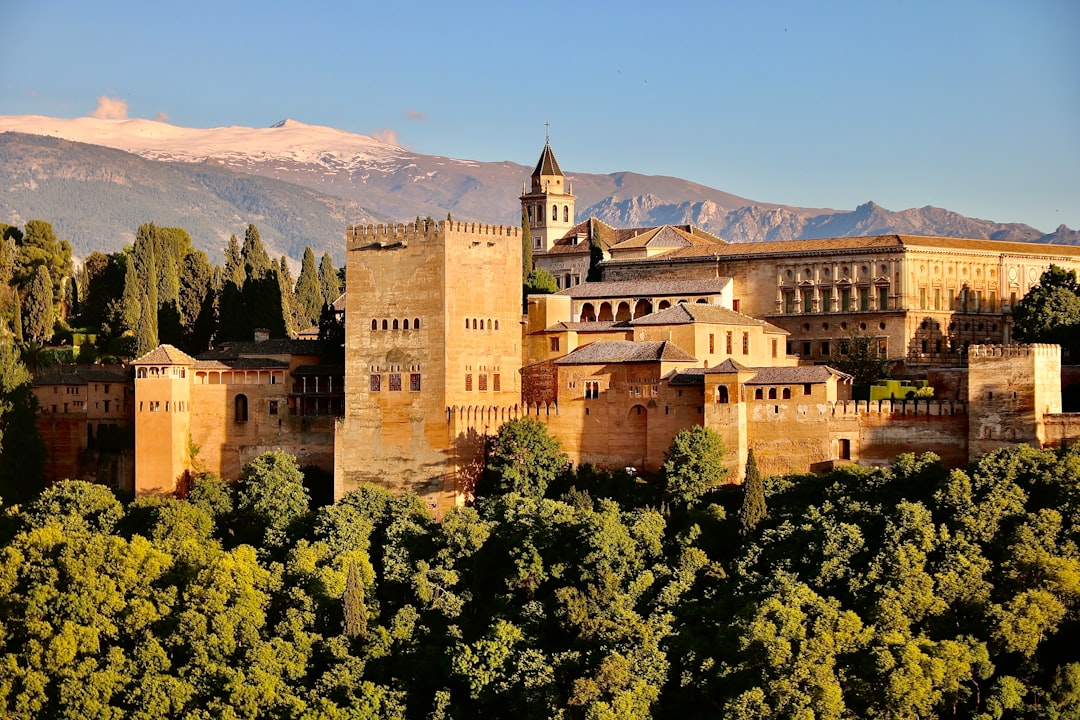
The Alhambra is the heart of it. This palace-fortress is where Granada’s rulers lived, where Boabdil made his final decisions, and where the symbols of Islamic Granada are most visible. Walking through the Alhambra now is strange—it’s beautiful, it’s well-preserved, tourists are taking selfies, it’s a UNESCO World Heritage Site. But it’s also a tomb. The civilization it represented is gone. The language that adorns its walls (Arabic Quranic verses, calligraphy, geometric Islamic art) is no longer spoken by the people living there.
The Albaicín, the old Moorish quarter of Granada, preserves the narrow streets and urban layout of medieval Granada. Wandering it, you get a sense of what the city looked like when Granada was independent. Now it’s a tourist destination, filled with tea shops and gift stores, but the structure of the place—the cramped streets designed for defense—remains.
The Royal Chapel in Granada is where Ferdinand and Isabella are buried. You can visit their tombs—a reminder that these people who created modern Spain through conquest and consolidation are still physically present in Granada. Looking at their tomb effigy, you’re seeing the faces of the monarchs who decided Spain would be religiously unified, whatever the cost.
The Cathedral of Granada was built over the remains of Granada’s main mosque. It’s imposing, it’s grand, it’s an architectural statement of Christian power replacing Islamic power. Inside, it’s beautiful, but it’s also a palimpsest: you’re looking at Christian faith imposed on top of a destroyed Muslim sacred space.
Seville is also important because it’s where Columbus’s preparations were made, where the Archive of the Indies (documenting empire) is kept, and where the grandeur of Spanish power built on empire is on display.
What 1492 Meant
1492 is the year Spain became Spain. Before 1492, there was Castile and Aragon and various other kingdoms. After 1492, there was Spain: religiously unified, militarily powerful, about to become a global empire.
For the Muslim and Jewish populations who lived on the peninsula, 1492 was catastrophic. Centuries of coexistence, which had sometimes worked, sometimes failed, but had been the norm, ended. Religious uniformity was imposed. Minorities were expelled or forced to convert or hunted down by the Inquisition.
For Europe, 1492 marked the beginning of European global dominance. Columbus’s voyage opened the Americas to European conquest. Spanish conquest of the Aztec and Inca empires would follow. Spanish silver would flood the world. Spanish power would reshape the Mediterranean and Europe for two centuries.
For the world more broadly, 1492 is the hinge point on which modern history turns. Not because there was anything magical about the year itself, but because of what happened that year: European expansion began, religious uniformity was asserted as a tool of state power, and the Iberian Peninsula was “unified” by eliminating religious diversity.
When you visit Spain and see the sites of 1492, you’re seeing the places where these transformations happened. The Alhambra is beautiful, but it’s also the memorial to a civilization that was destroyed. The Cathedral of Granada is a achievement of Christian Spain, but it’s also built on the ruins of Islamic Granada. Granada’s old quarter is charming to walk through, but it’s the remnant of a city that was conquered, whose population was exiled or forced to convert, whose culture was suppressed.
Understanding 1492 means understanding that Spain’s creation and the destruction of medieval multicultural Spain happened simultaneously. You can’t appreciate one without confronting the other. And when you’re standing in Granada, surrounded by the physical evidence of both, that complexity becomes very real.




Leave a Reply