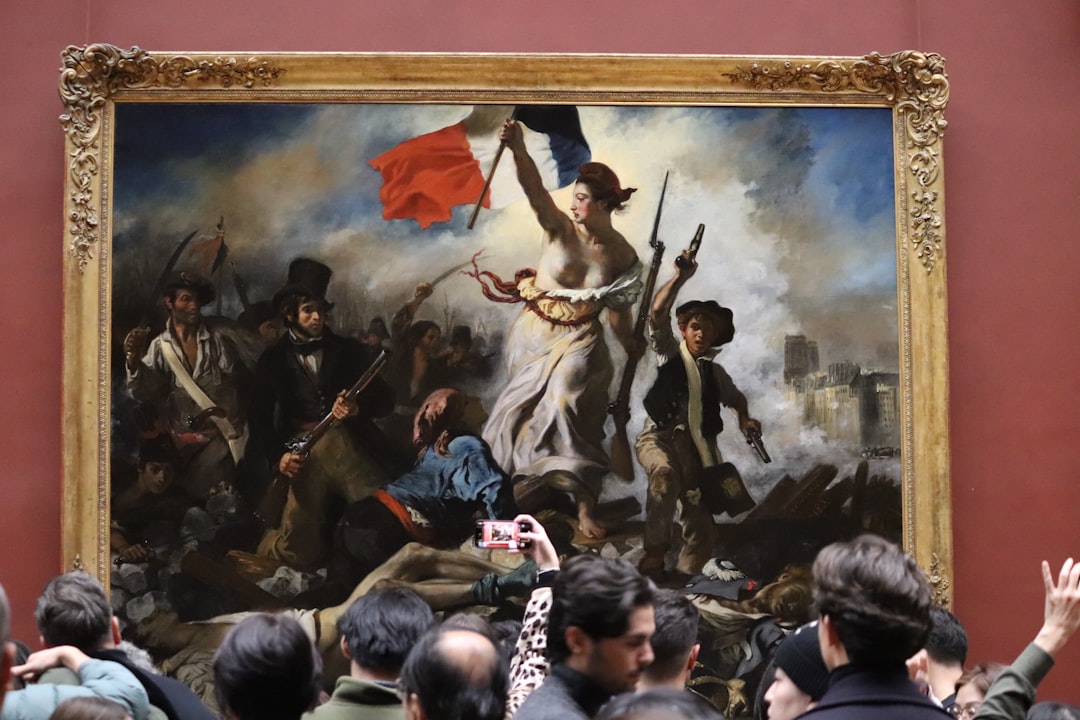
When you walk down the narrow streets of Paris’s Le Marais district, past the charming boutiques and buzzy cafés, it’s easy to forget that you’re treading on ground that was once soaked in blood—and hope. The French Revolution, which erupted in 1789, was one of history’s most transformative and violent upheavals, and its echoes still vibrate through the very stones of Paris. For travelers, understanding what happened here isn’t just academic—it transforms a visit into something deeper, a way of understanding how ordinary people challenged centuries of inequality and sparked a global conversation about freedom that still resonates today.
The Powder Keg: Why France Was Ready to Explode
Before we storm the Bastille, let’s talk about why the French were so angry. Picture yourself as a peasant in 1789. You’re starving—bread prices had tripled in just a few years due to bad harvests. Nobles and clergy are exempt from taxes, so all the tax burden falls on the shoulders of the Third Estate (everyone else). The monarchy is bankrupt after spending fortunes on wars and the lavish court at Versailles. Meanwhile, you’re watching aristocrats throw balls while children die of hunger in the countryside.
King Louis XVI was no tyrant—he was actually a decent, reform-minded man who preferred locksmithing to rulership. But he was imprisoned by a system he didn’t create and couldn’t fix fast enough. His finance minister, Jacques Necker, famously published a shocking report that revealed the crown’s massive deficit. The nobility and clergy, fearing any loss of privilege, blocked his reforms. France was essentially broken, and everyone knew it.
The Enlightenment—those revolutionary ideas about rights, reason, and democracy from Voltaire, Rousseau, and others—had been percolating through educated circles for decades. Books, pamphlets, and whispered conversations in coffeehouses had planted seeds of rebellion. When the king called for the Estates-General in 1789 (a gathering of representatives from all three estates) to address the financial crisis, people thought reform would come peacefully.
They were wrong.
The Tennis Court Oath and the Power of Promises
Our first stop on the revolutionary tour takes us away from Paris, to the Palace of Versailles. Specifically, to a converted indoor tennis court—the Jeu de Paume. On June 20, 1789, representatives of the Third Estate, furious at being denied voting power equal to the nobility, gathered here and made a vow. They promised not to disperse until they had created a constitution for France.
You can still visit the Jeu de Paume (it’s inside the Versailles complex), and standing in that modest, elongated hall where hundreds of revolutionaries squeezed together and swore an oath, you feel the electricity of that moment. This was the moment the Revolution became unstoppable. It shifted from “let’s negotiate” to “we will remake France.” The Tennis Court Oath was their declaration of intent, and within weeks, on July 14th, everything exploded.
Storming the Bastille: The Prison Nobody Really Wanted
July 14, 1789. A Parisian crowd—thousands strong, armed with whatever they could find—marched toward the Bastille, an ancient fortress-prison on the eastern edge of Paris. The irony? It was barely used anymore. There were only seven prisoners inside. But that wasn’t really the point. The Bastille symbolized royal oppression, arbitrary power, and despotism. Taking it was about seizing a symbol and proving the king’s authority could be challenged.
The storming itself was chaotic, bloody, and brief. The governor, Bernard de Launay, eventually surrendered, but panicked soldiers killed around 100 attackers. The crowd, enraged, murdered de Launay and several other officers, carrying their heads through the streets on pikes. It was savage, and it was the first hint that this revolution would not be tidy.
If you visit Paris today, you’ll find that the Bastille itself is gone—it was demolished within days. But the Place de la Bastille remains one of the city’s major plazas, and the July Column stands there now, a monument to the revolution’s violence and the liberty it sought. The Conciergerie prison, near Notre-Dame, where the revolutionaries later held prisoners during the Terror, still stands and is now a museum where you can see the actual cells and the very room where Marie Antoinette was imprisoned.
The Storming of Versailles and the Bread March
The fall of the Bastille was just the beginning. By October, bread was still scarce and expensive. A group of women, hungry and desperate, marched from Paris to Versailles to confront the royal family. Thousands joined them. When the royal guards moved to protect the king, things nearly turned into a massacre, but National Guard commander Lafayette managed to restore order.
The point was clear: the king and his court were prisoners now, not sovereigns. The family was brought back to Paris, to the Palace of the Tuileries, under what amounted to house arrest. The old order was collapsing.
The Radical Years: When Revolution Devours Its Children
For a moment—roughly 1789 to 1791—it seemed like a constitutional monarchy might actually work. A new constitution was drafted, property rights were guaranteed, and feudalism was abolished. This was real and important progress. But forces were spinning out of control.
The king’s failed escape attempt in 1791 (the Flight to Varennes, where he nearly made it to the border before being caught and dragged back) destroyed any remaining loyalty to the monarchy. War broke out with Austria in 1792. As the crisis deepened, radical republicans demanded a republic, not a reformed monarchy. In September 1792, royalists were massacred in Paris prisons by mobs. In January 1793, the king was executed by guillotine.
And then came the Reign of Terror.
The Reign of Terror and the Guillotine
The Reign of Terror (1793-94) is what most people remember—thousands executed, paranoia reigning, neighbor informing on neighbor. Robespierre and the Committee of Public Safety ruled through fear, convinced that a purge of traitors and aristocrats was necessary to save the revolution. Over 1,400 people were officially executed, and thousands more died in prisons or during brutal reprisals in other parts of France.
Place de la Concorde, one of Paris’s grandest and most elegant squares, was the site of the guillotine during the Terror. Louis XVI was executed there on January 21, 1793. Marie Antoinette followed nine months later. Walking through Place de la Concorde today—a place of beauty, fountains, and luxury—it’s jarring to realize that this serene plaza was once a slaughterhouse of revolution.
The Conciergerie, now a museum, is where Marie Antoinette spent her final weeks waiting to die. You can see her tiny cell and read about her final days. There’s something profoundly human about standing in that space, understanding that a woman—flawed, certainly, complicit in the old system, absolutely—faced execution in terror and dignity here. The revolution had indeed devoured its own.
Where to Walk: A Revolutionary Itinerary
If you want to trace the revolution through modern Paris:
The Conciergerie (on the Île de la Cité, next to Sainte-Chapelle) is essential. This medieval palace became a prison during the Terror, and you can see the cells, Marie Antoinette’s cell, and detailed exhibits about what life was like. It’s haunting and human.
The Musée Carnavalet, in the Marais district, is dedicated to Paris history and has an entire wing devoted to the Revolution with original documents, revolutionary artifacts, and a fascinating exploration of daily life and ideology.
Place de la Bastille is where it all started. The site is less dramatic than you might imagine, but that’s part of the point—the revolutionaries dismantled the fortress itself so thoroughly that few traces remain. The July Column marks the spot.
The Panthéon, in the Latin Quarter, is where many revolutionary heroes were honored (Voltaire, Rousseau, and others were given ceremonial burials there). It’s a beautiful building with powerful symbolism.
Place de la Concorde is where royal blood and revolutionary blood both flowed. Stand there, look at the Tuileries Gardens where the palace once stood, and meditate on how quickly everything changed.
The Revolution’s Aftermath and Legacy
By 1794, even radicals were exhausted. In July (Thermidor), Robespierre was arrested and executed himself. The Terror ended. What remained was a republic, unstable and militarily beleaguered, which would soon hand power to a charismatic young general named Napoleon.
Did the French Revolution succeed? That depends on your measure. It destroyed feudalism, established universal rights (though they took a long time to apply universally), created the nation-state as we know it, and sparked a global conversation about democracy that changed the world. It also killed tens of thousands and proved how quickly liberation movements can become instruments of tyranny.
For modern travelers, the French Revolution offers something beyond history—it’s a cautionary tale and an inspiration simultaneously. Standing in these Paris squares and museums, you’re standing in the ruins of a moment when people believed they could remake their world. Sometimes they were noble. Sometimes they were brutal. But they were never passive.
The Revolution is why France is the France we know today—secular, republican, passionate about equality and human rights (in theory if not always in practice). It’s baked into French identity. When you walk through Paris, understanding this history, you’re not just touring a city. You’re walking through the birth of the modern world.




Leave a Reply