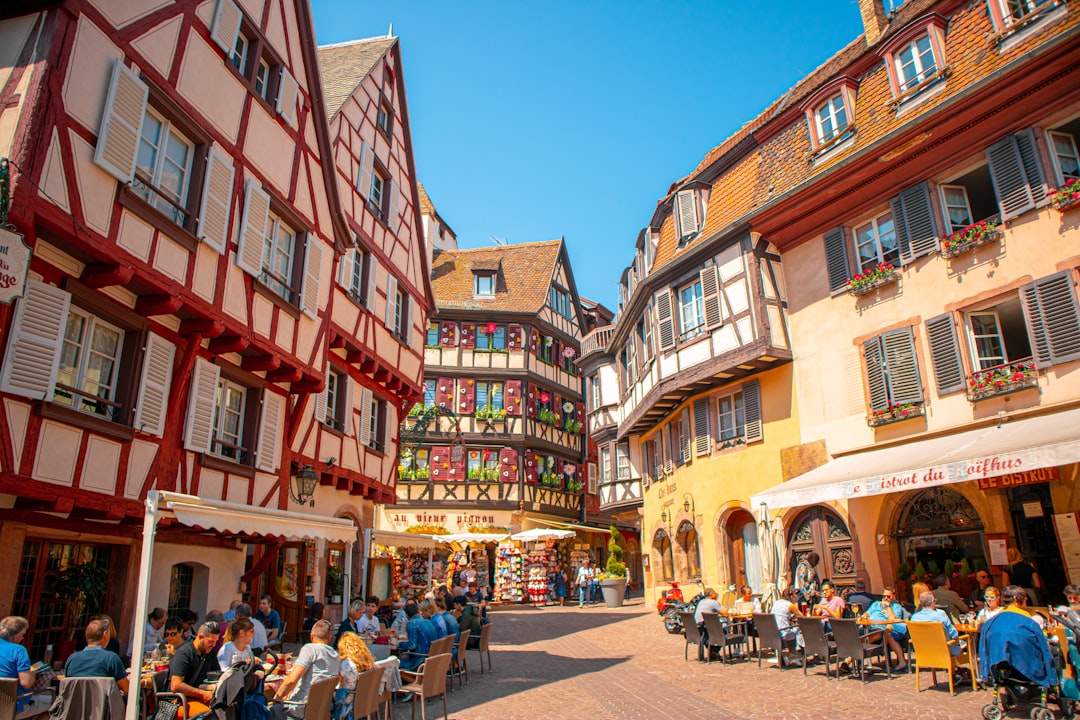
Europe has a deep history of conflict, and while wars have largely given way to economic cooperation and shared EU membership, the cultural rivalries remain. These aren’t serious feuds anymore—they’re more like family dynamics: affectionate ribbing, competitive edge, competitive pride, and the kind of teasing that only happens between people who know each other deeply. Let’s explore who loves whom, who despises whom, and who just thinks their neighbors are a little bit boring or ridiculous.
France and Germany: From Mortal Enemies to Best Friends
The France-Germany relationship is one of the most important European stories of the past century. These two nations spent 70 years (roughly 1870 to 1945) in serious conflict, culminating in the horrors of World War II. The reconciliation between these two nations—formally established through the European Coal and Steel Community in 1951—literally created the institutional foundation for modern Europe.
But from a cultural perspective, what’s fascinating is how the rivalry has transformed rather than disappeared. Modern French people and Germans don’t hate each other; they’ve shifted to a different kind of competition.
Germans think the French are pretentious, arrogant, and exaggerate the importance of culture. They complain that French people are unhelpful to visitors, protective of their language, and act like France is still the center of the world when actually Germany is economically more powerful and efficient.
French people think Germans are rigid, lack flexibility, and have completely missed the point of enjoying life. They find German cuisine boring, German culture overly structured, and German humor heavy-handed. There’s a sense that while Germans are good at engineering and following rules, they lack the elegance, creativity, and joie de vivre that makes civilization worth experiencing.
Yet they also deeply respect each other. The German chancellor and French president confer regularly. The two nations genuinely collaborate on major European projects. There’s an underlying understanding that they need each other, and that understanding creates a foundation of respect beneath the cultural rivalry.
The rivalry now is between equals who know each other, have fought through their worst impulses, and emerged committed to making cooperation work. It’s actually quite touching when you think about it historically.
France and Britain: The Oldest Rivalry
The France-Britain rivalry is older than the France-Germany rivalry. It predates the modern nation-states. English kings thought they should rule France. The two nations competed for global empire. Even now, the relationship is tinged with British skepticism about French sophistication and French disdain for British pragmatism and cold reserve.
But we’re focusing on continental Europe, so we won’t dwell on this one. However, it’s worth noting: the French think the British are cold, emotionally reserved, and obsessed with things like tea and punctuality rather than beauty and pleasure. The British think the French are emotional, dramatic, and a bit pretentious about their cultural importance.
Scandinavia’s Internal Pecking Order: Sweden, Denmark, and Norway
Scandinavia is fascinating because these three nations are culturally similar, economically successful, and deeply committed to social democracy and equality. Yet they have distinct competitive dynamics and stereotypes about each other.
Sweden thinks it’s the best. Swedes have higher-than-average confidence in their institutions, their design, their culture, and their approach to life. “Swedish design” is a global concept. Swedish furniture, Swedish music (ABBA, Roxette), Swedish social policies—Sweden punches above its weight globally and Swedes know it.
Denmark thinks Sweden is boring. Danes see Swedes as a bit stiff, overly formal, and lacking the warmth and humor that Denmark possesses. There’s a playful competitiveness here. Danes are friendly and laid-back; Swedes are professional and reserved. Both are happy with their own approach.
Norway thinks they’re both uptight. Norwegians have the advantage of not being in the EU (they’re in the EEA but not the EU), which gives them a sense of independence and freedom from EU regulations. Norwegians have oil wealth, which creates a sense of economic confidence. Norwegians are outdoorsy and less formal than both Sweden and Denmark. They see both neighbors as a bit too caught up in bureaucratic efficiency and social hierarchy.
The Scandinavian dynamic is less about real conflict and more about competitive pride and gentle mockery. It’s the dynamic of successful siblings who are proud of their achievements but can’t resist poking fun at each other.
The Iberian Sibling Rivalry: Spain and Portugal
Spain and Portugal have a fascinating relationship. Spain is larger, more economically powerful, and more internationally visible. Portugal is smaller and less economically developed. This creates a big-brother/little-brother dynamic that Portugal has been working to transcend for decades.
Spain’s perspective: Spanish people often view Portugal with affection mixed with condescension. Portugal is seen as less developed, less important, and somewhat quaint. There’s not real animosity, but there’s a sense that Spain is the more significant Iberian nation. Spanish cultural exports are bigger. Spanish economy is bigger. Spanish football is bigger.
Portugal’s perspective: Portuguese people are acutely aware of Spain’s dominance and have developed a strong national identity partly in response to Spanish overshadowing. There’s pride in Portuguese distinctiveness—in the Portuguese language (which is different enough from Spanish to matter), in Portuguese maritime history, in Portuguese football (which has developed significantly), and in Portuguese culture.
The rivalry is real but friendly. Portuguese people don’t hate Spain; they just want recognition that Portugal is its own distinct nation with its own identity, which shouldn’t be absorbed into Spanish identity or overshadowed by Spanish dominance.
What’s interesting is that younger Portuguese people often feel less competitive about this—they’re more confident in Portuguese identity. But it’s still a defining element of Iberian politics.
The Netherlands and Germany: WWII Shadows and Bike Politics
The Netherlands-Germany relationship is complicated by history and geography. Germany occupies far more cultural and economic space than the Netherlands, and WWII hangs over the relationship in ways that are slowly fading but not entirely gone.
Dutch perspective on Germans: Dutch people respect German efficiency and engineering but find Germans a bit cold and overly rule-bound. There’s a running joke about bikes (Fahrrad in German, fiets in Dutch)—the Dutch are obsessed with bikes as transportation, and Germans are seen as overly car-dependent. The Dutch pride themselves on their bicycle culture and see it as more environmentally conscious and socially advanced than German car culture.
The WWII legacy is complex. The Netherlands was occupied by Germany, and this history is remembered, especially among older generations. But younger Dutch and Germans have a more normal relationship. Still, there’s an undercurrent of “we remember what you did.”
German perspective on Dutch: Germans see the Dutch as slightly chaotic, informal to the point of rudeness, and overly proud of their bicycle infrastructure. There’s respect for Dutch efficiency and directness, but also a sense that Dutch culture lacks the formality and structure that Germans value.
The relationship is more balanced than Spain-Portugal but more historically fraught than Scandinavia’s internal dynamics.
Poland’s Complex Feelings About Germany and Russia
Poland has a completely different relationship with its neighbors than Western European countries have. Poland’s history involves being caught between German and Russian power, experiencing occupation, genocide, and domination.
Poland and Germany: Modern Poland-Germany relations are officially cordial and cooperative. But there’s a deep historical scar. Many Polish people remember German occupation in World War II. The relationship is civil and businesslike, but there’s a guardedness that doesn’t exist in Western European rivalries.
Poland and Russia: This relationship is even more fraught. Russia occupied Poland for over a century. The Soviet Union dominated Eastern Europe after World War II. Poland’s independence in 1989 was liberation from Russian domination. Poland’s current foreign policy is deeply shaped by desire to ensure Russia can never dominate again—this is why Poland joined NATO and the EU with such enthusiasm.
Polish people view Germany and Russia with a respect-but-wariness that’s different from playful Western European rivalries. The stakes historically were higher.
Czech Republic and Slovakia: An Amicable Divorce
The Czechoslovakia breakup in 1993 could have been hostile, but it wasn’t. The Czech Republic and Slovakia went their separate ways peacefully, and the relationship remains friendly. It’s perhaps the most amicable separation in modern European history.
Czechs and Slovaks: There’s mild affection and occasional ribbing. Czechs view Slovaks as slightly less developed economically and culturally, which Slovaks resent a bit. But there’s also a sense of shared heritage and mutual respect. They were united for 75 years and separated peacefully. That’s actually remarkable and reflects genuine goodwill.
Greece and Turkey: The Serious Feud
Greece and Turkey have a genuinely complex and sometimes hostile relationship. They’ve fought wars, they compete for Aegean resources, and there’s significant cultural and religious difference. This isn’t playful rivalry like France-Germany or Spain-Portugal.
Greek perspective: Greeks view Turkey with suspicion and historical wariness. The Ottoman occupation of Greece lasted 400 years. Turkish Cyprus and Turkish minorities in Greece are ongoing political issues. Greeks can be quite hostile about Turkish cultural appropriation of Greek food and culture.
Turkish perspective: Turks view Greece as economically weaker and less culturally significant, but also as a rival in the Eastern Mediterranean. The relationship is not warm.
This is the one European rivalry that remains genuinely tense. It’s not entertainment; it’s real geopolitical competition and historical resentment.
Italy’s North-South Internal Rivalry
Italy has an interesting internal dynamic. The wealthy, developed North (Milan, Turin, Venice) views the less developed South (Naples, Sicily) with stereotypes about inefficiency, poverty, and organized crime. The South resents the North for economic dominance and Northern attitudes of superiority.
This is less about international rivalry and more about regional identity conflict within one nation. But it’s culturally significant. Italians from different regions have different identities and sometimes different attitudes about other parts of Italy.
Why Every European Country Has One Neighbor They Love to Mock
The reality is that cultural proximity breeds familiarity, and familiarity breeds both affection and rivalry. Europeans mock their neighbors because they know them. A Frenchman can barely articulate what he thinks of a Czech person, but he has detailed opinions about Germans and the British. A Pole can articulate nuances about German character but has only vague impressions of Portuguese culture.
The rivalries exist precisely because the nations share so much history, so many borders, so much cultural exchange. The playful mockery is a form of intimacy. When Spain jokes about Portugal, or Denmark jokes about Sweden, or Germany and France trade insults, it’s because they’re neighbors who know each other deeply.
The serious rivalries (Greece-Turkey, Poland-Russia, Poland-Germany) exist precisely where historical wounds were deepest and trust was broken most severely.
What This Reveals About Europe
European rivalries reveal that Europe is not a unified thing. It’s a collection of distinct nations with distinct identities, histories, and perspectives. The European Union creates political and economic unity, but it doesn’t erase cultural identity or eliminate the sibling-like dynamics between nations.
The evolution of these rivalries also reveals something hopeful: that nations can move from serious conflict to playful mockery, from zero-sum competition to cooperative partnership. The France-Germany relationship, which went from war to union, is the template.
The fact that Europeans can still articulate detailed stereotypes about their neighbors isn’t a sign of disrespect—it’s a sign of genuine cultural distinction. Each nation is genuinely different, and those differences create the texture of European life. Without them, Europe would be homogenous and boring. With them, Europe is infinitely rich, complex, and worth exploring.




Leave a Reply