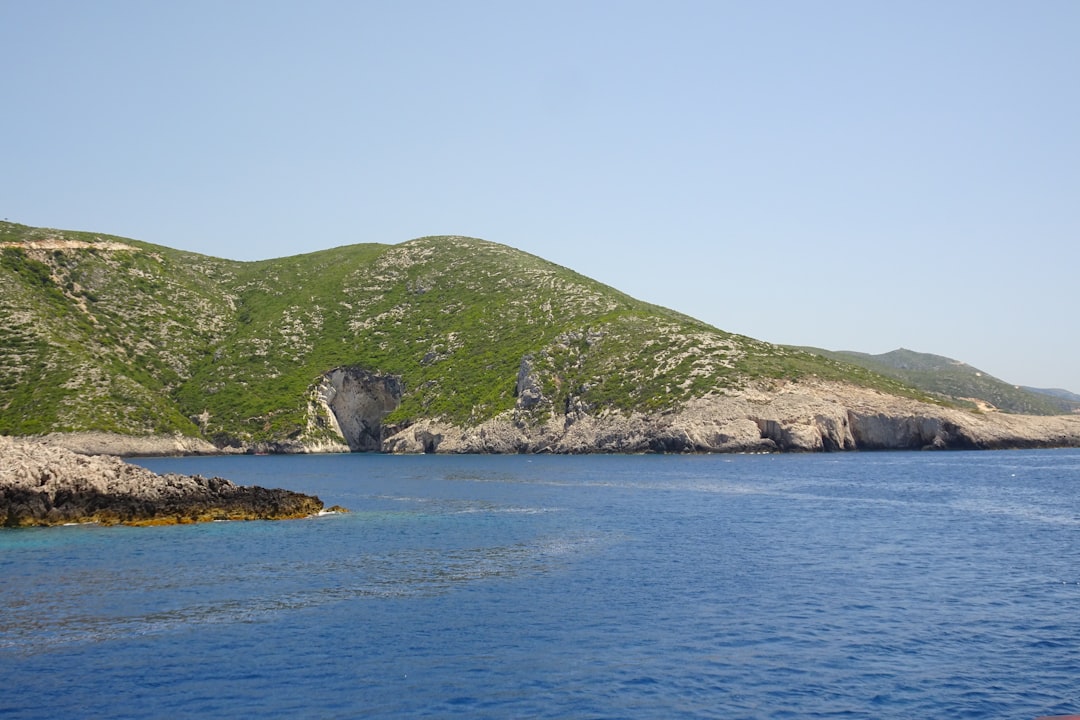
If you’ve been to the Greek islands, you might feel like you understand Greece. You’ve seen the white-washed buildings with blue shutters, the Aegean Sea, the tourists from around the world, the tavernas overlooking caldera views. You’ve eaten Greek food, drunk Greek wine, danced to Greek music. You understand Greece now, right?
Wrong. You understand one very specific version of Greece. You understand the Greek islands. The mainland is an entirely different country.
This isn’t hyperbole. The islands and the mainland feel so different—in landscape, in culture, in atmosphere, in life rhythm—that a visitor who only experiences one but not the other has seen roughly half of Greece. And that other half? That’s where the real Greece lives.
The Island Fantasy Versus Island Reality
The Greek islands are what the world imagines when it imagines Greece. Santorini, Mykonos, Crete, Rhodes, the Cyclades—these are places of stunning beauty, sea views, white cubic architecture, and tourist infrastructure that’s been perfected over decades. The islands are gorgeous. They’re also, increasingly, exhaustingly touristy.
The islands operate on a completely different economic model than the mainland. Tourism is the economy. The white buildings, the blue domes, the narrow streets, the tavernas—these things are beautiful partly because they’re authentic but also partly because they’ve been curated, refined, and marketed. The islands know what tourists want and they’ve optimized to provide it.
This creates a particular kind of culture: island life is seasonal. In summer, the islands are packed with tourists, the streets are crowded, the restaurants are full, the ferries are overbooked, and prices are high. In winter, half the businesses close, the tourist infrastructure shuts down, and the islands become quiet communities again. If you visit an island in winter, you’ll meet the locals. If you visit in summer, you’ll meet thousands of other tourists.
The island mentality is also shaped by geography: you’re surrounded by water. You’re connected to the mainland by ferries that cost money and take time. This creates a different relationship to travel and commerce than the mainland. Everything has to come by boat. Fresh produce is expensive. Goods are expensive. Tourism becomes attractive because it brings money to the islands.
The island culture is real, it’s beautiful, and it’s worth experiencing. But it’s not representative of Greece as a whole.
The Cycladic Aesthetic: More Than Just Pretty
The white and blue buildings of the Cyclades aren’t just an aesthetic choice. They’re rooted in practical and cultural history. The white buildings reflect heat (important in a hot, rocky climate with limited water and no air conditioning for most of history). The blue comes from traditional dye colors, and it’s associated with protection against the evil eye. The cubic, interlocking architecture maximizes shade and allows for narrow streets that stay cool.
The Cycladic style has been so successful and so marketed that it’s become the template for how Greeks themselves expect islands to look. This means that as tourism has grown, the architecture has become more standardized, more uniform, more designed. You’re seeing authentic Cycladic architecture, but it’s been curated and maintained specifically because it sells.
Compare this to an island like Crete, which didn’t adopt the Cycladic aesthetic. Crete’s architecture is diverse—Venetian buildings in Chania, Turkish influences in Rethymno, more varied building styles overall. Crete feels less “stereotypically Greek” because it is authentically Cretan.
The Forgotten Mainland: Where Most Greeks Live
Most Greeks don’t live on islands. They live on the mainland. The mainland is where Athens is, where Thessaloniki is, where the mountains are, where the ancient sites are beyond just ruins on an island—they’re woven into the landscape and the daily life.
The mainland has completely different landscapes: the Pindus Mountains in the north, the plains of Thessaly, the Peloponnese with its archaeological layers of history, the Meteora monasteries perched on rock pillars. If you want dramatic landscape, the mainland has it in spades. It’s just not the same kind of dramatic as islands.
The mainland feels more European, more modern, more like a “real” place where people actually live and work. You’ll see apartment buildings, cars, construction, infrastructure. It’s less curated. It’s messier. It’s more authentic to modern Greek life.
Athens: Love It or Hate It
Athens is the capital, the biggest city, the center of Greek civilization for 2,500 years. It’s also chaotic, crowded, polluted, and can be exhausting. It’s a city that most first-time visitors either fall in love with or can’t wait to leave.
Athens works better for travelers who enjoy cities—who like museums, restaurants, nightlife, bookshops, urban energy. If you’re the type who wants to escape to peace and nature, Athens will frustrate you. The city is built on a grid that doesn’t quite make sense. The traffic is chaotic. The air quality can be poor. The streets are crowded. The tourist areas (Plaka) are expensive and touristy.
But if you push past this, Athens is where real Greek culture lives. The National Archaeological Museum, the Byzantine museums, the Acropolis—yes, it’s touristy, but the history is real. The neighborhoods away from the tourist center—Exarcheia, Psyrri, Monastiraki—have character, personality, and life. There are bookshops, cafés where Greeks actually sit, tavernas where locals eat, neighborhoods where people live real lives.
Athens rewards explorers. It punishes tourists looking for postcard images.
The Forgotten Mainland Gems
This is where to find the real Greece:
Meteora: In central Greece, enormous rock pillars rise from the plain, and ancient monasteries sit on top of them. The landscape is surreal. The monasteries are still active communities. It’s spiritual, it’s beautiful, and it’s barely touched by mass tourism.
The Zagori Villages: In the Pindus Mountains, there are villages that have been inhabited for centuries, with traditional architecture, stone houses, narrow streets. They’re picturesque without being touristy. You can hike between villages, stay in local guesthouses, eat in local tavernas.
The Peloponnese: This is where you find ancient Sparta, Corinth, Argos, and Nafplio (the first capital of modern Greece). There are beaches, there’s history, there are mountains. It’s diverse and there are areas where Greek tourism infrastructure exists but it’s not overwhelming.
Pelion: In central Greece, near the coast, there are mountain villages that feel like another world. Pine forests, stone villages, waterfalls. It’s like the Swiss Alps but in Greece, and it’s much less touristy.
The Thessaly Plain: Less visited, but there’s agriculture, there are small towns, and there’s a different Greece from the islands.
Northern Greece: Cities like Thessaloniki (the second-largest city), and towns in Macedonia and Thrace that have history, culture, and very few tourists.
Ferry Logistics and Island-Hopping
One thing that makes island travel different from mainland travel: you need ferries. And ferries have schedules that may or may not match your plans.
Island-hopping is real and it’s a popular way to travel in Greece. You can take ferries between islands and create an island route. The ferry system is extensive and generally reliable, but it’s also weather-dependent, season-dependent, and sometimes unpredictable. In summer, ferries run frequently and are expensive. In winter, ferries might not run to all destinations or might run only a few times a week.
For mainland travel, you have buses, cars, and trains. It’s more flexible. You can go where you want when you want. It’s a different traveling experience.
The Seasonal Migration
One of the biggest differences between island and mainland culture: the seasonal migration. Islands empty out in winter. Businesses close. Tourists leave. The permanent population is smaller. Some islands become ghost towns October-April.
The mainland, being more economically diverse, doesn’t experience this as dramatically. Athens is busy year-round. Mainland towns are busy year-round. They’re not dependent on tourism.
This has cultural implications: island communities have a different rhythm, shaped by seasons and tourism. Mainland communities have the rhythm of regular work and life.
The Cost Difference
Islands are expensive. Everything comes by boat, so goods cost more. Tourism drives up prices. A meal that costs 12 euros on the mainland might cost 20 euros on an island. A room that costs 40 euros on the mainland might cost 70 euros on an island.
The mainland is cheaper. You can eat well, stay decently, and travel affordably if you stick to the mainland and smaller towns.
Going Beyond the Circuit
If you want to understand Greece, you need to see both islands and mainland. The popular circuit is Santorini-Mykonos-Crete or Rhodes. These are beautiful, but they’re the tourist circuit. The real experience is:
- Spend a few days on an island (pick one less touristy than Santorini—Naxos, Paros, or Crete work well)
- Spend more time on the mainland exploring smaller towns and regions
- Visit Athens but don’t treat it as just a transit point
- Hike in the Zagori villages or Meteora area
- Eat at tavernas where you’re the only tourist
- Sit in kafeneia and watch Greek life happen
This gives you both the island magic and the mainland reality. Both are Greece. Neither alone is enough.
The Bottom Line
The islands are beautiful and worth visiting. But they’re a specific, curated, tourism-dependent version of Greece. The mainland is where most Greeks live, where the real work of Greek society happens, where the landscape is diverse, where the culture is less polished and more authentic, and where you’ll have experiences that feel less like tourism and more like actual travel.
The best Greece experience: island with mainland. Not islands instead of mainland. Both. That’s when you actually understand the country.




Leave a Reply