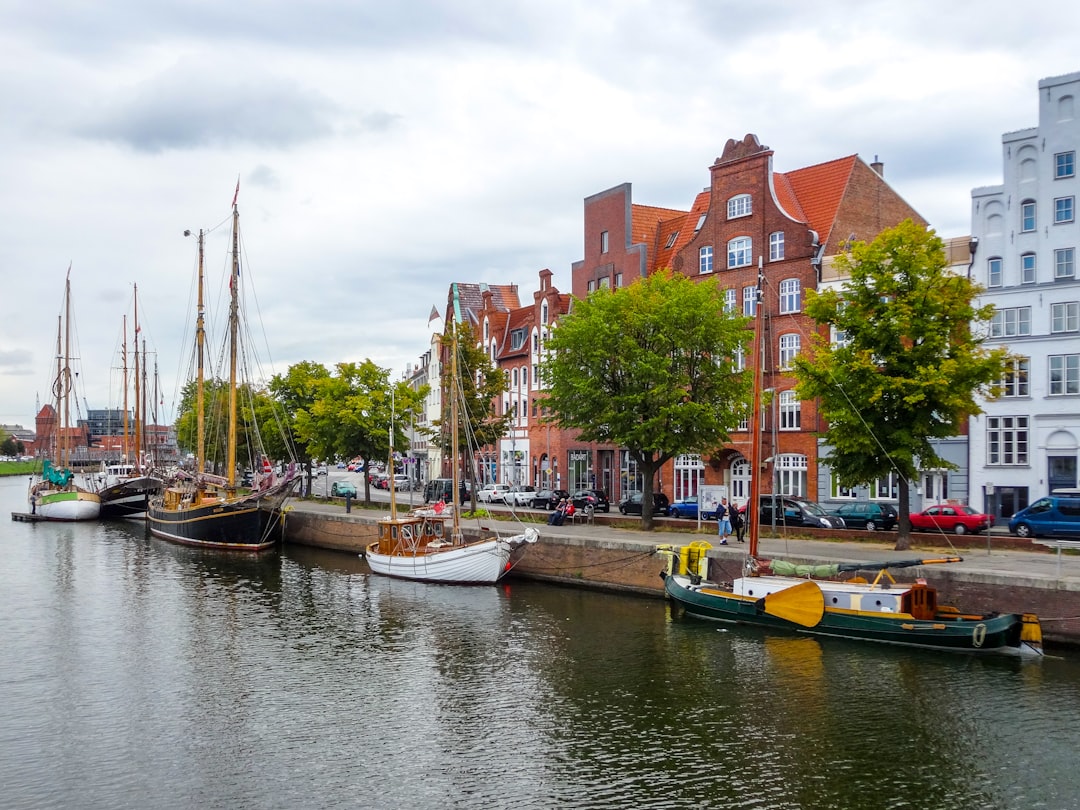
Before the European Union, before NATO, before the nation-state as we know it, there was the Hanse. The Hanseatic League — a confederation of merchant guilds and market towns that dominated trade across the Baltic and North Seas from the thirteenth to the seventeenth century — was one of the most powerful economic networks in European history. At its peak, the League encompassed nearly 200 cities stretching from London to Novgorod, controlled the trade in everything from salted herring to Flemish cloth, and wielded enough power to wage war against kings. Today, the League’s legacy is written in the architecture, culture, and civic identity of dozens of northern European cities.
What the Hanse Was
The Hanseatic League was not a state, nor even a formal organization with a constitution or permanent governing body. It was, at its core, a network of mutual commercial agreements between cities — primarily German-speaking — that banded together to protect their trading interests, negotiate favorable terms with foreign rulers, and suppress piracy. The word “Hanse” itself derives from a Middle Low German term meaning “convoy” or “group.” Member cities sent representatives to irregular assemblies called Hansetage, held most often in Lübeck, to discuss matters of common concern. But the League’s real power lay not in its meetings but in its ability to impose trade embargoes — cutting off economic lifelines to any ruler or city that threatened its interests.
Lübeck: The Queen of the Hanse
Lübeck, in northern Germany, was the de facto capital of the Hanseatic League from the late twelfth century onward. Founded in 1143 and granted a charter by Frederick Barbarossa in 1188, the city’s position at the head of a navigable river close to both the Baltic and North Seas made it an ideal commercial hub. Lübeck’s Altstadt — its old town, an island encircled by the Trave River — is a UNESCO World Heritage Site and preserves the characteristic Hanseatic townscape: tall, narrow-fronted brick Gothic houses, massive churches with copper-green spires, and the iconic Holstentor, the city’s fortified gate, whose twin towers lean at increasingly alarming angles after 500 years of subsidence. The Europäisches Hansemuseum, opened in 2015, is the most comprehensive museum dedicated to the League and tells its story through immersive reconstructions and original artifacts.
Bergen’s Bryggen Wharf
On the waterfront of Bergen, Norway, the wooden buildings of Bryggen — the old Hanseatic wharf — lean together in colorful rows along the harbor. This was the Kontor, or trading post, of the Hanseatic merchants in Norway, one of four major Kontore that the League maintained abroad (the others were in London, Bruges, and Novgorod). German merchants lived and worked here under strict rules: they could not marry Norwegian women, had to learn Norwegian, and were forbidden from heating their warehouses with open fires due to the risk of conflagration — a rule that was repeatedly broken, as evidenced by the numerous devastating fires that periodically destroyed the wharf. The current buildings, though they date mostly from the eighteenth century, follow the medieval plan, and the Hanseatic Museum inside one of the best-preserved buildings recreates the merchants’ living conditions with original furnishings.
Gdańsk, Bruges, Riga, and Tallinn
Gdańsk (then Danzig) was the League’s gateway to the Polish grain trade and the amber that was Baltic Europe’s gold. Its Long Market, lined with ornate merchant houses rebuilt after World War II devastation, testifies to the wealth that flowed through the city. Bruges, in Flanders, was the League’s connection to the rich cloth trade of the Low Countries. Riga’s Three Brothers — a row of medieval merchant houses — and the House of the Blackheads, originally the meeting hall of unmarried merchants, reflect the League’s influence in the eastern Baltic. In Tallinn, the Great Guild Hall and the remarkably intact medieval merchant houses along Pikk Street preserve the texture of Hanseatic commercial life with unusual completeness.
The League’s Economic Legacy
The Hanseatic League pioneered concepts that would become fundamental to modern economics: standardized weights and measures across its trading network, mutual insurance arrangements for ships and cargo, and a sophisticated credit system that allowed merchants to conduct business across vast distances without physically transporting currency. The League’s emphasis on the rule of commercial law, enforceable contracts, and the sanctity of property rights laid groundwork for the legal frameworks that still underpin international trade.
The League declined in the sixteenth and seventeenth centuries as nation-states consolidated power, the Atlantic trade routes diminished the Baltic’s importance, and internal disagreements weakened collective action. The last Hansetag was held in 1669, attended by only nine cities. But the League’s memory endures: Hamburg and Bremen still officially style themselves “Free Hanseatic Cities,” Lufthansa’s name derives from “Luft-Hansa” (air guild), and since 1980 a “New Hanse” association has connected over 190 former member cities in cultural and economic cooperation. The Hanseatic League reminds us that European integration is not a modern invention but a tradition with very deep roots.




Leave a Reply