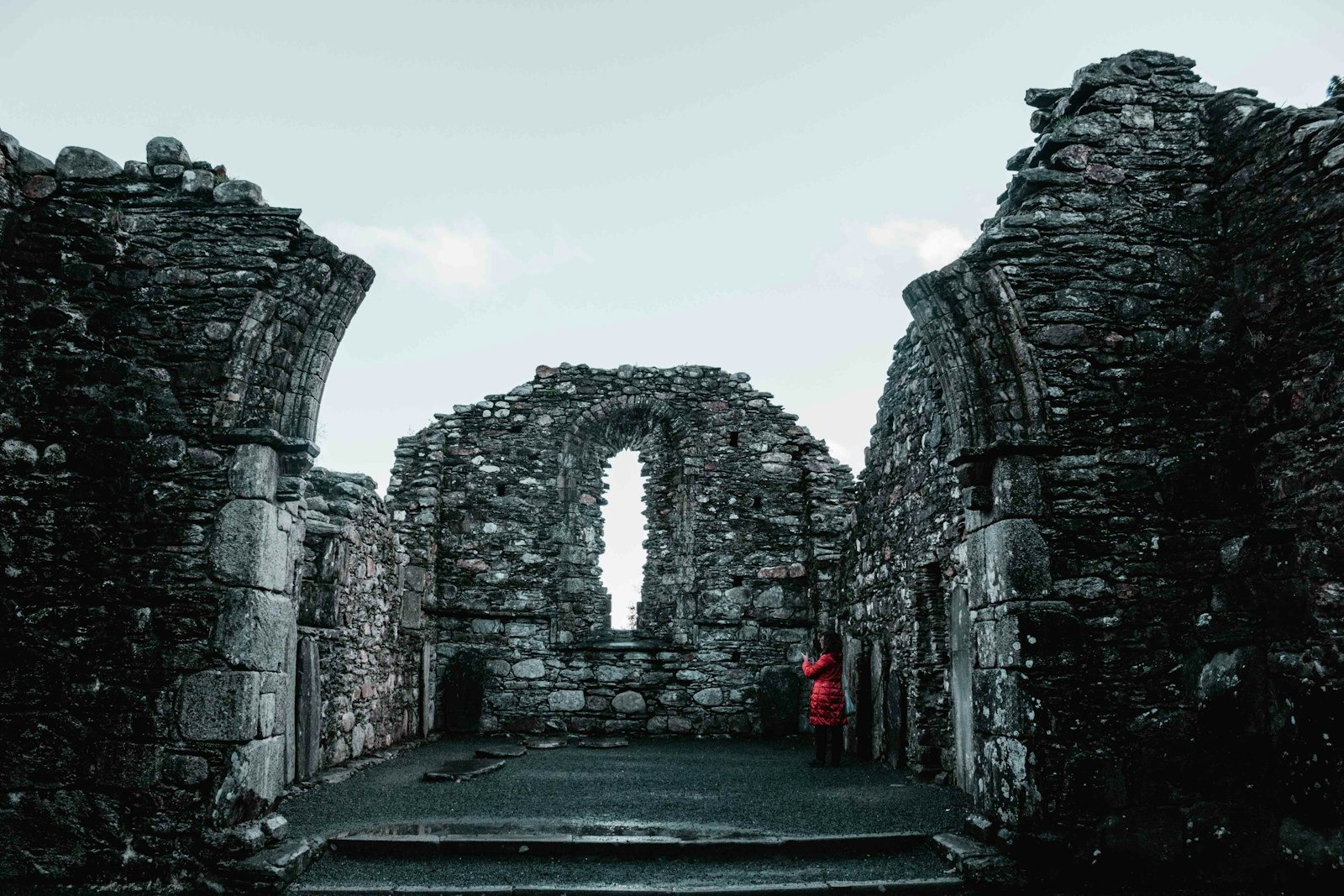
Before there was an Irish state, before there was a unified Ireland, there was the idea of the High King. For over a thousand years, stretching back into the mists of prehistory and legend, Tara—a hill in County Meath in the heart of Ireland—was understood as the seat of ultimate power in Ireland. Standing on that hill today, which is honestly unassuming unless you know what you’re looking at, it’s hard to grasp the profound significance it held. Yet for ancient Irish peoples, Tara was the center of the world, the place where the supreme authority over all Ireland resided.
What Was the High King?
The concept of the High King (Ard Rí in Irish) is fundamental to understanding ancient Irish political structure, though it’s important to note that it evolved over time and was never quite as absolute as medieval chronicles sometimes suggest. Essentially, the High King was understood as the supreme ruler who held authority over the provincial kings, who themselves ruled over smaller territories and clans.
Ireland was never a unified kingdom in the way that England or France developed. Instead, it was a patchwork of competing kingdoms and territories. The concept of a High King implied some kind of overlordship, a claim to supremacy. Whether that overlordship was real or more symbolic varied tremendously depending on the strength and charisma of individual kings.
The provincial kings—the Kings of Ulster, Connacht, Munster, and Leinster—were powerful in their own right. They ruled their territories, dispensed justice, and controlled armies. The High King had to be strong enough to command their respect and, when necessary, their submission. It was an inherently unstable system. A weak High King might find his authority meaningless. A strong one could dominate the island.
Legendary Kings and Historical Reality
Medieval Irish chronicles are filled with High Kings, and sorting out which are legendary, which are historical, and which are some hybrid is genuinely difficult. The Old Irish Chronicles listed 142 High Kings stretching back centuries before the Christian era. Most of these are names in lists, associated with Ireland’s prehistory. But a few stand out as figures around whom real historical memory seems to cluster.
Cormac Mac Airt (3rd century) is one of the most famous High Kings in Irish literature and tradition. Medieval stories tell of Cormac as a wise and just ruler who brought the high arts to Ireland and established the Brehon Laws. In legend, Cormac was lost at sea and returned with supernatural knowledge. Much of what’s attributed to Cormac in medieval texts was probably written centuries later, but there may be a kernel of historical truth—a king named Cormac who actually ruled and was remembered as particularly significant.
Brian Boru is the High King that historical evidence most clearly supports. He lived in the 10th century and genuinely did rule much of Ireland, achieving remarkable military success. Brian’s great triumph came in 1014 at the Battle of Clontarf near Dublin, where he defeated the Viking armies that had dominated Dublin and the east coast. The victory was so significant that it’s still remembered as a turning point in Irish history—the moment when Irish forces decisively defeated the Norse invaders. Brian himself was killed in the battle, but his death in victory made him legendary.
The High Kings after Brian were generally less impressive. The system was always fragile, and by the time the Normans arrived in 1169, the concept of the High King was largely ceremonial. The Normans and then the English had little interest in supporting an Irish High King when they could rule directly themselves.
The Hill of Tara: Ireland’s Ancient Powerhouse
Tara is located in County Meath, about 30 miles north of Dublin. Today it’s a collection of earthworks—raised banks, ditches, and mounds—that require some historical knowledge to appreciate fully. Without a guide, you might wonder what all the fuss is about. With one, or with the interpretive signs now on the site, the landscape comes alive with ancient history.
The main features include the Mound of the Hostages, which is actually a prehistoric passage tomb. The Rath of the Kings, the supposed seat of the High King. The Grianán of the Synods, with its concentric circular rings. The Banqueting Hall, marked by parallel banks that once defined a great building. Archaeologists believe that Tara was indeed a significant ceremonial and political center from at least the Iron Age through to medieval times, though the extent of settlement varied.
What’s fascinating about Tara is that it probably wasn’t the practical seat of government. The High King would have needed to maintain forces, collect taxes, and administer justice from a more obviously fortified location. Instead, Tara seems to have been primarily a ceremonial center, a place where the High King was inaugurated, where assemblies were held, where the symbolic authority of the High King was performed and demonstrated. In this sense, Tara’s “power” was partly magical and partly psychological—a place so laden with significance and history that ruling from there conferred legitimacy.
The Lia Fáil: The Stone of Destiny
The Stone of Destiny—the Lia Fáil—is one of the most iconic symbols of ancient Ireland. According to legend, it’s a magical stone that would cry out when the rightful king of Ireland touched it. The stone is supposedly connected to the Tuatha Dé Danann, the mythological pre-Christian inhabitants of Ireland who possessed magical powers.
In historical reality, the Lia Fáil was almost certainly a coronation stone, a physical object that made the abstract concept of kingship concrete and real. Stones were important in ritual and ceremonial contexts in ancient and medieval Ireland. A king touching or standing on a sacred stone as part of his inauguration made the transition real.
Today, the stone traditionally identified as the Lia Fáil stands at Tara. Ironically, there’s another stone that claims to be the Lia Fáil—the Stone of Scone in Westminster Abbey in London, which the Scottish have also claimed. The true location of the actual ancient Irish coronation stone, if it survives at all, remains debated by scholars.
The Brehon Laws: Ancient Justice System
The Brehon Laws are among the most fascinating surviving records of ancient Irish civilization. These were not written laws in the Roman sense, but rather a complex body of legal principles and precedents, transmitted orally by legal specialists (the “brehons” or “brithem”) and eventually written down by Christian monks from around the 7th century onward.
The Brehon Laws reveal a society far more sophisticated and complex than popular stereotypes suggest. There were laws about property, inheritance, marriage, divorce (which was allowed!), contracts, torts, and criminal penalties. The laws assumed multiple social classes—nobles, commoners, unfree people—with different legal statuses. Compensation was a major theme; many offenses could be settled through payment of fines calibrated to the victim’s status and the seriousness of the offense.
The laws also reveal a society where honor and reputation mattered enormously. A person’s “honor price” (their value in compensation) determined what they could demand if injured. Women had more legal protections and rights in some ways than they would have in medieval Europe, though they were certainly subordinate to men in significant ways.
The Brehon Laws continued to be used in Ireland even after the Norman conquest, modified to accommodate new circumstances. They eventually fell into disuse as English common law became dominant, but they were preserved in medieval manuscripts and have been studied intensively by modern scholars.
Visiting Tara: How to Make Sense of It
If you visit Tara—and you should, if you’re interested in ancient Ireland—the site now has good interpretive signage and information panels that help explain what you’re looking at. There’s a visitor center nearby. The site itself is free and open to the public.
The best time to visit is when the light is golden and low—early morning or late afternoon—when the earthworks cast shadows and become more visible. The site sits on a hillside with nice views across the Meath countryside. Even if the ancient stones and mounds seem abstract, standing there you can grasp why this place mattered. It’s a naturally commanding position, with views for miles. The sense of importance and history hangs in the air.
The Provincial Kings
While the High King was the symbolic apex, real power often lay with the provincial kings. The King of Munster, the King of Ulster, the King of Connacht, and the King of Leinster (and sub-kings below them) held the actual military and economic power. The High King’s authority was built on the consent and support of these provincial rulers, or on his ability to militarily dominate them—an inherently unstable situation.
Different regions developed different characteristics. Munster in the south was particularly powerful and productive. Ulster in the north was historically a center of Pictish and Scottish influence. Connacht in the west was more isolated but had its own strong traditions. Leinster, closest to the east coast and foreign contact, was often the wealthiest and most cosmopolitan.
The End of the High King System
The last High King generally considered legitimate was Ruaidhrí Ó Conchobair (Rory O’Connor), who reigned in the 12th century. After his time, the concept of High King became increasingly meaningless as power fragmented even further among quarreling regional kings. When the Norman knight Strongbow arrived in 1169 and began conquering territory, the Irish kings were unable to unite against him effectively. The fragmented, competing nature of Irish kingship—which had some advantages in maintaining a kind of chaotic balance—became a fatal weakness when faced with organized external conquest.
The High Kings of Ireland represented a unique political system that lasted for over a thousand years. Though they were often symbolic figures, they embodied an important principle: that Ireland was a unified concept, ruled according to some system of authority by a supreme king. That concept would eventually give way to Norman and then English rule, but the memory of the High Kings and of Tara as Ireland’s sacred center would echo through Irish culture and consciousness for centuries to come.




Leave a Reply