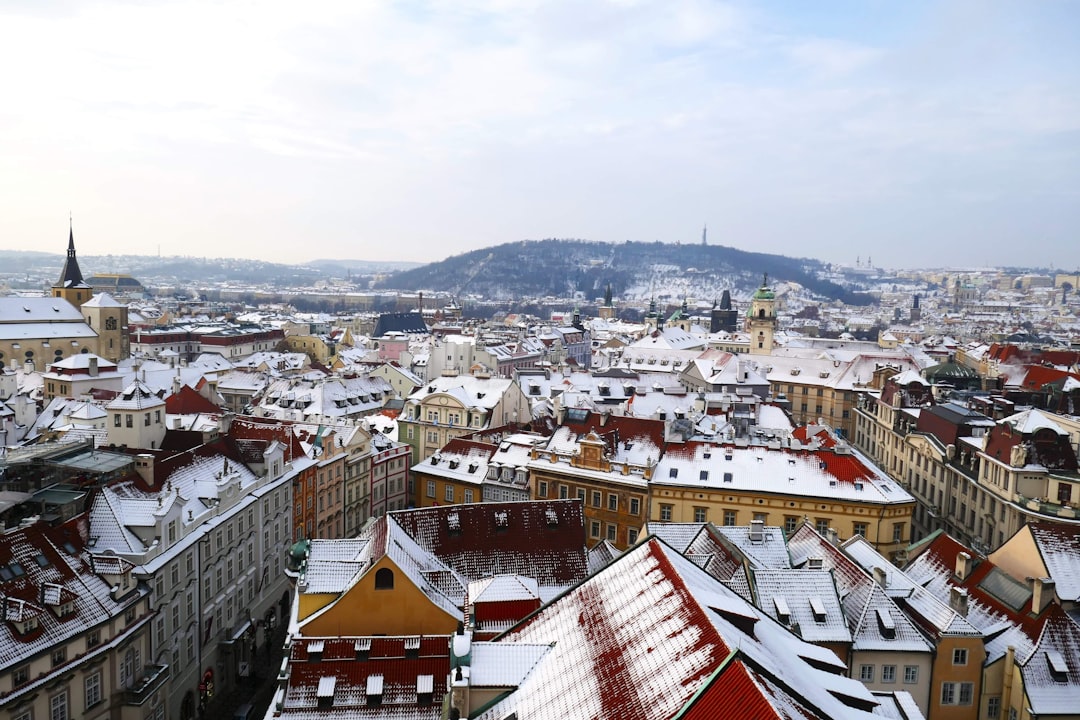
Prague’s role in cinema extends far beyond a single genre or era. Beyond the iconic films discussed in other articles, the city has hosted an astonishing range of period dramas, fantasy epics, and historical narratives. From Edward Norton’s The Illusionist to Bong Joon-ho’s Snowpiercer, from medieval epics to Baroque fantasies, Prague has become a cornerstone location for filmmakers requiring historical authenticity combined with cinematic magic. This versatility reflects both Prague’s architectural richness and its evolution as a major international film production hub.
The Illusionist: Prague as Belle-Époque Vienna
The Illusionist (2006) stands as one of Prague’s most successful period drama transformations. Director Neil Burger filmed the entire movie in Prague, using the city to portray Vienna in the 1920s—the era of the Austro-Hungarian Empire’s decline and a moment of rich cultural ferment.
Edward Norton plays Eisenheim, a magician navigating Vienna’s rigid class structures, imperial politics, and the complex relationship between illusion and reality. The film is fundamentally about deception, misdirection, and the power of perception—themes that extend to the filmmaking itself. By filming in Prague but presenting it as Vienna, The Illusionist enacts its own thematic concerns. The audience is deceived (pleasantly) into accepting Prague as Vienna, just as the film’s characters are deceived by Eisenheim’s illusions.
The Old Town Square appears extensively, dressed with period-appropriate elements and costumes. Prague’s baroque architecture, with its ornate facades and period details, required minimal alteration. Narrow streets in Malá Strana became Vienna’s back alleys. The Jewish Quarter’s preserved medieval layout stood in for Vienna’s older sections.
Visiting Tip: To experience The Illusionist‘s Prague, walk the Old Town Square early in the morning or late in the evening, when tourist crowds are minimal and the square feels closer to the Belle-Époque setting of the film. The narrow streets of Nerudova in Malá Strana evoke the film’s atmosphere of imperial decline and hidden magic. The Estates Theatre, discussed in the Amadeus article, also appears in The Illusionist. The Vrtbovská zahrada (Vrtba Garden) on Karmelitská street in Malá Strana is hidden and charming, offering the intimate, slightly decadent atmosphere the film requires.
Snowpiercer: Prague’s Brutalist Future
Bong Joon-ho’s Snowpiercer (2013), while primarily a science-fiction film rather than a historical drama, drew significantly on Czech locations for its dystopian aesthetic. The film’s premise—a perpetually moving train carrying the last humans after an apocalyptic climate catastrophe—required specific architectural vocabularies: industrial, cold, mechanistic, and oppressive.
Prague’s Brutalist architecture, combined with its industrial districts, provided ideal filming locations. Holešovice, an area on the city’s periphery, with its communist-era apartment buildings, factories, and utilitarian structures, offered the dystopian visual language Bong required. The concrete, the monumental scale, the sense of human insignificance in the face of massive structures—all of these elements are present in Prague’s Brutalist neighborhoods.
While Snowpiercer isn’t set specifically in Prague, and the train’s interior was largely constructed, the Czech Republic’s visual language and infrastructure influenced the film’s aesthetic. The choice to film in Prague connected Bong’s dystopian vision to the city’s actual history of communist-era architecture and the psychological weight that carries.
Visiting Tip: Brutalist architecture tourism is increasingly popular in Prague. The Hotel International (Hotel Interhotels) on Náměstí Jiřího z Poděbrad is a stunning example of communist-era modernism. The Žižkov Television Tower (Žižkovská televizní věž), a distinctive hyperboloid structure, looms over the east side of the city. These aren’t charming medieval locations, but they’re cinematically striking and represent a different Prague—the Prague of Cold War ideology and post-communist transition. A visit to Holešovice, less touristy than the Old Town, offers a sense of working-class Prague and the architectural legacy that Bong Joon-ho drew upon.
A Knight’s Tale: Medieval Prague
A Knight’s Tale (2001), directed by Brian Helgeland and starring Heath Ledger, is a medieval romance filmed substantially in the Czech Republic. While not exclusively a Prague production, the film used Czech locations extensively to portray medieval Europe.
The film’s approach is anachronistic—medieval settings with modern sensibilities, rock and roll on a medieval lute, contemporary dialogue in period clothing. This deliberate mixing of periods requires locations that can ground the fantasy while allowing the absurdity. Czech architecture, with its genuine medieval structures, provided authenticity. Production design then layered contemporary elements and stylization over that foundation.
The Charles Bridge, Prague’s Old Town, and the surrounding countryside provided exteriors for scenes meant to portray various medieval European settings. The film’s approach differs from Amadeus or The Illusionist, which strive for historical accuracy. A Knight’s Tale embraces anachronism and stylization, but Prague’s medieval architecture still grounds the fantasy.
Visiting Tip: Charles Bridge, featured in A Knight’s Tale, should be experienced from multiple vantage points. Walk it at different times of day. Visit from the Old Town Bridge Tower (climb to the top for panoramic views), walk its length, and observe how light and shadow change throughout the day. The bridge’s statues, its Gothic towers, and the Vltava below offer endlessly photogenic angles.
Van Helsing: Gothic Prague
Stephen Sommers’ Van Helsing (2004) is a high-concept action-fantasy mixing creatures from various horror mythologies—vampires, werewolves, Frankenstein’s monster—into a single narrative. The film is fundamentally about atmosphere, and Prague’s Gothic architecture, combined with Transylvanian locations, provided the visual foundation for this atmosphere.
Prague’s Charles Bridge, Prague Castle, and the city’s older neighborhoods were used to establish the film’s gothic aesthetic. The city’s shadows, its narrow streets, its abundance of spires and towers—all of these elements suit a film about supernatural darkness and violence.
Van Helsing is less a serious film than a pastiche, a deliberately over-the-top action movie that borrows from Gothic literature and horror cinema. But it demonstrates Prague’s versatility: the city can be a setting for serious historical drama (Amadeus), for Belle-Époque intrigue (The Illusionist), for dystopian futures (Snowpiercer), and for Gothic fantasy (Van Helsing). The same architecture and location can transform into any cinematic world depending on direction, design, and intent.
Visiting Tip: Prague Castle (Pražský hrad), looming above the city, is inherently dramatic and Gothic in appearance. The castle complex includes multiple courtyards, gardens, and viewing platforms. St. Vitus Cathedral, located within the castle grounds, is one of Europe’s great Gothic structures. Walking from Charles Bridge toward Prague Castle through Malá Strana, you climb gradually through increasingly narrow streets toward increasingly imposing architecture. This journey captures something of the Gothic atmosphere that films like Van Helsing exploit.
The Brothers Grimm: Fairy Tale Prague
Terry Gilliam’s The Brothers Grimm (2005) is another fantasy film using Czech locations, particularly Prague, to portray a fantastical Central Europe. The film, about the famous German fairy tale collectors, is essentially a Gothic fantasy adventure set in a world where the fairy tales might actually be true.
Prague’s visual vocabulary—its castles, its forests nearby, its medieval architecture—suits the fairy tale aesthetic. The film uses these locations to create a world that feels both historically grounded and magical. It’s not attempting strict historical accuracy (the Grimm brothers would not have encountered actual supernatural creatures), but rather using real locations to establish a fairy tale world’s internal consistency.
Visiting Tip: The Petřín Observation Tower (Petřínská rozhledna), a miniature Eiffel Tower-like structure on Petřín Hill, offers sweeping views of Prague and the surrounding countryside. The view toward the forests and hills beyond the city captures something of the fairy tale atmosphere that The Brothers Grimm requires. The park surrounding the tower is peaceful and less touristy than central locations.
Oliver Twist: Roman Polanski’s Prague
Roman Polanski’s Oliver Twist (2005) presents an interesting case: Polanski, one of cinema’s great visual stylists, filmed Charles Dickens’ Victorian-era novel primarily in Prague. The film’s London setting—the workhouses, the criminal underworld, the class divisions of Victorian society—was entirely constructed through location shooting and set design in Prague.
Polanski’s use of Prague reveals something important about how location works in period drama. The actual city where a story is set matters less than the visual and atmospheric qualities a location provides. Prague’s narrow medieval streets, its working-class neighborhoods, its architectural variations—all of these could portray Victorian London if dressed appropriately and filmed carefully.
Visiting Tip: The Jewish Quarter (Židovská čtvrť) of Prague, with its narrow medieval streets and preserved synagogues, offers an atmosphere of historical depth and slightly claustrophobic intensity. This area, with its specific history of persecution and preservation, carries weight that can be deployed cinematically for various purposes—whether portraying Victorian London (as Polanski used it) or historical Prague itself.
Yentl: Barbra Streisand’s Eastern European Fantasy
Barbra Streisand directed Yentl (1983), a musical about a Jewish woman in Eastern Europe at the turn of the 20th century who disguises herself as a man to pursue religious study. While the film is set in Poland and Eastern Europe generally, it was filmed partly in the Czech Republic, using Prague and other locations to portray Jewish Eastern European culture.
The film requires a specific visual language: Jewish shtetl life, synagogue interiors, Eastern European architectural detail. Prague’s Jewish Quarter provided both historical authenticity (the Quarter’s preserved medieval layout) and cultural resonance (Prague’s significant Jewish history). The narrow streets, the intimacy of medieval urban planning, and the presence of synagogues made Prague suitable for Streisand’s vision.
Visiting Tip: The Old New Synagogue (Staronová synagoga), the Jewish Museum, and the various preserved synagogues in Prague’s Jewish Quarter offer direct engagement with the cultural and historical context that Yentl draws upon. These are not merely cinematic locations but actual sites of historical and ongoing cultural significance. Visiting them provides deeper understanding of why the Quarter appeals to filmmakers portraying Jewish Eastern European life.
Prague’s Period Drama Formula
What emerges from examining these films is a consistent formula that explains Prague’s success as a period drama location:
- Architectural diversity: Prague contains Gothic, Renaissance, Baroque, and Neoclassical structures, allowing multiple historical periods to be portrayed.
Conclusion: The Period Drama Capital
Prague’s role as a period drama location extends beyond the specific films discussed here. Countless other productions—historical dramas, fantasy epics, Gothic tales, and period pieces—have been filmed in the Czech Republic. The city has evolved into something approaching a “period drama capital,” where filmmakers go when they need European history, Gothic atmosphere, or time-appropriate architecture combined with modern production facilities.
For visitors interested in film location tourism, this means Prague offers extraordinary opportunity. You can walk through locations from multiple films and eras. You can see how the same architecture transforms depending on direction, design, and intent. You can engage with the city’s genuine history while also understanding how that history is deployed cinematically. Prague becomes not just a location in films, but a film itself—a palimpsest of different cinematic imaginations layered over real history.




Leave a Reply