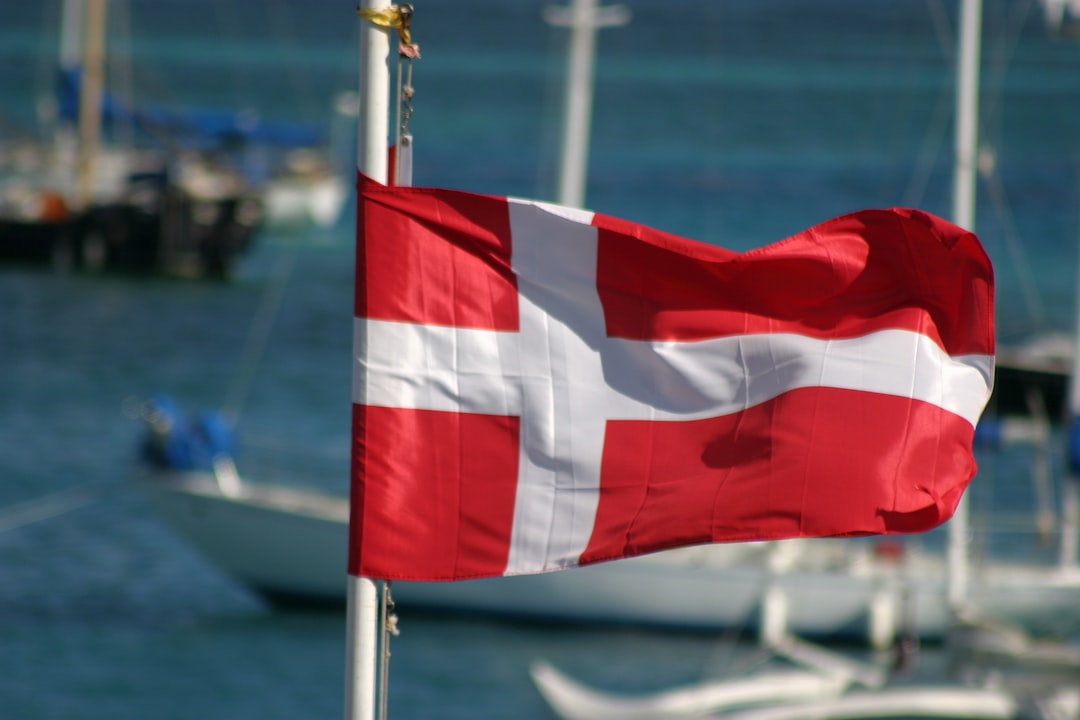
In 1397, something extraordinary happened in Nordic history. A Danish queen succeeded in uniting three independent kingdoms—Denmark, Sweden, and Norway—under a single crown. The Kalmar Union, named after the Swedish city where the agreement was signed, would last nearly 400 years and define Scandinavian politics, warfare, and culture for half a millennium.
The story of the Kalmar Union is fundamentally a story about one of medieval history’s greatest political operators: Margaret I of Denmark, a woman who wielded power with such skill that she became known as “Margaret the First”—not because she was first of her name, but because she was the pre-eminent ruler of her age. Her achievement was remarkable. But the union she created contained within it the seeds of its own dissolution, and the conflicts it generated would poison Scandinavian relations for centuries.
Margaret the First: The Woman Who United Scandinavia
Margaret was born in 1353, daughter of King Valdemar IV of Denmark. In medieval European politics, women typically wielded power through their husbands and sons, not through direct rule. Margaret would become an exception—though she did so by working within medieval expectations while transcending them.
At age six, Margaret was betrothed to Haakon VI of Norway, in a political marriage designed to strengthen Danish-Norwegian ties. She had no choice in this arrangement; political marriage was standard policy for royal daughters. But Margaret was exceptional in turning this arrangement into a foundation for power.
When she married Haakon and moved to Norway, she entered a court and kingdom where she would spend decades learning statecraft, accumulating relationships, and developing the political intelligence that would define her mature life.
By her 40s, Margaret had become the most influential figure in Norwegian politics. Her son, Olaf, inherited the Norwegian throne. She served as regent. Her Danish father died, making her brother king. When her brother was challenged politically, she backed him. When her Norwegian son died (before reaching adulthood), she maneuvered to secure his inheritance and her own continued influence.
By the 1380s, Margaret was in her 30s and 40s—prime age for political power in medieval Europe. Unlike most women of her era, she had the political intelligence, the network of relationships, and the legitimate claim to move toward something extraordinary.
The Union Negotiated
The Kalmar Union wasn’t imposed by military conquest. It was negotiated. This is crucial for understanding its nature. Margaret didn’t conquer Sweden and force it into union. She negotiated with Swedish nobles and presented union as preferable to continued fragmentation and conflict.
Sweden in the 14th century was politically fractious. Competing noble families held power. Swedish kings were weak. The country was vulnerable to external pressure and internal conflict. Margaret presented the Kalmar Union as a solution: one strong monarchy governing three kingdoms, eliminating civil wars, providing stability and joint defense.
In 1397, representatives from Denmark, Sweden, and Norway met in Kalmar to formalize the union. The agreement stated that the three kingdoms would have a common monarch and follow common foreign policy, but each kingdom would retain its own laws, governance structures, and administrative systems. In theory, this was a union of equals, three separate kingdoms under one crown.
In practice, it was Danish-dominated from the beginning.
The Realities of Power
Denmark, the strongest of the three kingdoms economically, became the center of union power. Danish nobles dominated the highest positions. Danish interests guided foreign policy. Swedish and Norwegian nobles increasingly resented Danish supremacy.
The tension was inherent to the structure. How could three nominally equal kingdoms function under one monarch without one dominating the others? The answer was: with increasing difficulty.
Margaret herself navigated this tension with remarkable skill. She ruled through her son, Erik of Pomerania, after her own son’s death. When Erik became king, Margaret served as regent and de facto ruler. She balanced Swedish and Norwegian interests against Danish interests carefully enough that the union held together through her lifetime (she lived until 1412, age 59—exceptional longevity for medieval royalty).
But after Margaret’s death, the union became unstable. Later kings proved less skilled at managing the competing interests of three realms. Swedish nobles increasingly demanded independence. Norwegian nobles felt systematically marginalized. Danish kings alternated between trying to rule autocratically and making concessions that later ones would repudiate.
The Stockholm Bloodbath: Union Breaking Point
The turning point came in 1520, under King Christian II. A Swedish nobleman named Sten Sture had led a resistance movement against Danish rule. Christian defeated him militarily and brought Sweden under firmer Danish control. But rather than consolidate this victory through diplomacy, Christian made a catastrophic error.
He ordered a massacre of Swedish nobles who’d resisted Danish rule. On November 8-9, 1520, dozens of Swedish nobility—including bishops, wealthy landowners, and military leaders—were arrested, tried on charges of treason, and executed. The violence was brutal and public. Blood ran in Stockholm’s great square. The massacre became known as the Stockholm Bloodbath.
Christian justified the executions as necessary—traitors who’d resisted the legitimate king must face justice. By medieval standards of justice, there’s a logic here. But the effect was catastrophic. The massacre didn’t terrify Swedes into submission. It enraged them.
Across Sweden, resistance mobilized. Gustav Vasa, a nobleman who’d escaped the massacre, led a rebellion against Danish rule. Within a few years, he’d liberated Sweden from the union. In 1523, Gustav Vasa became king of an independent Sweden. The Kalmar Union now effectively governed only Denmark and Norway.
The Political Aftermath
The Stockholm Bloodbath became a symbol of Danish tyranny in Swedish historical memory. Swedish nationalists pointed to it as proof that the Kalmar Union was fundamentally exploitative—Denmark using superior military power to dominate and oppress its neighbors.
This narrative, while containing truth about Danish dominance, wasn’t the complete story. The union had provided periods of stability and mutual benefit. But the bloodbath gave the narrative of Danish oppression a powerful emotional resonance that persisted for centuries.
Swedish-Danish relations were poisoned. For the next 250 years, the two nations fought periodically. The wars were serious and destructive. The Kalmar Union never recovered Swedish loyalty. Denmark-Norway ruled Denmark-Norway; Sweden ruled itself.
The Kalmar Union in Literature and Culture
Interestingly, the Kalmar Union period produced some of Scandinavia’s most famous literature and cultural achievements. Though politically troubled, the period was culturally fertile. The union meant that cultural ideas, religious movements, and artistic styles could flow between kingdoms more easily.
The Protestant Reformation, for instance, moved through Scandinavia partly via the union’s cultural connections. Religious ideas that took hold in Germany could reach Scandinavia more quickly because of interconnected courts and clergy.
At the same time, the union created opportunities for cultural competition. Danish and Swedish nobles competed to patronize the finest artists and intellectuals. This rivalry, while politically destructive, created cultural dynamism.
The Long Decline
After 1523, the Kalmar Union continued with Denmark-Norway as the senior partner and Sweden as an independent kingdom. The union treaty remained nominally in place—a claim that Sweden should submit to the common monarchy—but Sweden ignored it. This created a weird legal situation that lasted for centuries: officially, the union claimed to govern three realms, but in practice, it governed two (and poorly governed even those).
The 17th and 18th centuries saw continued conflict. Denmark and Sweden fought multiple wars, usually with destructive results for both. The wars weakened both nations militarily and economically, allowing stronger European powers to dominate.
By the 18th century, the Kalmar Union was moribund. It still existed on paper, but its power and purpose had eroded. Denmark-Norway ruled its own realms; Sweden ruled itself; and both were declining powers relative to rising European giants like Prussia and Russia.
The End of the Union
The Kalmar Union formally ended in 1523 when Sweden left and was never readmitted. But for those focused on the nominal three-kingdom union, the final dissolution came in 1814, when Norway—having been ruled by Denmark for centuries—was ceded to Sweden in the Treaty of Kiel after Denmark lost the Napoleonic Wars.
The end of the union was almost anticlimactic. Not a dramatic final break, but a slow decay as the union became increasingly irrelevant to actual politics.
The Legacy: Scandinavia Defined by Division
What the Kalmar Union leaves as legacy is complicated. It proved that uniting independent kingdoms was extraordinarily difficult, even when the unity seemed to serve mutual interests. The cultural and linguistic similarities between Danish, Swedish, and Norwegian made union seem natural. But political realities—competing elites, regional loyalties, resource distribution conflicts—made sustained union nearly impossible.
In modern Scandinavia, this history echoes. Denmark, Sweden, and Norway remain closely connected by culture and economics (they’re part of the European Economic Area; they share Nordic identity and values; citizens cross borders easily). But they’re three separate nations with distinct foreign policies and governance systems.
This political separation doesn’t prevent cooperation—the Nordic Model of welfare states emerged across Scandinavia and represents a shared philosophical approach. But there’s no illusion that they could be governed as one realm. The Kalmar Union taught that lesson.
Visiting the History
If you want to encounter Kalmar Union history while traveling, several sites matter:
Kronborg Castle in Helsingør represents Danish power during the union period. The castle controlled wealth and strategic position that enabled Danish dominance.
Stockholm’s Old Town (Gamla Stan) contains buildings from the Kalmar Union period, including the Storkyrkan cathedral where coronations took place. It’s also near the square where the Stockholm Bloodbath occurred.
Kalmar Castle in Sweden (where the union was agreed) still stands, now a museum. Visiting it from the Swedish side, you encounter the history from Sweden’s perspective.
Copenhagen’s Rosenborg Castle houses royal artifacts and demonstrates Danish royal magnificence during the union period.
The Lesson
The Kalmar Union is a fascinating historical moment that reveals both the possibilities and limitations of political union. It shows what can be accomplished through diplomatic genius (Margaret I creating the union) but also how those accomplishments can be undermined by structural problems that diplomatic skill alone can’t solve.
For travelers, it’s a reminder that the political map of Europe emerged from centuries of negotiation, conflict, marriage, bloodshed, and eventual acceptance that some separations are permanent. The Kalmar Union failed because the underlying political realities made sustained union untenable. Sometimes geography, culture, and economics can’t overcome the human desire for self-determination and the practical difficulties of sharing power across multiple realms.
Modern Scandinavia is peaceful and prosperous, not because they’ve reunited, but because they’ve learned to cooperate as separate nations. That’s perhaps a more valuable lesson than a successful union would have been.




Leave a Reply