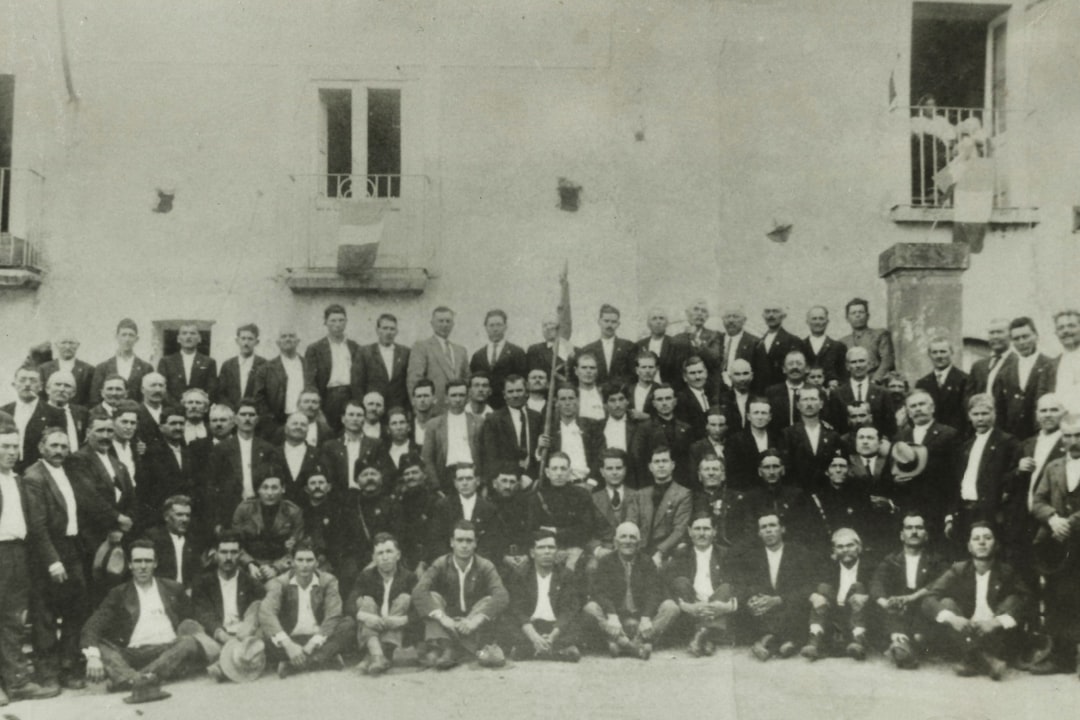
When you visit Sicily or Southern Italy, you’ll encounter the Mafia constantly in tourism marketing. There’s the Mafia Museum in Palermo. There are restaurants with “Godfather-themed” menus. Tour guides tell stories about famous mobsters. But the real history of the Mafia is less glamorous and more significant than the Hollywood version. It’s a story about the failure of the state, about poverty, about how organized crime becomes a substitute government when the legitimate government abandons you.
This is not a romantic history. It’s a tragic one. And it’s still unfolding today.
The Origins: Post-Feudal Sicily and the Vacuum of Power
To understand the Mafia, you have to understand feudalism’s collapse in Sicily. For centuries, Sicily was governed by feudal lords who controlled vast estates and had more power than the distant Spanish and Italian kings. When feudalism began to weaken in the 1700s and 1800s, something crucial happened: the state didn’t immediately fill the vacuum.
Instead, a new power structure emerged in Sicily—one based on personal relationships, patronage, and the threat of violence. Local strongmen began organizing extortion rings. They offered “protection” to landowners, merchants, and peasants. For a fee, they’d keep bandits and other criminals away from your property. It was basically a mafia structure, though the term “Mafia” probably didn’t come into common use until the 1800s.
What’s important to understand is that the early Mafia wasn’t some evil that suddenly appeared. It was a rational adaptation to the fact that the legitimate government—the Italian state and the Spanish crown—couldn’t or wouldn’t protect property or enforce contracts. If you were a farmer or a merchant in 1700s Sicily and the official police were hours away and corrupt, you’d hire local muscle to protect your interests. That’s what most people did.
This created a system where local Mafia bosses essentially governed Sicily. They collected taxes (in the form of extortion). They settled disputes (through violence or threat of violence). They enforced contracts (often through intimidation). They weren’t seen as evil by many Sicilians—they were seen as practical. They got things done. The official government was distant and indifferent to local needs.
The Structure of the Mafia: Cosa Nostra
The Sicilian Mafia developed a sophisticated organizational structure called “Cosa Nostra”—”our thing.” It wasn’t a unified organization with one boss at the top. Instead, it was a federation of regional “families,” each led by a “Capo” (boss). Each family controlled a territory, and the families’ leaders would meet in a “Commission” to resolve disputes and coordinate activities.
This structure made it hard for the police to destroy—you could arrest one boss, and his family would simply elect a new one. You could break up one family, but the overall organization would continue. It was decentralized in a way that made it extremely resilient.
Within each family, there was hierarchy: bosses, underbosses, soldiers, and associates. Members took oaths of loyalty. Membership was for life (or until you were executed). The code of honor was strict: you didn’t work with the police, you didn’t discuss the organization with outsiders, you followed orders from your superiors. Breaking these rules could result in death.
The Mafia controlled everything in Sicily for over a century. They weren’t just involved in crime—they controlled politics, business, and legitimate industries. They bribed politicians and judges. They owned restaurants, bars, and shops. They controlled labor unions. They had their hands in building construction, shipping, agriculture, and wine production. They were partially a criminal organization and partially just… how Sicily worked.
The ‘Ndrangheta and the Camorra: Other Organized Crime Groups
Sicily wasn’t the only place with organized crime. Calabria, in the very toe of the Italian boot, had the ‘Ndrangheta (also spelled N’drangheta). Naples had the Camorra. These were separate organizations with their own structures, their own territories, and their own methods.
The ‘Ndrangheta might actually be older than Cosa Nostra, and it’s certainly more ruthless. It expanded dramatically from the 1970s onward, getting heavily involved in cocaine trafficking. The ‘Ndrangheta is much more decentralized than Cosa Nostra and, by some measures, actually more powerful today. But it operates more secretly—it’s less known because it’s less willing to interact with legitimate society.
The Camorra, based in Naples, was more chaotic and less hierarchically organized than Cosa Nostra. This actually made it more brutal—without a central structure to maintain order, Camorra families engaged in more frequent and more violent internal warfare. But it also kept the Camorra’s power more contained to Naples.
All three organizations—Cosa Nostra, the ‘Ndrangheta, and the Camorra—engaged in the same basic businesses: extortion, loan sharking, drug trafficking, gambling, and prostitution. They all used violence and the threat of violence as their primary tools of control.
The Peak of Power: The 1950s-1970s
The Mafia’s power reached its absolute peak in the postwar years. Italy was rebuilding after World War II. There was massive migration from Sicily and Southern Italy to Northern Italy and to America. American Mafia families (which had their own origins in Italian immigration) had connections back to Sicily, and a drug trade developed.
In the 1950s and 1960s, the Sicilian Mafia didn’t just run Sicily—they were actively planning murders of police, judges, and political rivals in ways that were almost casual. Salvatore “Toto” Riina, who would become the most powerful Mafia boss of his era, was involved in the disappearance of opponents, the murder of priests who spoke against the Mafia, and campaigns of violence designed to intimidate anyone who thought about resisting.
The Mafia also began to shift more heavily into drug trafficking in the 1960s and 1970s. The heroin trade became their most profitable business. This made them wealthier and more violent—drug trafficking requires different skills than traditional extortion, and it attracts more brutal people.
By the 1970s, the Mafia was essentially ungovernable. They killed judges, politicians, and police officers with relative impunity. The Italian state was either unwilling or unable to stop them. For many Sicilians, the Mafia was not a crime problem but simply reality—a harsh one, but reality.
The Turning Point: The Maxi Trial (1986-1987)
For decades, Italy’s response to the Mafia was mostly ineffective. The police could arrest some street-level guys, but the top bosses were untouchable. Judges could investigate, but they’d be killed before they could bring cases to trial. Witnesses wouldn’t testify because they’d be murdered.
Then, in the early 1980s, something changed. A few things happened simultaneously:
First, young magistrates (judges) in Sicily—specifically Giovanni Falcone and Paolo Borsellino—decided to actually prosecute the Mafia at a high level. They realized that to make a case stick, they needed to flip low-level Mafia members and get them to testify. This was incredibly dangerous because even imprisoned Mafia members had the ability to order murders from jail.
Second, in 1985, Tommaso Buscetta, a high-ranking Cosa Nostra member, decided to become an informant. Buscetta had suffered losses in a Mafia war and decided his organization had become too brutal and self-destructive. He gave prosecutors detailed information about the Mafia’s structure, operations, and key figures.
Third, the magistrates and prosecutors were willing to actually push the case forward despite the danger. Falcone and Borsellino personally faced death threats. They were protected by police escorts. But they continued the investigation.
The result was the Maxi Trial of 1986-1987. Over 450 alleged Mafia members were prosecuted. The trial lasted over a year and involved hundreds of hours of testimony. It was broadcast on television—Italians watched their justice system actually confront the Mafia.
The trial resulted in dozens of convictions, including of high-level bosses. But here’s the crucial part: the sentences were later overturned on a technicality. The convictions weren’t completely reversed, but many were reduced. It was a legal victory that wasn’t quite a complete victory.
Still, the Maxi Trial represented a turning point. For the first time, the Italian state had shown that it was willing to actually fight the Mafia at the highest levels. The Mafia realized they were vulnerable.
The Murders of Falcone and Borsellino (1992)
The Mafia’s response was to kill the judges who’d pursued them.
On May 23, 1992, Giovanni Falcone, his wife, and three police officers were killed in a car bombing on the highway outside Palermo. Two months later, on July 19, Paolo Borsellino, his wife, and five police officers were killed in another bombing.
These weren’t drive-by shootings or quiet murders. They were calculated, public, shocking demonstrations of the Mafia’s willingness to kill even judges and their families. The message was: this is what happens when you take us on.
But the murders backfired. The Sicilian public, which had tolerated or at least accepted the Mafia for generations, finally said enough. The murders of judges with their families, broadcast on national television, were a bridge too far. Thousands of people protested. The government finally allocated serious resources to anti-Mafia efforts.
The most famous visual symbol of the anti-Mafia movement came after Borsellino’s murder: at the site where he was killed, someone planted a tree. That tree—the “Falcone Tree”—became a symbol of resistance to organized crime. You can visit it today in Palermo.
The Decline and the Modern Mafia
From the early 1990s onward, the Mafia began losing its grip on Sicily. Salvatore Riina, the longtime “Boss of Bosses,” was finally arrested in 1993 after decades of being one of the most wanted criminals in the world. Other top bosses followed. The state finally had political will and resources to pursue real anti-Mafia efforts.
But “decline” doesn’t mean “gone.” The Mafia still exists. Cosa Nostra still operates in Sicily, though with less territory and less political influence. The ‘Ndrangheta has actually increased its power, particularly through drug trafficking. The Camorra is still active in Naples, though it’s become more fragmented.
What’s changed is the character of the Mafia’s relationship to society. They’re no longer seen as practically necessary—the modern Italian state, despite its flaws, is strong enough to provide basic security and services. They’re seen as what they always were: criminals. Ambitious Sicilian and Southern Italian youth might still be involved in organized crime, but it’s not because there’s no alternative anymore. The Mafia no longer runs entire cities.
The anti-Mafia movement has also transformed the culture of resistance. Falcone and Borsellino are now celebrated as heroes. Anti-Mafia activists, judges, and prosecutors continue their work. Schools teach about the Mafia’s impact. Civil society organizations fight to reclaim public spaces from Mafia control.
Why It Matters for Travelers
When you visit Sicily or Southern Italy, you’ll see references to the Mafia everywhere. Some of it is tourism—capitalizing on romanticized versions of Mafia history. Some of it is genuine memory and resistance. The Antimafia Museum in Palermo, for instance, is a powerful and serious effort to document the Mafia’s impact and the fight against it.
What’s important to understand is that the real Mafia was never romantic. It wasn’t the godfather negotiating business disputes with quiet dignity. It was people being murdered, families being devastated, communities living under constant threat of violence. It was extortion, brutality, and the corruption of every legitimate institution.
At the same time, the Mafia is a product of specific historical circumstances. It emerged because the state abandoned Southern Italy for centuries. It persisted because it provided something (order, protection, justice) that the legitimate state couldn’t provide. This doesn’t excuse it—nothing excuses brutality and organized crime. But it explains it. And it teaches a lesson about what happens when a state fails to govern effectively and justly.
The modern story is more hopeful: a state that decided to take on organized crime, judges willing to die for justice, and a public that finally decided enough was enough. That’s a story worth learning.
What to Visit
- The Antimafia Museum in Palermo: A serious museum documenting the Mafia’s history and the anti-Mafia resistance. Powerful and sometimes difficult, but important.
- The Falcone Tree in Palermo: At the site of Paolo Borsellino’s murder, this memorial represents the fight against organized crime.
- Palermo’s Old City: Walk the streets where Falcone and Borsellino worked. Understand that Sicily has moved past the Mafia, even if traces remain.
Sicily and Southern Italy are no longer under Mafia control. They’re complex regions with real culture, real history, and real communities. The Mafia is part of that history—a dark and important part—but just one part. Don’t let tourism romanticize it, but don’t let it prevent you from understanding and appreciating these regions either.




Leave a Reply