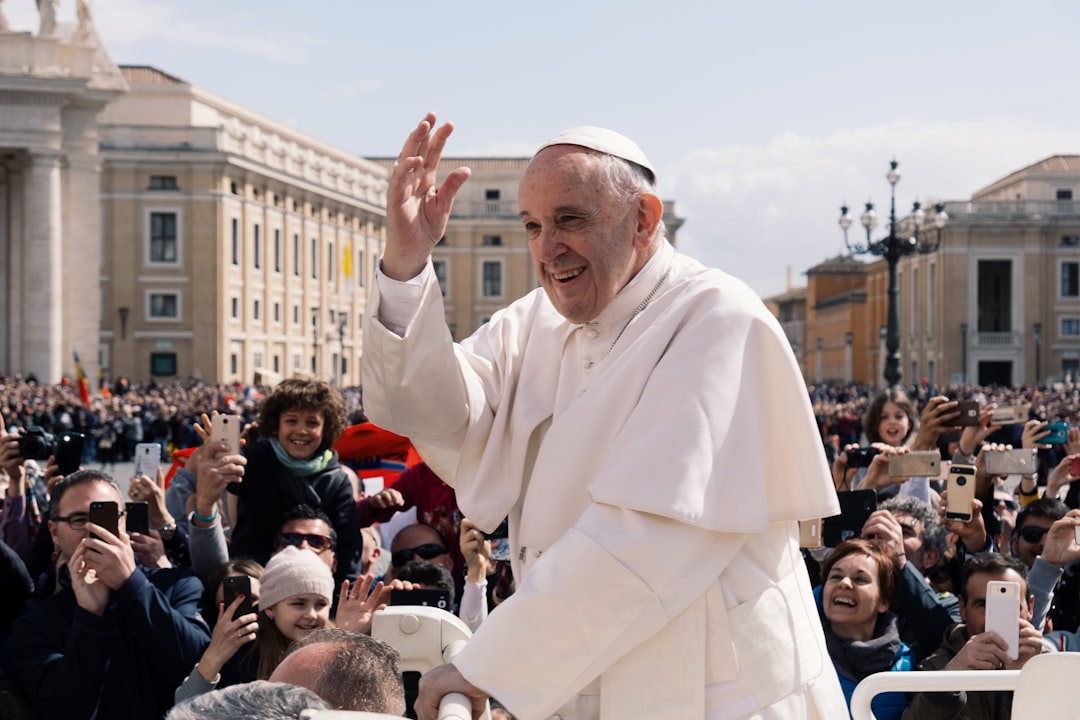
You’re standing in Rome, surrounded by churches, domes, and Renaissance palaces. You know the Pope lives in Vatican City, a tiny independent country entirely surrounded by Rome. But here’s what’s hard to imagine: for over 1,000 years, the Pope ruled a massive territory that included Rome, large parts of central Italy, and significant wealth and power. The Pope wasn’t just a religious figure—he was a king. He had an army. He fought wars. He made political alliances. He collected taxes. He conquered territory.
The Papal States were one of the most unusual political entities in European history: a theocracy claiming spiritual authority over all Christianity, but also a territorial power playing the game of politics and warfare just like any secular kingdom.
The Donation of Constantine: A Forgery That Shaped History
The story of the Papal States begins with a forgery.
In the 8th century, a document appeared claiming that Constantine—the first Christian emperor of Rome—had given the Pope dominion over Rome, Italy, and the entire western Roman Empire. This document, known as the “Donation of Constantine,” was the purported legal basis for papal territorial claims.
It was fake. Completely fabricated. Scholars proved this in the 15th century (Lorenzo Valla showed, through textual analysis, that the Latin was too modern to be from Constantine’s time). But for 700 years before that, people believed it was real, and the Donation was used to justify papal claims to territory.
This is actually a good metaphor for the Papal States as a whole: built on shaky foundations, but persistent and powerful because people believed in them.
How the Popes Actually Got Territory
While the Donation of Constantine was forged, the Popes did actually acquire territory through various means.
As the Roman Empire collapsed in the west (around 476 AD), the Church was one of the few institutions that remained powerful and organized. The Pope, as the leader of the Church, accumulated wealth and influence. Local rulers began donating land to the Church. Kings saw benefits in having a powerful Church that would legitimize their rule. The Church, in turn, used its moral authority to demand protection and territory.
By the early Middle Ages (around the 8th century), the Pope controlled significant territory around Rome. The Frankish Kings (including Charlemagne) protected papal territory and expanded it. When Charlemagne was crowned Emperor by the Pope in 800, it was partly a recognition that the Pope and the Holy Roman Emperor were partners in ruling Christian Europe.
Over the next several centuries, through warfare, diplomacy, marriage alliances, and the simple fact that the Church was wealthier and better organized than most secular rulers, the Papal States expanded. By the 11th century, the Pope controlled a swath of territory across central Italy—Rome, large parts of what is now Tuscany, Umbria, and the Marches, and areas further south. This territory provided wealth, power, and political independence.
The Pope as a Temporal Ruler: A Contradiction
Here’s the tension that runs through the entire history of the Papal States: the Pope is supposed to be a spiritual leader devoted to Christ’s teachings. Christ explicitly told his followers to give up worldly possessions, to avoid violence, to turn the other cheek. Yet the Pope, as ruler of the Papal States, was doing exactly the opposite—acquiring wealth, waging warfare, making political alliances, and punishing enemies.
This was not lost on critics. Throughout the Middle Ages and Renaissance, people pointed out the contradiction. How could the Pope, supposedly Christ’s vicar on Earth, be acting like a medieval warlord? Some of this criticism came from genuine reformers who wanted the Church to return to spiritual focus. Some came from political enemies of the Papacy who wanted to delegitimize papal power.
But the Popes largely ignored these criticisms. They were too invested in temporal power. The Church’s wealth and independence depended on the Papal States. Giving up territory would mean giving up power.
The Renaissance Popes: Art Patrons and Warriors
The Papal States reached their height of power during the Renaissance (14th-16th centuries). The Popes of this era were simultaneously sophisticated art patrons and ruthless political operators.
The most famous are probably the Borgia popes—Callixtus III and Alexander VI. Alexander VI is infamous for his affairs, his illegitimate children, and his ruthless use of violence to maintain power. But he also commissioned great art and architecture. He was a product of his time: a Renaissance prince who happened to be Pope.
Other Renaissance popes were more focused on art and intellectual pursuits than on warfare, but they all maintained the territorial power and wealth of the Papal States.
This era gave us St. Peter’s Basilica and the Sistine Chapel—built by papal patronage, financed by church revenue (which included the infamous sale of indulgences—paying money to reduce time in purgatory, a practice that Martin Luther famously protested and which sparked the Protestant Reformation).
The Renaissance popes showed that the Papacy could be culturally sophisticated and powerful. But they also embodied the corruption and worldliness that critics pointed to. The sale of indulgences, the nepotism, the political wheeling and dealing, the armies—all of it undermined the Pope’s claim to spiritual authority.
The Decline: Loss of Territory During Italian Unification
By the 18th and 19th centuries, the Papal States were surrounded by rising nation-states. France, Spain, Austria, and Britain were becoming stronger and more centralized. The Papal States, by contrast, were relatively backward economically and militarily.
The final blow came during Italian unification in the 1860s. Italian nationalists wanted to unite all Italian territories under a single state. The Papal States stood in the way.
In 1870, during the Franco-Prussian War (which distracted France, which had been protecting the Papal States), Italian forces marched on Rome. The Pope’s small military force—basically the Swiss Guard—couldn’t resist. Rome was captured. The Papal States ceased to exist as a territorial entity.
The Pope, Pius IX, refused to accept this loss. He declared himself a “prisoner in the Vatican”—confined to a small area of the Vatican by the Italian state. For 59 years, the Popes claimed they were not free. They refused to leave Vatican territory. They refused to cooperate with the Italian state. They excommunicated Italian politicians who had seized papal territory. It was a dramatic but ultimately futile protest.
The Lateran Treaty: Vatican City Is Born
The standoff between the Pope and the Italian state lasted until 1929, when Benito Mussolini’s fascist government negotiated the Lateran Treaty (also called the Treaty of Rome).
The treaty recognized Vatican City—a tiny 110-acre city-state entirely surrounded by Rome—as an independent sovereign state. The Pope would rule Vatican City absolutely. In exchange, the Pope would recognize the Italian state and give up claims to the former Papal States.
Vatican City is the world’s smallest independent state, with a population of around 800. It has its own postal service, radio station, newspaper, and complete independence in international relations. It’s also a UNESCO World Heritage Site.
The treaty was a compromise that satisfied both sides. The Pope got sovereignty and independence. Italy got Rome without the constant conflict with the Church. For the Pope, Vatican City represented a dramatic loss of power—from ruling large territories across central Italy to ruling 110 acres. But it also freed the Pope from the entanglement of temporal politics, allowing him to focus on spiritual leadership.
The Papal Palace and Castel Sant’Angelo
When you visit Rome, you can see physical remnants of papal temporal power.
Castel Sant’Angelo is a fortress that was used by the Pope as a refuge and as a military installation. It’s a massive, imposing structure that looks like a medieval castle because it basically is one. The Popes fortified it, stationed troops there, and used it to defend Rome. It’s a reminder that the Pope, for centuries, was a military power.
The Apostolic Palace (the Pope’s residence) within Vatican City is less accessible to tourists, but you can see it from outside Vatican City. It’s a massive complex of buildings that served as the Pope’s seat of temporal power. The Pope lived there, governed from there, and held court there like any Renaissance prince.
St. Peter’s Basilica, while primarily a religious building, was also a statement of papal power and wealth. Building it cost enormous sums—sums that came from the Papal States’ revenues and the Church’s donations and indulgences. It’s beautiful and spiritually significant, but it’s also a monument to papal temporal power and ambition.
What This Means for Modern Vatican City
Today, Vatican City is an anomaly. It’s the only absolute monarchy left in Europe. The Pope has complete power over Vatican City’s tiny territory. He’s both a religious leader and a temporal ruler, though now he rules just a city block rather than central Italy.
This strange hybrid status—spiritual leader of about 1 billion Catholics worldwide, but also the absolute ruler of a tiny city-state—is a direct inheritance from the Papal States era. If the Papal States had been fully absorbed into Italy in 1870 and had no special treaty, the Pope would just be a religious leader. But the Lateran Treaty gave him sovereignty, even if only over a tiny territory.
Vatican City does have an army—the famous Swiss Guard, the only soldiers the Pope commands. They’re colorfully dressed in Renaissance uniforms, but they’re professional soldiers who are actually trained and armed.
The Contradiction Resolved and Renewed
The end of the Papal States resolved one contradiction: the Pope no longer had to balance spiritual authority with temporal power. He could focus on being a spiritual leader.
But it created new ones. How does the Pope, who preaches poverty and detachment from worldly things, justify Vatican City’s wealth? Vatican City has extensive real estate holdings, significant financial investments, and substantial income. It’s a sovereign state, which means the Pope can exercise absolute power and be accountable to no one. This creates occasional scandals when Vatican finances are mismanaged or when the Pope’s policies seem contrary to Christian principles.
These contradictions are not new. They go back centuries to the fundamental tension of the Papal States: what is a spiritual leader doing wielding temporal power?
Visiting the Remnants
When you visit Rome, take time to think about what it was like when the Pope ruled not just Vatican City but Rome and large parts of central Italy. Walk the streets of Rome knowing that for centuries, the Pope was the ruler here—not in a purely spiritual sense, but in a concrete political and military sense.
Visit Castel Sant’Angelo and imagine papal troops stationed there. Visit St. Peter’s and think about what it meant that the Pope could command the resources to build it. Walk past the Vatican walls and remember that they once surrounded much larger territory.
The end of the Papal States marks a transition point in world history: the moment when temporal power and spiritual authority finally separated. It’s also a reminder that institutions, no matter how powerful they seem, are always subject to historical change. The Papal States seemed permanent for over a thousand years. Then they were gone in a few decades.




Leave a Reply