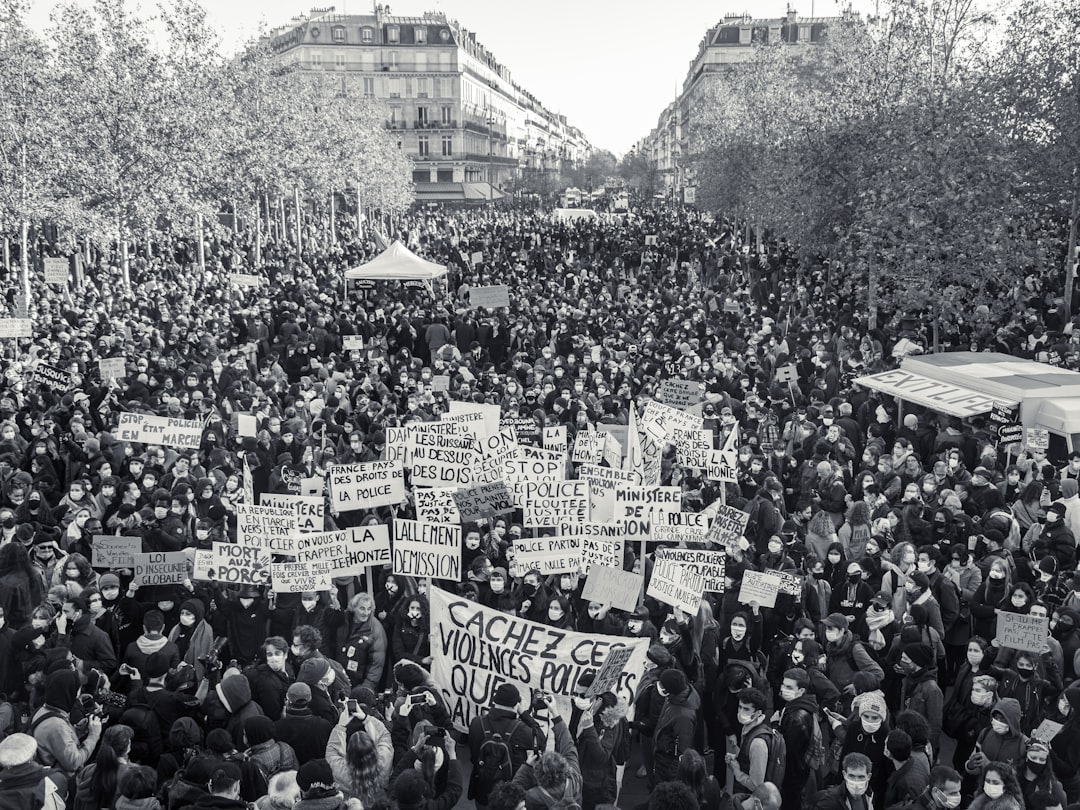
Most travelers visiting Paris don’t think about the Paris Commune of 1871. It happened 150 years ago, and its remains aren’t as visually obvious as the monuments of the French Revolution or World War II. But it was one of the most radical and consequential upheavals in European history—a 72-day experiment in radical democracy and working-class power that would inspire revolutionaries for the next 150 years, including Karl Marx and Vladimir Lenin.
The Commune’s story is deeply human and deeply political. It emerged from catastrophe, was driven by desperate hope for a better world, and ended in a bloodbath so severe that it traumatized French society for generations. To understand modern Paris, and to understand how 19th-century radicals imagined an alternative to capitalism and hierarchy, you need to understand the Commune.
The Franco-Prussian War: Defeat and Betrayal
The Commune didn’t emerge in a vacuum. It emerged from the ashes of France’s catastrophic defeat in the Franco-Prussian War of 1870-71. French Emperor Napoleon III, trying to extend French influence, provoked a conflict with Prussia (the dominant German state under Chancellor Bismarck). The war was a disaster. The Prussian Army defeated the French in decisive battles, French forces were surrounded and captured, and within months, Paris itself was under siege.
The siege of Paris lasted from September 1870 to January 1871. The city’s population, cut off from supply lines, starved. Parisians ate horses, then dogs, then zoo animals. Tens of thousands died of hunger and exposure. The government, terrified of the radical elements within Paris and desperate to end the siege, negotiated a peace treaty with the Prussians. The treaty was humiliating: France lost the regions of Alsace and Lorraine, and had to pay an enormous indemnity.
Most importantly, the peace treaty meant that Prussian occupation would continue until the indemnity was paid. France would be under foreign occupation, with the Prussian Army as a visible reminder of national defeat. For Parisians who had endured the brutal siege believing they were defending French liberty and independence, the betrayal was profound.
The Roots of Rage: Inequality and Exclusion
But there was more to it than national humiliation. Paris in 1870 was a city of profound inequality. The wealthy lived in the western neighborhoods (the 16th arrondissement and beyond). The poor, the workers, the dispossessed lived in the northern and eastern parts of the city. The siege, with its mass starvation, had devastated the poor and working-class areas while the wealthy found ways to secure food and survive.
Paris had been dramatically transformed in the previous two decades under the leadership of Baron Haussmann, who had demolished medieval neighborhoods and created the grand boulevards and uniform architecture that define central Paris today. Haussmann’s modernization was magnificent, but it had also displaced hundreds of thousands of poor people. Property values skyrocketed. The poor were pushed to the margins of the city.
Additionally, the Prussian defeat and the collapse of France had economic consequences. Unemployment was rampant. Businesses were shuttered. The economy was in crisis. And yet, the wealthy were making money—contractors were rebuilding, speculators were buying destroyed property at low prices. For ordinary people, the situation was unendurable.
Political ideology also mattered. During the 1860s, socialism, republicanism, and revolutionary ideas had spread among Paris’s working classes. Workers’ clubs met in cafés. Newspapers and pamphlets circulated ideas about equality, common ownership, and alternatives to capitalism. When the War was lost and Paris surrendered, many Parisians felt that the moment for fundamental change had arrived.
The Commune Rises: Direct Democracy in Action
After the peace treaty was signed, the French government—now a conservative republic based in Versailles, not Paris—tried to disarm Paris. The idea was to take weapons away from the National Guard, the citizen militia that had been crucial in defending Paris during the siege. On March 18, 1871, government troops tried to seize the cannons of the National Guard.
What happened next was spontaneous and radical. The people of Paris, enraged at the attempt to disarm them, rose up. The government troops, confronted by crowds of ordinary Parisians, refused to fire on civilians. The soldiers fraternized with the crowds. The government collapsed, and the National Guard was in control of the city.
In the chaos that followed, Paris declared itself an independent Commune. Elections were held for a governing council. The Commune’s program was radical: no standing army, a genuine citizens’ militia. No bureaucrats earning more than workers. Direct democracy, with elected representatives subject to recall. The separation of church and state. Free education. Economic cooperation between workers. The abolition of rent.
For 72 days, Paris governed itself. It wasn’t chaos—the Commune established functional institutions. But it was genuinely revolutionary. The Commune was primarily composed of workers, small shopkeepers, and radical intellectuals. There were women involved (unusual for political movements of the era), and they pushed for expanded rights and recognition. The Commune, for all its flaws and contradictions, was genuinely trying to imagine and implement a different way of organizing society.
The Role of Women
One fascinating and often overlooked aspect of the Commune is the role of women. Women participated actively in the Commune—in the fighting, the governing, the ideological debates. They organized women’s clubs, wrote for newspapers, and fought in the streets. Some, like Louise Michel, became legendary revolutionaries.
Women’s organizations within the Commune pushed for specific demands: equal pay, education, rights to leave abusive husbands. These demands weren’t always integrated into the official Commune platform, and women’s contributions were sometimes marginalized. But the fact that women participated at all, that they were active agents rather than passive observers, was significant for the period.
The participation of women in the Commune terrified the ruling classes. The image of armed women fighting in the streets, of women making political demands, of women participating in communal governance—it violated traditional gender hierarchies. After the Commune was crushed, some of the most brutal violence was directed specifically at women.
The Versailles Government Strikes Back
The French government, ensconced in Versailles, was horrified at the Commune. The idea of a working-class government in Paris, implementing socialist policies, was intolerable. The government decided to crush the Commune militarily. In May 1871, the Versailles army (now about 130,000 strong) attacked Paris.
What followed was the Semaine Sanglante, the Bloody Week. For about a week, Parisians fought desperately to defend their Commune and their city. Barricades were erected. Streets became battlefields. As the Versailles army pushed deeper into the city, the fighting became increasingly brutal.
The Commune used a scorched-earth strategy. As Versailles forces advanced, Communards set fires. Government buildings burned. The Tuileries Palace (where the royal family had lived before the Revolution) was deliberately set alight. The Communards, knowing they were losing, wanted to ensure that the ruling classes couldn’t simply restore the old order with ease.
The Versailles army, fighting house-to-house, began summary executions. Suspected Communards were shot on the spot, without trial. Prisoners were marched to walls and executed en masse. The killing was systematic and vengeful. By the end of the week, tens of thousands were dead—estimates range from 10,000 to 30,000. The exact number will never be known because bodies were buried in mass graves.
The Aftermath: Trauma and Myth-Making
After the Commune was crushed, survivors faced horrific reprisals. Suspected Communards were rounded up, tried in military courts, and imprisoned or executed. Tens of thousands were imprisoned. Many were deported to penal colonies in far-flung parts of the French empire. Louise Michel was imprisoned and then exiled to New Caledonia. It took years for exiles to be allowed to return.
The psychological impact on French society was profound. The ruling classes were terrified by what the Commune represented—the possibility of working-class revolution, the rejection of traditional hierarchy, the attempt to create a genuinely egalitarian society. The Commune became a symbol of the dangers of democracy taken too far, of mob rule, of the chaos that lurks beneath the surface of civilization.
Karl Marx analyzed the Commune extensively in “The Civil War in France,” treating it as a crucial experiment in working-class power. Lenin and the Bolsheviks looked to the Commune as a model for revolution. For radicals around the world, the Commune was evidence that another world was possible.
For conservatives, and for much of the French ruling class, the Commune was a nightmare that must never be allowed to recur. The memory of the Commune helped push French politics rightward and made the ruling classes more determined to prevent working-class organization and political power.
Where to See the Commune Today
For travelers interested in the Commune, Paris still has physical traces and memorials:
Père Lachaise Cemetery contains the Mur des Fédérés (Wall of the Federation), where Communards were executed during the final suppression. A ceremony is held there annually on May 28, the anniversary of the Commune’s fall. Visiting the wall, seeing the names of the dead, understanding that this is where so many were murdered—it’s sobering.
The Tuileries Gardens are where the palace once stood, before it was burned. You can walk where the palace used to be, seeing the emptiness where that structure once dominated. The absence is meaningful.
Montmartre, the neighborhood north of the central city, was a Commune stronghold. The streets and squares where barricades were erected and fighting occurred are still recognizable. Sacré-Cœur basilica, perched on the hill above Montmartre, has an interesting and complicated history related to the Commune (conservatives built it partly as a response to the Commune, to reclaim the spirituality and tradition that they felt the Commune had rejected).
The Museum of Montmartre has exhibits on the neighborhood’s history, including the Commune period.
The Musée Carnavalet in the Marais has exhibits on the Commune, including artifacts, photographs, and documents from the period.
The Commune’s Political Legacy
The Paris Commune didn’t achieve its goals. It didn’t establish a working-class government that persisted. The Versailles army crushed it, and the old order reasserted itself. France returned to conservative republicanism. The radical dream of 1871 seemed to have been defeated permanently.
But the Commune’s intellectual and political legacy was vast. Marxists saw in the Commune evidence that working-class revolution was possible, that capitalism could be overthrown, that an egalitarian society could be built. The Commune became a symbol and inspiration for revolutionaries worldwide. It influenced the Russian Revolution of 1917 (Lenin saw the Bolshevik takeover as the fulfillment of what the Commune had begun). It influenced socialist and communist parties throughout the 20th century.
Within France itself, memory of the Commune shaped politics. The right remembered it as a terrifying example of what radical democracy could produce. The left remembered it as a heroic struggle for working-class power. The psychological scar of the Commune lasted for decades, affecting how French people thought about class conflict, revolution, and social change.
Understanding Radicalism and Its Limits
For modern travelers, the Commune offers a fascinating window into radical political movements and their limitations. The Communards were genuinely idealistic. They wanted to create a more just, egalitarian, and democratic society. They were willing to fight and die for those beliefs.
But the Commune also demonstrates the challenges of radical social transformation. The Communards were facing a far more powerful enemy. The Versailles army was larger, better armed, and more cohesive. The Commune was defending urban territory against an enemy willing to wage total war. It was a mismatch.
Additionally, the Commune had internal contradictions and divisions. There were different factions with different visions. The question of whether the Commune should focus on defending Paris or launching revolutionary action against Versailles was contested. The scarcity of food and resources created desperate conditions. Idealism ran up against practical reality.
Yet the Commune persisted for 72 days, maintaining a functioning government, defending its territory against a larger army, implementing at least some of its radical vision. That persistence, that commitment, that willingness to imagine a different kind of society—it matters.
The Larger Historical Moment
The Commune occurred in a Europe convulsed by the decline of traditional monarchies and the rise of modern mass society. It was one moment in a larger story about how rapidly industrializing societies would organize themselves, whether through conservative reaction, liberal reform, or revolutionary transformation.
The Commune represented the revolutionary option taken to its extreme. It failed in France, but similar experiments and struggles would occur elsewhere throughout the world. Understanding the Commune gives context to understanding subsequent revolutions and radical movements.
For travelers visiting Paris, the Commune reminds you that the city’s beauty and elegance were built on exploitation, that working people lived and fought and died in these streets, and that the history of modern cities is inseparable from the history of class conflict and radical hope. Walking through Paris knowing this history changes how you see the city. It’s not just a place of beauty and culture—it’s a place where people have repeatedly struggled for justice and equality, where they’ve imagined alternative worlds, and where those struggles have been violently suppressed and then remembered, commemorated, and eventually reinterpreted.




Leave a Reply