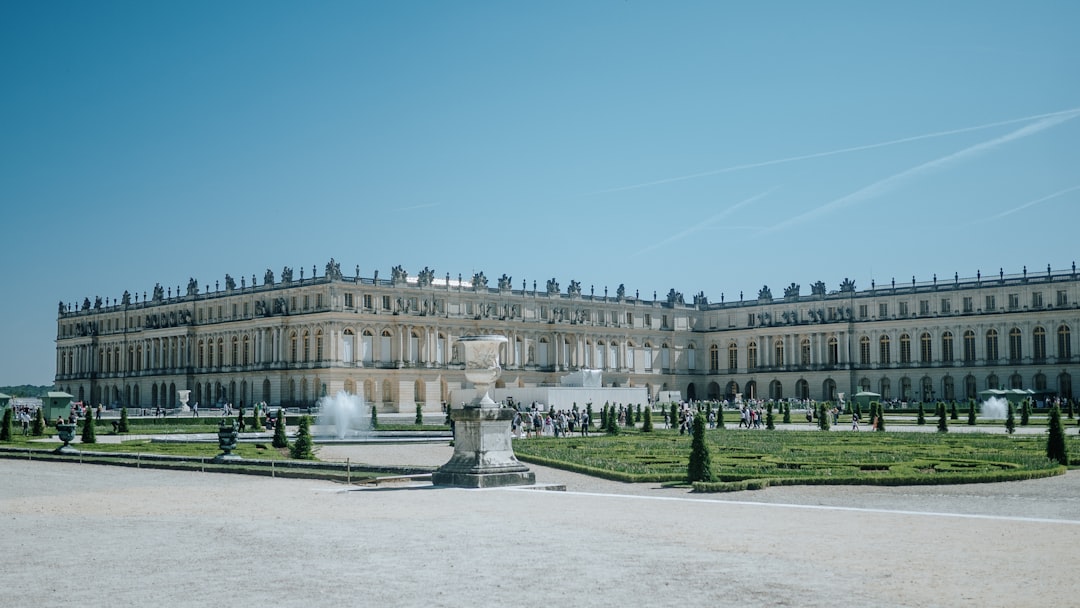
Versailles is overwhelming. That’s by design. When King Louis XIV’s architects and designers created this palace in the 17th century, they didn’t intend it to be merely beautiful or even merely impressive. They intended it to be literally incomprehensible in its scale and magnificence—a building that would make visitors feel small, powerless, and awestruck before the absolute authority of the king.
Most tourists arrive at Versailles, wander through the Hall of Mirrors, take a photo, and leave thinking they understand it. They don’t. Versailles isn’t just a beautiful building. It’s a political statement frozen in stone, marble, and gold. It’s a demonstration of power so complete that it shaped European politics for 200 years. To understand Versailles is to understand how absolute monarchy actually worked and why it eventually collapsed so spectacularly.
The Hunting Lodge Experiment
It’s easy to forget that Versailles didn’t start as a palace. In the 1620s, King Louis XIII—paranoid, chronically ill, and obsessed with hunting—decided to build a small hunting lodge about 12 miles west of Paris, in an area called Versailles. It was modest, a place to escape the court intrigues of Paris and pursue his favorite hobby of killing animals.
Why this location? Because it was unappealing. Swampy, poorly drained, lacking fresh water, with terrible air quality. In other words, it was defensible. Distance from Paris meant the king could control who came and went. The unpleasant terrain meant an enemy couldn’t easily invade. It was a strategic choice dressed up as a preference for hunting.
Louis XIV inherited the throne in 1643 at age five. His first decades were marked by struggle against the nobility (particularly the great magnates who had their own armies and territories) and against his chief minister Cardinal Richelieu’s successor, Cardinal Mazarin. These nobles—the old feudal aristocracy—were a threat to royal absolutism. They were powerful, independent, and could potentially rebel.
The Brilliant Solution: Move the Court to a Swamp
This is where the genius of Louis XIV (ruled 1643-1715) becomes visible. Instead of trying to suppress the nobility militarily or govern them from distant Paris, he did something radical: he decided to turn nobility into a lifestyle. He would create a place so magnificent, so full of ritual and ceremony, so dependent on his approval and presence, that the greatest nobles in France would willingly abandon their estates and live at Versailles, locked in constant competition for the king’s favor.
It was the ultimate power move. Instead of warfare, he would use spectacle and ceremony. Instead of prison, he would use gardens and gold. The nobles who lived at Versailles weren’t there against their will—they fought desperately for the privilege, for a place in the king’s presence, for the honor of standing near the sun king.
So Louis XIV began his transformation of the swampy hunting lodge into a palace. Construction began in the 1660s and continued for decades. Entire forests of trees had to be cut down and replanted according to geometric designs. The swamp had to be drained—a process that killed thousands of workers. Water had to be pumped uphill to supply fountains. The entire terrain had to be reorganized to match the king’s vision.
A Landscape That Embodies Absolute Power
The gardens at Versailles—designed by André Le Nôtre—are as important as the palace itself. They’re not natural gardens. They’re forests, lawns, and water reorganized according to geometric principles visible only from above or from specific vantage points. They’re nature conquered and arranged to express a vision of order and control.
Walking through Versailles’s grounds, you experience this mathematically expressed power. Long allees stretch toward the horizon in perfectly straight lines. Water features are precisely positioned. Trees are trimmed to shape. The entire landscape is an expression of human will imposed on nature. For a 17th-century visitor, it would have been an almost religious experience—seeing proof that human intelligence and will could shape the world so completely.
The Hall of Mirrors: The Political Theater
But the heart of Versailles, the space that defines it globally, is the Hall of Mirrors. Finished in 1684, it’s a gallery of 73 meters running along the western façade of the palace, lined with 357 mirrors. Each mirror was expensive, precious, and symbolized wealth and power. The light reflecting off them seemed almost supernatural to 17th-century observers.
The Hall of Mirrors wasn’t intended as a museum. It was a political theater. Courtiers gathered here, performed for each other, and performed for the king. The hierarchy of Versailles existed in the mirror gallery—who stood closest to the king, who was reflected most positively in the mirrors, who was ignored. The space turned social climbing into a visible, measurable thing.
Here’s what’s crucial to understand: the entire palace was a machine for controlling the nobility. Want a position, a title, or a pension? You need the king’s favor. How do you get that? By being at Versailles. By appearing in the Hall of Mirrors. By participating in the endless rituals that structured court life. By competing constantly with other nobles for the king’s attention.
Court Life: A Kind of Beautiful Prison
The ritual at Versailles was exhausting and elaborate. The king’s day was choreographed down to the minute. He had a formal lever (rising from bed), attended by specific nobles in a specific order. He had breakfast, official meetings, hunting, dinner, evening entertainment. Every moment was observed and noted.
Nobles competed fiercely for the privilege of participating in these rituals. Being chosen to attend the lever was an honor. Being ignored meant your favor was declining. A noble who fell out of favor at Versailles was doomed—they lost influence, wealth, and status. So they had to stay, had to participate, had to compete.
Women had their own version of this. Marie Antoinette (Louis XIV’s great-great-granddaughter and Louis XVI’s wife) lived in the Petit Trianon, a smaller, more intimate palace within the Versailles complex that she had redesigned to her taste. She created a miniature court, a theatrical escape from the rigid formality of the main palace. But even her escape was constructed, performed, and political.
The Costs and Contradictions
Running Versailles was staggeringly expensive. The palace, its maintenance, its staff of thousands, and the pensions of attending nobles consumed enormous portions of the crown’s budget. Historians estimate that Versailles consumed something like 3-6% of the royal revenue annually. Money that might have been invested in agriculture, industry, or military defense was instead spent on mirrors, gardens, and the staging of power.
This was, in hindsight, unsustainable. As the 18th century progressed, France accumulated debt through constant wars, agricultural crises, and the sheer weight of maintaining an antiquated feudal system alongside an absolute monarchy that was increasingly expensive to perform. The same nobility that had been tamed by the spectacle of Versailles became a drag on the state’s finances.
The irony is profound: Louis XIV used Versailles to consolidate absolute power and neutralize the nobility. But the expense of maintaining that fiction, that spectacle, ultimately helped bankrupt the state. Two centuries later, this financial crisis would contribute directly to the French Revolution.
The Architecture of Authority
The palace itself, beyond the gardens and mirrors, expresses absolute power in its architecture. Everything is on a massive scale. Ceilings are painted with frescoes showing the king’s victories. Staircases are grand and monumental. Doorways are enormous. Rooms flow into each other, creating a sense of endless space and wealth. Everything is subordinated to the expression of the king’s power and glory.
When you walk through Versailles, you’re not just moving through architecture. You’re moving through an ideology of absolute monarchy expressed in stone and paint. Every room, every garden, every fountain is saying the same thing: the king is supreme, the king’s will is law, the king’s glory is infinite, and you, the visitor, are insignificant before it.
The March on Versailles and the Collapse of the Myth
By 1789, Versailles had become a symbol of inequality and excess. The palace that had been built to consolidate power had become a symbol of everything wrong with the old regime. On October 5, 1789, during the early stages of the French Revolution, thousands of Parisians (many of them women and working people, hungry and angry) marched to Versailles demanding bread and confrontation with the king.
The royal family was essentially captured and taken back to Paris, where they became prisoners of the Revolution. The palace that had been the seat of absolute power, the place where royal authority was most visibly expressed, became a haunted monument to a dying system.
After the Revolution, Versailles fell into disrepair. It was vandalized. Furniture was sold off. For decades, it seemed like Versailles would disappear into history. Then, in the late 19th and 20th centuries, Versailles was transformed into a museum—a place to commemorate a lost world rather than to exercise power.
The Treaty of Versailles and Historical Irony
There’s a strange historical symmetry here. In 1919, after World War I, the Treaty of Versailles was signed—the peace treaty that ended the war and attempted to reshape Europe. It was signed in the Hall of Mirrors, the very heart of French royal power. The location was chosen symbolically: France was reasserting its dominance in Europe after German victory seemed possible.
Walking through the Hall of Mirrors today, you might stand in the exact spot where the 1919 treaty was signed. The room that had once been the theater of absolute monarchy became the stage for modern international diplomacy. There’s something poignant about that—the replacement of one kind of power with another.
Practical Visiting Tips
Versailles is huge—the palace has over 700 rooms, and the grounds are vast. You need at least a full day, ideally two. Here are some practical suggestions:
Start early. Versailles opens at 9 AM, and lines form quickly. Arriving early means you’ll see major rooms before they’re crowded with tourists.
Consider hiring a guide or using an audio guide. The architecture is beautiful, but understanding the history makes it far more interesting. Why was that corridor designed that way? Why is that fresco significant?
Don’t miss the gardens. Most tourists focus on the palace itself, but the gardens are equally important to understanding Versailles’s political meaning. The geometric precision, the way water is used, the vistas—they all express the same ideology of absolute control.
The Petit Trianon is often overlooked. It’s quieter than the main palace and offers a more intimate sense of how royals lived when not performing at state ceremonies.
Visit the Musée Carnavalet in Paris before or after Versailles. It has exhibits on court life that provide context for what you’re seeing.
What Versailles Means Today
Versailles remains the most visited palace in the world. It attracts millions of tourists annually. They come because it’s beautiful, because it’s historically significant, and because standing in front of the Hall of Mirrors connects them to a moment when humans were trying to build permanence, to express power through architecture, and to create a system where ritual could substitute for actual governance.
For modern visitors, Versailles offers several lessons. First, that spectacle can be a form of power—that controlling how things appear and how they’re performed can be as important as actual authority. Second, that absolute systems, no matter how magnificent, contain the seeds of their own destruction—they’re unsustainable, they create resentment, and they eventually collapse. Third, that the architecture of power is never neutral—every building, every garden, every mirror is making a political statement.
Versailles isn’t just a museum of beautiful objects. It’s a museum of a way of thinking about power, authority, and the relationship between rulers and ruled. And it’s a museum of that thinking’s ultimate failure. Walking through Versailles, you’re walking through the architecture of a dream of eternal absolute power—and the stone records both the grandeur of the dream and the inevitability of its collapse.




Leave a Reply