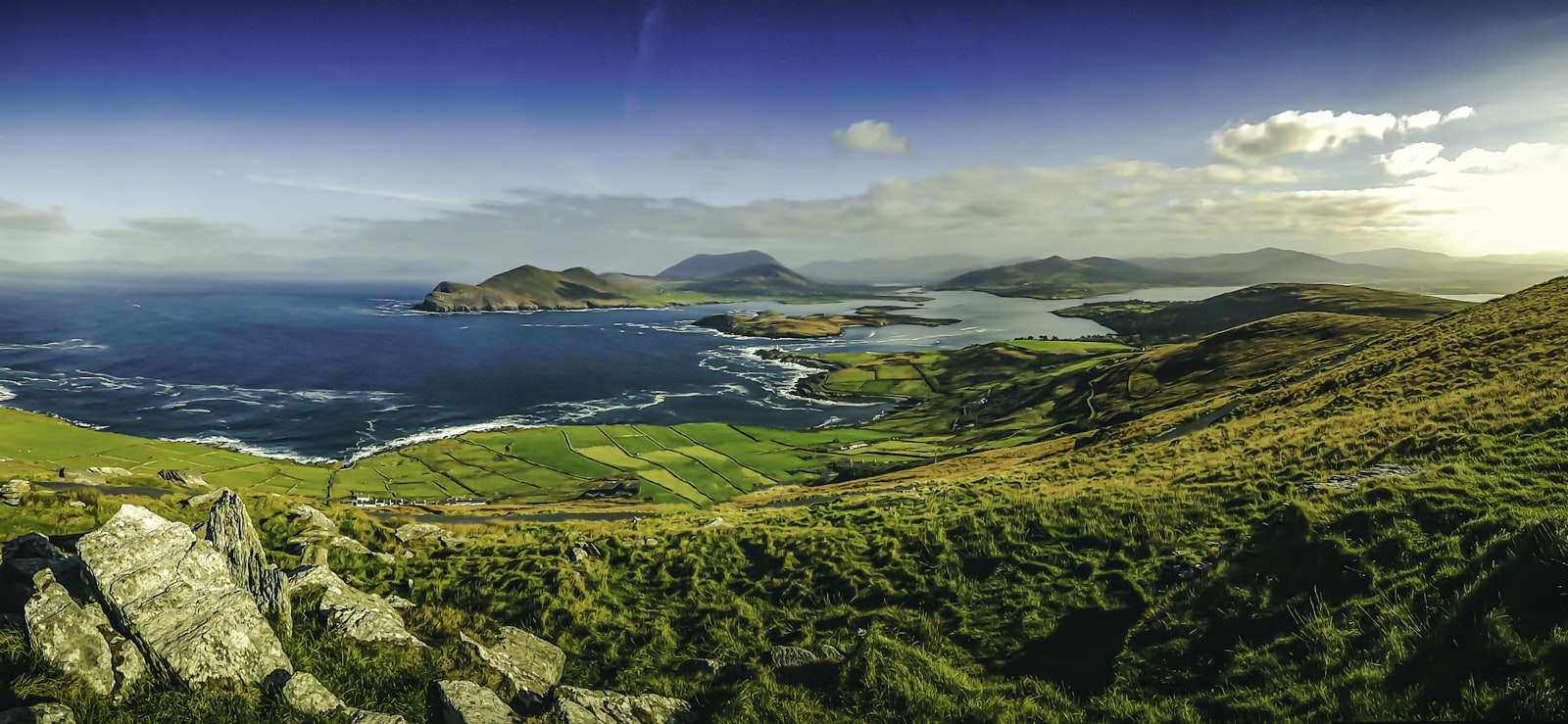
Introduction: Ireland’s Most Scenic Loop
The Ring of Kerry is a 179-kilometer circular route around the Iveragh Peninsula in County Kerry. It’s arguably Ireland’s most famous scenic drive, offering dramatic mountain scenery, coastal views, charming villages, and easy access to Killarney National Park. For Americans renting a car, it’s an essential experience—a manageable day drive with abundant stops and nearby attractions.
While the Ring itself can be driven in 4-5 hours of continuous driving, most visitors spend 2-3 days exploring, allowing time for detours, walks, and village stops. This guide covers the Ring route, nearby alternatives, accommodation options, and practical driving information.
The Ring of Kerry Route
The Ring forms a complete loop, and direction matters. Here’s why: In summer, tour buses dominate the road, and most travel clockwise. Driving counterclockwise means you’ll avoid facing down tour buses on narrow sections and find fewer crowds at popular stops.
The route is well-marked with brown “Ring of Kerry” signs. Drive counterclockwise from Killarney town through these towns in order:
Killorglin (Start)
A charming small town and the traditional starting point. It’s home to the wild Puck Fair festival in August. The town itself is unremarkable, but it’s good for fuel, supplies, and a quick coffee before heading out.
Cahersiveen
A working Irish town (not primarily a tourist destination), Cahersiveen is where you’ll feel you’ve discovered “real Ireland.” The harbor features colorful houses reflected in the water. The town has Irish cultural significance as a center of the Irish diaspora—many Irish Americans trace heritage here.
Visit Cahersiveen Barracks, a historic military installation with exhibits about Irish independence. The town’s central location makes it an excellent base for 1-2 nights. Accommodation is affordable (€70-100 per night), and restaurants serve locals, not just tourists.
Valentia Island
A small island connected by bridge (formerly only by ferry) and a remarkable detour. The island was home to the transatlantic telegraph cable station in the 1800s, connecting Europe and North America. The Skellig Experience visitor center tells this story. The island’s cliffs rival the Cliffs of Moher but with a fraction of the crowds.
The drive to Valentia adds 30 minutes roundtrip but is worth it. The island feels genuinely remote despite being just off the coast. On clear days, you can see Skellig Michael in the distance (the island used in Star Wars filming, accessible only by boat).
Sneem
A picture-perfect village at the foot of mountains, Sneem is the Ring’s most charming stop. The village green features two pyramids (Punchbowl and Pyramid monuments), and the entire place has been carefully preserved. The locals are exceedingly friendly.
Stay overnight here if possible. Blue Bull is an excellent pub with local character. South Port Café makes excellent coffee. The village has just enough tourism infrastructure to be convenient but remains genuinely Irish.
Kenmare
A elegant mountain town and a good base for 1-2 nights. Kenmare sits at the head of Kenmare Bay with mountains rising behind it. The town is notably prosperous and upscale, with excellent restaurants and hotels. It has a distinct atmosphere—more refined than other Ring towns, with boutique shops, galleries, and quality restaurants.
Kenmare has excellent dining for a small Irish town. Try Boathouse at Kenmare (seafood, €16-28), The Lime Tree (bistro, €14-22), or Moll’s Gap (traditional pub, €10-16). The town makes an excellent 2-night base because you can drive the Ring from here in one day, then use the second day for other activities.
Glenbeigh
A small village in a scenic valley. The beach here is surprisingly good. If you’re a golfer, Dooks Golf Club is a links course with ocean views.
Killarney
Killarney is the Ring’s largest town and primary tourist hub. It’s more commercialized than Ring villages but offers the widest range of facilities. Killarney National Park adjoins the town, offering serious hiking and natural attractions beyond the Ring route itself.
Killarney town center is pleasant with shops, restaurants, and pubs. The town caters specifically to tourists, which is fine for one night but can feel less authentic than smaller Ring villages.
Essential Detour: Skellig Ring
An alternative to the main Ring, the Skellig Ring (Skellig Route) offers dramatic coastal scenery with fewer bus tours. This route is less well-known and consequently less crowded.
Starting from Cahersiveen, the Skellig Ring heads toward Ballinskelligs, a tiny village with stunning beach and mountain views. The road winds through impossibly beautiful scenery—mountains dropping to the sea, with only scattered houses and sheep. You’ll often feel like you’re driving through unspoiled Ireland.
The Skellig Ring loop adds 45 minutes to your Ring drive but is arguably more beautiful and definitely less touristy. The drawback is that roads are narrower and less frequently traveled. Don’t attempt this in poor weather or if you’re uncomfortable with narrow roads.
Killarney National Park
Killarney National Park encompasses 102 square kilometers of mountains, lakes, valleys, and forests. It’s Ireland’s most visited national park and the only national park in Ireland when it was established in 1932.
Muckross House & Gardens: A stately home built in 1843, now operated as a museum. The house displays how Victorian gentry lived, and the gardens are exquisite. Admission is €10. Budget 2 hours. This is essentially a museum-style experience.
Muckross Lake: One of three lakes in the park. Scenic walks circle the lakes, ranging from 30 minutes to several hours. The lake scenery is genuinely beautiful—mountains reflecting in calm water, with forest valleys beyond.
Torc Mountain: For serious hikers, the Torc Mountain trail (5 km, 2-3 hours) climbs 989 meters offering panoramic views of the three lakes and surrounding mountains.
Moll’s Gap: Scenic mountain pass with a famous pub at the summit. The views are excellent.
Gap of Dunloe: A scenic valley hike (10 km) through mountain scenery. It’s more popular in summer and can be crowded.
Most park visitors spend a few hours walking around the lakes or driving to scenic viewpoints. You don’t need a full day for the park, but 3-4 hours significantly enhances your Ring experience.
The Beara Peninsula: The Insider’s Alternative
While not technically on the Ring of Kerry, the Beara Peninsula is 45 minutes south and offers an alternative loop many prefer to the Ring. The Beara is less commercialized, with dramatic scenery and fewer tourists.
Advantages over the Ring:
- More remote and wild feeling
- Better hiking options
- Gorgeous coastal drives
- Far fewer tour buses
- More authentic village atmosphere
Disadvantages:
Key stops on the Beara include Castletownbere (fishing village), Dunmore Head (scenic point), and Allihies (colored-house village). The Beara Way is a walking trail circumnavigating the peninsula.
If you have time (3-4 days), doing the Beara instead of the Ring, or combining both, gives you different perspectives on southwest Ireland.
Practical Information
Driving Tips for the Ring
Road conditions: Most of the Ring is well-maintained national road (N71). However, some sections are narrow, especially the Skellig Ring alternative. Sections can be windy and steep. Autumn and winter bring frequent rain and fog that reduces visibility.
Crowds: July and August are busiest. Easter, June, and September are busy but more manageable. Winter (November-February) is quiet but cold and wet. May and October are ideal—mild weather with modest crowds.
Driving time: The Ring loop takes 4-5 hours of pure driving but should take 7-10 hours including stops. Plan accordingly.
Fuel: Fill up in Killarney before starting. Fuel stations are spaced throughout the Ring but less frequent than in cities. Budget €60-80 for a full tank covering the Ring and surrounding driving.
Parking: Most Ring villages and attractions have free or very cheap (€1-2) parking. Muckross House charges €6 for parking.
Navigation: The Ring is well-marked. GPS works fine, but basic road signs are sufficient.
Accommodation Strategy
2-day Ring experience:
3-day Ring experience:
Good accommodation options:
Budget (€60-90):
Mid-range (€90-150):
Upscale (€150+):
Book accommodation ahead, especially weekends and June-September. Ring villages fill up by afternoon, making spontaneous accommodation difficult.
Food & Dining
The Ring offers surprisingly good food. Kenmare has the most upscale options, but villages have quality casual dining.
Kenmare:
Sneem:
Cahersiveen:
Killarney:
Pack picnic supplies from supermarkets (Dunnes Stores, Tesco, SuperValu) to save money and experience roadside dining with mountain views.
Weather Expectations
The southwest is Ireland’s sunniest region but also changeable:
May-June: 14-17°C, mostly dry, longest daylight
July-August: 15-18°C, occasional rain, busiest
September-October: 12-15°C, increasing rain, dramatic light
November-February: 5-9°C, frequent rain/fog, shortest days
The dramatic scenery often appears best in changeable weather. Clouds and mist over mountains create moody, beautiful landscapes. However, persistent fog can obscure views and make narrow roads dangerous.
Always bring waterproof jackets and extra layers. The weather can change within hours.
Practical Recommendations
- Don’t rush: The Ring tempts speediness, but slow down. Stop frequently. The drive is as important as the destination.
The Ring of Kerry isn’t just a route—it’s an experience of southwest Ireland’s dramatic landscape, village character, and outdoor beauty. Done properly, it becomes a highlight of any Irish visit.




Leave a Reply